

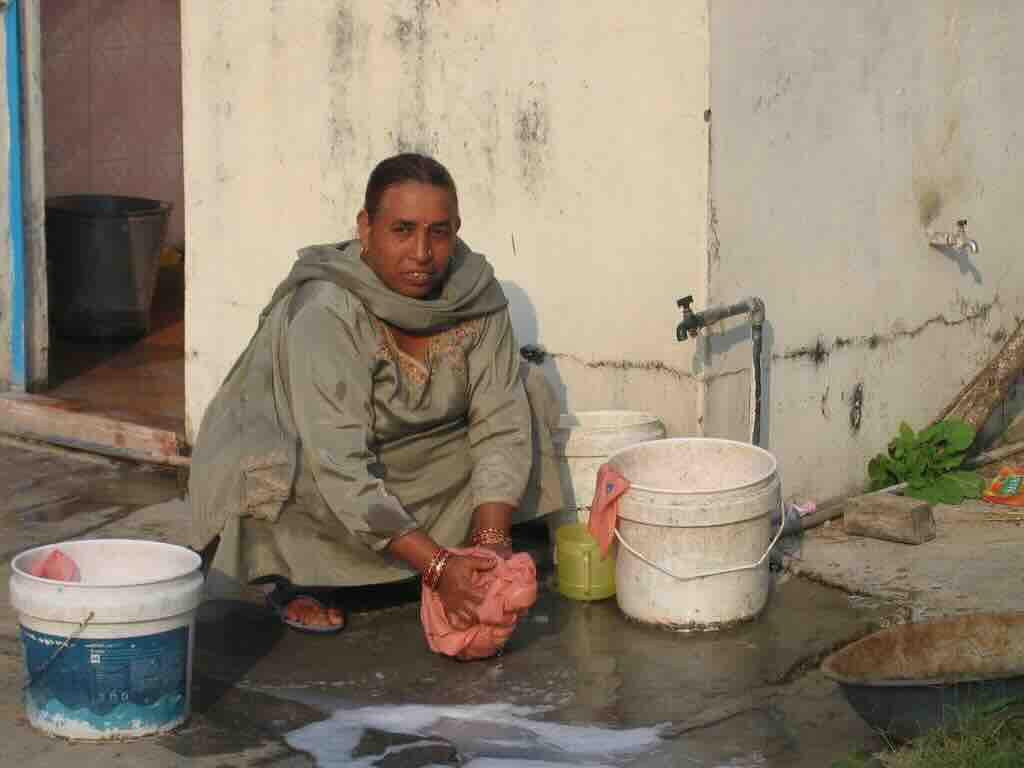
Somewhere along my first trip to India in 2005, I needed to do laundry. The pile of dirty clothes was growing, while the clean pile had nearly disappeared.
I asked my driver, Rakesh, where I might get some laundry done.
“No problem. We will do tonight.”
That put my mind at ease for the rest of the day. Until we checked into our guesthouse around four that afternoon.
How was I going to get everything washed and dried by tomorrow? I asked Rakesh again where I should take my laundry.
He came into my room, walked into the bathroom, and pointed to a plastic bucket and scoop sitting in the shower.
This city boy was mortified.
I’d never heard of washing clothes in a bucket, let alone tried it. Fortunately, I had an Indian man who’d grown up in a village to show me the ropes. That evening, with my freshly washed laundry hanging to dry, I started taking note of all the things India was teaching me.
More than twenty years later, doing a bucket of laundry on the road is a small task I actually look forward to. It means I can travel for weeks without packing a month’s supply of clothes.
Many Indian bathrooms have a bucket and smaller mug, commonly used for bathing. I sometimes call it jugged bathing: scooping water over yourself rather than standing under a shower. That same bucket makes a perfectly serviceable washing machine.
For other approaches, including hotel laundry and local wash-and-fold services, see my Laundry Options for the India Traveler.
Before you start: How much laundry and where to find washing powder
My usual load is three or four shirts, a similar number of pairs of underwear, a couple of pairs of socks, and perhaps some trousers. An entire suitcase is another matter; I’d hand that over to a laundry service.
For soap, ask for washing powder. That’s the term I’ve found most useful in neighborhood shops. “Laundry detergent” or “laundry soap” can occasionally get lost in translation.
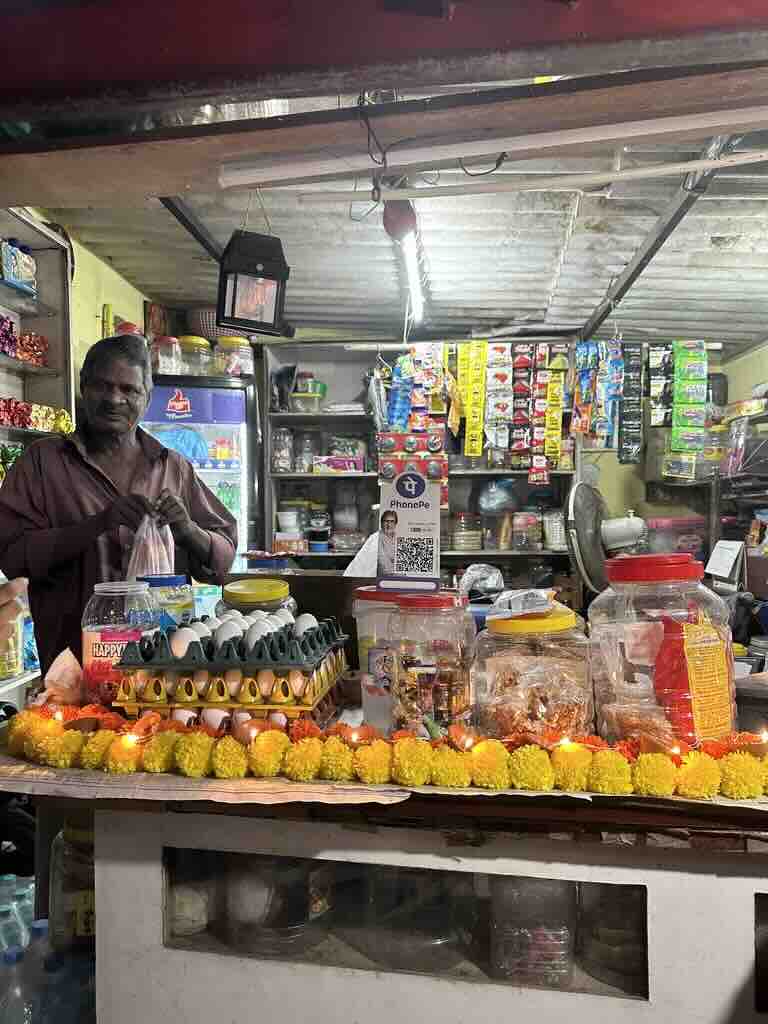
Uncle-ji might reach for a large packet, but look behind the counter for a waterfall of little sachets hanging in strips. Ask for a small packet and he’ll tear one off. That’s generally enough for a few garments.
I bring a couple of sealable plastic baggies so I can save any unused powder for the next stop. Don’t go overboard with the powder; more soap means more rinsing.
Check the MRP (Maximum Retail Price) printed on the packet, too. I’ve explained how that works in my article about MRP in India.
Step 1: Fill the bucket and let everything soak
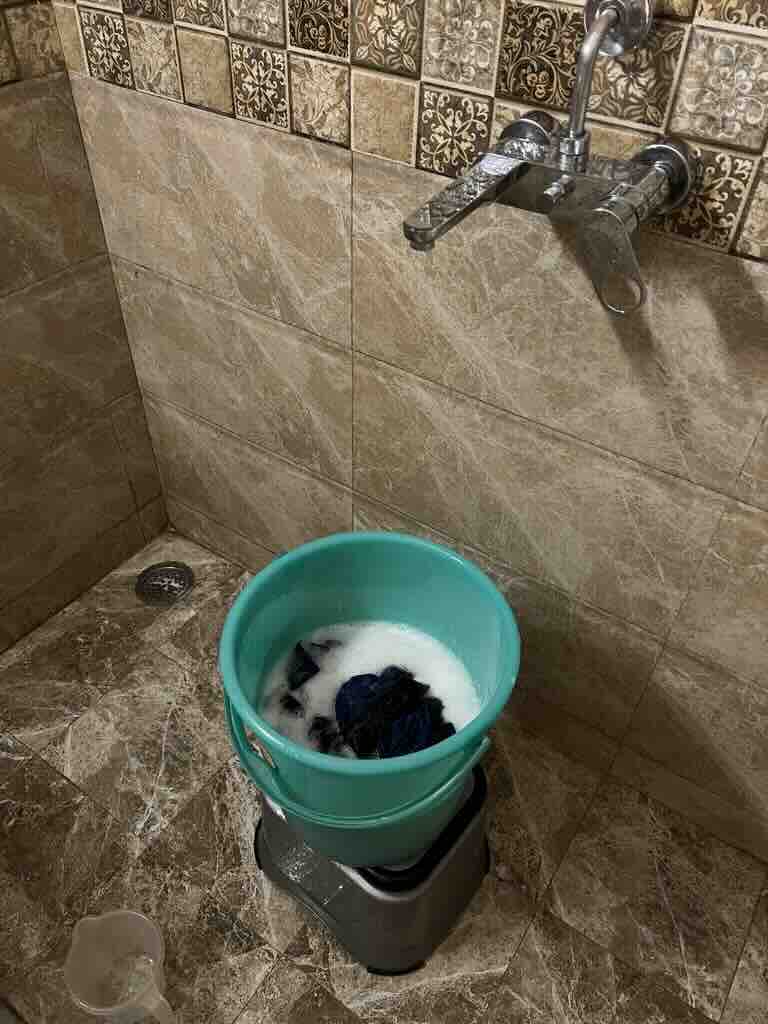
I fill the bucket, stir in a modest amount of washing powder, and submerge the clothes. I tend to use warm water for cottons and linens and cold water for synthetics. Is that technically correct for every garment? Probably not. Check the care label if you’re concerned.
Then I leave everything soaking for 30 to 60 minutes while I answer emails, check social media, or head out for a walk.
If the geyser isn’t working or there’s a power cut, cold water will do for plenty of everyday clothing.
Step 2: Become the washing machine
First I agitate the clothes in the bucket, pushing them down, lifting them, and squeezing soapy water through the fabric. I’m the washing machine’s agitator.
Then I work on each piece individually. Think of kneading dough: gather a garment on the shower floor or in the bathroom sink, press and fold it against the surface, then open it up, refold, and knead again. Pay extra attention to collars, cuffs, underarms, and any visibly dirty spots.
Cottons and linens can take a little more enthusiasm; I’m gentler with lightweight synthetics.
Knead as much as needed.
Step 3: Rinse without wasting water
As I finish kneading each item, I put it aside in a pile. Once the last piece is washed, I start rinsing.
One garment at a time, I run a gentle stream of fresh tap water over the fabric while squeezing and wringing out the soap. Repeat as necessary. The tap isn’t at full blast. A little water goes a long way when you’re working it through the clothing rather than letting it run aimlessly.
I’m conscious of water use in India. There’s no reason to leave a tap running wide open for every shirt and pair of underwear.
Step 4: Wring out the water
I usually wring each garment by hand before hanging it up. It works, although linen can emerge looking as though it’s been through a wrestling match.
For wrinkle-prone fabrics, a towel-roll is another option: lay the garment on a dry towel, roll them together, press out the moisture, then unroll and hang. I generally stick to wringing, especially with my quick-drying synthetics.
Step 5: Find somewhere to dry everything
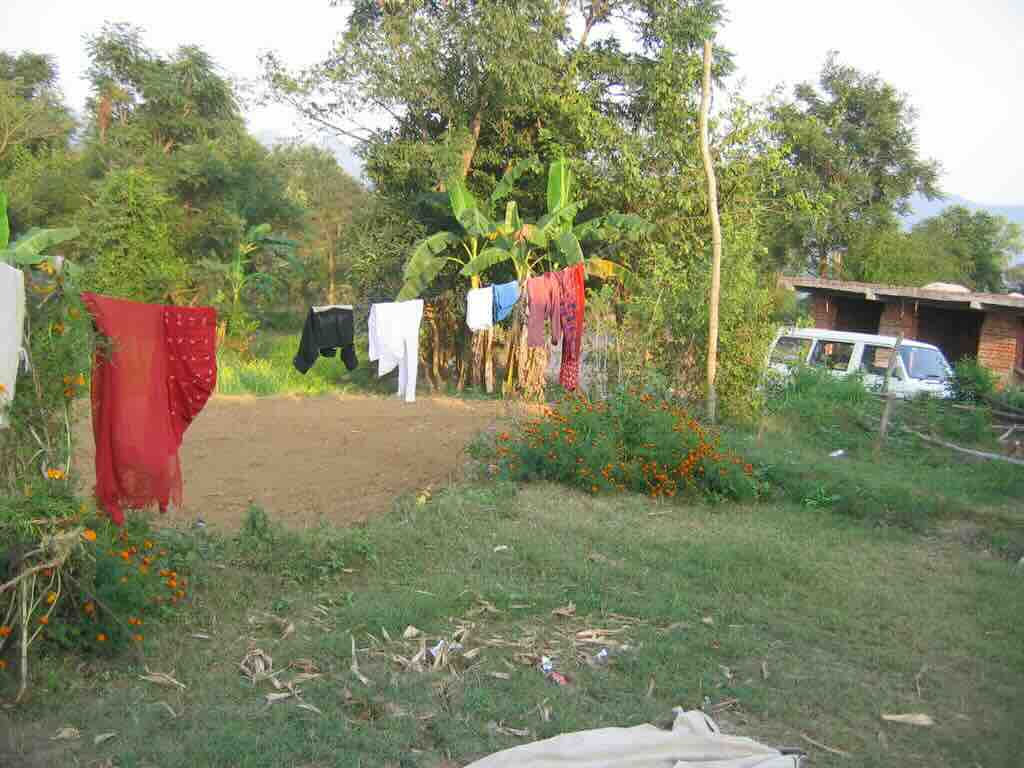
I always dry my laundry indoors. Clotheslines in private homes are one thing; hanging laundry over a hotel or guesthouse balcony is another, especially when the property prohibits it.
On a recent trip, my sister-in-law washed practically her entire suitcase and hung everything from our shared balcony. A notice in the room specifically forbade it. I pointed that out and asked her to bring it inside.
The laundry stayed out there all day.
Between hotel rules, a gust of wind, curious monkeys, and bird droppings, I’ll take my chances indoors.
I use hangers, shower rods, or clean, dry surfaces that won’t be damaged by moisture. Then I turn on the ceiling fans and rotate the clothing as necessary. Air circulation helps enormously, especially in humid weather.
When your laundry doesn’t dry in time
Plan ahead, plan ahead, plan ahead.
I’ve started too late, had a nighttime power cut stop the ceiling fan, and occasionally forgotten to switch the fan on in the first place. Duh.
More than once, I’ve checked out with damp laundry and draped it across the seats of my driver’s car, asking his forgiveness as we either opened the windows to the highway air or blasted the air conditioning. Neither is ideal.
Heavy cottons and linens need more time than synthetic travel clothes. If I’m leaving early the next morning, I try to wash well before evening. Sometimes I even remember to turn on the fan.
When a bucket isn’t the answer
For a one-night stay, a large load, or heavy garments, I’d use a local wash-and-fold shop or the hotel’s laundry service. I’ve covered the choices in Laundry Options for the India Traveler.
A final word on bucket laundry
I suspect Rakesh would get a good laugh knowing that, more than twenty years after he first pointed me toward that plastic bucket, I’m still doing laundry the same way.
You can wash the everyday dust of India out of your clothes, but you can’t wash the journey from the fabric of your memories.

 UPI: How India Changed the Way It Pays
 10 Essential Apps for Traveling in India in 2027