
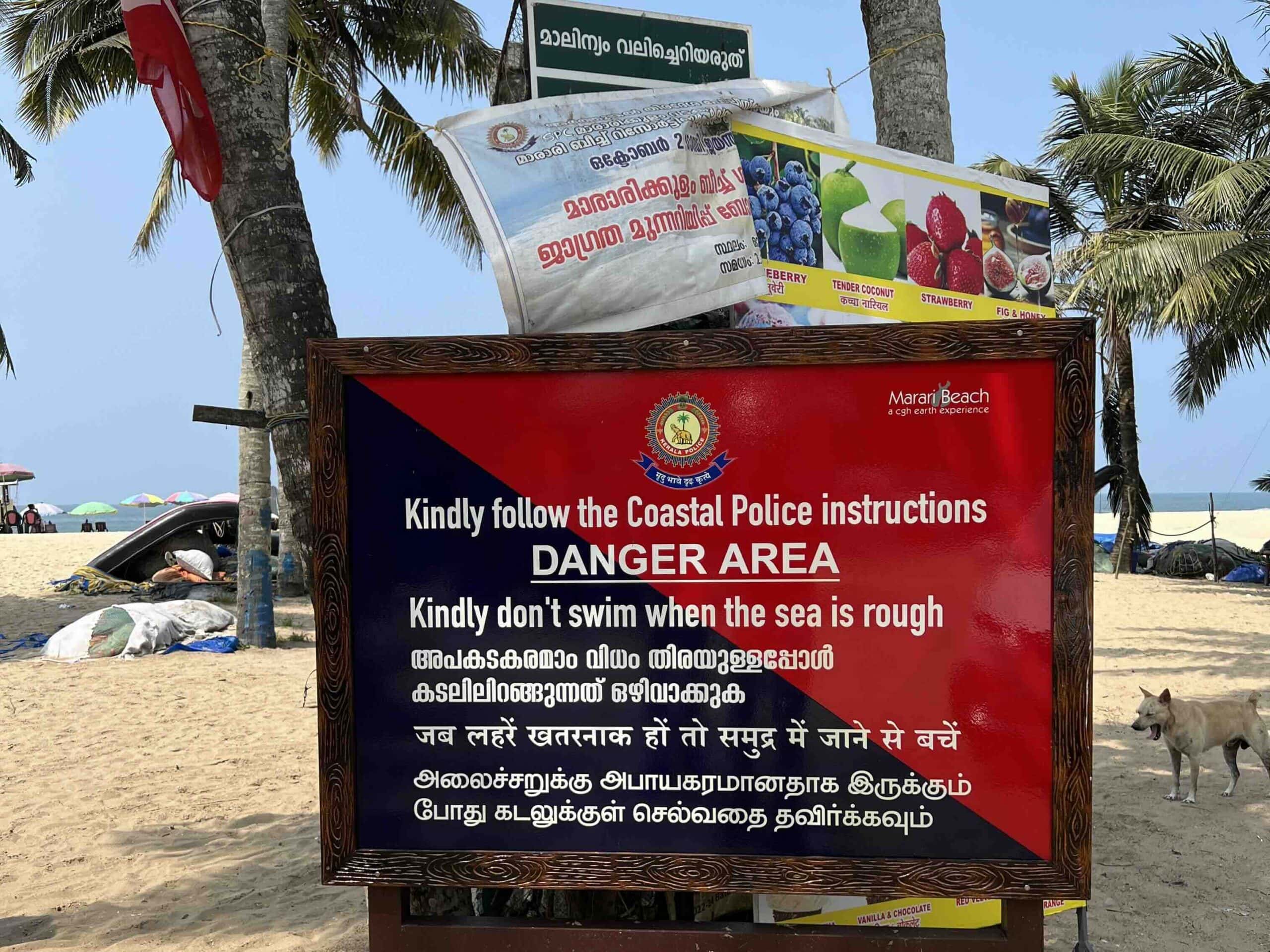
Travel south from Karnataka into Kerala and watch the lettering on the roadside signs change. The rounded characters of Malayalam are unmistakable, even if, like me, you haven’t a clue how to read them.
Perhaps the most surprising thing about traveling through Kerala is how little Malayalam I’ve needed to know.
Ordering food, asking directions, checking into hotels, shopping and striking up conversations have presented absolutely no difficulties. Occasionally, I’ve encountered people from northern India who have moved south to find work in the tourism industry, giving me an unexpected opportunity to practice my Hindi. But English has been, by far, my primary means of communication.
Have I attempted to learn Malayalam? No. Hindi is already kicking my ass on a daily basis.
In some ways, though, I find the ease with which I travel through Kerala a little disappointing. English has long been prominent throughout the state, but during my more recent travels, particularly in the cities, I’ve found myself noticing signs and storefronts where Malayalam seems increasingly absent.
As a traveler, I appreciate the convenience. As someone fascinated by India’s cultural diversity, I find myself wondering what we might be missing.
Malayalam at a Glance

Where Is Malayalam Spoken?
Malayalam is the principal language of Kerala, a narrow state situated between the Arabian Sea and the Western Ghats. From Kasaragod in the north to Thiruvananthapuram in the south, Malayalam provides a linguistic identity to a state with considerable religious, cultural and geographical diversity.
Beyond Kerala, Malayalam is spoken in Lakshadweep, Mahé (part of the Union Territory of Puducherry), and communities in neighboring Tamil Nadu and Karnataka.
Lakshadweep is particularly interesting. Malayalam and closely related speech varieties are used across much of the archipelago, while the island of Minicoy has its own linguistic identity through Mahl, a variety of Dhivehi.
Outside India, large Malayali communities have established themselves in the United Arab Emirates, Saudi Arabia, Qatar, Oman, Kuwait and Bahrain. Malayalam newspapers, radio stations, restaurants, cultural associations and community celebrations help maintain connections with Kerala across generations.
The Origins of Malayalam
Malayalam belongs to the Dravidian language family, alongside Tamil, Kannada and Telugu. Unlike Hindi, Punjabi and Bengali, its linguistic origins are not Indo-Aryan.
Malayalam developed from earlier southern Dravidian speech forms closely connected to Tamil. Over centuries, geographical separation, regional literary traditions and substantial Sanskrit influence helped shape its distinct identity.
Among the earliest surviving records associated with Malayalam are the ninth-century Vazhappally copper plates. These inscriptions offer a glimpse into the language’s early development and Kerala’s political and religious history.
Thunchaththu Ezhuthachan, traditionally associated with the 16th century, occupies a particularly important place in Malayalam literary history. Often described as the father of modern Malayalam literature, his devotional writings helped shape the language’s literary development.
In 2013, the Government of India granted Malayalam classical language status, recognizing its historical depth and independent literary heritage.
Understanding the Malayalam Script
Its rounded letters, loops and sweeping curves give the script a distinctive appearance. One commonly cited explanation for these shapes is the historical practice of writing on palm leaves, where curved strokes helped avoid splitting the writing surface.
Malayalam is written from left to right. Like many Indian writing systems, it is an abugida: consonant characters carry an inherent vowel that can be modified through additional signs.
The language also uses special consonant forms known as chillu letters, including ൻ, ൽ and ൾ, which represent consonants without an inherent vowel.

Today, the same language appears on smartphones, digital newspapers, social media platforms, electronic railway displays and computer keyboards. The script has undergone changes over time, including reforms that simplified aspects of writing and printing.
Can You Pronounce Malayalam?
The letter ള represents a retroflex sound produced by curling the tongue backward. Another distinctive letter, ഴ, represents a sound with no straightforward equivalent in English. It is often transliterated as zh, which helps explain the unfamiliar spelling of place names such as Alappuzha and Kozhikode.
Listen to Malayalam
Reading about Malayalam is one thing. Hearing the language spoken aloud offers an entirely different introduction to its sounds and rhythm.
What’s in a Name?
One of the small complications of planning a trip through Kerala is that the same city may appear under two different names. Older English spellings, many popularized during colonial rule, survive alongside modern official names. I use both Alleppey and Alappuzha, for example, depending on the context.
| Older English name | Modern name |
|---|---|
| Trivandrum | Thiruvananthapuram |
| Cochin | Kochi |
| Alleppey | Alappuzha |
| Calicut | Kozhikode |
| Quilon | Kollam |
| Cannanore | Kannur |
| Palghat | Palakkad |
| Trichur | Thrissur |
| Tellicherry | Thalassery |
The older names are not necessarily obsolete in everyday usage. Airline and railway systems can retain historical names or codes, such as TRV for Thiruvananthapuram and COK for Kochi. Try both spellings when searching for transportation or accommodation, and verify the actual station or airport before booking.
Malayalam Isn’t Spoken the Same Way Everywhere
Kerala stretches approximately 580 kilometers from north to south. Despite sharing a common language, the way people speak Malayalam differs according to geography, community and social background.
The Malayalam heard in northern Malabar may differ noticeably from that spoken in central Kerala or the southern districts historically associated with Travancore. Border communities may also incorporate elements of neighboring languages.
Kerala’s Mappila Muslim communities developed a tradition of writing Malayalam using a modified Arabic script known as Arabi-Malayalam. It became an important vehicle for religious writing, poetry and songs.
Malayalam and the Making of Kerala
Language played a significant role in shaping India’s political geography in the years following independence and Partition in 1947. While Partition divided British India into India and Pakistan, the newly independent Indian nation faced the separate challenge of integrating former princely states and reorganizing its internal boundaries.
On November 1, 1956, nine years after independence, the modern state of Kerala was formed under the States Reorganisation Act, bringing together much of the Malayalam-speaking territory previously divided among Travancore-Cochin, the Malabar district and the Kasaragod region of South Canara.
The reorganization reflected a broader movement across India to establish states along linguistic lines, allowing communities sharing a common language to develop a more cohesive regional and political identity.
November 1 is celebrated as Kerala Piravi, literally meaning the birth of Kerala.
Malayalam in Everyday Life

Walk into a neighborhood tea shop in Kerala and you’ll frequently find a Malayalam newspaper resting on a table. Malayalam has a particularly vibrant print media tradition. Newspapers such as Malayala Manorama, Mathrubhumi and Deshabhimani serve readers across the state and beyond.
Television news, radio programming, advertising, religious broadcasting, literature and digital media reinforce the language’s everyday presence.
Malayalam Literature
Vaikom Muhammad Basheer is known for his humor, humanity and accessible storytelling. His work offers an intimate perspective on Kerala’s social and cultural life.
Thakazhi Sivasankara Pillai‘s novel Chemmeen explores love, community and tradition against the backdrop of Kerala’s coastal fishing communities.
M. T. Vasudevan Nair, a major figure in Malayalam literature and cinema, retells the Mahabharata from Bhima’s perspective in Randamoozham. English translations provide another way to explore Kerala without necessarily learning the language.
Malayalam Cinema
The Malayalam film industry, sometimes referred to as Mollywood, has developed an identity distinct from Hindi-language Bollywood. Its films frequently explore family relationships, social expectations, village life, migration, religion, gender roles and the complexities of contemporary Kerala.
English and Hindi in Kerala
Venture beyond the areas commonly visited by international travelers and you may encounter people who are much more comfortable communicating in Malayalam. A translation app, a little patience and a willingness to gesture can go a surprisingly long way.
Hindi can be useful when communicating with workers who have moved to Kerala from northern India. Nevertheless, I wouldn’t arrive in Kerala expecting Hindi to be understood everywhere.
India has no constitutionally designated national language. Hindi is an official language of the Union government, alongside the use of English, but that does not make Hindi the national language of every Indian.
Malayalam Words You’ll Encounter in Kerala
There are certain Malayalam words that become particularly interesting when connected to the food, landscapes, architecture and cultural traditions you’ll encounter while traveling.
| Malayalam | Say it | Meaning |
|---|---|---|
| സദ്യ | Sadya | Traditional feast served on a banana leaf |
| കായൽ | Kaayal | Lake, lagoon or backwater |
| ചായക്കട | Chaayakkada | Tea shop |
| മുണ്ട് | Mundu | Traditional waist-wrapped garment |
| പൂക്കളം | Pookkalam | Decorative floral arrangement |
| കെട്ടുവള്ളം | Kettuvallam | Traditional boat with tied or stitched components |
| തേങ്ങ | Thenga | Coconut |
| നാലുകെട്ട് | Naalukettu | Traditional courtyard house |
English Words with Malayalam Roots
Even if you’ve never spoken a sentence in Malayalam, you may already use words that traveled from the Malabar Coast into English. Centuries of maritime commerce, including Portuguese trade, carried the vocabulary of local crops and materials far beyond India.
Jackfruit reached English through Portuguese jaca, from Malayalam chakka. Coir, the coconut fiber used in ropes and doormats, is traced to Malayalam kayar, with related forms in Tamil. Copra, the dried coconut kernel used to produce oil, came through Portuguese from koppara. And teak, the timber familiar to furniture makers, has roots in Malayalam tekka and related Dravidian vocabulary.
These words tell a story about Kerala’s agricultural economy and its long commercial relationship with the wider world. For more on their origins, see the Association of British Scrabble Players’ Malayalam word origins and the Online Etymology Dictionary entries for teak and copra.
Essential Malayalam Words and Phrases for Travelers
Even if you communicate entirely in English while visiting Kerala, there’s nothing wrong with making an effort to speak a little Malayalam. The following transliterations are simplified for English-speaking travelers rather than presented using formal linguistic notation.
Kerala Tourism: 100 Malayalam words and expressions

Reading Signs in Kerala
Railway station signs in Kerala commonly include Malayalam, Hindi and English. Road signs and commercial signage may feature Malayalam and English, while some local buses display their destinations primarily in Malayalam.
One particularly interesting feature of Indian English is the use of the word hotel to describe an establishment serving food, even when it provides no accommodation. Don’t be surprised if a small roadside hotel in Kerala turns out to be somewhere to enjoy breakfast rather than somewhere to spend the night.
Is Malayalam Losing Ground to English?
But how does a society embrace an international language without diminishing its own?
The growing visibility of English that I’ve noticed in some of Kerala’s cities doesn’t necessarily indicate a decline in the number of people speaking Malayalam. A commercial storefront displaying its name in English tells us very little about the language spoken inside the owner’s home.
The Kerala government’s Malayalam Mission provides opportunities for Malayali communities living outside the state and overseas to maintain connections with their mother tongue through language education. The Malayalam Language Act, 2025, published as Kerala Act 3 of 2026, further addresses Malayalam’s role in state administration and education.
English-medium schooling and international employment can create strong incentives to develop English fluency. Yet the language of instruction, the language used at work and the language spoken around the dinner table need not be the same. For families raising children overseas, maintaining Malayalam may require deliberate effort through conversations with relatives, community classes, films and books.
Manglish: Malayalam in the Digital Age
On messaging apps and social media, Malayalam doesn’t always appear in Malayalam script. Informal Latin-letter spellings are often called Manglish, a term also used for mixing Malayalam and English. A friend might type Sukham aano? rather than സുഖമാണോ? to ask how someone is doing. Spellings vary from person to person.
Romanized messaging can make communication convenient, particularly for people accustomed to English keyboards. It also raises an interesting distinction between preserving a spoken language and maintaining literacy in its traditional script. Modern Malayalam keyboards, predictive text and digital publishing offer other ways to keep the script in everyday use.
The challenge is not necessarily choosing between Malayalam and English. It is finding ways for both languages to flourish without treating one as inherently more valuable than the other.
Learning Malayalam
| Resource | Useful for |
|---|---|
| Malayalam Mission | Language education and cultural preservation |
| Google Translate | Everyday translation |
| Wiktionary Malayalam | Exploring vocabulary |
A Language Beyond Words
The script on a restaurant sign, the name of a traditional garment, the dialogue in a film, the words exchanged over a cup of tea — all offer little glimpses into the cultural identity of Kerala.
English may get me through Kerala without so much as an awkward conversation. That doesn’t mean Malayalam has nothing to teach me.
Explore Kerala
Kerala: A State Guide — Explore all 14 districts, regional culture, landscapes, food and transportation.
Festivals of Kerala — Discover Onam, Vishu, Thrissur Pooram and other celebrations.
Further Reading & Sources
Census of India · Malayalam Mission · Kerala Tourism · Malayalam Language Act
Part of Full Stop India’s Languages of India series, exploring the 22 languages recognized under the Eighth Schedule of the Indian Constitution.

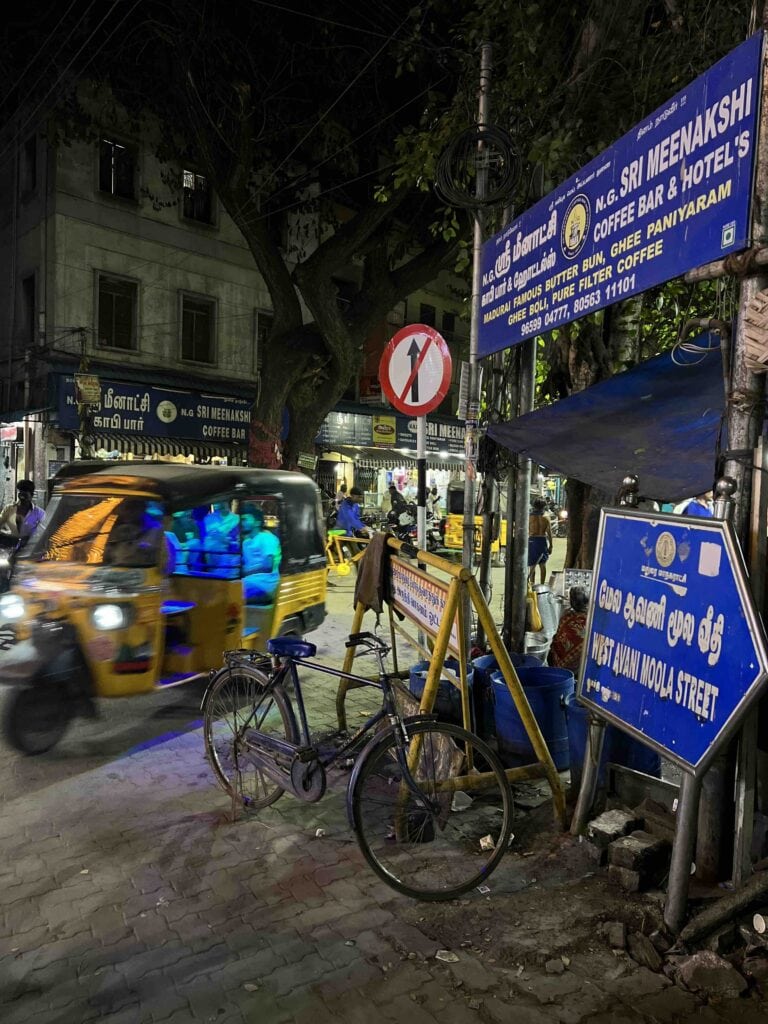 Tamil: The Language of Tamil Nadu
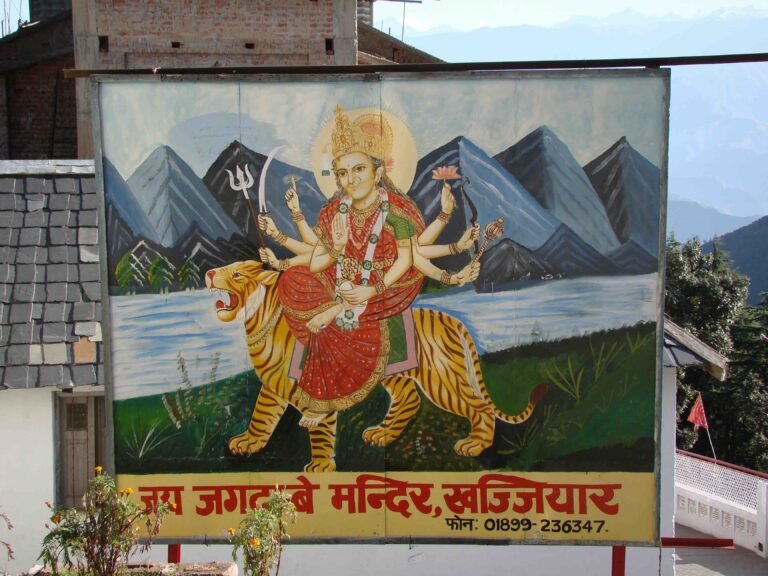 Why Do Hindu Gods and Goddesses Have So Many Arms?
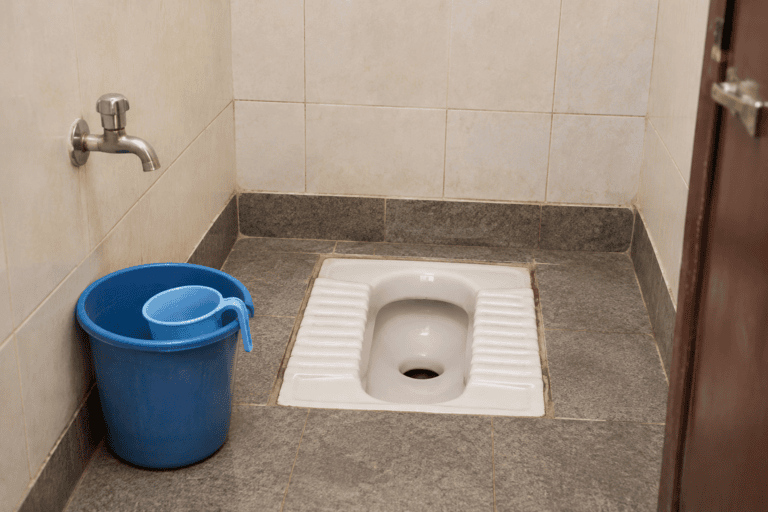 The Indian Toilet: Everything You Were Afraid to Ask