
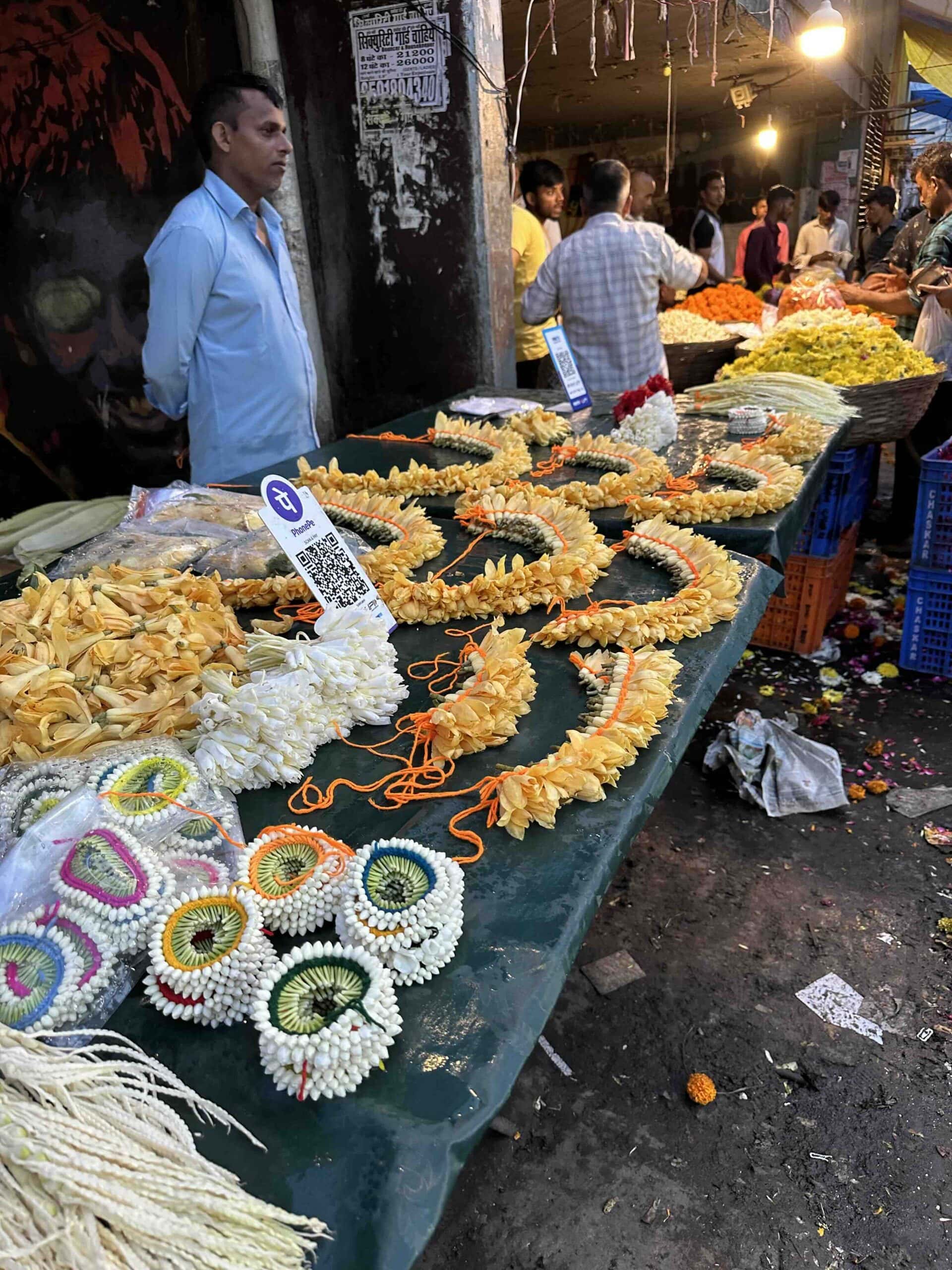
When I returned to India in 2024 after an eleven-year absence, one of the biggest changes I noticed wasn’t in the buildings, the roads or the cars. It was in the way Indians paid for things.
EVERYONE seemed to accept UPI. The chaiwallah, the taxiwallah, the dhobiwallah, the hotelwallah, the restaurantwallah, even the jewelrywallah. Those little QR codes were everywhere while I was still fishing around in my pocket for change.
I’ll admit it. I had a serious case of FOMO.
Whenever I asked how I could use UPI, I received much the same response. “It’s only for Indians.” It was never said in a disrespectful way. It was more of an awww, shucks, you need an Indian bank account.
“Okay, then let’s get me an Indian bank account!”
That suggestion was usually met with a few chuckles.
After returning home in 2024, I Googled relentlessly, determined to find a way to use UPI on my next trip. Somewhere in all that searching, I discovered an app called MONY. I downloaded it before my 2025 trip and completed activation after arriving in India.
And it worked like a charm. Well, mostly.
What Is UPI?
UPI stands for Unified Payments Interface. Created by the National Payments Corporation of India (NPCI), it lets people pay each other instantly in Indian rupees, even when they use different banks or participating payment apps. UPI itself isn’t an app or a currency. For more on the rupee, see The Indian Rupee: ₹, Rs, INR & a Few Surprises.
Can Foreign Tourists Use UPI?
Absolutely! And you don’t need an Indian bank account. Eligible foreign travelers can load rupees into a prepaid wallet through participating apps under NPCI’s UPI One World framework and pay merchants across India.
Which app should you choose?
MONY is the app I used. CheqUPI is another option. UPI One World is the underlying tourist-wallet framework, not a single universal app. Check your eligibility and activation requirements before leaving home. I have not personally tested CheqUPI.
Editorial disclosure: Full Stop India has no commercial or affiliate relationship with MONY. This is not a sponsored article, and the experiences shared here are entirely my own.

My Experience With MONY
I downloaded MONY in the United States but couldn’t activate it until I arrived in India and connected to an Indian cellular network. Once there, I simply followed the instructions. Within hours I was ready to use it. Tension-free!
Suddenly, I could pay for lunch, entrance tickets, shopping and countless other daily expenses with my phone. Instead of loading up my pockets with cash before leaving the hotel each morning, I might throw ₹2,000 in my pocket and head out for the day. What a game changer.
Does digital money feel like real money?
Here’s the downside for me. Much like using a credit card, paying with UPI began to feel like spending fake money! When I’m carrying cash, I can physically see my supply dwindling. I’m thinking about when I’ll next need to find an ATM. With UPI, it was so easy to refill my balance that I was topping up every four or five days. I was using it for practically everything! The money was very real, of course.
Interestingly, no merchant ever expressed a preference for UPI over cash. It was simply another way to settle the bill.
The personal QR code problem
MONY told me upfront that I wouldn’t be able to pay personal UPI accounts. That was rarely an issue during my trip, but it is an important distinction. A merchant QR code and a personal QR code might look identical. Tourist wallets are intended for merchant payments, not sending money to individuals. If the recipient only has a personal account, have another way to pay.
What Does UPI Cost a Tourist?
Loading a tourist wallet can cost money even when paying a merchant does not. Check the funding fees, exchange rate and what it costs to recover unused funds. I was able to request a return of my remaining balance at the end of my trip.
MONY vs. CheqUPI: what does ₹10,000 cost?
Both providers publish a card funding charge of approximately 3.5%. On a hypothetical ₹10,000 reload, after initial wallet limits have passed, that is about ₹350 in funding fees alone. The figures below are published provider terms checked November 21, 2026, not a live checkout test or a personal review of CheqUPI.
| Feature | MONY | CheqUPI |
|---|---|---|
| Registration | Confirm in app | Free for most eligible nationalities; exceptions apply |
| Verification | Required | Required |
| Card funding ₹10,000 | About ₹350 | About ₹350 |
| Bank transfer | Published fee 1.99%, where supported | Confirm applicable charges |
| Inactivity | ₹399 monthly under published 30-day conditions | Not specified in FAQ |
| Wallet closure | ₹399 | Confirm with provider |
| Unused balance | Request deactivation in app; remaining balance returned to funding source | Request through support; normally 8–10 business days for unused funds |
Check the actual amount credited, card issuer charges and exchange rate before confirming. Fees can change. Sources: MONY funding guide, MONY terms, MONY refunds and CheqUPI FAQs.
How Do You Pay With UPI?
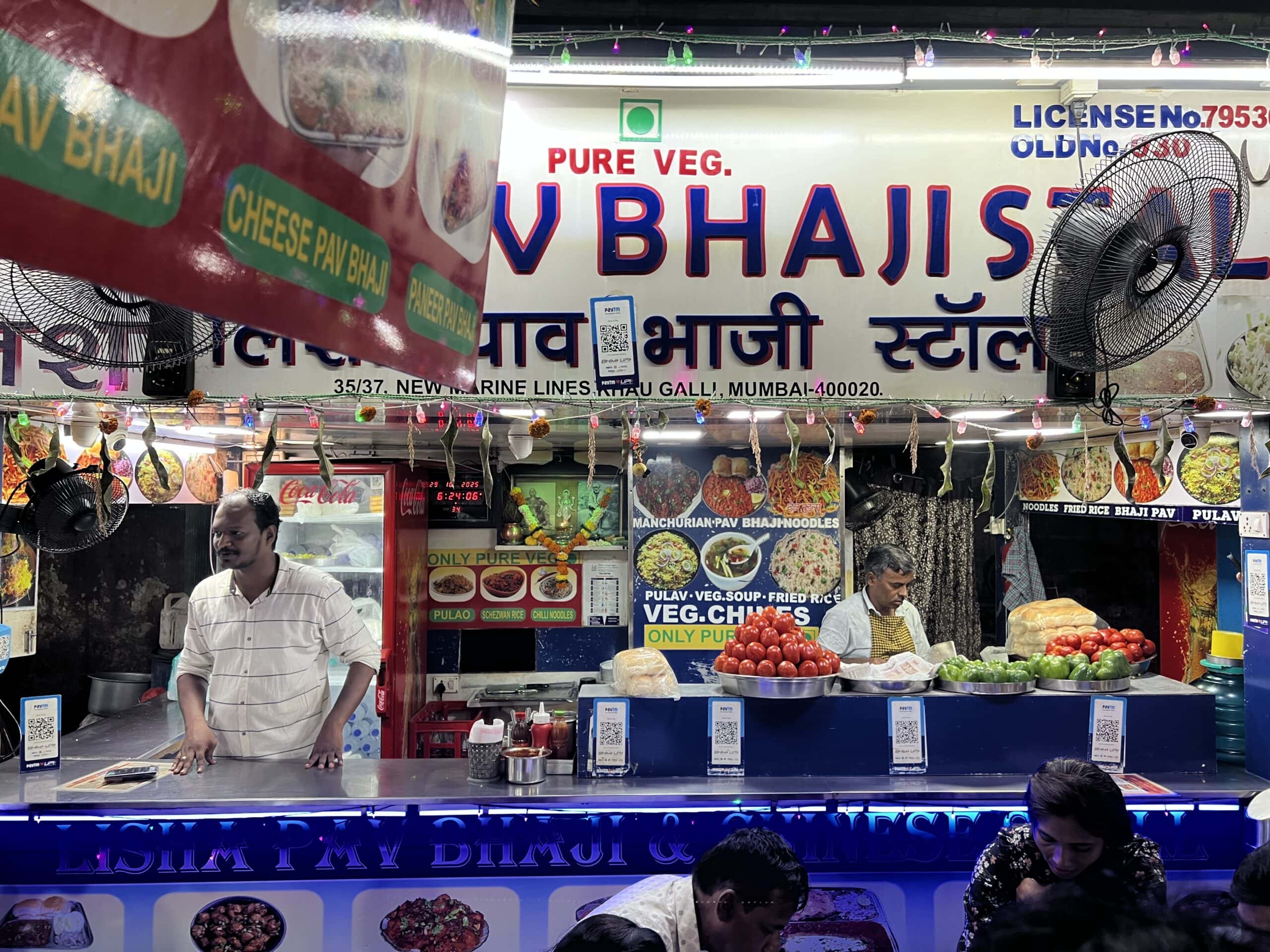
At a shop, the merchant may display a printed QR code. Some businesses generate a new code for each purchase with the amount already entered. Others use a permanent code and ask you to enter the amount yourself.
At some dhabas and restaurants, the UPI QR code is printed directly on your bill. You can scan the code, confirm the amount and pay right at your table without having to visit the cashier.

Online purchases work a little differently. You may be directed to your payment app or asked to enter your UPI payment address. Regardless of how you pay, always wait for confirmation before attempting another payment.
The Sound of Money in India
One of my favorite sounds in modern India is the sound of a successful UPI payment.
Sitting on shop counters and alongside cash registers are little devices called soundboxes. They announce incoming payments, allowing merchants to confirm receipt without constantly checking their phones. A merchant can keep serving customers rather than relying on a payment screenshot shown by a stranger.
I grew rather fond of that little sound.
What made it particularly entertaining was watching Uncle-ji’s face as I pulled out my phone. I suspect many shopkeepers had previously watched foreign tourists attempt to scan their QR codes, assuming they could pay through Apple Pay or some other banking app from back home.
But then came that familiar chime announcing my successful payment. Uncle-ji’s face would light up.
“How?”
Suddenly, I was the one explaining how something worked in India! I’d show curious merchants the MONY app and explain how I was able to make UPI payments without an Indian bank account. Such a simple transaction, yet it became an opportunity for conversation. And those little interactions are among the things I enjoy most about traveling in India.
When UPI Doesn’t Work
There were two days during my 2025 trip when paying with UPI became an exercise in patience. Error code after error code. I wasn’t being charged for the failed transactions, but being new to both MONY and UPI, I couldn’t determine which was causing the problem.
Eventually, I started asking vendors. Several told me they’d been experiencing intermittent problems during those same periods. Apparently, I wasn’t alone.
And that ₹2,000 in my pocket? It came in handy.
If a payment fails or is pending, check your transaction history and wallet balance before paying again. Keep the transaction reference and contact the wallet provider if a debit has not been resolved. Don’t assume an error message means nothing was deducted.
Getting your money back is another story
On one occasion, I purchased an admission ticket through the Archaeological Survey of India (ASI) that was supposed to include a companion tour entry ticket. I was charged for both, but only one ticket was generated.
I contacted ASI. No response. Not entirely surprising.
I contacted MONY. They told me to contact ASI.
Well, that was helpful.
I never received the second ticket, never got to take the additional tour and never recovered the money. Oh well.
There’s an important distinction here. The payment itself was successful, but I didn’t receive the service I paid for. Don’t assume a merchant dispute will be handled in the same way as a failed transfer or a credit card dispute.
Keep Your Money Safe
Check the recipient and amount before paying, wait for the merchant’s confirmation and never share your PIN or one-time password. Never authorize an outgoing payment to receive a refund. For suspected fraud, contact your wallet provider and India’s National Cyber Crime Reporting Portal or call 1930.
India’s Digital Payment Revolution
UPI launched in 2016, the same year India withdrew its old ₹500 and ₹1,000 notes. Affordable mobile internet, smartphones and the pandemic helped accelerate its adoption.

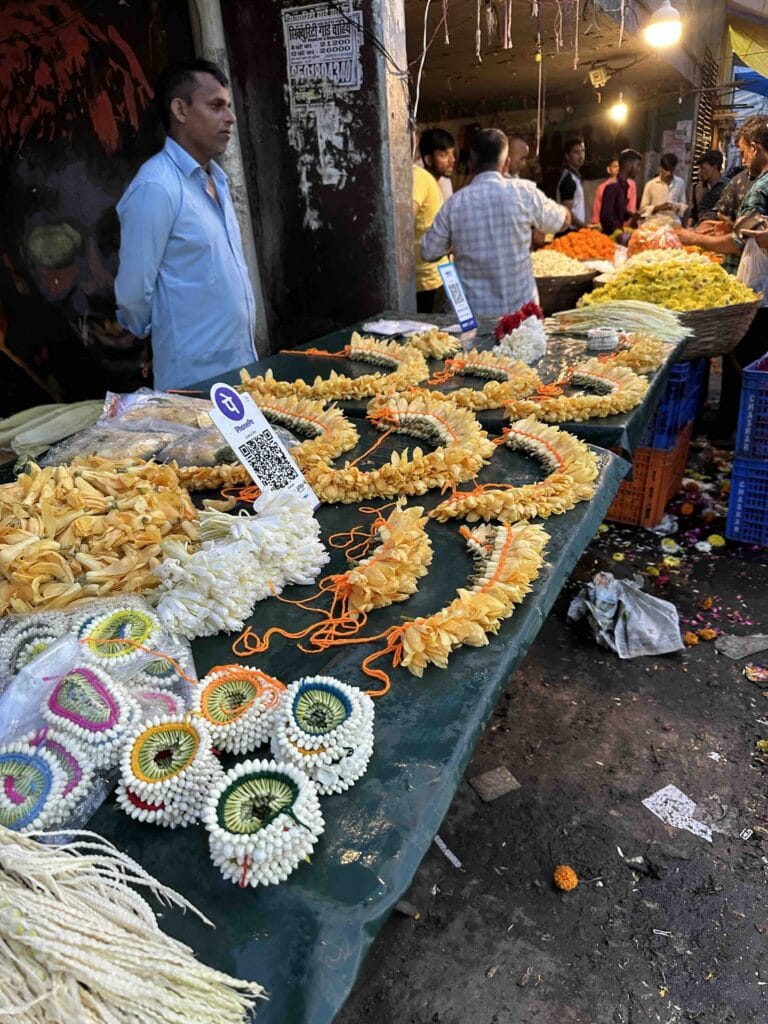
Look again at the flower market photograph at the top of this article. A printed QR code lets a flower vendor accept digital payments without an expensive card terminal. Even my ₹20 cup of chai can be paid for electronically. According to the Ministry of Finance, 86% of merchant UPI transactions in FY 2025–26 were below ₹500. Payment companies can earn money from services such as soundbox subscriptions, while merchant fees depend on the type of transaction.
Coming home to America after my 2025 trip, I couldn’t help feeling that we were behind India in the way we pay for things. What impressed me was how seamlessly one payment system reached from a hotel to a roadside chai stall. I missed that simplicity.
India hasn’t gone cashless, though. Not everyone has reliable internet, a smartphone or access to banking, and RBI figures show currency in circulation continues to grow. Cash still has a place.

Am I Ready to Give Up Cash?
Not quite. But after using UPI throughout my 2025 trip to India, I’m hooked!
If you’re traveling to India in 2026 or beyond, I cannot stress enough how much I recommend getting yourself set up with UPI. The benefits are obvious. Beyond the convenience of not having to carry so much cash, there’s something liberating about being able to pay for a cup of chai, pick up a few things at a local market or settle your lunch bill at a roadside dhaba with your phone. It will transform the way you experience India.
And no, this isn’t an advertisement for MONY. This is my real experience using the app and, more importantly, my experience using UPI. MONY happened to be the solution I found. As more options become available to foreign travelers, I’ll certainly be curious to try them.
Will I still carry cash and bring my debit and credit cards? Absolutely. I experienced enough hiccups with UPI to know better than to rely on any one form of payment.
For more on how I handle my money while traveling, read Money, ATMs & Credit Cards in India.
But that little soundbox announcing my payment and the look on Uncle-ji’s face? That hasn’t gotten old yet!

 10 Essential Apps for Traveling in India in 2027
 The Indian Rupee: ₹, Rs, INR & a Few Surprises