

Updated October 2026: Originally published in October 2010, this article has been revised to reflect India’s updated 2026 baggage and Customs regulations.
From luggage and duty-free purchases to prescription medications and cash, here’s what travelers should know about Indian Customs before arriving.
I’ve been traveling to India since 2005, and in all those years, I’ve never been stopped by Indian Customs.
I’ve had my luggage opened and inspected by airport security while taking domestic flights within India. That’s a different process, though, and one worth distinguishing from Customs when you first enter the country.
Most travelers arriving with their own clothes, electronics, toiletries and ordinary personal belongings will have little reason to worry. Still, there are allowances and restrictions worth knowing, particularly if you’re bringing gifts, new merchandise, substantial amounts of cash or prescription medications.
When I originally wrote about Indian Customs in October 2010, the official baggage allowances still referred to portable typewriters, transistor radios, rolls of photographic film and videocassettes. That gives you some idea of how much has changed.
India introduced updated baggage rules in February 2026, making this a good time to revisit the subject.
Your suitcase isn’t a shipment of imported goods
The important distinction is between your own USED personal belongings and NEW merchandise you’re bringing into the country.
Your clothing, shoes, toiletries, laptop, phone, camera and other ordinary travel items are generally treated as personal effects when they’re appropriate for your trip.
You don’t need to arrive with a nearly empty suitcase or worry that every electronic device you own counts against a shopping allowance. I typically travel with a phone, laptop or tablet, camera equipment and probably one or two charging cables for my devices.
New merchandise is a different matter. Gifts, boxed electronics and items purchased abroad to bring into India can be subject to baggage allowances and customs duty.
Under the 2026 baggage rules, the general duty-free allowance for eligible new goods brought by foreign tourists arriving by air or sea is ₹25,000, separate from qualifying used personal effects. The precise allowance and exclusions depend on the traveler’s status and the type of goods.
For an idea of what that means in dollars, use this ₹25,000 INR-to-USD converter. Exchange rates change, so a fixed dollar equivalent quickly becomes outdated.
If you’re arriving with ordinary used belongings, this distinction is unlikely to affect you. If you’re bringing several new devices, expensive gifts or goods for someone else, it’s worth reading the rules carefully.
Alcohol and tobacco allowances
Indian Customs has specific duty-free limits for alcohol and tobacco. For eligible arriving passengers, the allowances under the 2026 rules are:
- Alcoholic liquor or wine: Up to 2 liters
- Cigarettes: Up to 100
- Cigars: Up to 25
- Tobacco: Up to 125 grams
These are limits, not suggestions about what you should bring. Quantities above the allowance may be subject to duty or additional restrictions. Check the current official guidance if these allowances matter to your plans.
What about duty-free shopping at the airport?
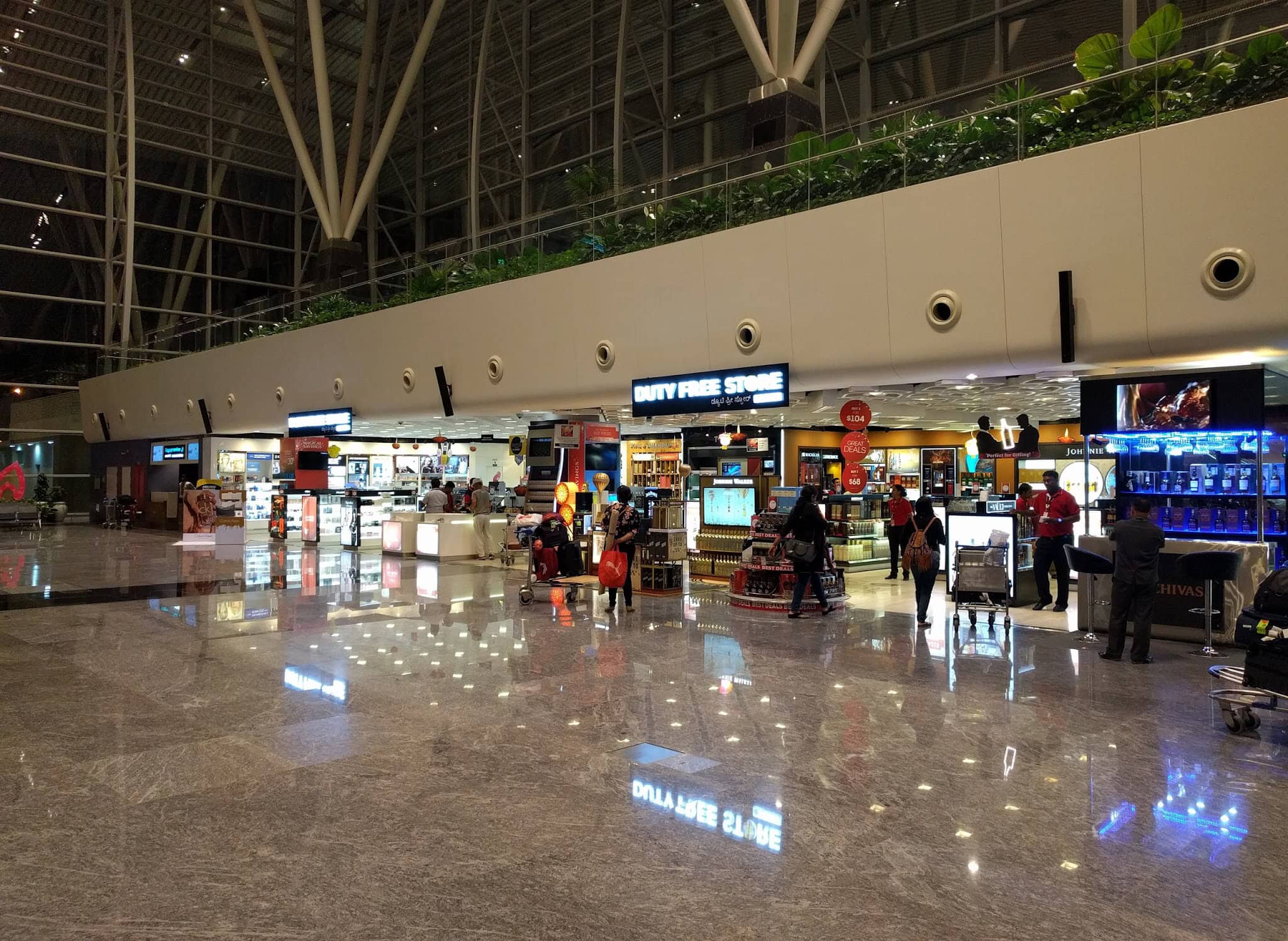
Many international airports in India have duty-free shops, including shops in the arrivals area.
I’ve never actually bought anything at one of them.
Usually, after a long flight, I’m more interested in getting through the airport and reaching my hotel. A few days later, once I’ve adjusted to Indian Standard Time, I occasionally wonder why I didn’t stop and pick something up.
The important thing to understand is that buying something at an airport duty-free shop doesn’t automatically exempt it from India’s Customs limits. Purchases are still subject to applicable allowances and restrictions.
If you’re planning to buy alcohol or tobacco on arrival, keep the limits in mind.
Carrying foreign currency into India
You can bring foreign currency into India, but larger amounts may require a declaration.
- More than US$5,000 in foreign currency notes, or the equivalent in another currency.
- More than US$10,000 in total foreign exchange, including notes and travelers’ checks.
Travelers’ checks. Does anyone still use travelers’ checks? Is that even a thing anymore?
The thresholds apply to the relevant combined amounts, not just US dollars.
For more about exchanging money, withdrawing cash and using cards in India, see my guide to Money, ATMs & Credit Cards in India.
My little starting bank of rupees
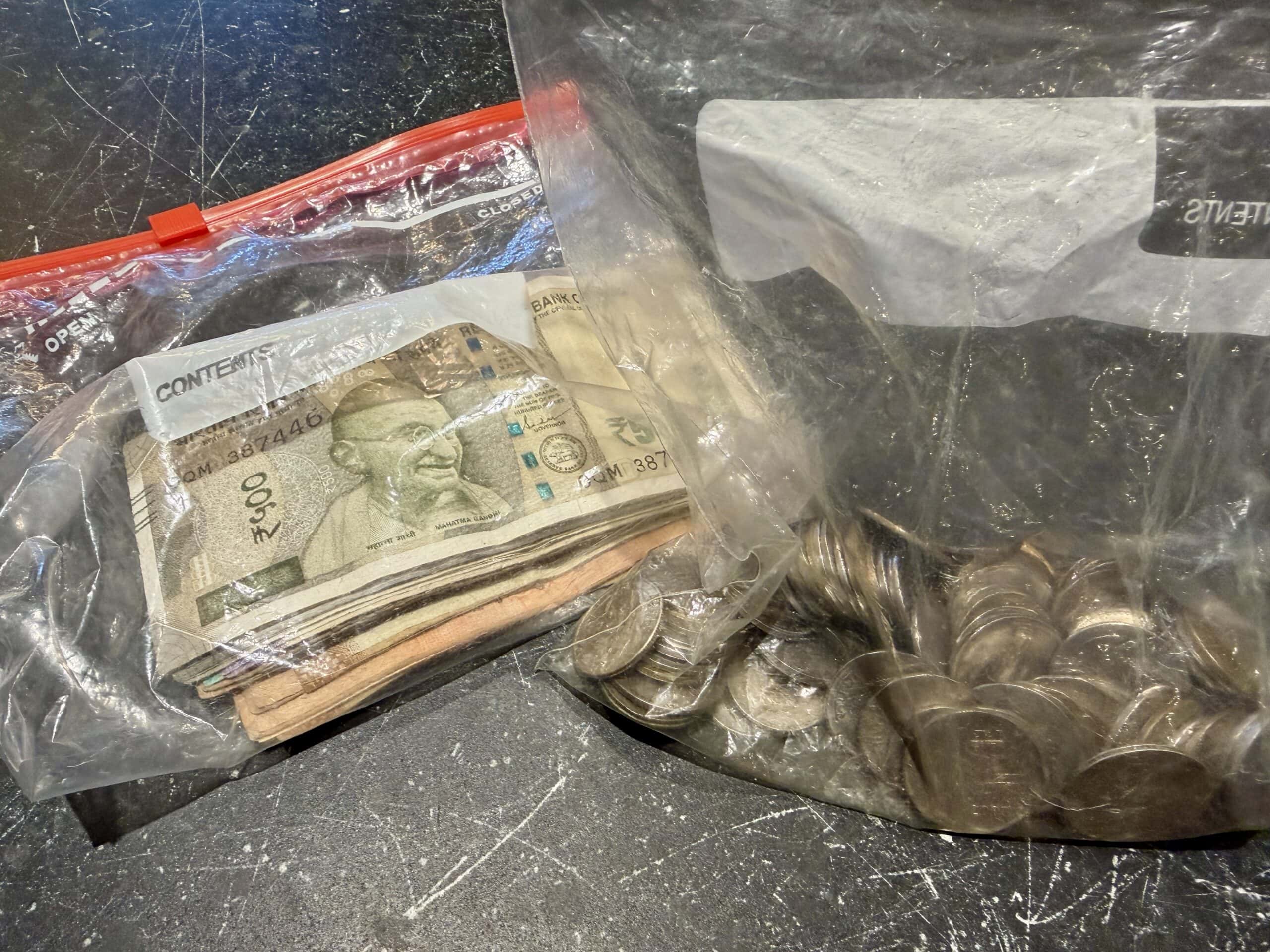
Whenever I return home from India, I generally bring back approximately ₹5,000 in leftover currency. I save it for the next trip.
It’s my starting bank, enough to pay for small purchases, tips and other incidentals during the first day or two, sometimes three, without immediately looking for an ATM.
I’ve never been questioned about this money by Indian Customs, either arriving or departing. That is simply my experience, not a substitute for the regulations.
Under RBI currency regulations, eligible visitors residing outside India (other than citizens of Pakistan or Bangladesh) may generally bring up to ₹25,000 in Indian currency into India and take up to ₹25,000 out, subject to applicable conditions. Check the Reserve Bank of India’s current guidance before traveling, particularly if your route or circumstances are unusual.
For me, having a modest amount of rupees ready on arrival is one less thing to think about after a long flight.
Prescription medications
I always recommend bringing enough prescription medication for your entire trip, plus a little extra in case your return is delayed. Keep essential medications in your carry-on bag, not in checked luggage.
It’s sensible to retain medicines in their original labeled packaging and carry a copy of your prescription or a doctor’s letter, particularly if you travel with several medications.
Certain controlled substances and medications containing narcotic or psychotropic ingredients can be subject to additional restrictions or documentation requirements. Check those rules before departure rather than assuming a valid prescription from home automatically permits entry.
Prohibited and restricted items
India restricts or prohibits the import of certain goods. These can include narcotic drugs, weapons and ammunition, certain wildlife products, and other regulated items.
Some categories require advance authorization, permits or specific declarations.
Cannabis is one subject that deserves particular attention because India’s laws distinguish between different substances and preparations. For more background, read Pot in India: Ganja, Bhang, Sadhus and the Law.
If you’re carrying something unusual, expensive or potentially restricted, investigate the requirements before packing it.
Green channel or red channel?
After collecting your checked luggage, international arriving passengers generally proceed through the Customs area.
The green channel is for travelers who have nothing to declare. The red channel is for travelers who have goods or currency requiring declaration or Customs assessment.
Choosing the green channel is itself a declaration that you’re not carrying anything that needs to be reported. Customs officers can still stop and inspect luggage.
If you’re uncertain whether something needs to be declared, ask rather than guessing.
What is ATITHI?
ATITHI is an Indian Customs online facility intended to help international arriving passengers submit relevant Customs declarations. The official portal is ATITHI — Indian Customs.
For travelers who have goods or currency requiring declaration, it may be useful to review the current online submission process before arriving.
If you’re entering with ordinary personal belongings and nothing to declare, you generally don’t need to submit a Customs declaration simply because you’re visiting India. As with other government services, procedures can change. Check the official portal for current instructions.
Where to check the latest rules
India’s baggage regulations contain exceptions and distinctions that a general travel article can’t cover exhaustively. For official information, start with:
- Central Board of Indirect Taxes and Customs — International Travellers
- Baggage Rules, 2026 — Delhi Customs (PDF)
- Delhi Customs — Guide to Travellers
- Reserve Bank of India for rules concerning Indian and foreign currency.
A few final thoughts
For most tourists arriving with ordinary personal belongings, Indian Customs should be straightforward. Know the allowances, declare anything that requires it, and check the regulations before traveling with unusual or restricted items.
India’s baggage rules have changed considerably since the original article was published in 2010. The updated regulations are worth understanding, particularly if you’re bringing new purchases or gifts into the country.

 UPI: How India Changed the Way It Pays
 10 Essential Apps for Traveling in India in 2027