

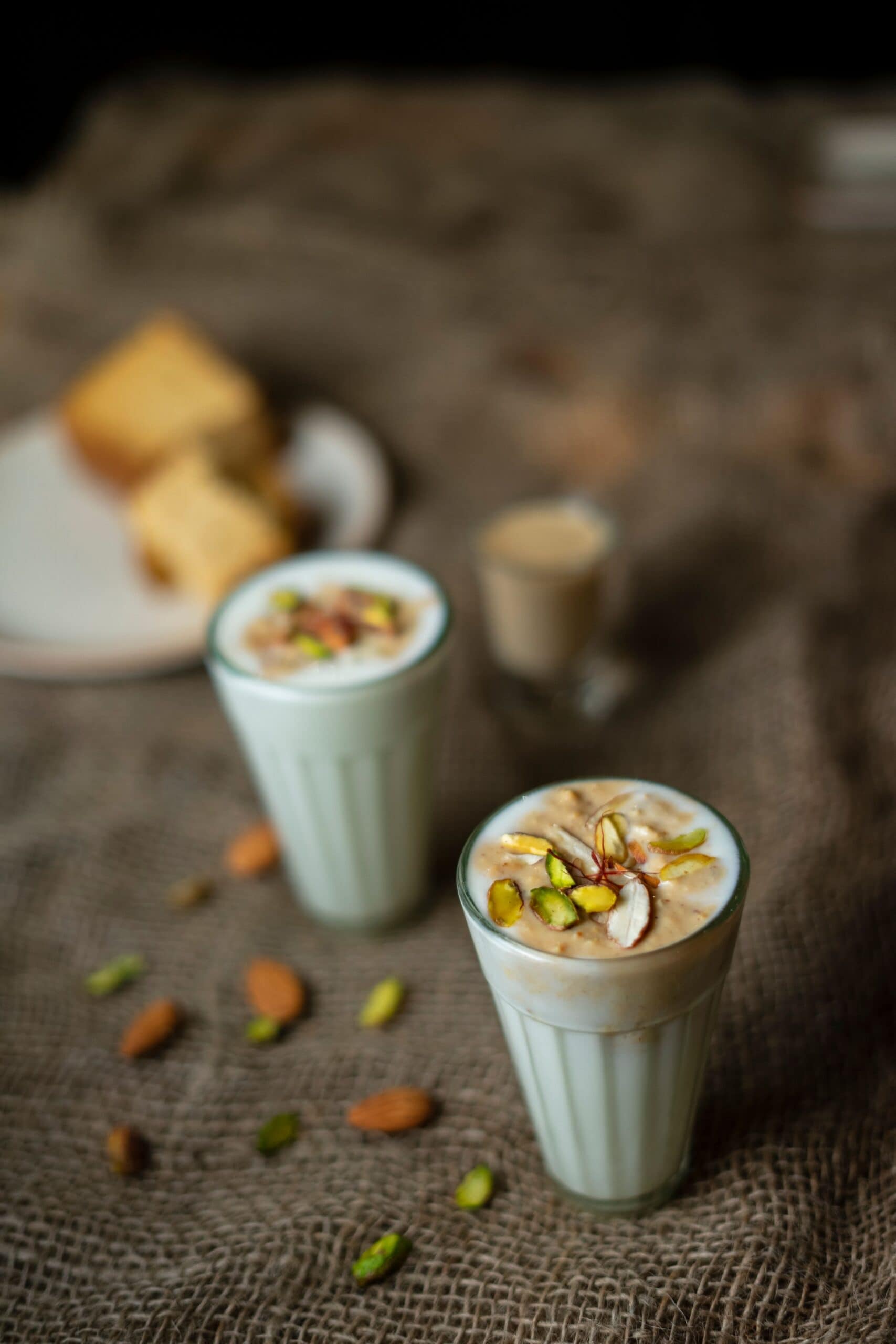
During my earlier trips to India, a day without a sweet lassi was rare. Breakfast, lunch, an afternoon stop—it didn’t much matter. If lassi was available, chances were I’d order one.
These days, once a week is plenty. My enthusiasm hasn’t disappeared, although I’ve become a little more selective about what ends up in the glass.
For anyone unfamiliar with lassi, it’s a yogurt-based drink made with dahi (Indian yogurt), usually mixed with water or milk. Depending on who’s preparing it, you might receive something wonderfully thick and creamy or a thin, watery mess.
Sweet, Salted, or Something in Between?
The two basic varieties are meethi lassi (sweet) and namkeen lassi (salted).
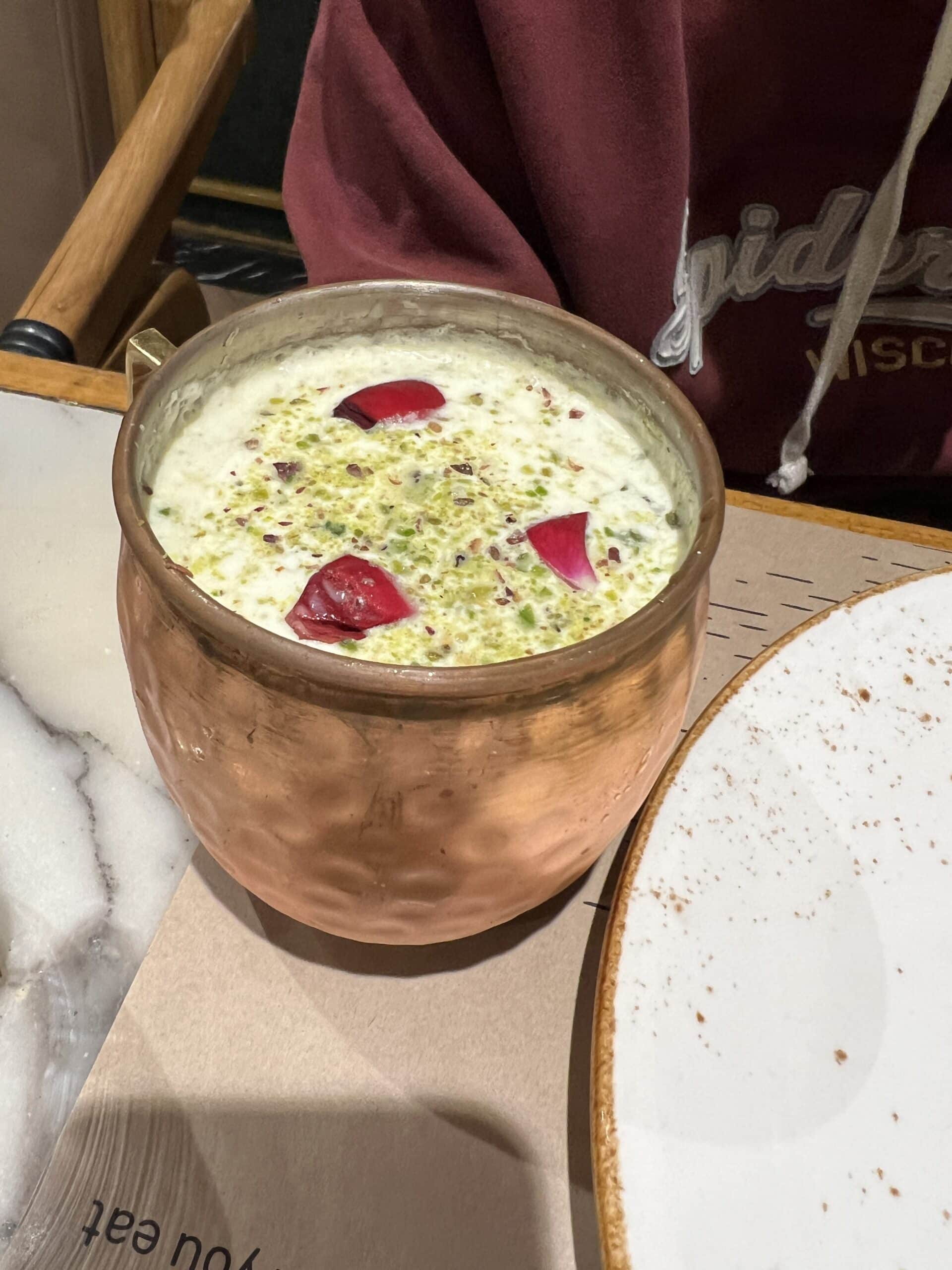
Sweet lassi typically contains yogurt, sugar, and water or milk. Order one in India and you never quite know what will arrive. It might be perfectly plain, or it might come with cardamom, saffron, rosewater, or a generous layer of malai (cream). The menu rarely gives you the full picture.
Salted lassi is a different experience. It’s commonly prepared with salt, sometimes roasted cumin or other spices, and is said to be especially refreshing in hot weather. Or so I’m told.
How to Order Lassi in Hindi
You don’t need to speak Hindi to order lassi, but knowing a few words can help, particularly at smaller shops where English may be limited.
| Hindi | What it means |
|---|---|
| Meethi lassi | Sweet lassi |
| Namkeen lassi | Salted lassi |
| Bina namak | Without salt |
| Bina baraf | Without ice |
| Kam cheeni | Less sugar |
| Gaadhi lassi | Thick lassi |
“Mujhe ek meethi lassi chahiye.” — I’d like one sweet lassi.
“Thodi gaadhi banana, please.” — Please make it a little thick.
“Ismein namak mat daalna.” — Don’t put salt in it.
That last one might have saved me some trouble in Jaipur.
Lassi Around India
Punjab: Perhaps the region most closely associated with lassi. Servings can be generous, the yogurt thick, and a layer of malai on top is not unusual. Some are substantial enough to qualify as a small meal.
Varanasi: Sweet lassi is something of a local specialty, particularly around the lanes of the old city. You’ll find shops serving thick lassi in small earthenware cups called kulhads, sometimes topped with malai, nuts, or other additions.
Rajasthan: Sweet and salted varieties are widely available, along with spiced versions. Depending on the establishment, you may also be offered a mixture of the two, as I discovered in Jaipur.
Lassi Versus Chaas
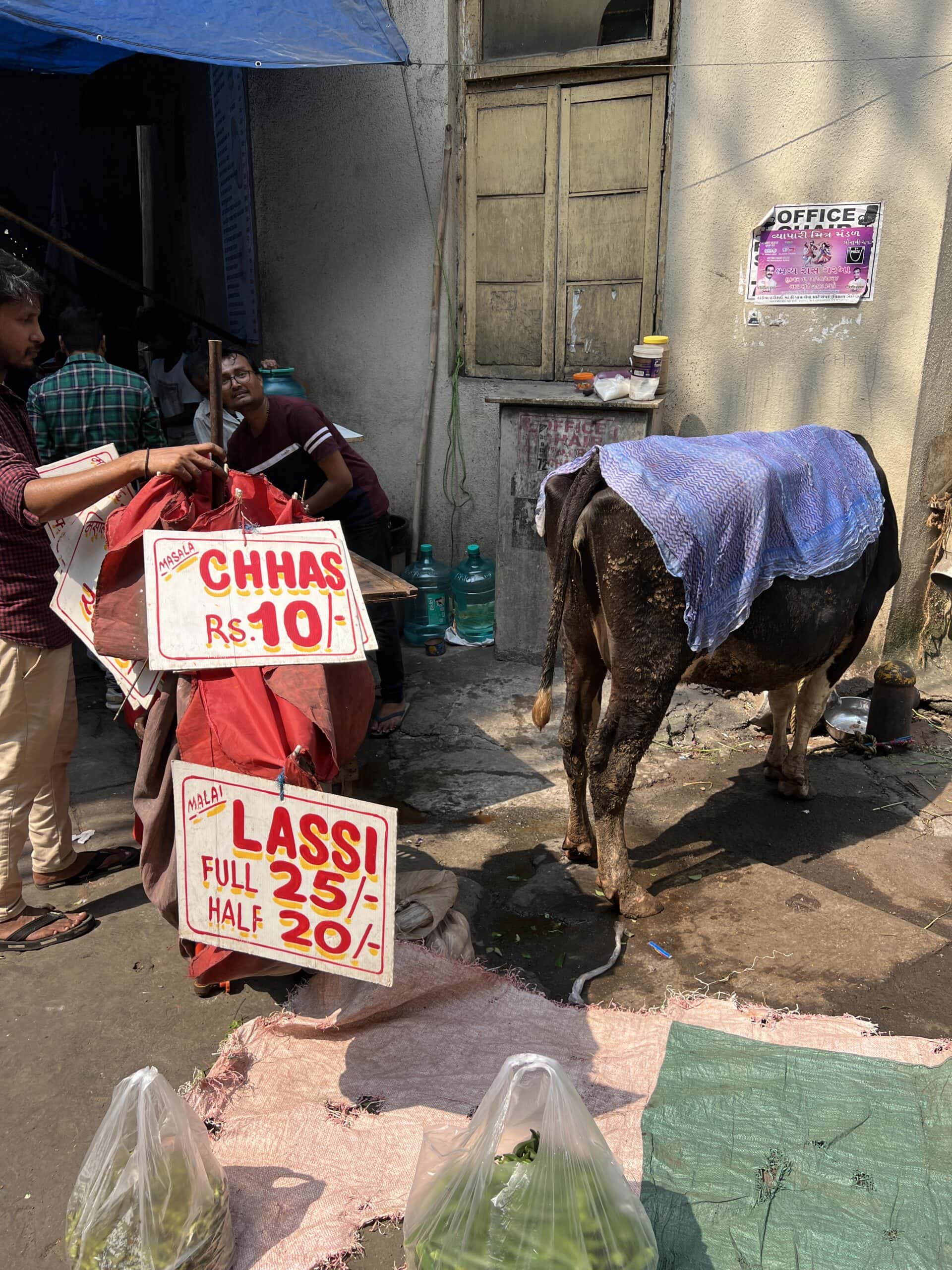
Another yogurt-based drink you’ll encounter in India is chaas, sometimes called mattha or spiced buttermilk.
Chaas is generally thinner than lassi and commonly savory, with salt, roasted cumin, and sometimes herbs such as coriander or mint. It’s particularly popular as a cooling accompaniment to meals.
If you see both lassi and chaas on a menu, don’t assume they’re interchangeable. One may arrive thick and sweet; the other could be light, salty, and spiced.
What About Mango Lassi?
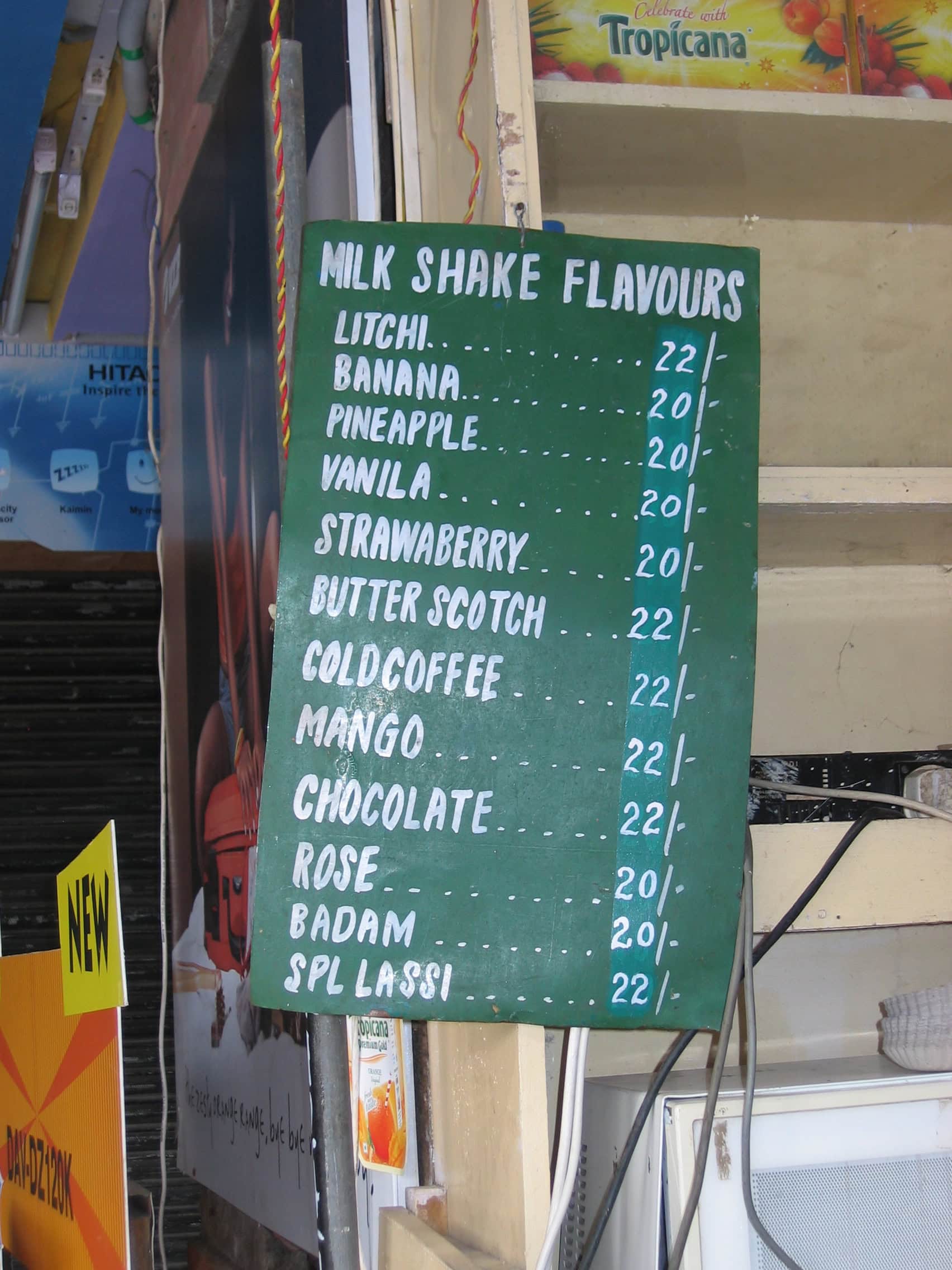
For many Americans, mango lassi is their introduction to the drink. It’s practically a fixture on Indian restaurant menus back home.
Fresh mangoes are seasonal, with availability varying by region and variety. Yet mango lassi appears on menus throughout the year.
Sometimes it’s made with fresh fruit. Other times, mango pulp, canned mango, or flavored syrup does the job. A lassi made with good-quality mango pulp can still be excellent, but mango lassi doesn’t automatically mean fresh mango.
Every now and then, you’ll spot an “in season” sticker or a handwritten note beside mango lassi on a menu. It’s a small detail, but one that catches my attention. If you’re in India during mango season, it’s worth asking whether fresh mango is being used.
Why Some Lassis Are Better Than Others
Texture makes an enormous difference. The amount of water or milk added determines much of the consistency. Some makers add ice, others don’t. Yogurt quality matters, too.
Traditional preparation often involves hand-churning dahi, while electric blenders are common in restaurants and shops. Either method can produce a good lassi, although too much added liquid will leave you with something closer to flavored milk.
A thicker lassi takes longer to drink and has a richer texture. Too thin, and much of the appeal disappears.
Watch: Making Lassi
Make Your Own Lassi
Lassi is easy to prepare at home. A blender works well, although a whisk is perfectly adequate for smaller quantities. Choose one of the three variations below.
Full Stop India · Recipe Collection
Three Ways to Make Lassi
Select a recipe below to view its ingredients and instructions.
Classic Sweet Lassi · Serves 2
Ingredients
- 1½ cups plain whole-milk yogurt
- ¼–½ cup cold water or milk
- 2–3 tablespoons superfine (caster) white sugar, to taste
- Ice cubes, optional
Method
- Combine yogurt, ¼ cup water or milk, and sugar or cooled simple syrup.
- Blend briefly until smooth and slightly frothy.
- Taste and adjust sweetness. Add more liquid only as needed.
- Serve cold.
Simple syrup: Substitute 2–3 tablespoons of cooled 1:1 syrup for sugar. Make it by warming equal parts white granulated sugar and water until dissolved; cool before using. Reduce the other liquid slightly.
Mango Lassi · Serves 2
Ingredients
- 1½ cups plain whole-milk yogurt
- 1 cup ripe mango flesh or unsweetened mango pulp
- ¼ cup cold milk or water, as needed
- 1–2 tablespoons superfine sugar or simple syrup, optional
- Pinch of ground cardamom, optional
Method
- Blend yogurt and mango until smooth.
- Add a little milk or water if too thick.
- Taste before adding sugar; sweetened pulp may need none.
- Serve chilled.
Alphonso or Kesar mangoes work particularly well when available.
Cardamom & Saffron Lassi · Serves 2
Ingredients
- 1½ cups plain whole-milk yogurt
- ¼ cup cold milk
- 2–3 tablespoons superfine sugar or simple syrup
- ¼ teaspoon ground green cardamom
- 6–8 saffron threads
- 1 tablespoon warm milk
- 1 tablespoon finely chopped pistachios, optional
Method
- Steep saffron in the tablespoon of warm milk for 10–15 minutes.
- Combine yogurt, cold milk, sugar or syrup, and cardamom.
- Add saffron-infused milk and blend briefly.
- Taste, pour into chilled glasses, and garnish with pistachios if desired.
Is Lassi Safe to Drink in India?
Lassi is made with dairy, so freshness, clean preparation, and proper refrigeration matter, particularly in hot weather.
If you’re uncertain about the water used to dilute the yogurt or the source of the ice, ask. Bottled or properly treated water is the safer choice when drinking-water quality is uncertain.
And Then There’s Bhang Lassi
Bhang lassi is an entirely different proposition. It contains a cannabis preparation traditionally associated with certain festivals and religious practices, particularly Holi.
During Holi in 2008, I had several glasses with Indian friends. They were delicious, although I suspect there was an extraordinary amount of sugar involved.
My friends were soon laughing uncontrollably. I felt absolutely nothing.
For more about bhang, its cultural associations, and Indian cannabis laws, read Pot in India: Ganja, Bhang, Sadhus and the Law.

 Chaat: India’s Love Affair with Street Food
 Thali: India’s Many Meals on a Plate
 Lime Soda Sweet: The Refreshing Drink of India