

When I first traveled to India, I was so overwhelmed with figuring out transportation, ordering food, getting from one place to another, and trying to be somewhere remotely on time that alcohol barely registered as a want, let alone a need.
By my second trip, I had started to find my footing. I remember my driver, Rakesh, mentioning India’s dry states in passing during one of our many conversations on the road.
“Dry states?” I asked. “As in, they don’t get much rain? They’re going through a drought?”
He gave me a puzzled look, as though trying to figure out what on earth I was talking about.
“No,” he clarified. “Dry states. Sharaab nahin. No alcohol.”
Oh.
It hadn’t occurred to me that entire states in India could prohibit alcohol. Coming from the United States, where you can generally find a beer without much effort, I found the idea rather fascinating.
India doesn’t have one nationwide alcohol policy. Instead, its 28 states and 8 union territories establish their own regulations, ranging from outright prohibition to visitor permits and restrictions on particular days.
Here’s where things stand today.

Gujarat: India’s best-known dry state
Gujarat has maintained prohibition for decades. It’s probably the first place most people think of when the subject comes up.
It’s also the only dry state I’ve personally visited.
I traveled through Gujarat with my Hindi tutor, who doesn’t drink. Neither of us was looking for alcohol, so prohibition had absolutely no effect on our trip. We had plenty else to see and do.
Had we wanted a drink, however, we would have needed to understand the permit system.
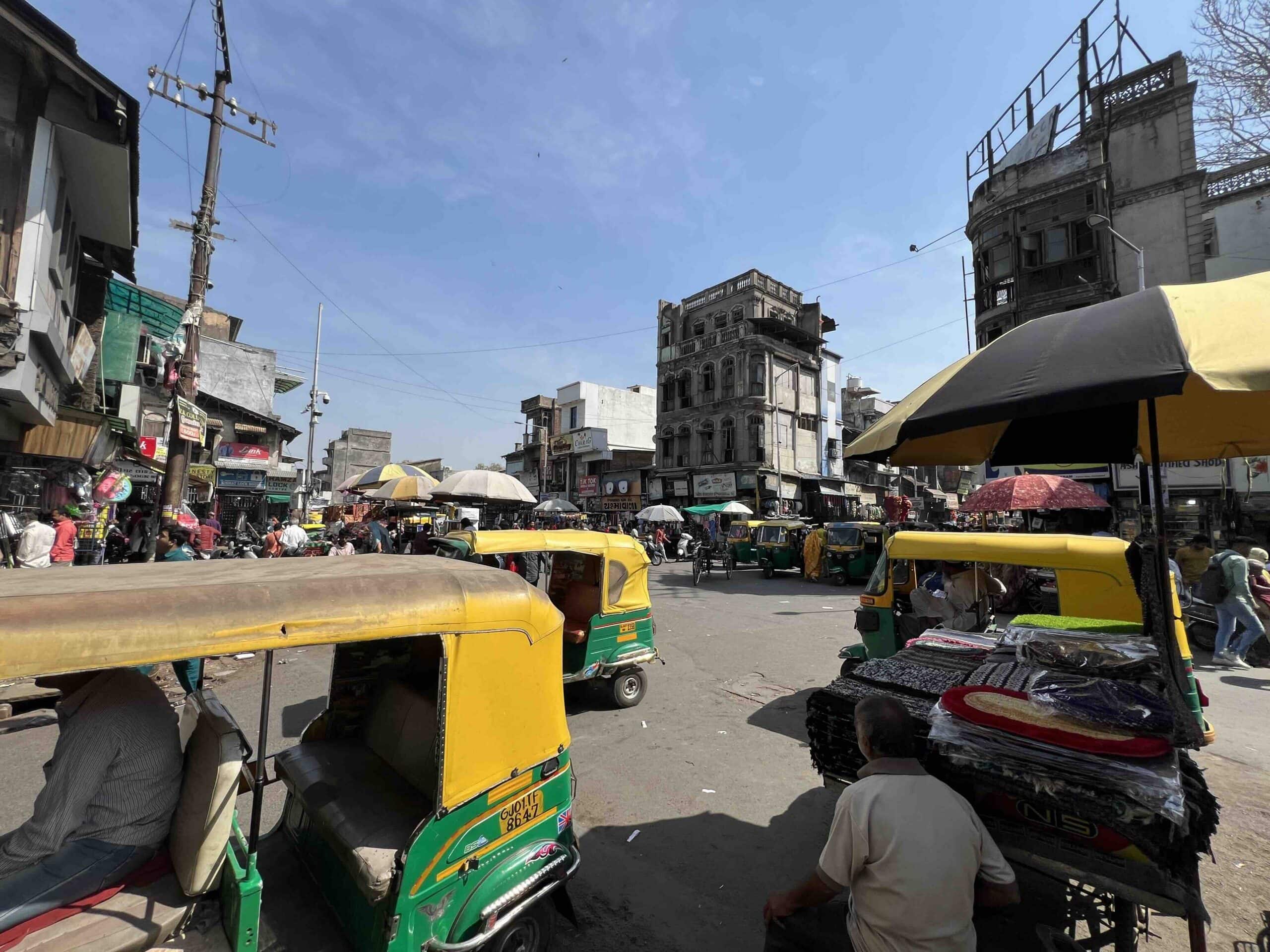
Can tourists drink in Gujarat?
Yes, under certain circumstances.
Gujarat provides liquor permits for eligible visitors, including travelers arriving from outside the state. Permits come with conditions governing eligibility, quantities, and where alcohol can be purchased and consumed.
Don’t expect to order a beer at just any restaurant.
Gujarat’s GIFT City, near Gandhinagar, also has a special arrangement allowing alcohol service at authorized establishments for eligible employees and approved visitors. It isn’t a general exemption for tourists traveling elsewhere in the state.
What about Diu, Daman, and Dadra and Nagar Haveli?
Here’s where geography becomes interesting.
Diu, Daman, and Dadra and Nagar Haveli belong to a separate union territory, not Gujarat. Unlike Gujarat, alcohol is legally available through licensed establishments.
The distances help explain why these places have long been popular with Gujaratis looking for a drink.
Daman sits immediately across Gujarat’s southern border, roughly 15 kilometers from Vapi. For someone living around Vapi, crossing into Daman for dinner and a few drinks is hardly a major expedition. Even Surat is only about 120 kilometers away by road.
Diu sits along Gujarat’s Saurashtra coast, connected to the mainland by road. From nearby Una, it’s roughly 15–20 kilometers to Diu town. With beaches, resorts, and restaurants, it’s also a popular coastal getaway.
Dadra and Nagar Haveli is another geographical oddity. The territory lies between Gujarat and Maharashtra, with Silvassa, its principal town, roughly 30 kilometers from Vapi.
So while Gujarat remains dry, residents in some border areas don’t necessarily have to travel hundreds of kilometers to find a licensed bar. A short drive may be all it takes.
There is an important distinction, however, between enjoying a drink legally in a neighboring union territory and bringing alcohol back into Gujarat. The latter can violate Gujarat’s prohibition laws.
And if you’re making the trip yourself, arrange a driver or stay overnight rather than driving after drinking.
Bihar: A dry state since 2016
Bihar introduced statewide prohibition in 2016.
The restrictions extend beyond liquor-shop sales to possession, transportation, and consumption. There’s no general tourist exemption allowing visitors to drink simply because they’re staying in a hotel.
This is particularly relevant if you’re visiting Bodh Gaya, Patna, or Nalanda, or traveling overland through eastern India.
Alcohol purchased legally in a neighboring state may become a problem once you cross into Bihar.
Nagaland: Prohibition in the northeast
Nagaland introduced its liquor prohibition law in 1989.
The state has a complicated relationship with alcohol. Prohibition remains in place, although informal sales and debates about changing the law have continued for years.
For visitors to Kohima, Dimapur, and elsewhere in Nagaland, the important distinction is between alcohol being available and alcohol being legally sold.
Those aren’t necessarily the same thing.
Mizoram: More complicated than simply dry
Mizoram has changed its approach to alcohol several times.
Its prohibition framework remains in place, but amendments adopted in 2025 introduced provisions for certain locally produced alcoholic beverages, including wine and fruit beer, under regulated conditions. Specific permit arrangements also exist.
That doesn’t mean ordinary alcohol sales have been legalized throughout the state.
If you’re traveling to Mizoram, check the current permit requirements and the rules governing licensed establishments before assuming a particular drink will be available.
Lakshadweep: Restrictions among the islands
Lakshadweep maintains some of India’s strictest alcohol restrictions.
Limited exceptions have existed for certain tourist facilities, particularly on Bangaram Island, but alcohol isn’t freely available throughout the archipelago.
Don’t assume you can bring bottles from the mainland or purchase alcohol at every resort.
If you’re planning a visit, confirm the arrangements directly with your accommodation or tour operator.
Manipur: No longer a simple statewide ban
Manipur appeared on my original list of dry states.
In December 2023, however, the government withdrew prohibition from specified areas, introducing regulated alcohol sales and consumption in those locations.
Restrictions remain elsewhere.
For travelers, this means the rules depend on where in Manipur you’re visiting, rather than one statewide answer.
Beyond dry states: India’s alcohol-restricted pilgrimage towns
Not every alcohol restriction in India applies to an entire state. Some of the country’s best-known pilgrimage destinations have their own rules, even when alcohol is legally available elsewhere in the state.
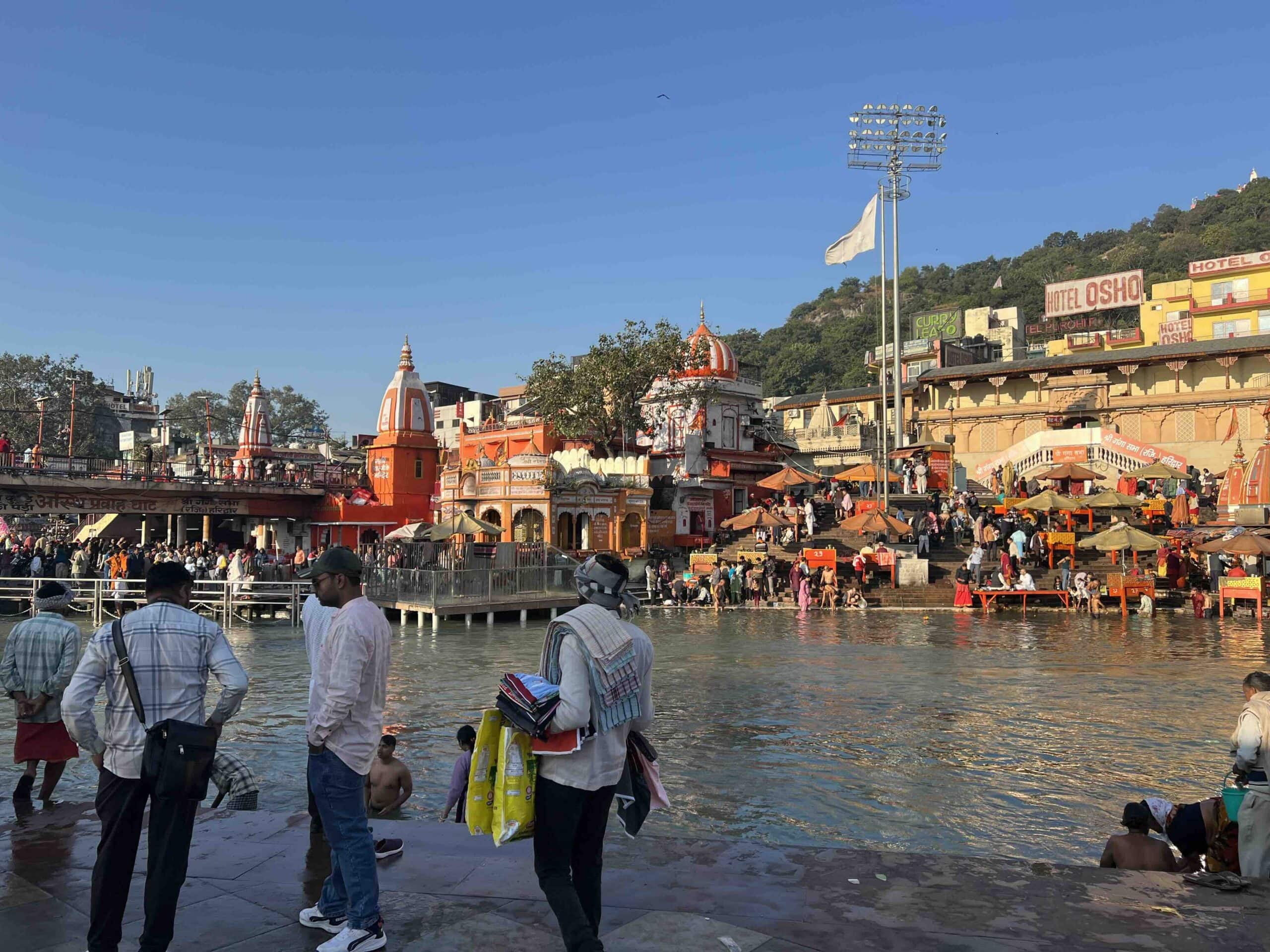
Haridwar and Rishikesh, Uttarakhand
Both cities sit along the Ganges and attract pilgrims, yoga enthusiasts, and travelers from around the world. Alcohol restrictions have long been part of their identity, particularly in designated religious and prohibition areas.
The boundaries matter, however. Uttarakhand’s excise rules distinguish restricted areas from surrounding neighborhoods, and the precise extent of some restrictions has been challenged in court. Don’t assume that every hotel in greater Rishikesh operates under identical rules.
For a closer look at the religious traditions behind these pilgrimage destinations, read What Is Aarti? India’s Ceremony of Light, Explained.
Mathura, Vrindavan, and Ayodhya, Uttar Pradesh
These major pilgrimage destinations have restrictions on alcohol sales in designated religious areas.
In Mathura and Vrindavan, the restrictions are associated with Krishna’s birthplace and surrounding pilgrimage zones. Ayodhya has introduced restrictions around the Ram Mandir and certain pilgrimage routes.
Varanasi is another example. Alcohol sales face restrictions near the Ganges and certain religious sites, although Varanasi itself is not a dry city.
Ujjain, Omkareshwar, and Orchha, Madhya Pradesh
Madhya Pradesh made a significant change in April 2025, closing licensed liquor shops and bars in 19 designated religious towns and areas.
The list includes Ujjain, home to the Mahakaleshwar Temple; Omkareshwar, on an island in the Narmada River; and Orchha, known for its temples and historic architecture.
Other affected destinations include Maheshwar, Maihar, Amarkantak, Chitrakoot, and Datia.
Unlike a restriction covering a few streets around a temple, these closures extend across the designated municipal or village boundaries.
Puri, Odisha
Odisha’s excise policy introduced in April 2026 prohibits liquor shops near the Jagannath Temple and along the Grand Road, the ceremonial route associated with the annual Rath Yatra.
That doesn’t make the entire coastal city of Puri dry. It’s a restriction tied to particular religious areas.
For travelers, the distinction is straightforward: a state may permit alcohol, a city may restrict its sale, and a particular neighborhood may have different rules again. Knowing where you’re staying can matter as much as knowing which state you’re visiting.
What about India’s dry days?
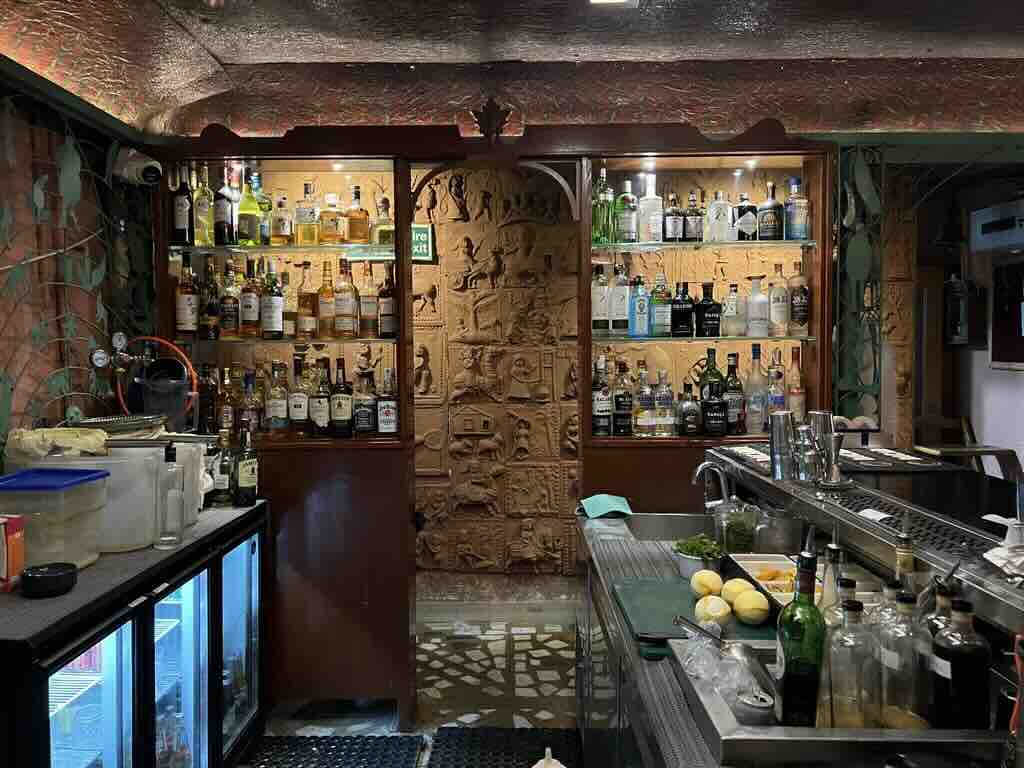
Even in states where alcohol is normally available, you may encounter a dry day, when alcohol sales are restricted for national holidays, elections, or religious occasions.
Three dates to keep in mind:
- January 26 — Republic Day
- August 15 — Independence Day
- October 2 — Gandhi Jayanti
These are commonly observed as dry days, although rules vary by location. Elections can also bring temporary restrictions, even in cities such as Jaipur and Delhi.
A dry day doesn’t necessarily prohibit drinking alcohol you’ve already purchased. Some restrictions apply only to sales and service, while others go further. Check the local rules before making assumptions.
Can you carry alcohol between Indian states?
Here’s something travelers can easily overlook.
Buying a bottle legally in one state doesn’t automatically mean you can transport it into another.
States establish their own rules for possession and transportation, and crossing a border can change what you’re legally allowed to carry.
The same principle applies to duty-free purchases. An international airport’s duty-free allowance doesn’t override a destination state’s prohibition laws.
Airline baggage rules are separate, too. Being allowed to pack a sealed bottle in checked luggage doesn’t necessarily make it legal to possess at your destination.
If you’re traveling into a prohibition state, check its excise regulations before packing alcohol.
A word about illegally produced alcohol
India has a long history of regional alcoholic drinks, including rice-based beverages, fermented drinks, and locally distilled spirits.
Some are legally produced under local regulations. Others are sold through informal or illegal channels.
The distinction matters because illicit alcohol has caused serious poisonings and deaths, including incidents involving methanol contamination.
I wouldn’t recommend buying unlabelled spirits or relying on someone who claims they can quietly obtain alcohol in a prohibition area.
There’s plenty to drink in India without taking that particular gamble.
One less thing to worry about
Looking back, I still find it amusing that I initially thought Rakesh was talking about rainfall.
Throughout my travels in India, I’ve continued to enjoy cocktails and beer from time to time. Yet I’ve never found myself somewhere that being dry was an issue, unless you count the occasional piece of overcooked chicken.
Revisiting this list has been a good opportunity to refresh my own memory, particularly as I plan future travels that will take me into some of the states covered here.
And when that happens, I’ll be a little better prepared than I was during that conversation with Rakesh.
Sharaab nahin. Now I know.
Alcohol regulations can change through legislation, government notifications, and temporary orders. Check the relevant state excise department or your accommodation for current requirements before traveling.

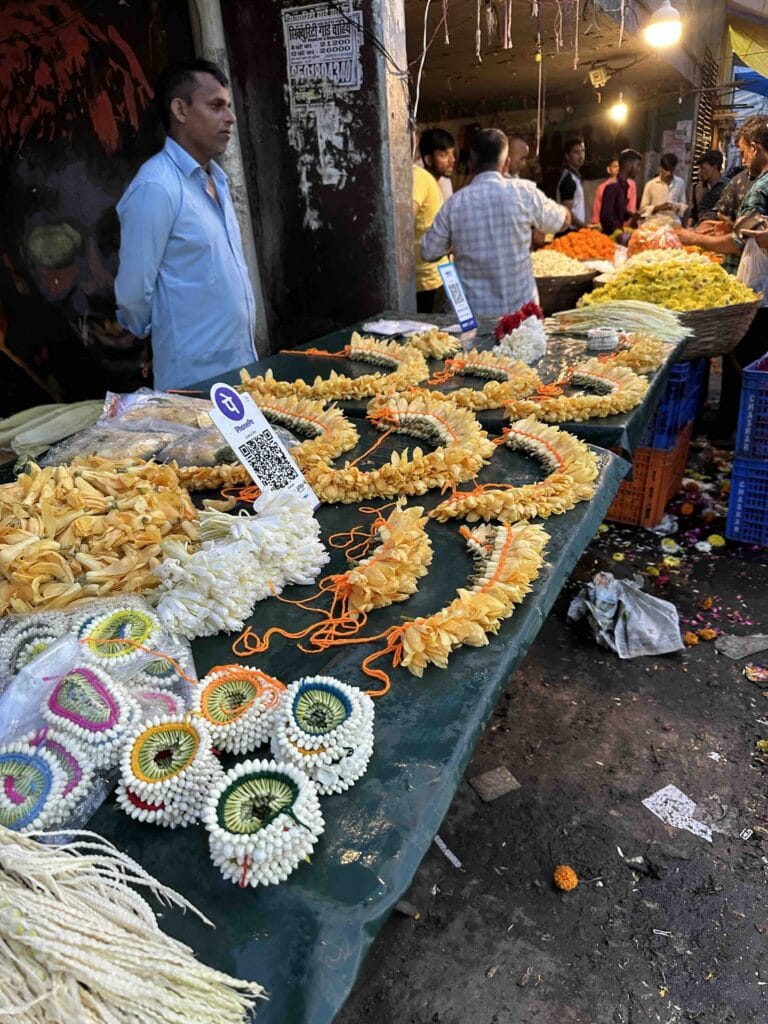 UPI: How India Changed the Way It Pays
 10 Essential Apps for Traveling in India in 2027