

Thousands of people gather along the ghats in Haridwar as the sun begins to set over the Ganges. Pilgrims, sadhus, Indian families, and foreign visitors sit shoulder to shoulder. There is a palpable excitement in the air. Then, as the ceremony begins, the crowd of thousands comes together in a hushed silence.
I’ve attended Aarti in Haridwar, Rishikesh, and Varanasi, as well as a private ceremony at the Ekaanta hotel beside the Ganges. Each has been memorable for different reasons.
If you’re traveling to India for the first time, put Aarti on your list. Not as another attraction to check off, but as an opportunity to sit among the people who have gathered for a reason far more meaningful than sightseeing. This is a centuries-old tradition, and whether you’re there to witness it or not, the prayers will be said, the lamps will be lit, and the ceremony will go on.
What Exactly Is Aarti?
Aarti (also written Arti or Arati) is a Hindu ritual in which light is offered as an act of devotion. A flame, often produced by cotton wicks soaked in ghee or oil, is moved in a circular motion before a deity, sacred image, or—in the case of Ganga Aarti—the river Ganges herself.
Light represents reverence and the removal of darkness. The ritual takes place in homes and temples throughout India, but the large public ceremonies along the Ganges are particularly striking. You do not need to be Hindu to attend, and you do not need to understand every word of the prayers to appreciate what is happening around you.
What Happens During an Aarti Ceremony?
Priests raise brass Aarti lamps, sometimes large multi-tiered arrangements carrying many flames, and move them in deliberate circles. Bells ring. Conch shells sound. Chants and devotional songs rise above the crowd, accompanied by incense and the flicker of fire.
Participants may fold their hands in prayer, sing along, or reach toward the flame and draw their hands back toward their faces as a gesture of receiving its blessing. At riverfront ceremonies, the moving water becomes part of the ritual itself.
An Evening on the Ganges I’ll Never Forget
One of my most memorable experiences took place at Ekaanta in Haridwar, a hotel with a private ghat just feet from the swift-moving Ganges. There was something almost auspicious about the setting. It was a warm, comfortable evening, with the sound of water lapping nearby and the occasional stray dog wandering through. We were far enough from the public crowds to hear the river.
A priest conducted the ceremony, lifting and circling a large multi-tiered brass lamp as we watched. Afterward, he applied a tilak to our foreheads and tied a red kalava, also called mauli, around our wrists. He wrapped mine seven times. The thread is associated with blessings and protection; while seven is a sacred number in Hindu traditions, I can’t say why he chose seven wraps that evening.

Then, almost as if someone had arranged a scene for a film, two musicians appeared. One played the tabla, the other a harmonium. Another hotel guest sat cross-legged beside them and began singing. For roughly ten minutes we listened to the music, the river moving in the darkness just beyond the steps.
I kept the red thread on my wrist for months, until water and everyday life eventually wore it away.
The Public Aarti: Haridwar
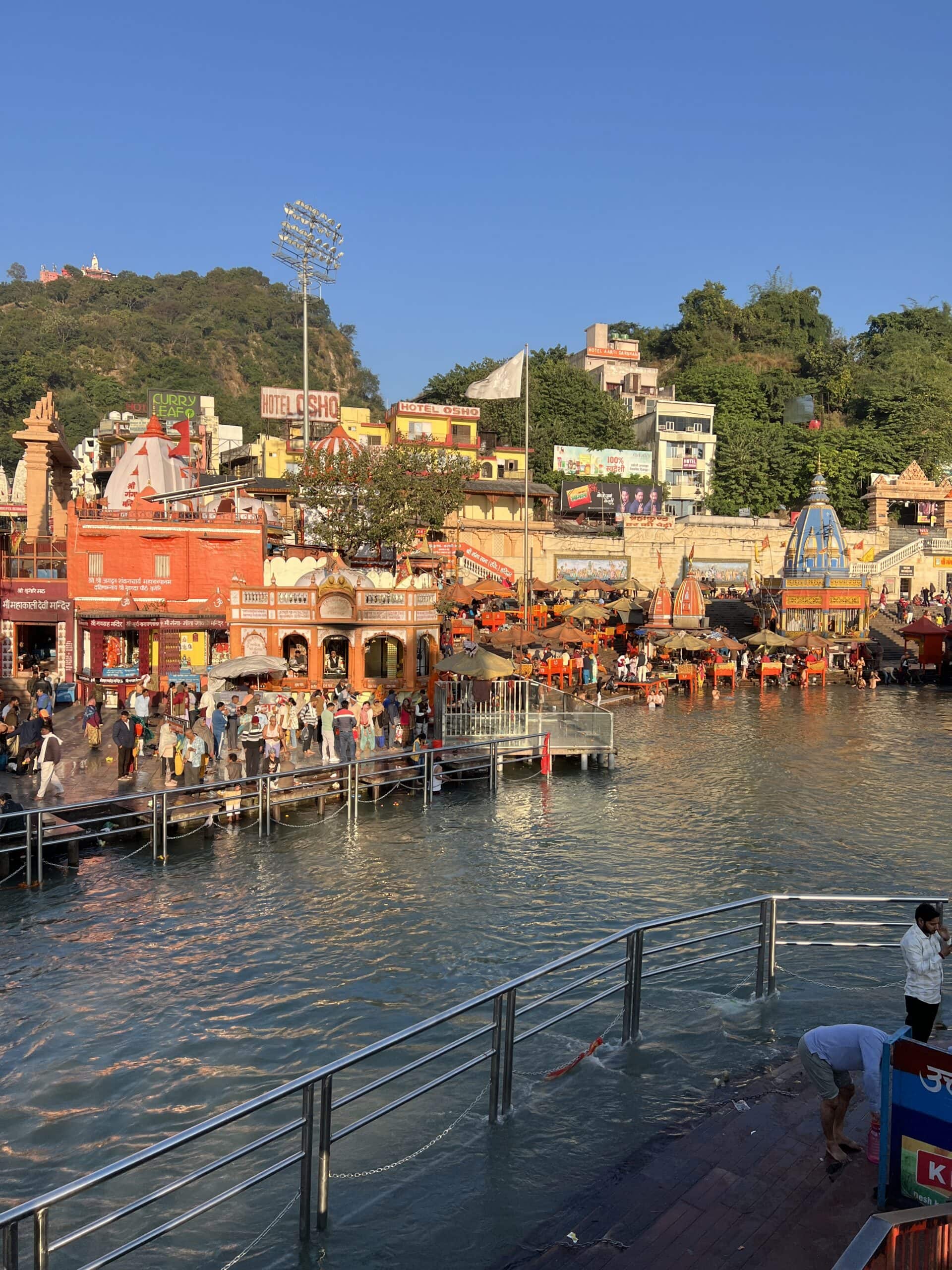
At Har Ki Pauri, the evening ceremony is an entirely different experience. The ghats fill on both sides of the Ganges, with pilgrims, sadhus, families, Indian tourists, and international visitors arriving well before sunset. People settle into every available space, and anticipation builds as the priests prepare.

When the ceremony begins, the restless crowd settles and attention turns toward the flames and the river. It is an extraordinary sight: thousands of people taking part in the same moment, with the sound of prayer carrying across the water.
The public ceremony is free, and the evening Aarti generally lasts around 45 to 60 minutes, although the length varies. You may encounter people offering particular viewing spots for a fee. I can’t speak to who authorizes those arrangements, and you don’t need to pay to witness the ceremony.
Personally, I often prefer to stand toward the back. I’m tall enough to see over much of the crowd, the cascading ghats provide surprisingly good sightlines, and it’s easier to leave if necessary.
Haridwar and Rishikesh: The Ganges Beneath the Mountains
What I love about both Haridwar and Rishikesh is the setting. The Ganges moves swiftly beneath the surrounding hills, with buildings painted in warm colors along the river and lights beginning to twinkle as evening falls.
Neither location needs to be set against the other. Both are wonderful for the same reasons. The mountains, the river carved between the hillsides, the buildings, and the gathering evening light all become layers on a canvas for the ceremony unfolding along the water.
Morning Aarti: Haridwar Before the Crowds
Return to the ghats early in the morning and you’ll find another side of Haridwar. As the sun spills over the mountain peaks and begins to illuminate the riverfront, the morning prayers are drawing to a close. There are far fewer tourists. This is the devotees’ ceremony.
Hundreds of people are already at the water. Some step carefully into the current for a ritual dip; others submerge themselves, wash, pray, or towel off as the chanting continues nearby. The river is not simply scenery here. It is central to daily life and devotion.
Take a few photographs if you wish. Then put your phone away and watch what is happening around you. Give yourself time to absorb it rather than looking at everything through a screen.
Humanity in its purest form.
Varanasi: Aarti on a Grand Stage
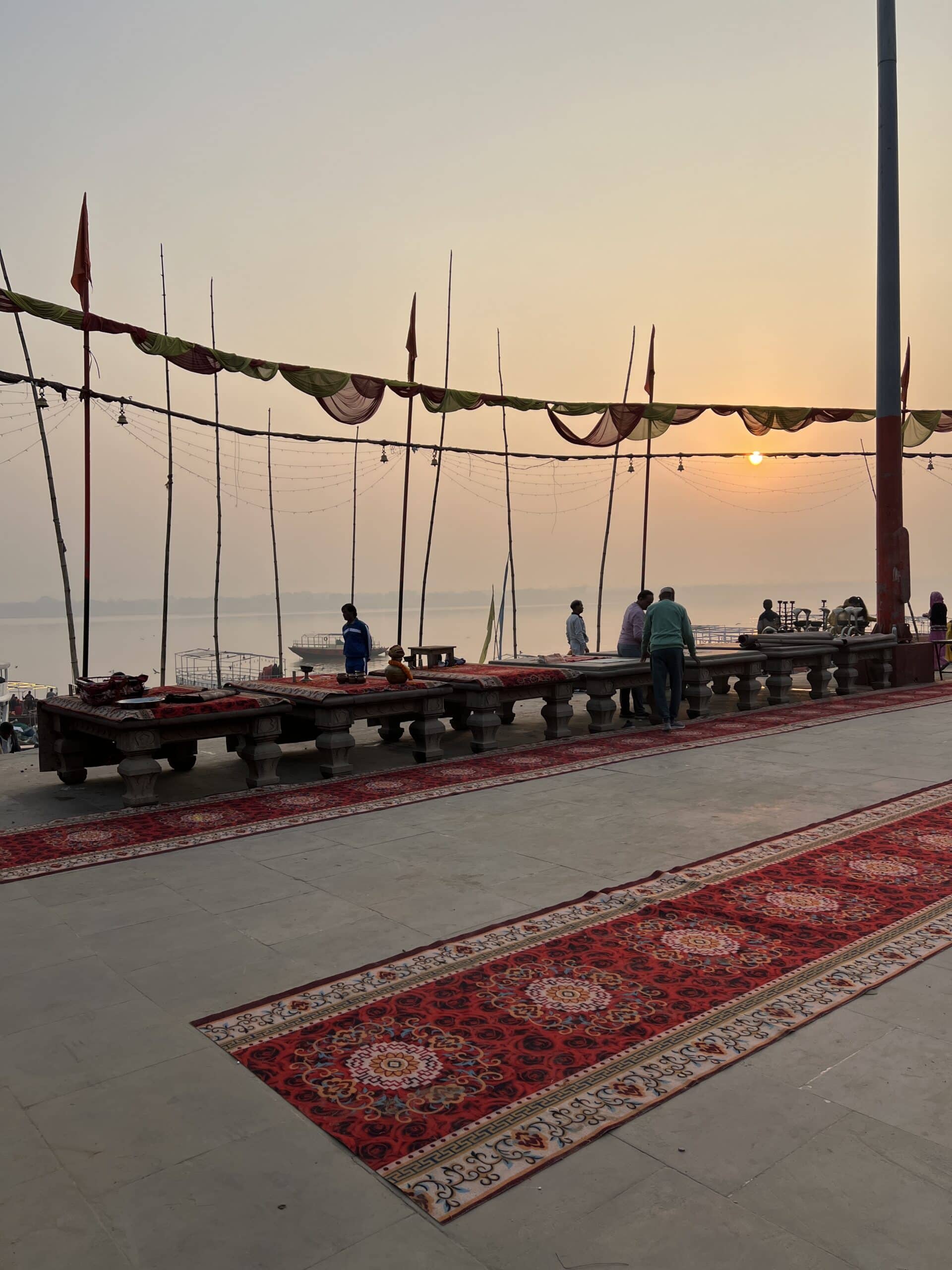
I attended evening Aarti in Varanasi in 2024 and returned for a morning ceremony in 2025. Compared with the experiences I had in Haridwar and Rishikesh, Varanasi has a greater sense of showmanship.
Priests perform on raised platforms, lifting elaborate lamps in coordinated movements. The city stretches and meanders for miles along the Ganges, and it can feel as though the audience does, too. People pack the steps down to the water and spill into the surrounding alleys.
Some people come and go almost as if they were watching a television program playing in another room. That observation isn’t meant to diminish anyone’s devotion; it is simply part of the extraordinary scale and movement of the place. It’s a spectacle, and one I wouldn’t tell a first-time visitor to miss.
For a sense of the elaborate evening ceremony in Varanasi, watch this recording:
What to Know Before Attending Aarti
Public Ganga Aarti ceremonies in Haridwar, Rishikesh, and Varanasi are generally free to attend. Timings change with the season and the relationship to dawn and dusk, sometimes described through the traditional idea of sandhya, the transition between day and night. Check the current time with your hotel, guide, Airbnb host, or even a nearby shopkeeper.
You’ll often see vendors selling flowers, incense, and small leaf bowls holding a diya, or oil lamp, which people float on the river with a wish or prayer. Ask the price before buying, and avoid offerings that contain plastic or foil that could pollute the water.
Remember that this is an act of worship, not a performance arranged for visitors. Be considerate about where you stand, how you photograph people, and whether your camera blocks someone else’s view. Sometimes the most rewarding thing you can do is simply watch.
Watch More Ganga Aarti
For a closer look at ceremonies beyond Varanasi, these channels share recordings and live broadcasts from the banks of the Ganges.
Haridwar: Shri Ganga Sabha — YouTube channel
Rishikesh: Parmarth Niketan — YouTube channel
Related reading: Attending a religious ceremony is one of many occasions when understanding local customs makes a difference. Read Cultural Etiquette in India: The Everyday Customs Worth Understanding.

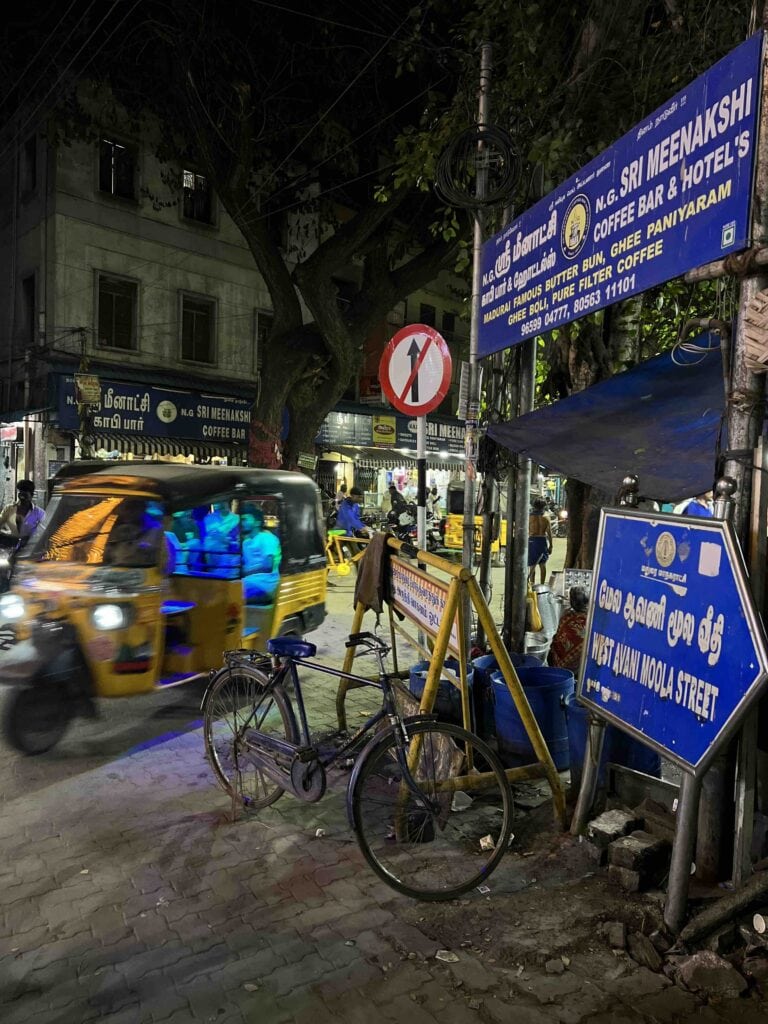 Tamil: The Language of Tamil Nadu
 Malayalam: The Language of Kerala
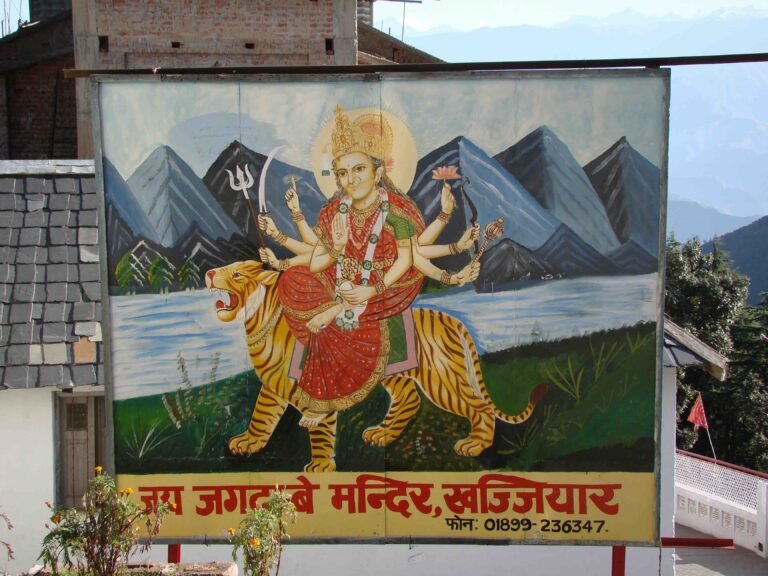 Why Do Hindu Gods and Goddesses Have So Many Arms?