

More than a herb
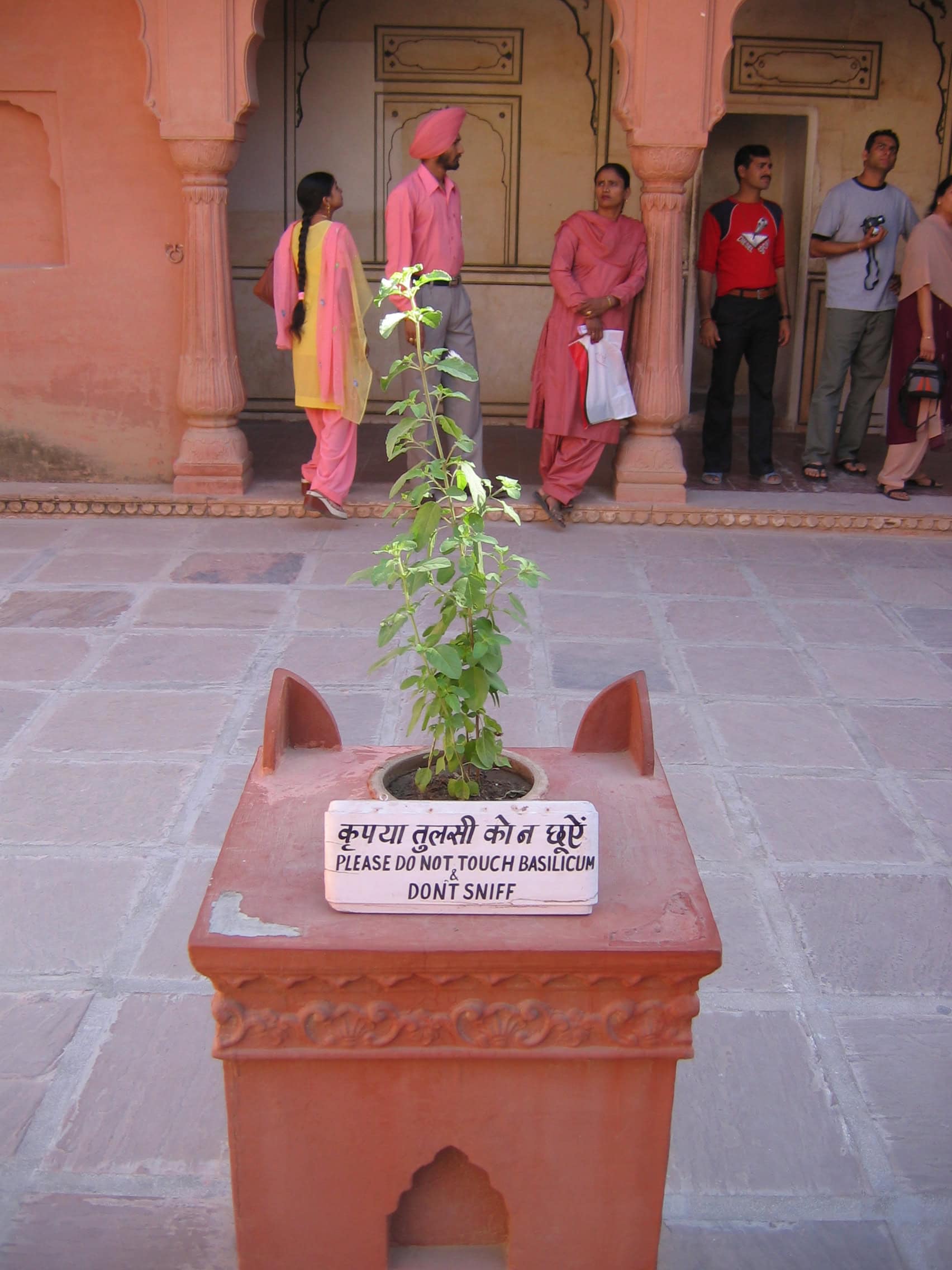
Walk through a residential neighborhood in India and you may notice something curious: a small leafy plant occupying a place of honor in a courtyard. It might be growing in a painted pedestal, surrounded by a few offerings, with a little oil lamp nearby. To a visitor, it can look like an unusually elaborate arrangement for a pot of basil.
But this is tulsi, or holy basil, and for many Hindus it is not simply a plant. It is treated as a sacred presence in the home. Watering it, tending it and offering prayers can be part of the rhythm of everyday religious life.
First, who is Vishnu?
Stay with me here. There’s no test at the end, I promise. But a little background on Hinduism will help explain much of what you’ll encounter while traveling through India, from temple carvings and roadside shrines to the religious symbols you might notice outside someone’s home.
Let’s start with Vishnu. Hinduism includes many deities and many ways of worshipping them. Vishnu is one of its principal gods, commonly understood as the preserver or sustainer of the universe. He is often pictured with blue skin and four arms, holding symbolic objects including a conch and a discus.
In Hindu tradition, Vishnu takes earthly forms, called avatars, when the world needs its balance restored. Two of the best known are Rama, the hero of the Ramayana, and Krishna, whose stories appear throughout Hindu devotional life.
Vaishnavism is the name for the broad family of Hindu traditions that regard Vishnu, or one of his forms such as Krishna, as supreme. A follower is called a Vaishnava. Not all Hindus are Vaishnavas, and Vaishnava communities do not all practice in exactly the same way. But across many of these traditions, tulsi has a particularly intimate connection to Vishnu and Krishna. Its leaves are among the offerings devotees may place before their images during worship.
UNDERSTANDING THE CONNECTION
Vishnu
A principal Hindu deity associated with preserving the universe
Among Vishnu’s avatars
Rama
Central figure of the Ramayana
Krishna
A central figure in Hindu devotional traditions
Vaishnavism is a family of traditions devoted to Vishnu or his forms, including Krishna and Rama.
A sacred plant in many of these traditions
Tulsi · Holy Basil
Its leaves are offered in worship of Vishnu and Krishna.
Is tulsi the same as the basil used in cooking?
Tulsi and sweet basil are relatives in the mint family, although they serve very different purposes. Here’s how to tell them apart.
Tulsi · Holy Basil
Ocimum tenuiflorum (syn. Ocimum sanctum)
Often more peppery, clove-like or herbal in aroma. Grown in Indian homes for worship, and also used in teas and traditional preparations. Several cultivated forms have green or purple-tinged leaves.
Sweet Basil
Ocimum basilicum
The fragrant, tender-leaved basil used in pesto, pasta sauces and many other dishes. Related to tulsi, but not interchangeable with it botanically or in religious practice.
How did tulsi become sacred?
One explanation comes from the story of Vrinda, a woman celebrated for her devotion to her husband, Jalandhara. In a widely told version, Vishnu disguises himself as Jalandhara, deceiving Vrinda and breaking the protection her fidelity gives her husband. When she discovers what happened, she curses Vishnu. Vrinda then becomes associated with the sacred tulsi plant, while Vishnu is linked to the shaligram stone. Versions of the story differ, yet they share a lasting connection between tulsi, devotion and Vishnu—which helps explain why the plant is revered and its leaves are offered in his worship.
How tulsi becomes part of daily life
For families who observe the tradition, caring for tulsi can be a small daily act of devotion. Someone might water the plant in the morning, offer a prayer, or light an oil lamp nearby in the evening. Tulsi leaves may also be gathered for worship, particularly offerings to Vishnu or Krishna. The customs differ from household to household, and not every Hindu family follows them.
Devotional necklaces and prayer beads may also be made from tulsi wood, particularly in traditions associated with Krishna.
Tulsi Vivah: a ceremonial marriage
One of the best-known celebrations associated with the plant is Tulsi Vivah, a ritual marriage of Tulsi to Vishnu, often represented by a shaligram stone or an image of Krishna. It takes place during the Hindu month of Kartik, generally in October or November, although the date varies according to the lunar calendar and local custom. For more on India’s celebrations throughout the year, see our Festivals of India guide.
The plant may be dressed and decorated like a bride, and the ceremony can resemble elements of a traditional wedding. For many families, it marks an auspicious transition in the religious calendar.
Tulsi: the “queen of herbs”
Tulsi’s significance extends beyond religious practice. In Ayurveda, India’s traditional system of medicine, it has long been valued as the “queen of herbs.” Its aromatic leaves are often steeped in hot water to make tulsi tea, sometimes blended with ginger or other spices. You may come across it in herbal shops, packaged teas and household remedies.
Traditional uses are part of tulsi’s cultural story, although they aren’t the same as scientifically established medical benefits. Tulsi isn’t a proven cure for illness, and concentrated herbal products can cause side effects or interact with medication. For travelers, a cup of tulsi tea is another way to encounter a plant that occupies an unusually important place in Indian life.
Spotting tulsi on your travels
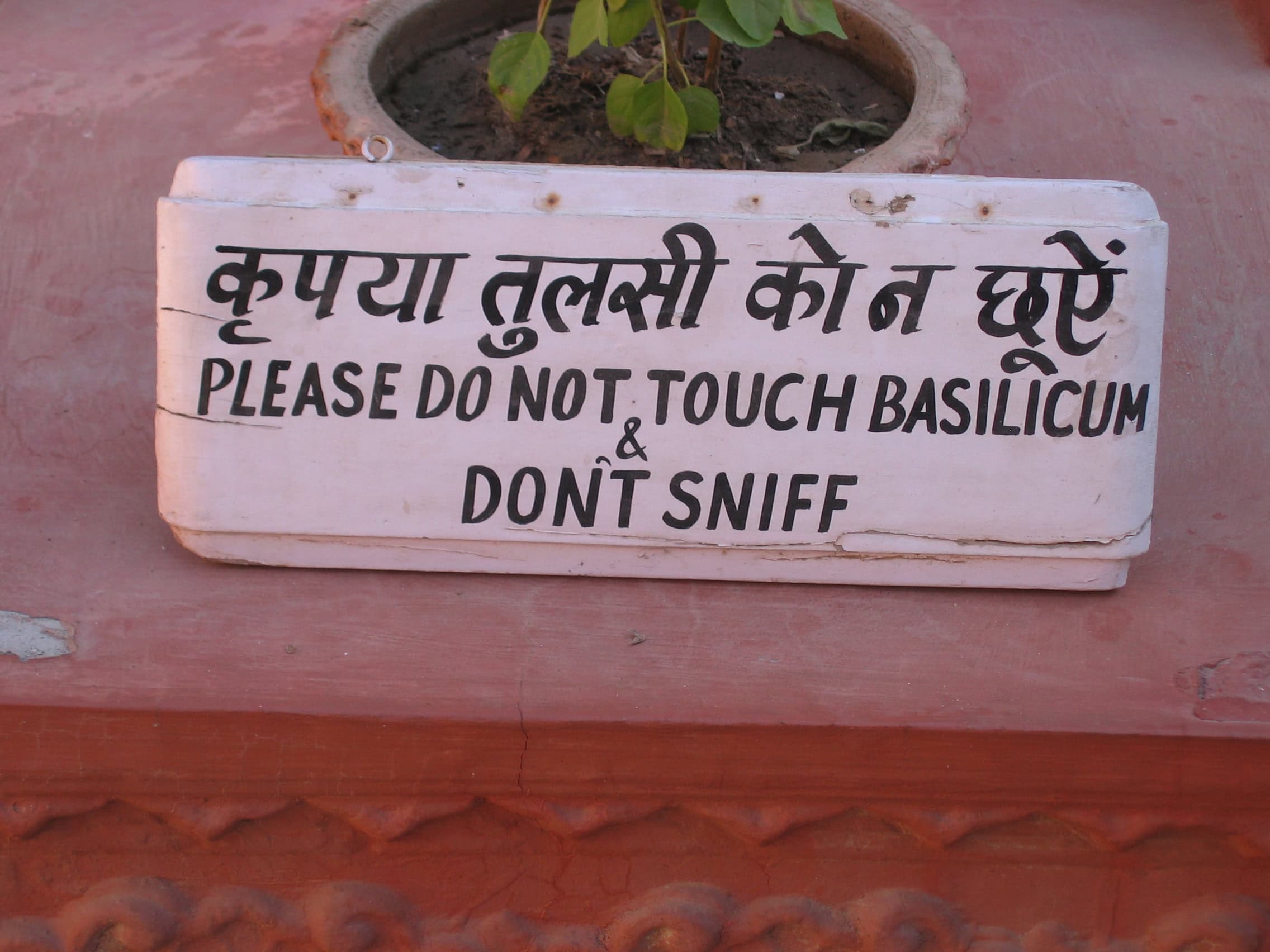
Look for a small leafy plant in a raised planter near a courtyard entrance, in a temple precinct, or beside a family shrine. You may also notice tulsi leaves used in worship or beads sold near pilgrimage sites. These small details are easy to miss unless you know what you’re looking at.
It is a useful reminder that some of the most revealing things you encounter in India are not monuments or major festivals. Sometimes they are growing quietly in a pot outside someone’s front door.

 Tamil: The Language of Tamil Nadu
 Malayalam: The Language of Kerala
 Why Do Hindu Gods and Goddesses Have So Many Arms?