

In India, a little extra money can be a gesture of generosity, an expression of gratitude, or something considerably less innocent. Sometimes it’s difficult to tell which.
In 2024, I’d just arrived at Delhi airport when I spotted an Airtel kiosk. I needed an Indian SIM card, and rather than spend part of the following day hunting down a store somewhere in the bazaar, I decided to take care of it before leaving the airport.
A young man greeted me enthusiastically and began helping with the paperwork. The SIM and a 28-day plan cost ₹399. Easy enough.
Except it wasn’t.
The process suddenly hit a snag. Papers were shuffled. There was confusion. I couldn’t quite understand what the problem was, although I was beginning to suspect there wasn’t much of one.
Then the young man asked me to follow him away from the kiosk, around a corner to a more secluded spot.
He wanted money.
He didn’t initially specify how much. I was tired from traveling, and after nearly 40 minutes of paperwork, I was in no mood to start over.
I offered ₹100.
He shook his head.
₹200?
Another shake.
“Really? Come on, man!” I said.
“How about ₹500?” he replied.
Five hundred rupees? The SIM card and 28-day plan only cost ₹399!
I was flummoxed. Yet after nearly 40 minutes, I was also standing there with almost everything completed. Did I really want to abandon the whole thing and spend part of the following day finding another Airtel shop?
I pulled out a ₹500 note and went to hand it to him.
“Whoa, whoa!” he said, backing away. “No, man. You have to be discreet. I could get in trouble.”
Really? Now you have a conscience?
I folded the note into my palm, extended my hand, and we exchanged what looked like an ordinary handshake. As our hands separated, the money passed from mine to his.
Jerk.
My ₹399 SIM card had just cost me ₹899.
Welcome back to India. And to the complicated world of baksheesh.
What Exactly Is Baksheesh?
Baksheesh, sometimes spelled bakshish, is a word with Persian roots associated with giving or a gift.
In India, its meaning can shift considerably depending on the circumstances. It might describe money given to someone in need, a gratuity for a service, or an unofficial payment intended to persuade someone to do something.
These are three very different transactions, although they share the same word.
That distinction matters for visitors, particularly those encountering the practice for the first time.
A small amount of money offered freely as thanks is not the same thing as a payment demanded before someone will do their job. Nor is giving money to a person in need the same as paying an official to overlook a supposed violation.
Yet all three can fall under the broad umbrella of baksheesh.
And the circumstances aren’t always as clear as the definitions.
Baksheesh as Giving
The oldest meaning of baksheesh is connected with giving.
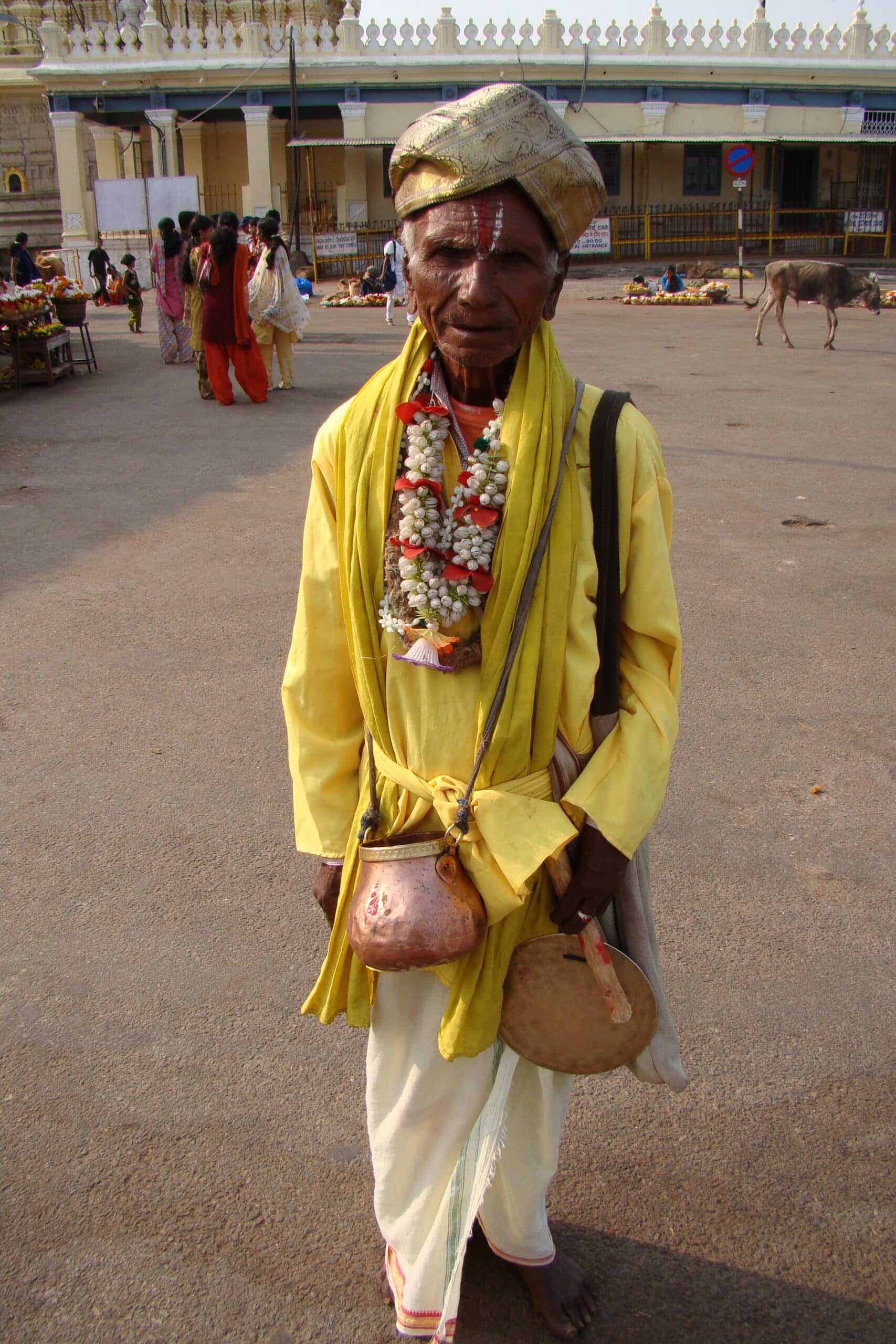
Across India, you’ll encounter people asking for money near temples, markets, railway stations, and other busy public places. You may also see donations offered to sadhus, religious figures, or people seeking assistance.
Charitable giving has an important place in several Indian religious traditions, including Hinduism, where dāna, or generosity, is considered a virtue.
In these situations, money may be given out of compassion, religious devotion, or respect. It isn’t necessarily an exchange for a service.
That doesn’t mean every request must be met, or that visitors should feel obligated to hand out money whenever approached.
Giving is a personal decision.
I’ve always thought this distinction was important because the word baksheesh can acquire such a negative association among travelers. Not every outstretched hand represents someone trying to take advantage of you.
Sometimes someone is simply asking for help.
Baksheesh as Tipping
Then there’s the version of baksheesh most visitors are likely to recognize: tipping.
Someone carries your luggage, assists with a task, opens a door, or helps arrange something. A small gratuity may follow.
In tourist areas, the expectation of a tip can sometimes be apparent before the service has even been completed. Occasionally, it’s apparent before you’ve agreed to receive the service at all.
The awkwardness comes when the amount expected and the amount offered bear little resemblance to one another.
I encountered a particularly memorable example in 2025.
Ten Days With a Driver. A $500 Tip. And Apparently, Not Enough.
After ten days traveling with a private driver, we were saying goodbye at Dehradun airport.
We were flying on to Lucknow and then Varanasi, where we wouldn’t need his services.
A few days earlier, I’d exchanged digital payment information with him because he’d helped me purchase safari tickets when I couldn’t get my own UPI payment to work.
As we said our goodbyes, I transferred $500 to his account.
Five hundred US dollars. Fifty dollars for every day we’d spent traveling together, in addition to what we’d already paid for his services.
He looked down at his phone, checked the transaction, and then looked up at me.
“Awww, man. Really? Please, sir, this is nothing.”
Nothing?
I thought $500 was generous. Really generous.
He didn’t specifically ask for more money. It was all implied.
I wasn’t in the mood to negotiate. So I turned and walked away.
Maybe I’m the jerk.
When a Tip Becomes an Expectation
I don’t know what amount my driver had in mind. Perhaps he had an entirely different expectation based on the length of our trip. Perhaps there was something about the arrangement I didn’t understand.
What I do know is that I’d intended the payment as a generous expression of appreciation, and he apparently received it quite differently.
That is one of the difficulties with tipping in any country. The person giving and the person receiving may have entirely different ideas about what is appropriate.
India is no exception.
I wouldn’t suggest that my driver’s reaction is representative of Indian drivers generally. I’ve traveled with drivers who have been gracious, helpful, and entirely professional.
Still, it was a memorable reminder that generosity and expectations don’t always meet in the middle.
When Baksheesh Becomes a Bribe
The third meaning is less comfortable.
Baksheesh can also describe money offered or demanded to obtain a favor, speed up a process, avoid a penalty, or persuade someone to overlook a rule.
This is where the distinction between a gratuity and a bribe becomes important.
And it’s hardly a new experience for me.
Roadside Encounters in Himachal Pradesh
In my original 2010 article about baksheesh, I described traveling by car and driver through northern India and encountering police officers who appeared more interested in collecting money than enforcing traffic regulations.
On different occasions, the supposed violations included not wearing a seatbelt where one wasn’t required, questionable registration problems despite the driver having the necessary documentation, or no clearly explained violation at all.
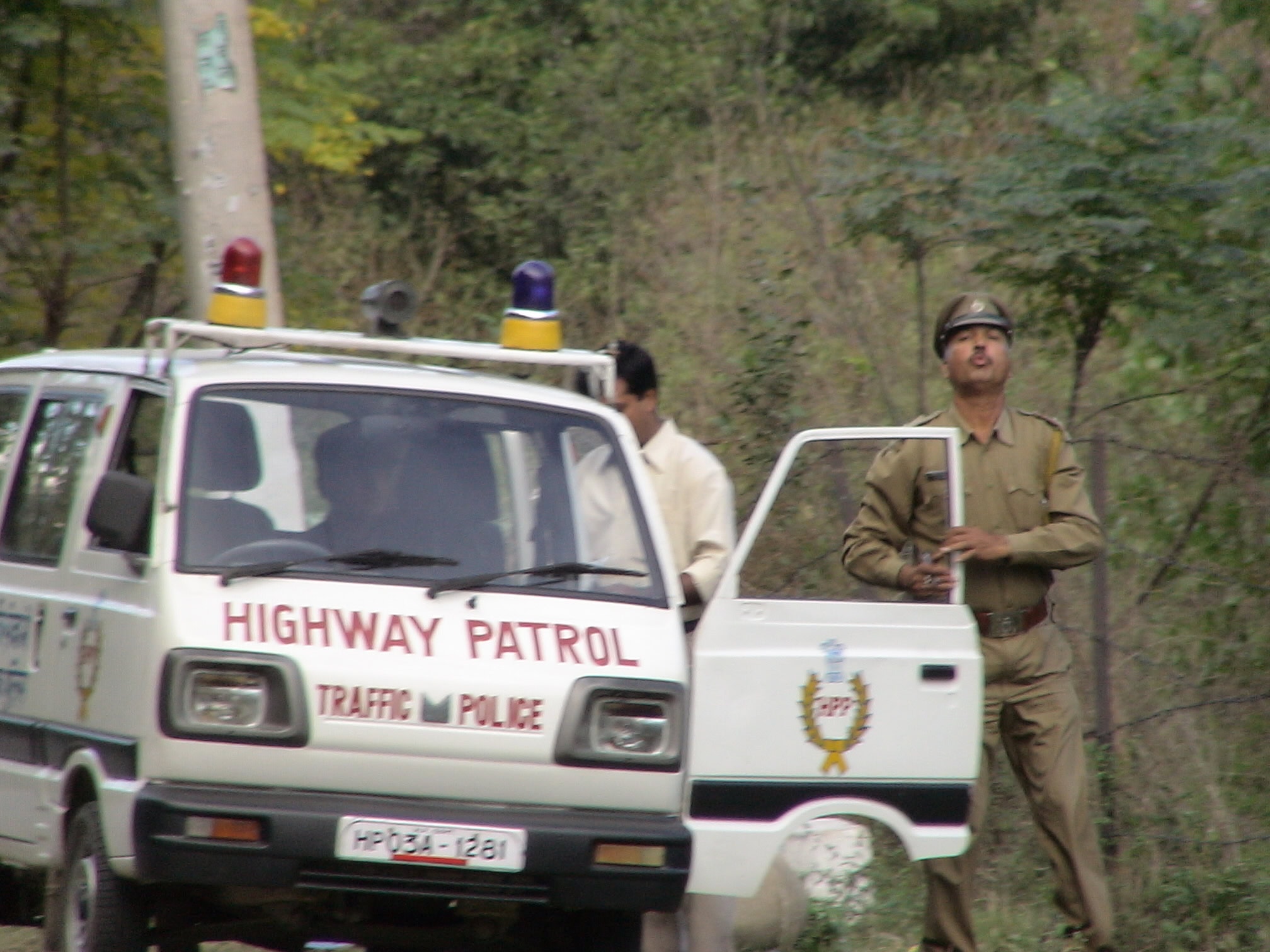
Sometimes the amount requested was ₹500.
The message was straightforward: without payment, we weren’t going anywhere.
One of those encounters took place near Manali in Himachal Pradesh, where I photographed a highway patrol vehicle during a stop.
I remember the frustration of sitting there while the driver dealt with the situation. As a passenger, I had little understanding of what was being said or what options were available.
Was there an actual violation? Was the payment legitimate? Was the officer simply looking for money?
From where I sat, it certainly appeared to be the latter.
These experiences were part of what prompted me to write about baksheesh back in 2010.
Fifteen years later, the Airtel kiosk at Delhi airport reminded me that an unofficial payment doesn’t necessarily require a uniform or a roadside checkpoint.
Sometimes all it takes is a stack of paperwork, a tired traveler, and someone who knows that the traveler would rather pay than begin again.
The Everyday Baksheesh You’ll Encounter
Not every request for baksheesh involves a bribe, an elaborate scheme, or even a service you asked someone to perform.
Take sadhus, for example.
Many tourists are fascinated by these devout followers of Hinduism. Traditionally, sadhus renounce worldly possessions and devote their lives to spiritual pursuits, often traveling on pilgrimage and relying on the generosity of others to sustain themselves.
They’re also among the most photographed people in India.
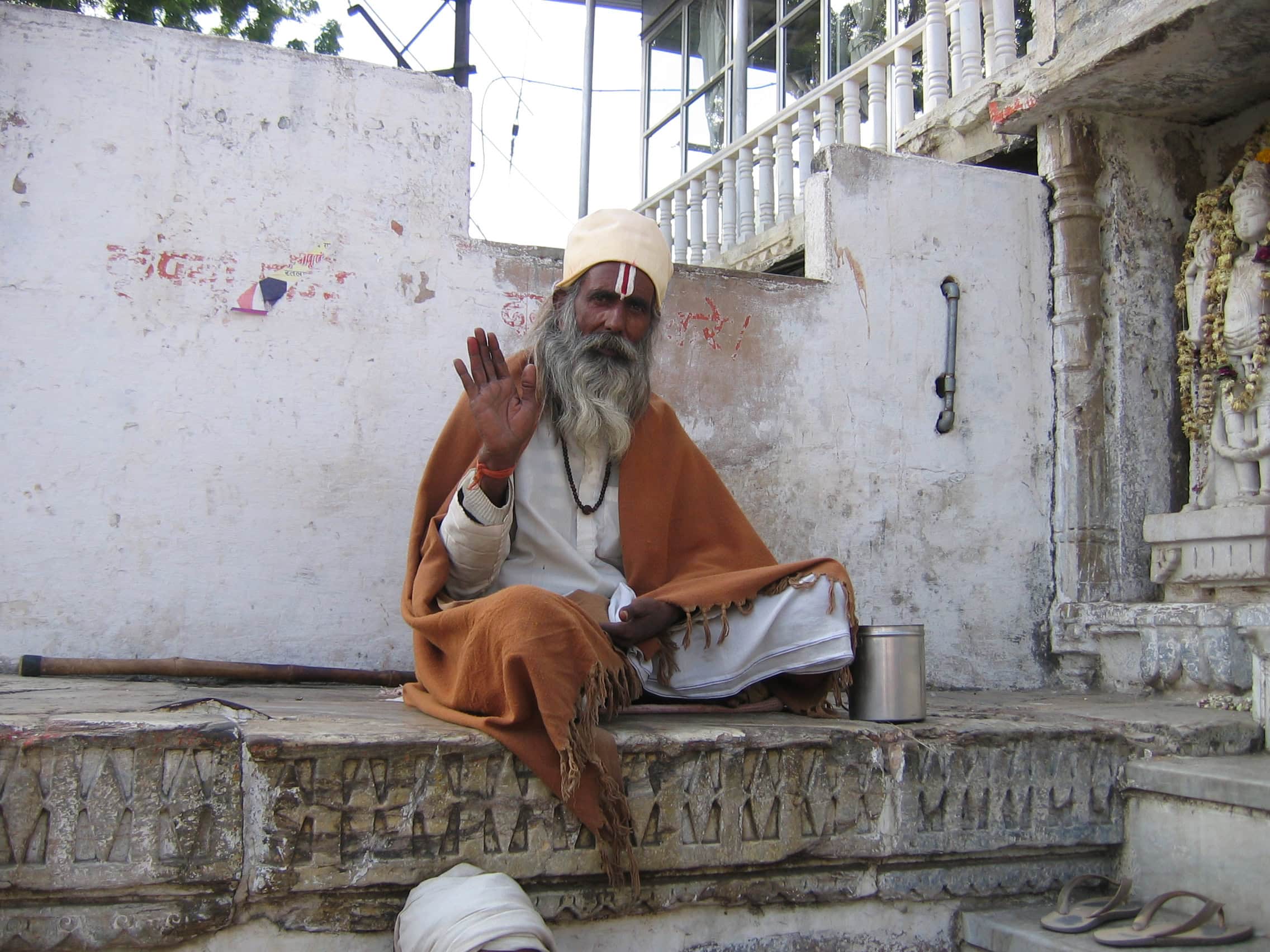
Approach a sadhu and ask to take his photograph, and don’t be surprised if an outstretched hand follows. Twenty rupees. Fifty rupees. Perhaps more.
In a sense, he’s providing a product: his likeness, in exchange for payment.
Baksheesh.
You might argue that someone who has renounced worldly possessions shouldn’t be asking for money to have his photograph taken. On the other hand, he’s not obligated to pose for tourists simply because his appearance interests them.
If you want the photograph, ask permission and agree on an amount beforehand. If you don’t want to pay, thank him and move along.
Then there are the bathroom attendants.
It’s not uncommon to use a restroom at a monument, market, or other public facility and emerge from the stall to find an attendant with an outstretched hand.
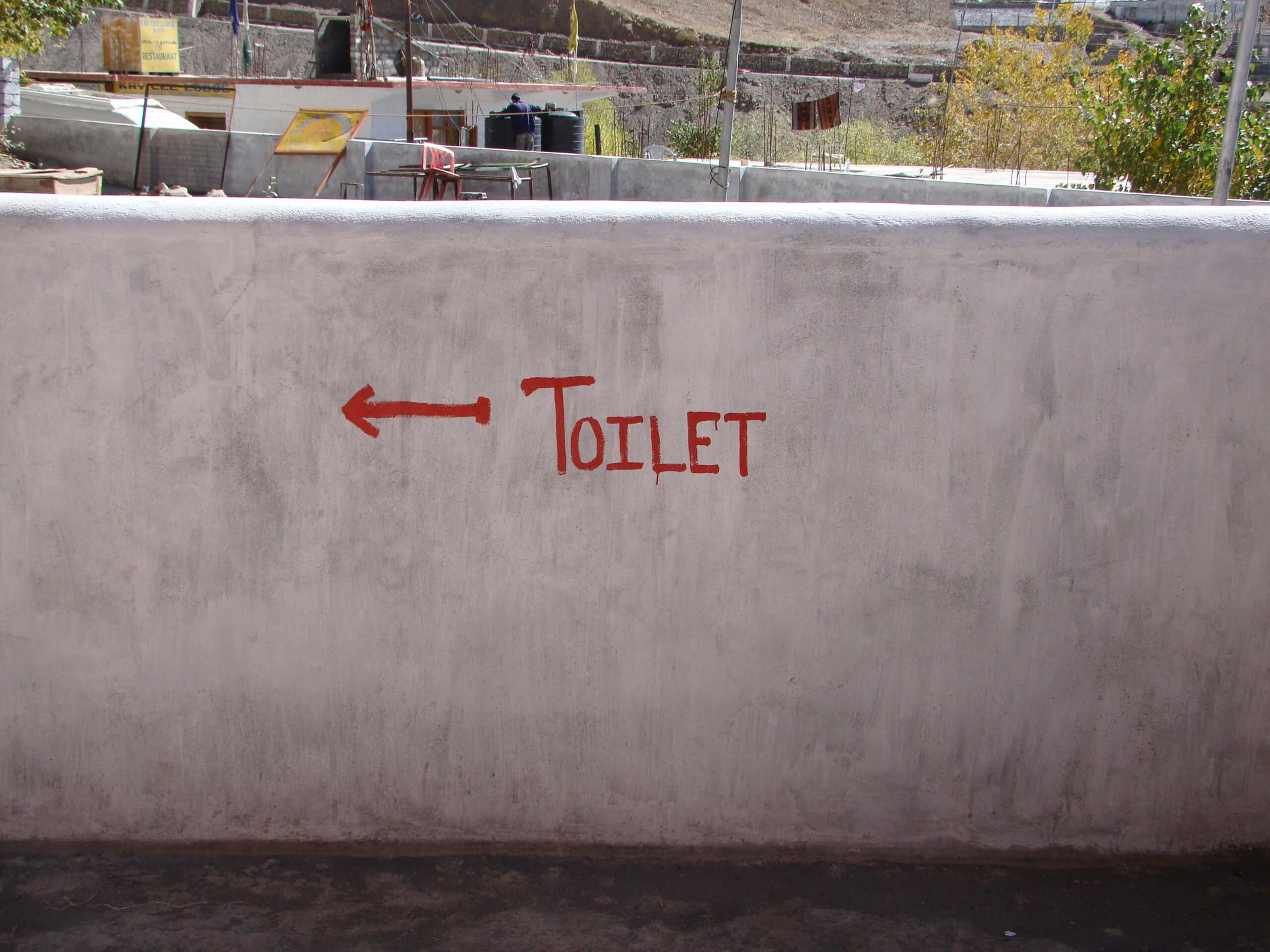
No words necessary. The implication is clear.
A few rupees would be appreciated.
Unless there’s a posted fee, as you’ll sometimes find at designated pay toilets, there’s generally no reason to assume that payment is required simply because someone is standing there.
You can give something if you wish. You can also smile, say thank you, and continue on your way.
Personally, I find these moments a convenient opportunity to put those pesky ₹10 and ₹20 coins I’ve accumulated as change back into circulation.
Not every exchange needs to become a negotiation. Sometimes a small gesture of appreciation is just that.
And sometimes it’s perfectly reasonable to keep walking.
What Should Travelers Do When Someone Asks for Baksheesh?
There isn’t a universal answer, because the circumstances vary so much.
A few principles are worth keeping in mind.
Know what you’re paying for. If you’re purchasing a SIM card, arranging transportation, or paying for another service, ask for the official price and a receipt. An unexplained additional payment should raise questions.
Don’t confuse a tip with an obligation. If someone provides a service and you’d like to show appreciation, that’s your decision. You don’t have to agree to every amount suggested.
Keep smaller rupee notes and coins available. They’re useful for ordinary gratuities, small purchases, and situations where you don’t want to rely on someone making change.
Be cautious when an official requests money. Ask what the charge is for and whether there’s an official receipt or payment process. Don’t offer a bribe to resolve a problem. If you’re traveling with a driver or guide, they may be better positioned to understand what’s happening, although that doesn’t automatically mean every payment they suggest is legitimate.
Don’t let embarrassment make the decision for you. Sometimes the pressure is subtle. Someone looks disappointed, hesitates, or implies that the amount you’ve offered is inadequate. You can remain polite without increasing the payment.
And perhaps most importantly, don’t assume that every person who asks for money is trying to deceive you.
A request for charity, a customary gratuity, and an attempt to extract an unofficial payment deserve different responses.
So, Is Baksheesh Good or Bad?
That’s probably the wrong question.
The word itself isn’t inherently good or bad. What matters is the reason money is being exchanged, whether it’s freely given, and what the person requesting it is expecting in return.
I’ve encountered baksheesh as generosity, as appreciation for service, and as something that felt uncomfortably close to extortion.
Sometimes the distinction is obvious.
Sometimes it becomes clear only after you’ve handed over the money.
At Delhi airport, I knew exactly how I felt about the ₹500 that disappeared during our discreet little handshake.
At Dehradun airport, I was left wondering how a $500 tip could possibly be considered nothing.
Two encounters, two very different circumstances, and one complicated subject.

 Tamil: The Language of Tamil Nadu
 Malayalam: The Language of Kerala
 Why Do Hindu Gods and Goddesses Have So Many Arms?