
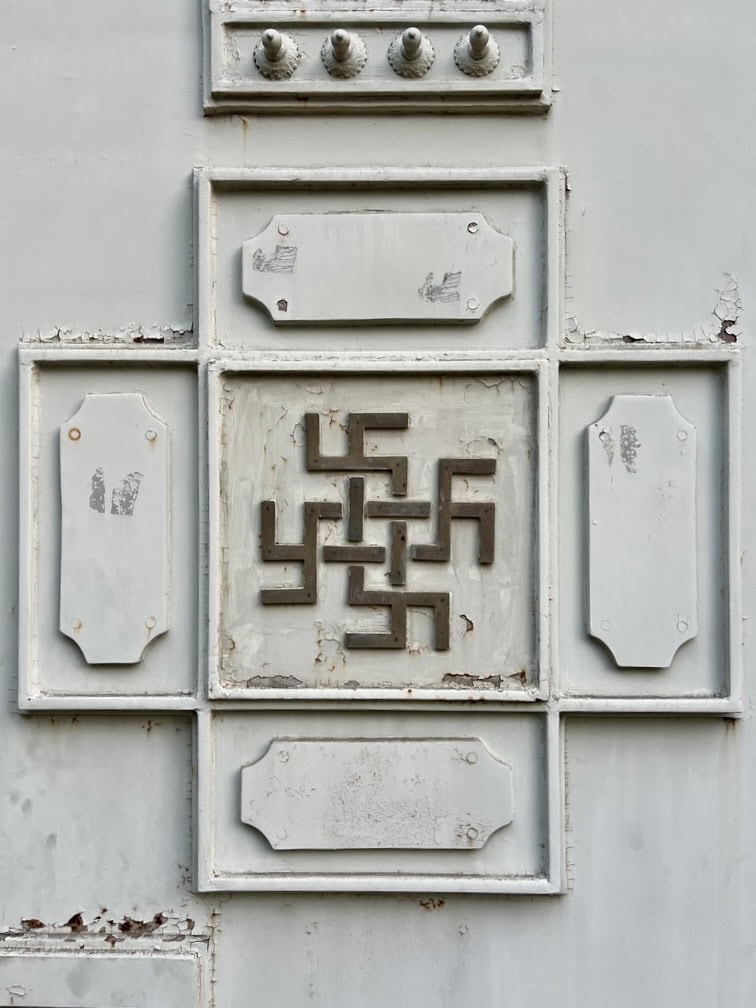
India has a way of making you curious about things you might otherwise walk right past. A swastika painted above a shop entrance, a trident planted beside a roadside shrine, or a small oil lamp flickering in a doorway can leave you wondering about the traditions behind them.
And yes, I said swastika. That infamous symbol, along with nine others, has a meaning and history that might surprise you.
Here are ten important symbols of Hinduism, what they represent, and where you’re likely to encounter them while traveling through India.
1. Om (ॐ)
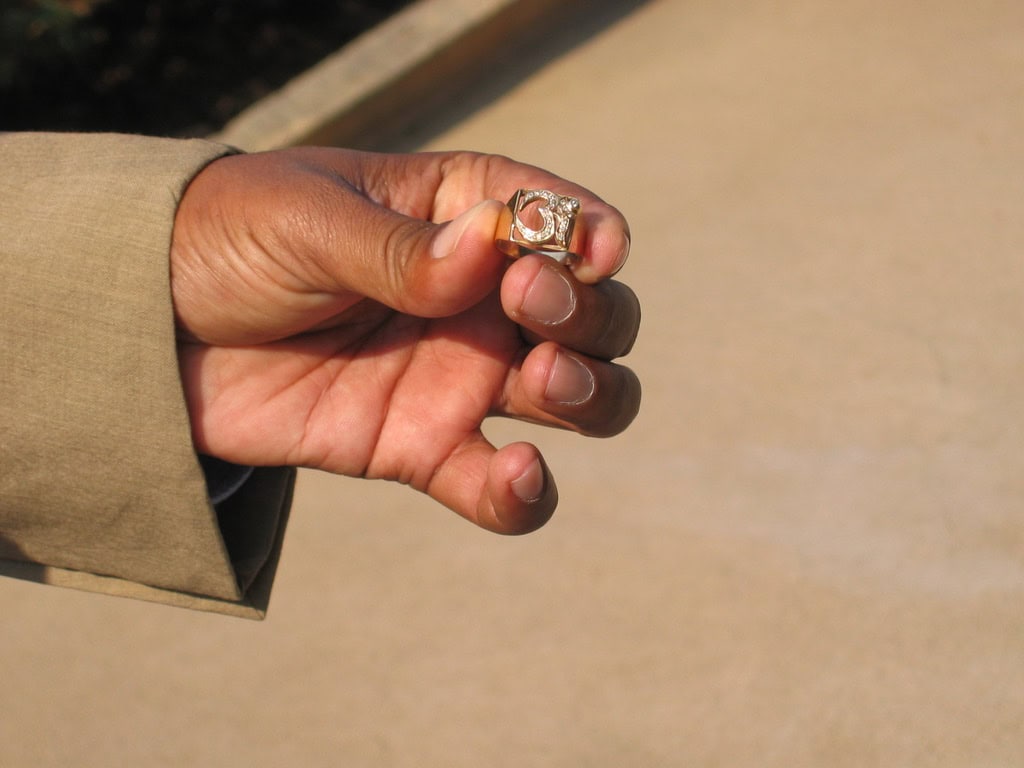
Perhaps the most recognizable symbol associated with Hinduism, Om (also written Aum) is a sacred syllable representing ultimate reality and the sound of the universe. It is chanted during prayers, meditation, and ceremonies.
You’ll see ॐ on temple entrances, religious books, jewelry, and household shrines. While visiting Khajuraho in 2005, I noticed my guide wearing an Om ring made of gold and diamonds. I asked if I could photograph it, which immediately earned me a smile and an enthusiastic yes!
2. Namaste (नमस्ते) — Hands Joined in Greeting
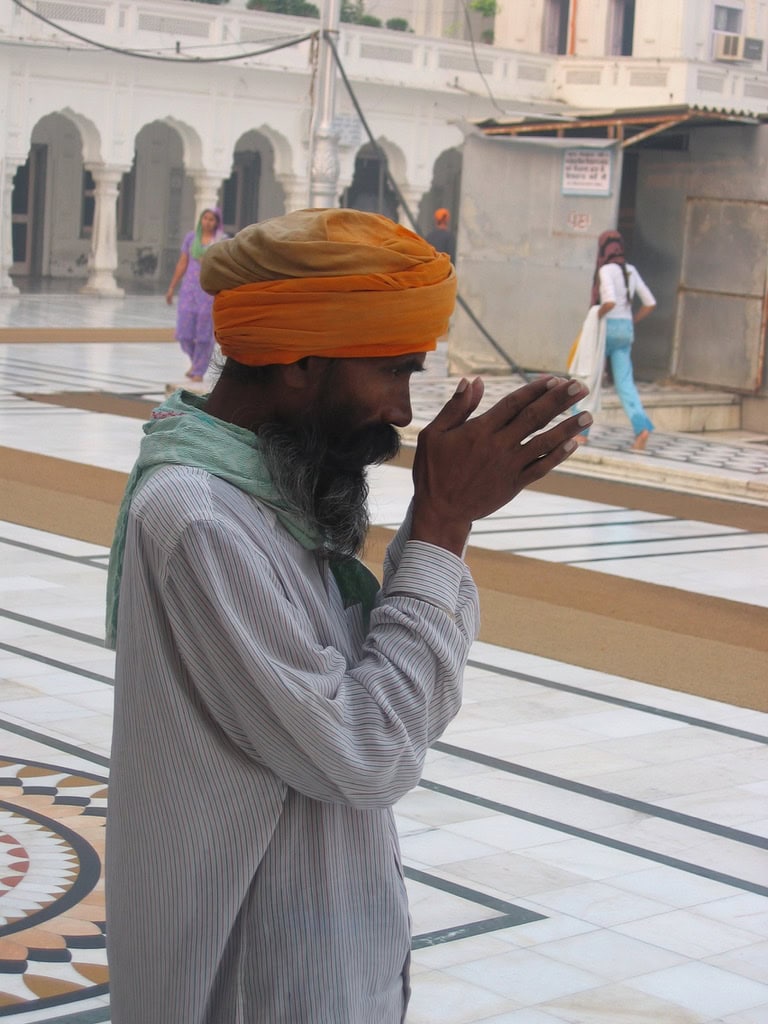
You’ve probably encountered this gesture before arriving in India. With the palms pressed together in front of the chest, the gesture is known as anjali mudra. When accompanied by the greeting namaste or namaskar, it conveys respect and acknowledgment. The Sanskrit word namaste can be understood as “I bow to you.”
Unlike so many Indian customs portrayed in films and on television, namaste really is practiced throughout the country. It conveys a genuine sense of welcome and respect, particularly toward guests.
I’ve also seen it misused by travelers, usually with the best intentions. A nervous visitor pressing their palms together to greet an auto-rickshaw driver, or someone offering a namaste to every hotel employee they pass on the way to breakfast. There’s nothing particularly offensive about it, although it can look a little forced.
As you find your feet in India, you’ll begin to recognize when a namaste feels natural and when a simple hello will do. There’s no precise rule about who gets one and who doesn’t. Much depends on the setting, the relationship, and the moment.
In temples, you’ll also see worshippers standing before a deity with their palms joined in prayer. The gesture is the same, although its purpose is different.
3. Lotus (Padma)
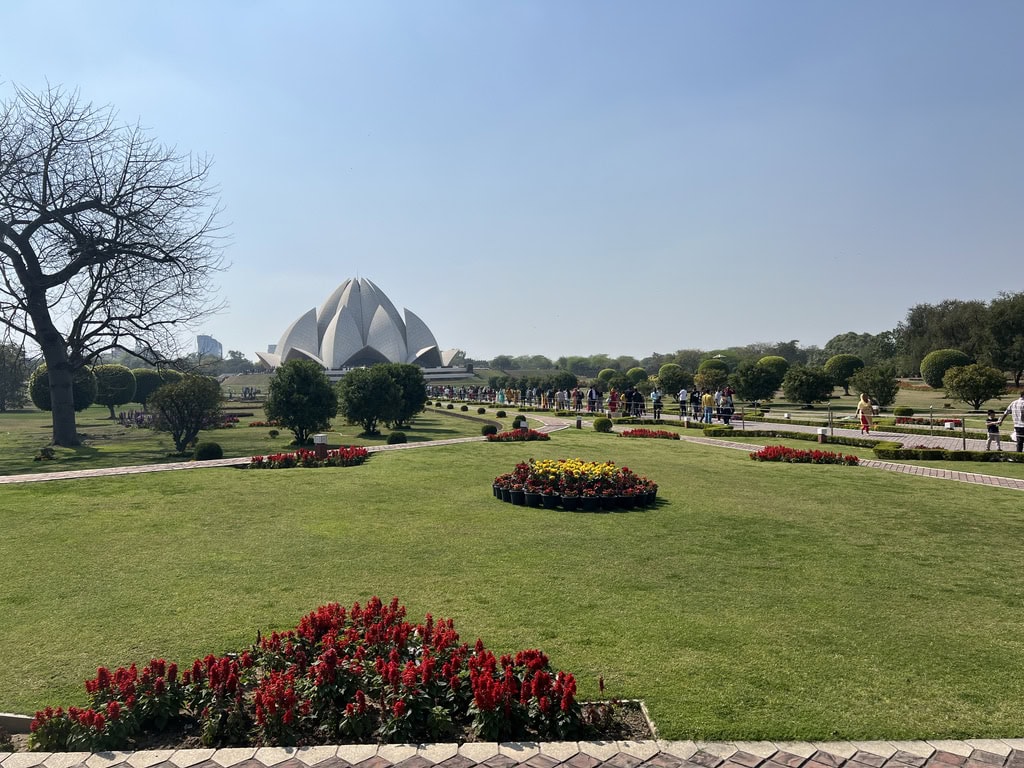
The lotus grows rooted in muddy water yet opens into a clean flower above the surface. That is why it has long represented purity and spiritual growth.
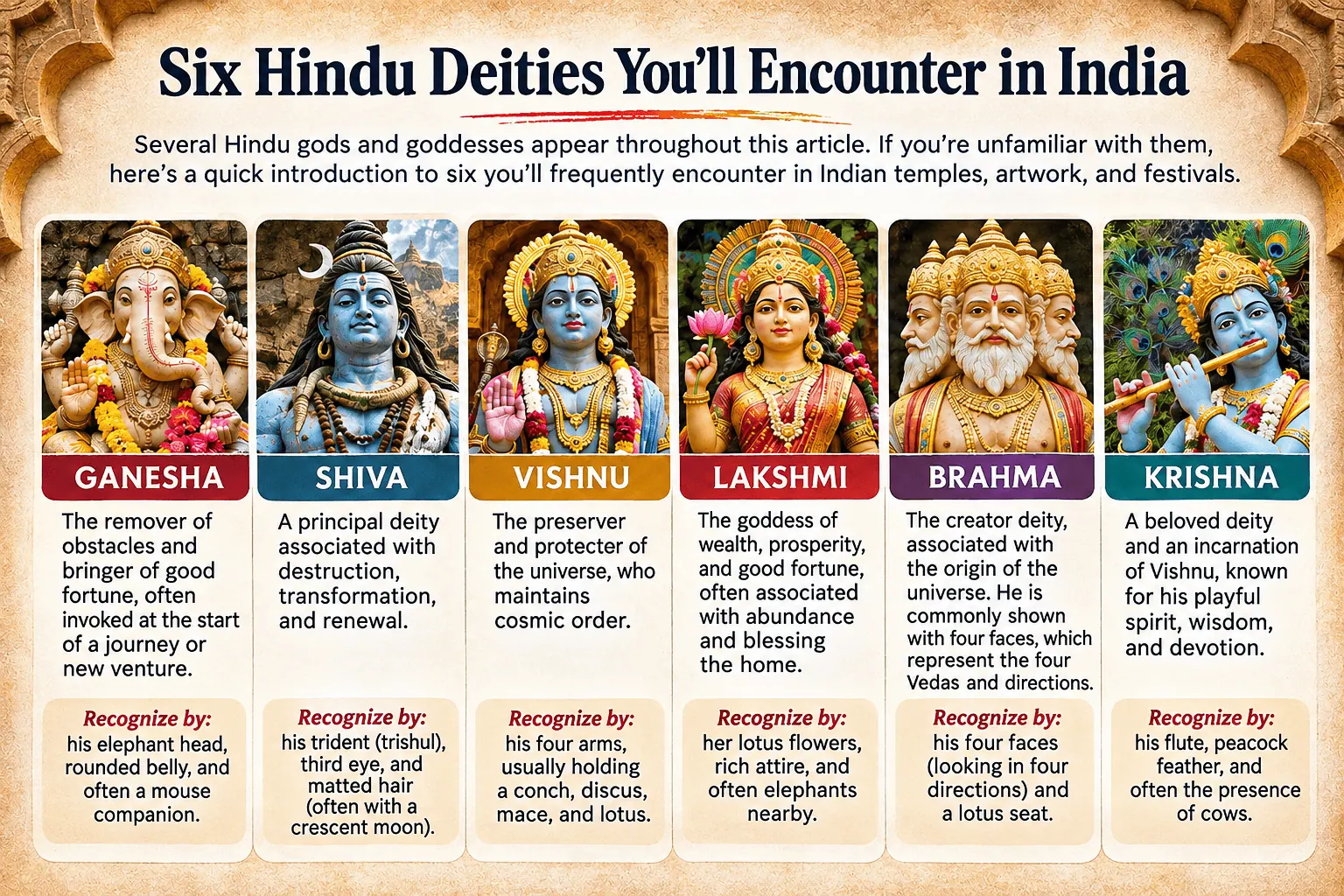
Look for it beneath Lakshmi, the goddess of wealth and prosperity, or beneath Brahma, the creator deity. Lotus flowers also appear in temple carvings, textiles, and paintings throughout India.
If your travels take you to Delhi, make time for the Lotus Temple, officially the Bahá’í House of Worship. The lotus-shaped building is visually stunning, and I found the adjacent visitor information centre even more impactful. It isn’t a Hindu temple, but its architecture shows how far the lotus motif reaches beyond Hinduism. I didn’t finally visit until 2024. How I managed to miss it for all those years is a head-scratcher.
4. Conch Shell (Shankha)
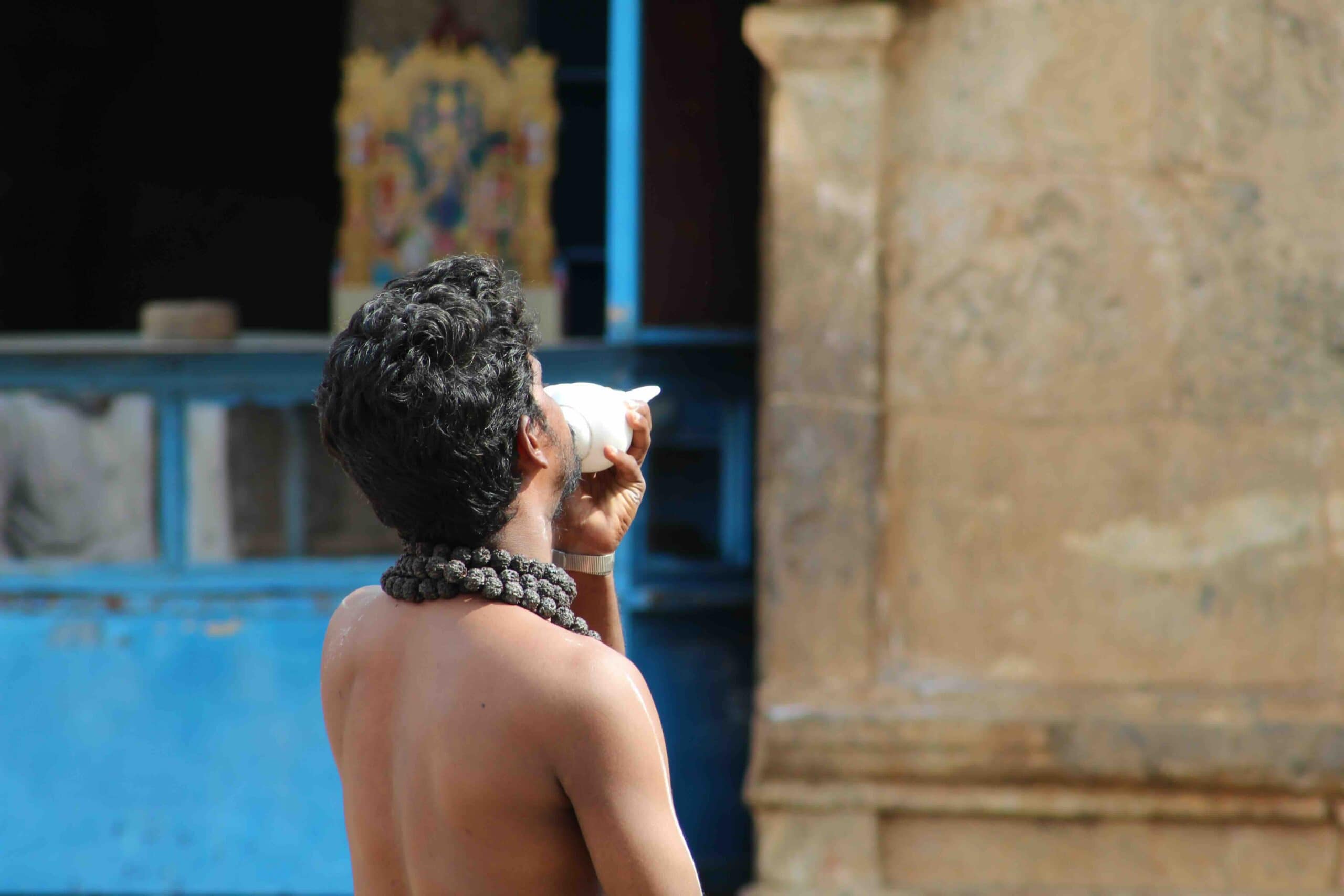
The shankha is a spiraling seashell that doubles as a ritual instrument. Blow into its opening and it produces a deep, carrying sound heard during worship and religious ceremonies. Many aarti ceremonies begin with the blowing of a conch shell.
It is one of the four objects held by Vishnu, the Hindu deity associated with preserving and protecting cosmic order. The others are a discus, mace, and lotus. The conch announces worship and is regarded as auspicious.
5. Swastika (स्वस्तिक)
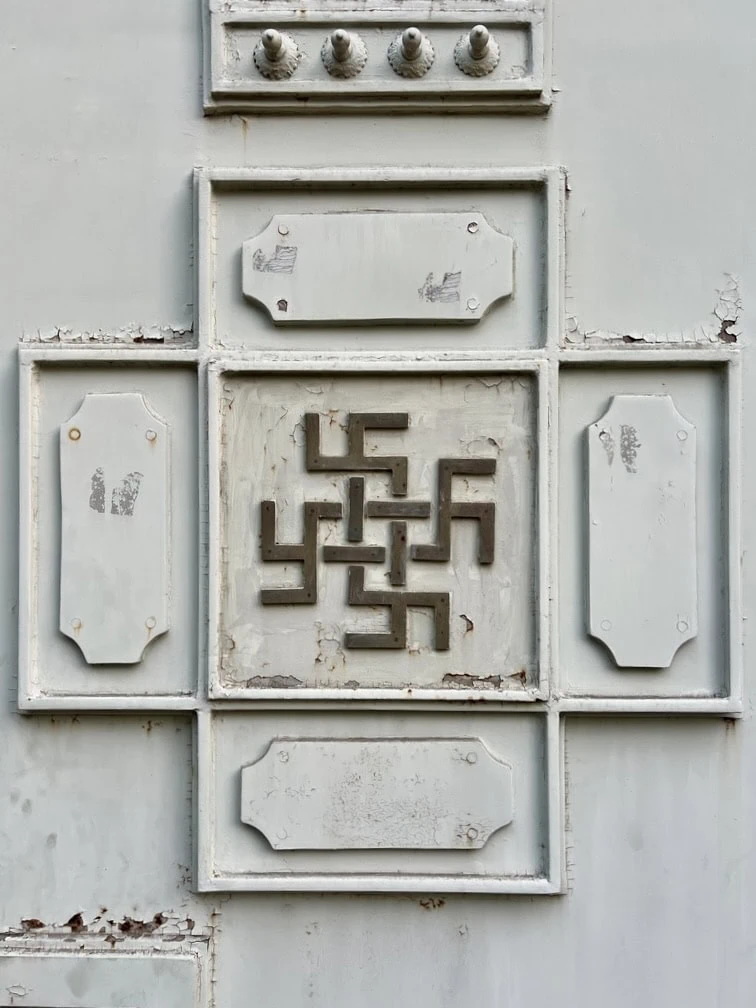
This is one symbol that can surprise Western visitors. It certainly caught my eye within my first day of arriving in India. Now, after more than twenty years of traveling here, it feels perfectly natural to spot the swastika incorporated into architecture, printed on posters, and even worn on clothing.
Long before its appropriation by Nazi Germany, the swastika was an auspicious religious symbol in Hinduism and other Indian traditions. Its name is related to the Sanskrit word svasti, associated with well-being and good fortune.
In India, you’ll see swastikas painted beside doorways, displayed in temples, incorporated into wedding decorations, and drawn during Diwali celebrations. The symbol is frequently associated with Ganesha, the elephant-headed deity invoked at new beginnings, and Lakshmi, goddess of prosperity.
Its religious history extends back thousands of years. The Nazi emblem’s history understandably shapes how Western visitors react, but a swastika at a Hindu temple or shop entrance carries a very different meaning. Orientation and the presence of decorative dots aren’t foolproof ways to distinguish contexts.
6. Trident (Trishul)
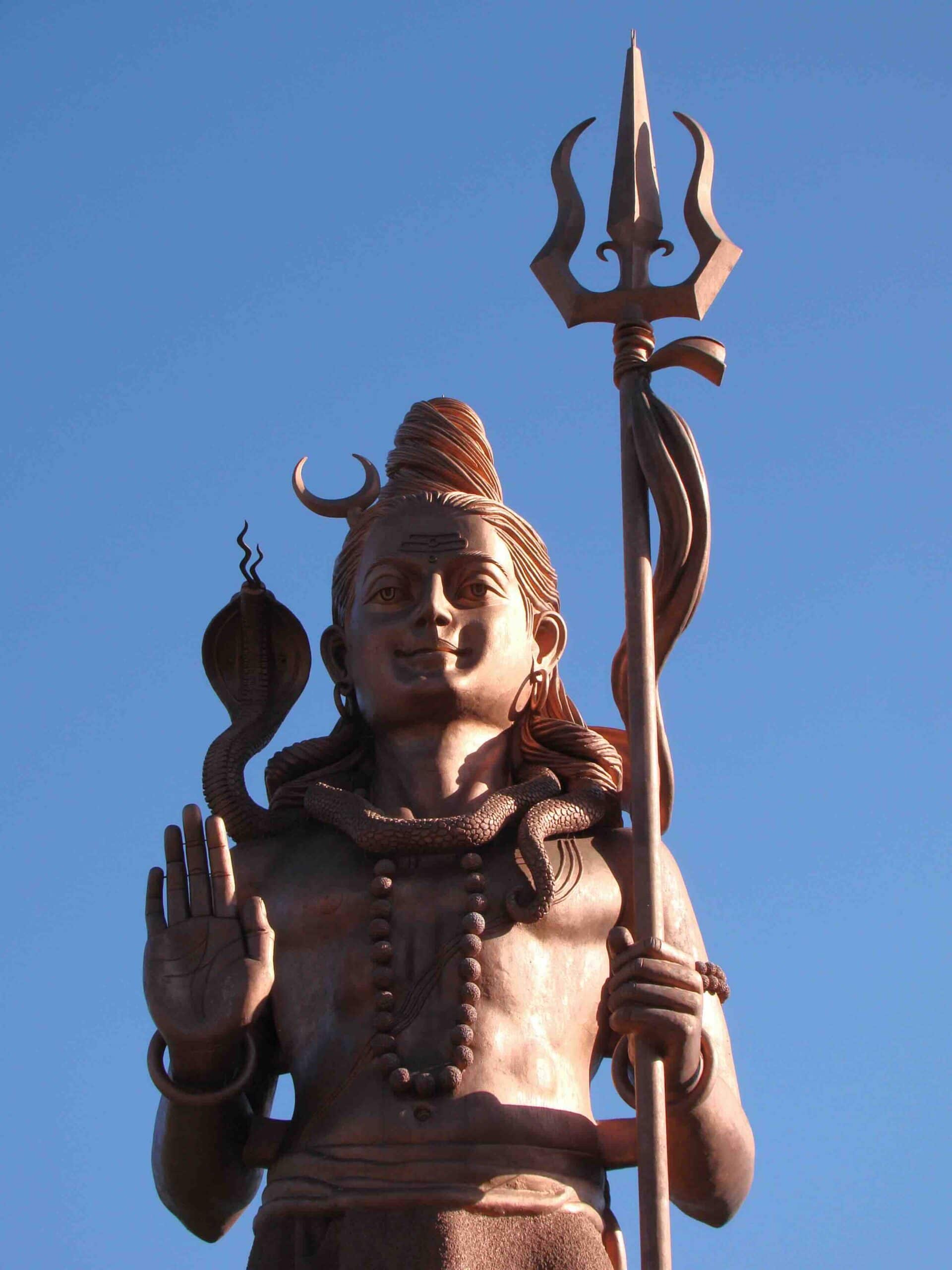
The trishul is a three-pronged spear associated with Shiva, one of Hinduism’s principal deities. Shiva is linked to destruction and transformation, but destruction here also makes renewal possible.
You’ll see metal tridents near Shiva temples, in roadside shrines, and carried by some ascetics devoted to him. The three points have been interpreted in different ways, including as creation, preservation, and destruction.
7. Kalasha — The Sacred Pot
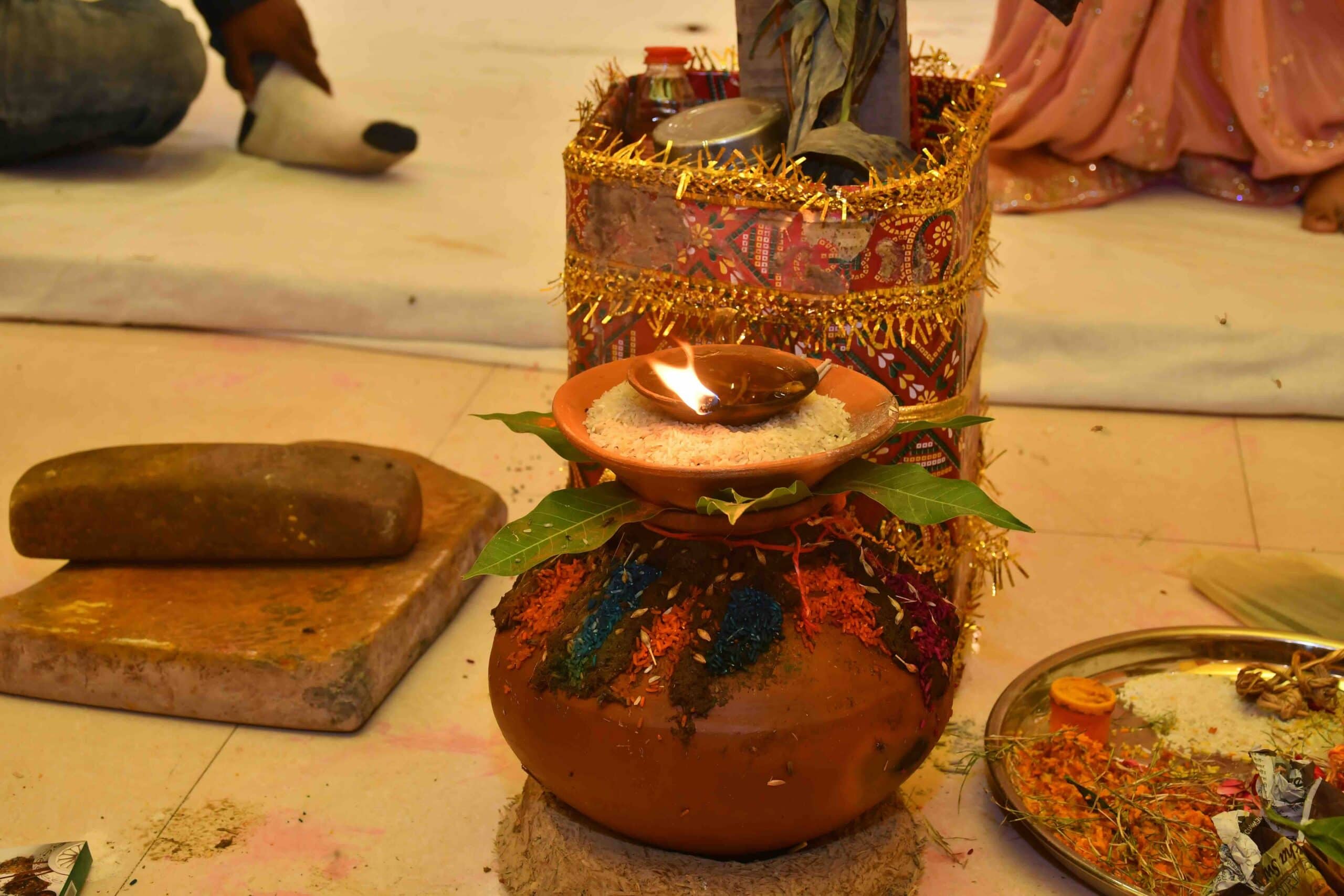
A kalasha is usually a brass or copper pot filled with water, with mango leaves arranged around a coconut resting on top. It is prepared for weddings, housewarmings, and religious ceremonies.
The pot signifies abundance and auspiciousness, and in worship it can serve as a vessel for divine presence. Once you know its distinctive shape, you’ll start recognizing it in temporary festival shrines and household rituals.
8. The Cow (Gau Mata)
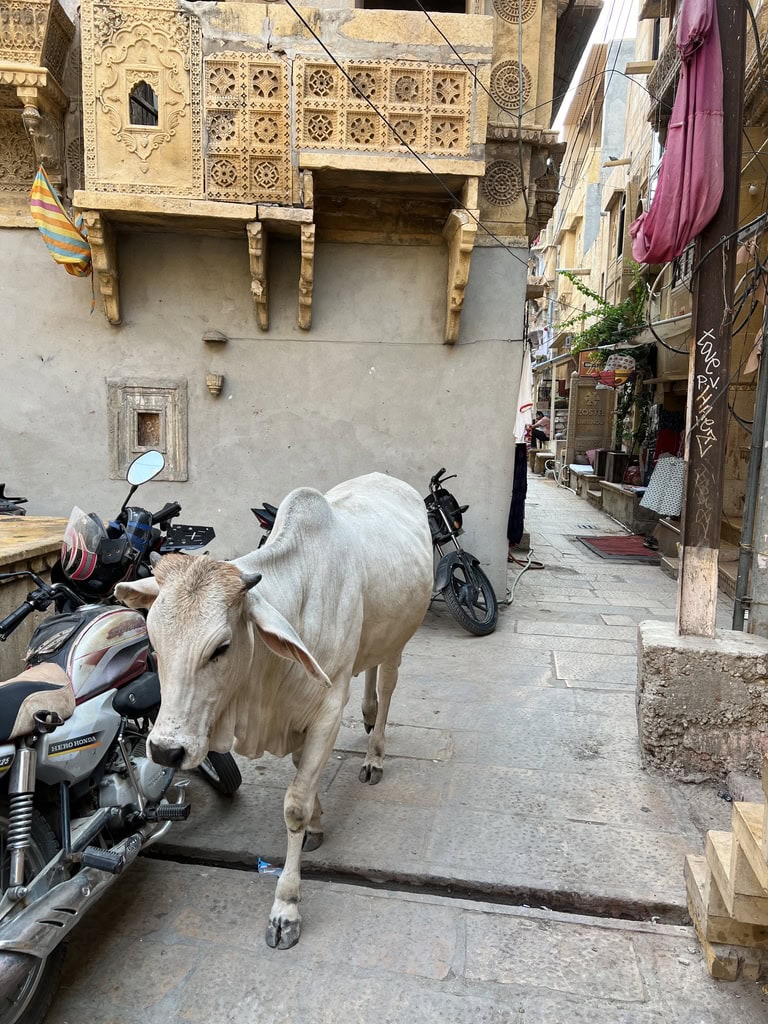
Cows are a familiar sight on India’s streets, sometimes walking through traffic or settling down beside a shop. Their religious importance goes far beyond their visibility in everyday life.
In many Hindu traditions, the cow represents motherhood, nourishment, and nonviolence. Gau Mata means Mother Cow. Cows are also closely linked with Krishna, a beloved deity often shown playing a flute and tending cattle in stories of his youth.
The animal’s place in Indian agriculture and its provision of milk and ghee helped shape this reverence. You may also encounter gaushalas, shelters devoted to caring for cattle. I stumbled upon one in the heart of Mumbai, surrounded by skyscrapers as far up as I could look. We were asked not to take photographs, out of reverence for the animals. It was a fascinating place to find amid all that concrete and glass. India hai.
9. Tilak — The Forehead Mark
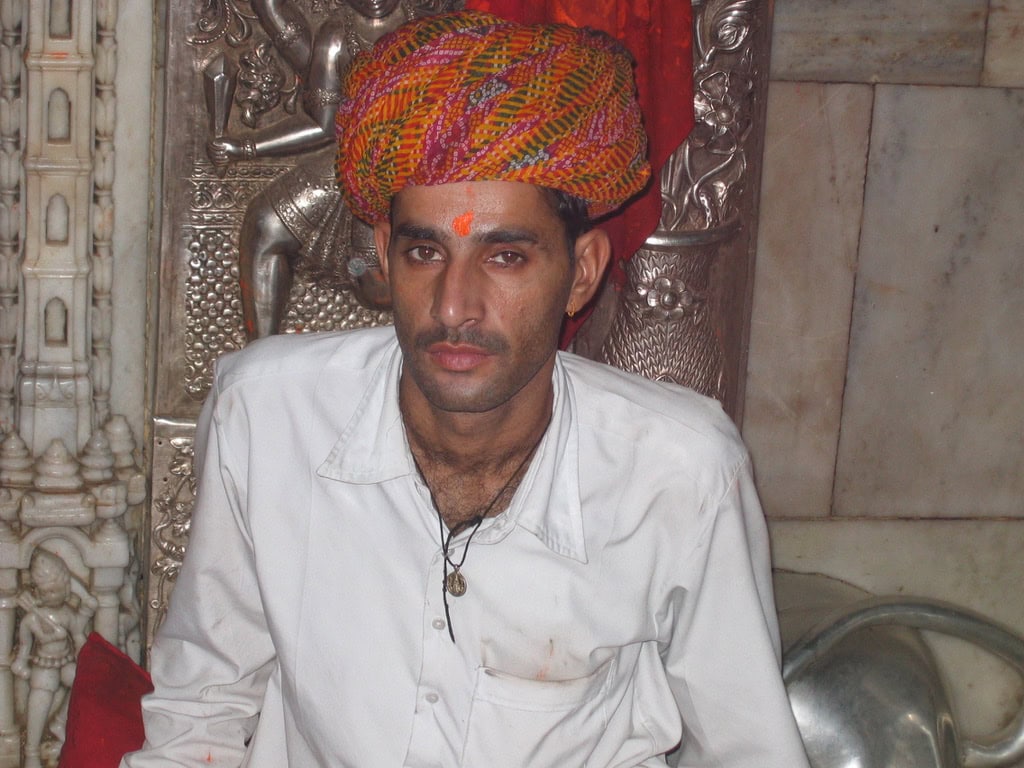
The colored mark on someone’s forehead may be a tilak or tika, applied during worship, blessings, or celebrations. It might be a red dot, a vertical line, or a more elaborate pattern drawn with sandalwood paste, ash, or other materials. It’s nearly impossible to spend much time in India without being offered one yourself. For Western visitors, it can bring smiles, giggles, irritation, or a moment of awkwardness. It’s unfamiliar, and not everyone knows how to react. But emerge from a temple or blessing wearing a tilak, and you may find passersby delighted that you took part.
Some markings indicate devotion to a particular deity or religious tradition; others are applied temporarily after a temple visit or ceremony. Notice how different the markings can look from one place to another.
10. Diya (Deepa) — The Oil Lamp
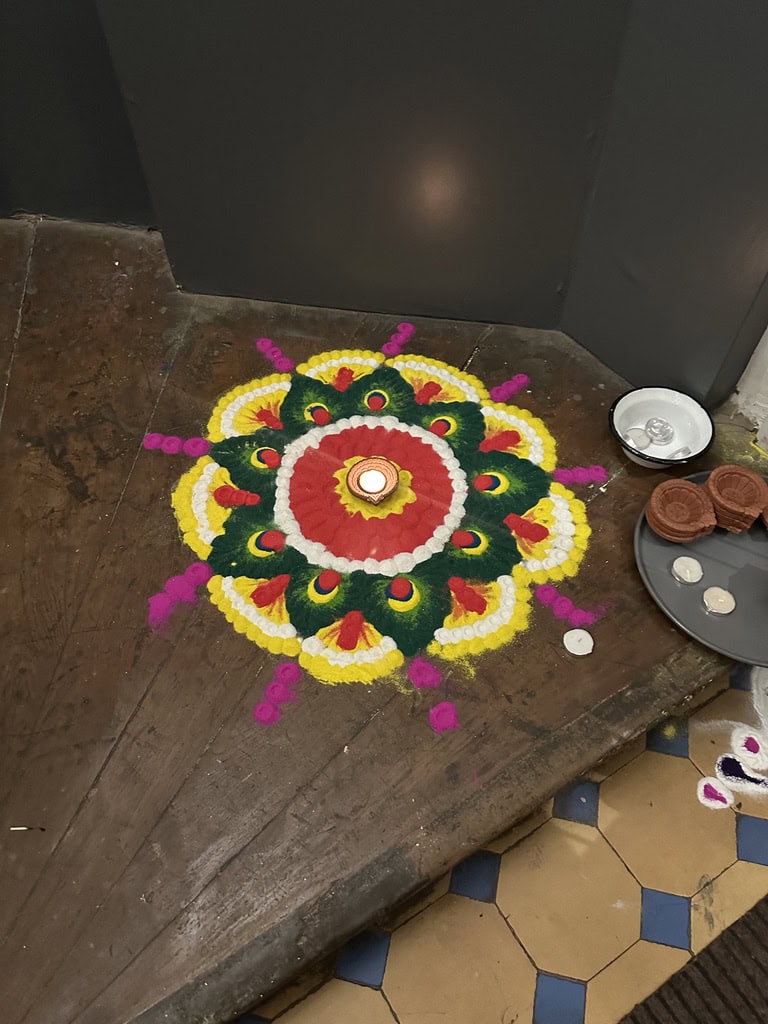
A diya is a small clay or metal lamp holding oil or ghee and a cotton wick. Its flame represents light overcoming darkness and knowledge overcoming ignorance.
Diyas appear in home shrines, temples, and especially during Diwali, when rows of lamps illuminate doorways and courtyards. They are also part of aarti, the ritual offering of light before a deity. Take a moment. Light a diya. Sit with it for a while. You can feel the energy of that small flame.
Recognizing these ten symbols won’t make you an expert in Hinduism. It will, however, make a temple visit, a neighborhood walk, or a festival procession a little more understandable.

 Lungi: The Everyday Dress of South India
 It’s Pronounced Desi Not Desi
 The Masala Dabba: Inside India’s Traditional Spice Box

