
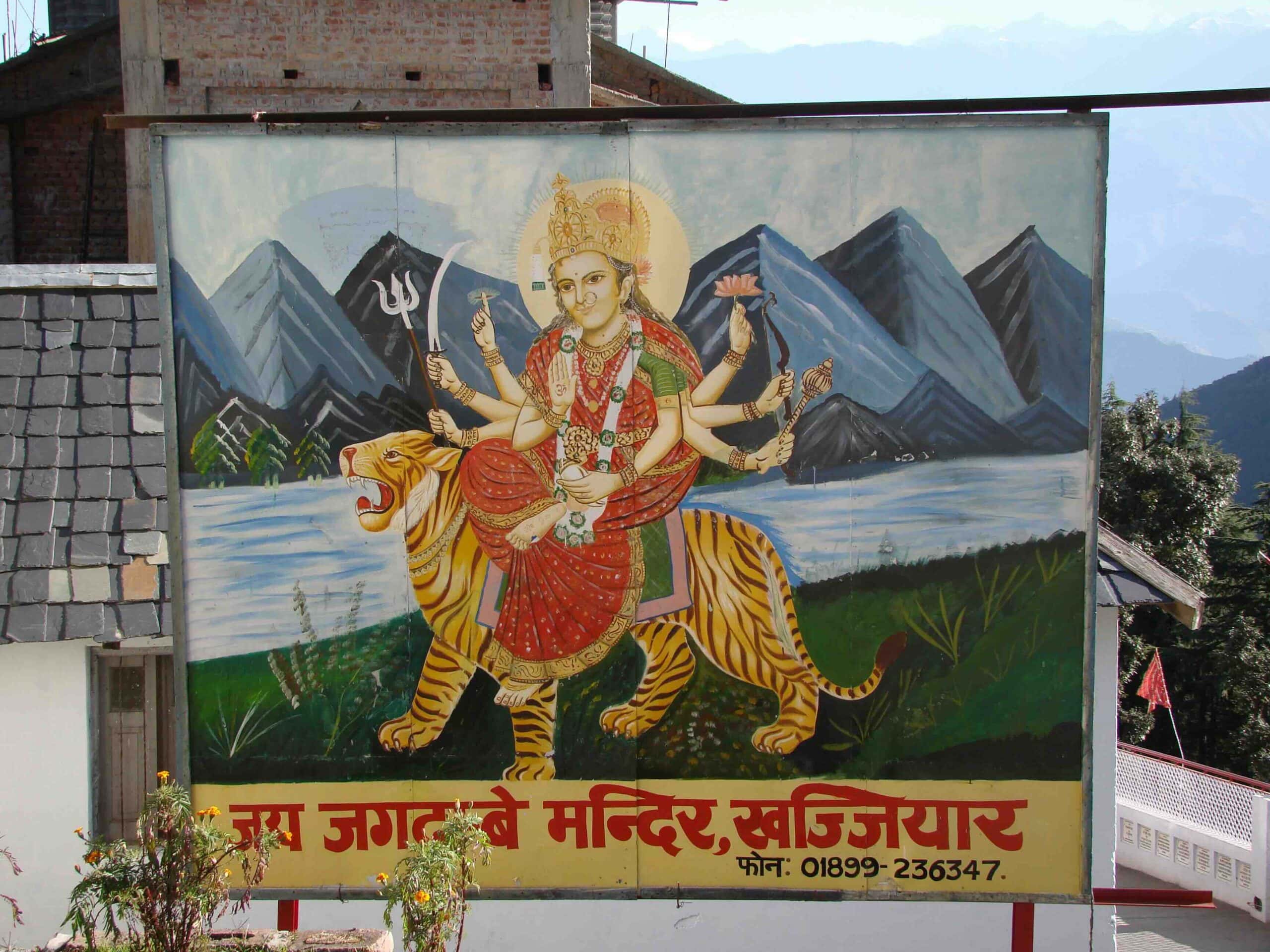
Four arms. Eight arms. Sometimes ten or more. And every hand seems to be holding something different. What’s going on?
Hinduism is the largest religion in India, practiced by roughly 80 percent of the population. It’s also one of the world’s oldest religious traditions, with a vast collection of gods, goddesses, stories, rituals, and philosophies.
Unlike religions with a single, universally accepted understanding of God, Hinduism encompasses many different beliefs about the divine. Some Hindus worship a particular god or goddess as supreme, while others understand the various deities as different manifestations of one ultimate divine reality.
Vishnu, Shiva, Lakshmi, Durga, Ganesha, and Hanuman are among the most recognizable. Each has particular associations, stories, and forms of worship.
And in India, you don’t have to visit a temple to see them.
Images of Hindu gods and goddesses are everywhere. Framed pictures hang in homes and businesses. Small statues sit on shop counters and car dashboards. Their faces appear on calendars, posters, television programs, and advertisements. During religious festivals, entire streets may be decorated with enormous images or temporary shrines dedicated to a particular deity.

One of the more curious things about these images is the number of arms some gods and goddesses have. Four is common, but eight, ten, or even more isn’t unusual.
And then there’s the assortment of things they’re holding. Swords, flowers, tridents, conch shells, and sometimes nothing at all.
It’s not random, nor is it simply artistic license. There’s a meaning behind the extra arms, the objects they carry, and even the way their fingers are positioned.

Getting to Know a Few Hindu Deities
Before getting into the arms, it helps to recognize a few of the gods and goddesses you’re likely to encounter.
Vishnu
Associated with preserving and protecting the universe. Often depicted with blue skin, four arms, and a collection of distinctive objects.
Shiva
Associated with destruction, transformation, and renewal. Recognizable by his trident, matted hair, and sometimes a snake around his neck.
Lakshmi
Goddess of wealth, prosperity, and good fortune. Frequently depicted seated or standing on a lotus, sometimes with gold coins flowing from her hand.
Durga
A powerful goddess associated with protection and the defeat of evil. Commonly shown riding a lion or tiger and carrying weapons in her many hands.
These are only four examples. Hindu religious imagery includes countless other deities and regional forms, each with its own recognizable characteristics.
Why So Many Arms?
Multiple arms represent the different powers and qualities of a Hindu deity. They allow artists to depict several aspects of a god or goddess at once, through objects, gestures, and scenes from Hindu mythology.
Hindu traditions also describe deities appearing in extraordinary forms, including those with multiple arms and heads. How these forms are understood varies among worshippers and traditions.
Does having ten arms make a deity more powerful than one with four? Not necessarily. The number depends on the deity, the particular form being depicted, and sometimes the story being told. Even the same deity may appear with different numbers of arms.
Who Decided What the Gods Should Look Like?
Hindu sculptors didn’t simply choose the number of arms or the objects in them on a whim. Artistic and religious traditions developed over centuries, with texts associated with the Shilpa Shastras and Agamas describing aspects of sacred imagery, proportions, and temple design.
These conventions vary by region and period. A stone sculpture in Tamil Nadu might look quite different from a painting in Rajasthan, even when both depict the same deity. But familiar objects and gestures often remain recognizable.
What’s in All Those Hands?
Think of the objects as clues.
A trident? You’re probably looking at Shiva. A conch and a discus? Vishnu is a good bet. An elephant head? Well, that one’s considerably easier.
The objects are known as attributes, and they’re closely associated with particular deities and their powers.
Here are eight worth recognizing.

| Object | Associated deity | What it represents |
|---|---|---|
| Chakra — Discus | Vishnu, Durga | Divine power, protection, and cosmic order. Vishnu’s Sudarshana Chakra is a weapon used to defeat evil. |
| Shankha — Conch shell | Vishnu | Sacred sound and divine presence. Conch shells are also blown during worship. |
| Trishul — Trident | Shiva, Durga | Divine power and the destruction of evil and ignorance. Its three points have several interpretations. |
| Padma — Lotus flower | Lakshmi, Vishnu, Saraswati | Purity, beauty, and spiritual awakening. The lotus rises clean from muddy water. |
| Gada — Mace | Vishnu, Hanuman | Strength, authority, and the power to overcome obstacles. |
| Damaru — Small drum | Shiva | Creation and the rhythm of existence, particularly in images of Shiva as Nataraja. |
| Khadga — Sword | Durga, Kali | Courage, knowledge, and the destruction of ignorance and evil. |
| Pasha — Noose | Ganesha, Varuna | Restraint and control; in Ganesha’s imagery, it can suggest overcoming attachments or drawing devotees closer. |
Of course, recognizing the object is only half the story. Knowing why a deity carries it makes things more interesting.
Durga and Her Collection of Weapons

Durga is frequently depicted with eight or ten arms, sometimes more, carrying an impressive collection of weapons.
There’s a reason for that.
In the Devi Mahatmya, the gods contribute their powers and weapons to Durga as she prepares to battle Mahishasura, a buffalo demon. Her many arms allow her to wield those weapons simultaneously.
So when you see Durga holding a sword, trident, discus, and other weapons, you’re looking at a representation of divine powers brought together to defeat evil.
It’s not simply a goddess who happens to be exceptionally well-armed.
Shiva and His Little Drum
Shiva’s depiction as Nataraja, the cosmic dancer, is another excellent example.
In one hand he holds a small drum called a damaru, associated with creation and the rhythm of existence. Another holds fire, representing destruction.
One hand offers reassurance, while another gestures toward his raised foot, associated with liberation.
Even the figure beneath Shiva’s other foot has meaning, commonly interpreted as representing ignorance.
Nothing about the composition is accidental. The entire sculpture tells a story.
Vishnu: Four Arms, Four Objects
Vishnu is one of the easiest deities to recognize once you know what to look for.
He’s commonly depicted with four arms, each holding one of four traditional objects.

These attributes can identify Vishnu even in a weathered sculpture. Their arrangement can also indicate a particular form of the deity.
What About the Hands That Aren’t Holding Anything?
Not every hand needs an accessory.
Some are positioned in deliberate gestures known as mudras. You’ll encounter these in Hindu religious imagery, classical Indian dance, and religious rituals.
Two are especially common.
Abhaya mudra: A raised hand with the palm facing outward. It’s generally associated with protection, reassurance, and freedom from fear.
Varada mudra: A lowered, open hand, commonly associated with generosity, blessings, and the granting of wishes.
The complete hand position matters, not simply whether the fingers point upward or downward.
And once you start noticing these gestures, you’ll see them everywhere, from ancient stone carvings to contemporary temple statues.
And Why Do Some Have Multiple Heads?
If the additional arms weren’t enough, you’ll also encounter Hindu deities with multiple heads or faces.
Brahma, for example, is commonly depicted with four faces, associated with the four directions and, in some interpretations, the four Vedas.
Other deities appear in multi-headed forms for different reasons, often connected to particular stories or aspects of their divine nature.
The extra heads have their own meanings. They’re not simply another opportunity for the sculptor to show off.
How to Read a Hindu Temple Sculpture
The hands aren’t the only clues. The animal accompanying a deity can be just as revealing as the objects being held. These animals are known as vahanas, often described as the vehicles or mounts of Hindu deities.
Shiva is associated with Nandi, the bull; Vishnu with Garuda, a bird-like divine being; Durga with a lion or tiger; and Ganesha with a mouse.
Posture and surrounding figures matter, too. Shiva dancing within a ring of flames is different from Shiva seated in meditation, while smaller figures may identify a particular mythological story. Regional traditions and centuries of wear can make some sculptures harder to identify.
Next Time You’re at a Temple
A knowledgeable guide can make all the difference when visiting India’s elaborate temples and monuments. What might otherwise be a quick look at some impressive carvings can turn into a fascinating lesson in Hindu mythology, with stories and details you’d never have picked up on your own.
It’s the difference between walking away thinking, “OK, cool, I saw that,” and “Vah! That was unbelievable!”

 Tamil: The Language of Tamil Nadu
 Malayalam: The Language of Kerala
 The Indian Toilet: Everything You Were Afraid to Ask