
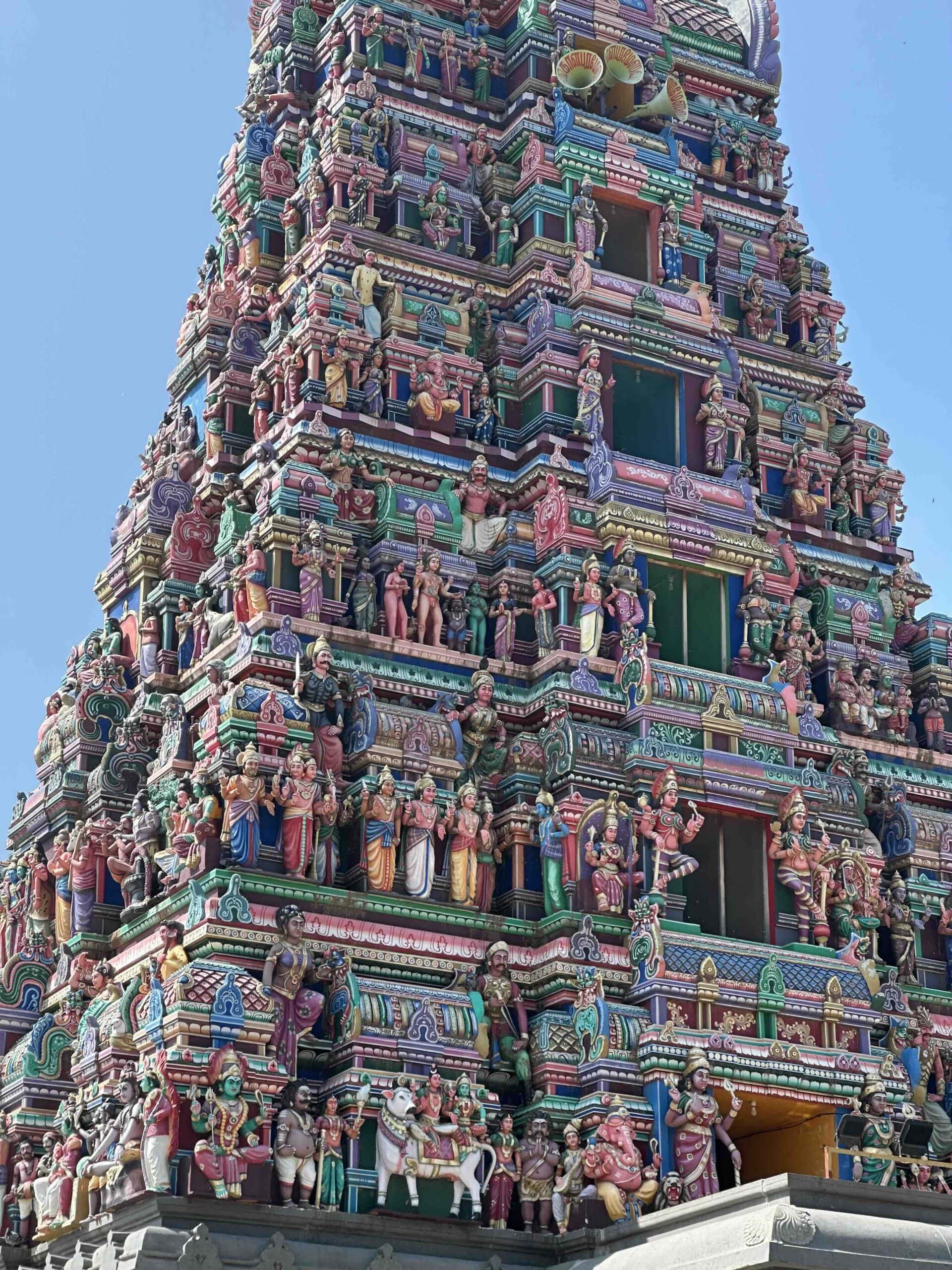
Like a steeple marks a church for Christians, and minarets signify a mosque for Muslims, Hindu temples of South India can be easily located by a gopuram. It is the entrance gateway to a Hindu temple enclosure and one of the most iconic features of South Indian temple architecture.
Also known as gopuras, these rectangular, layered towers can rise more than 50 meters in height. In fact, the Rajagopuram at Sri Ranganathaswamy Temple in Srirangam, Tamil Nadu, reaches approximately 72 meters (236 feet). Its 13 tiers make it roughly as tall as a 20-story building! Remarkably, the tower was completed only in 1987, despite being part of a temple complex with a history stretching back many centuries.
What does a gopuram look like?
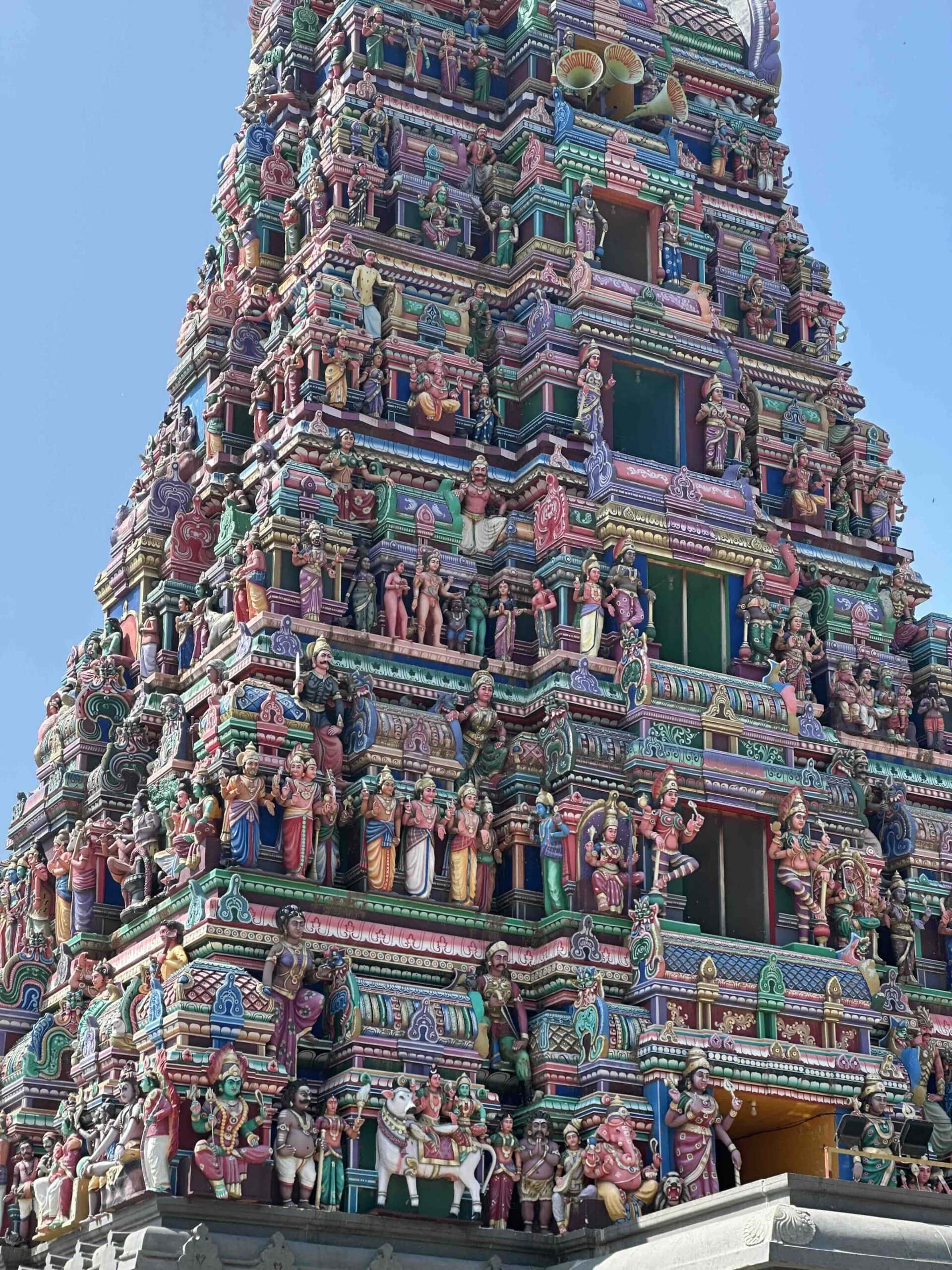
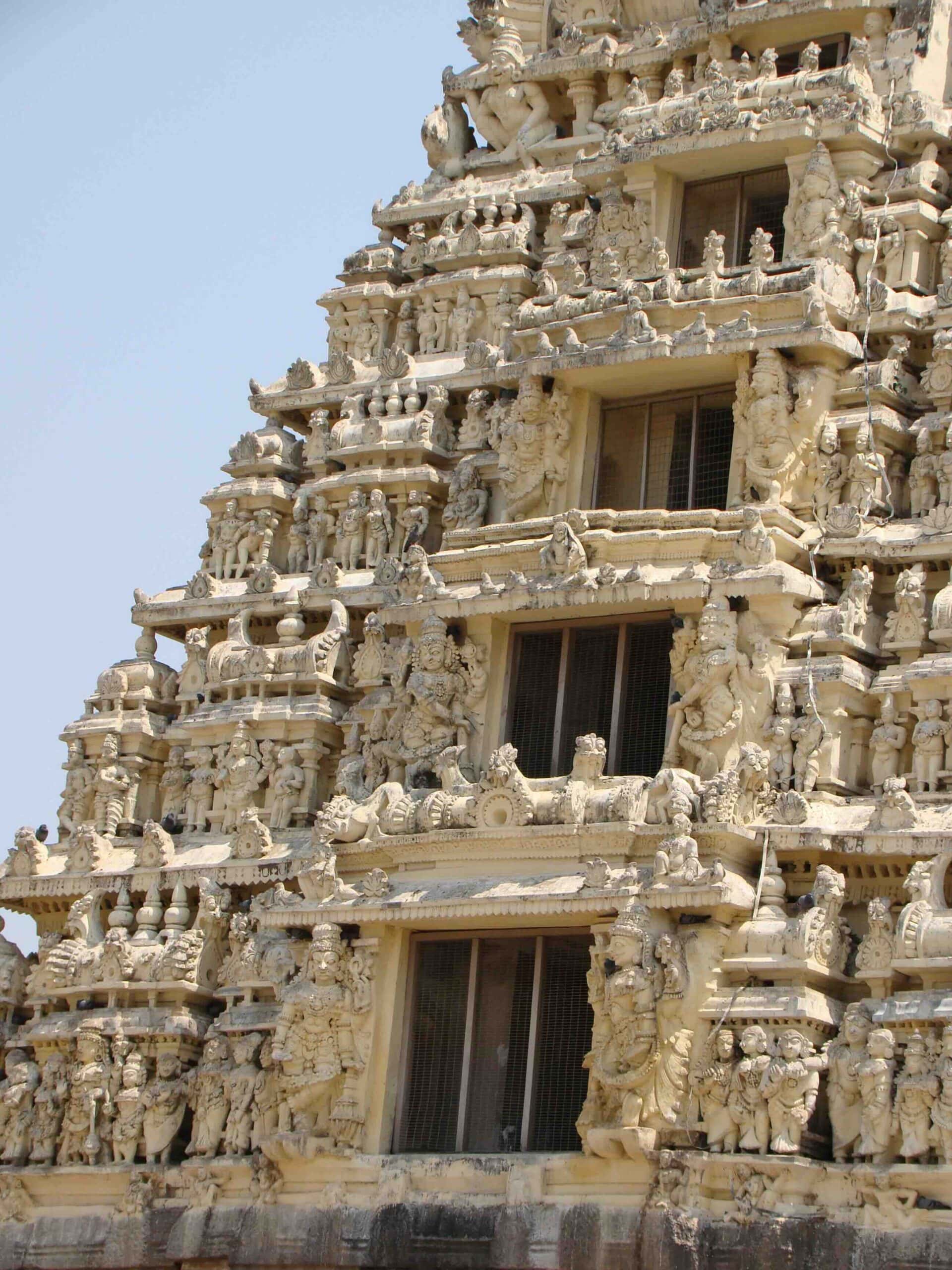
Think of these enormous towers as giant, elaborately decorated wedding cakes. Each layer is slightly smaller than the one beneath it, with one tier stacked upon another until the tower reaches its decorative cap.
Their exteriors can be covered with hundreds, sometimes thousands, of intricately sculpted figures. Hindu gods and goddesses, mythological creatures, animals, musicians, dancers and guardians appear in elaborate arrangements across the tower’s surface. Some figures stand individually in small architectural niches, while others form entire scenes.
These figures aren’t simply decoration. Many represent stories from Hindu religious traditions, including episodes from the Ramayana and Mahabharata, the lives and exploits of deities, and figures associated with the temple’s particular form of worship. A temple dedicated to Shiva may feature different imagery from one dedicated to Vishnu or a goddess.
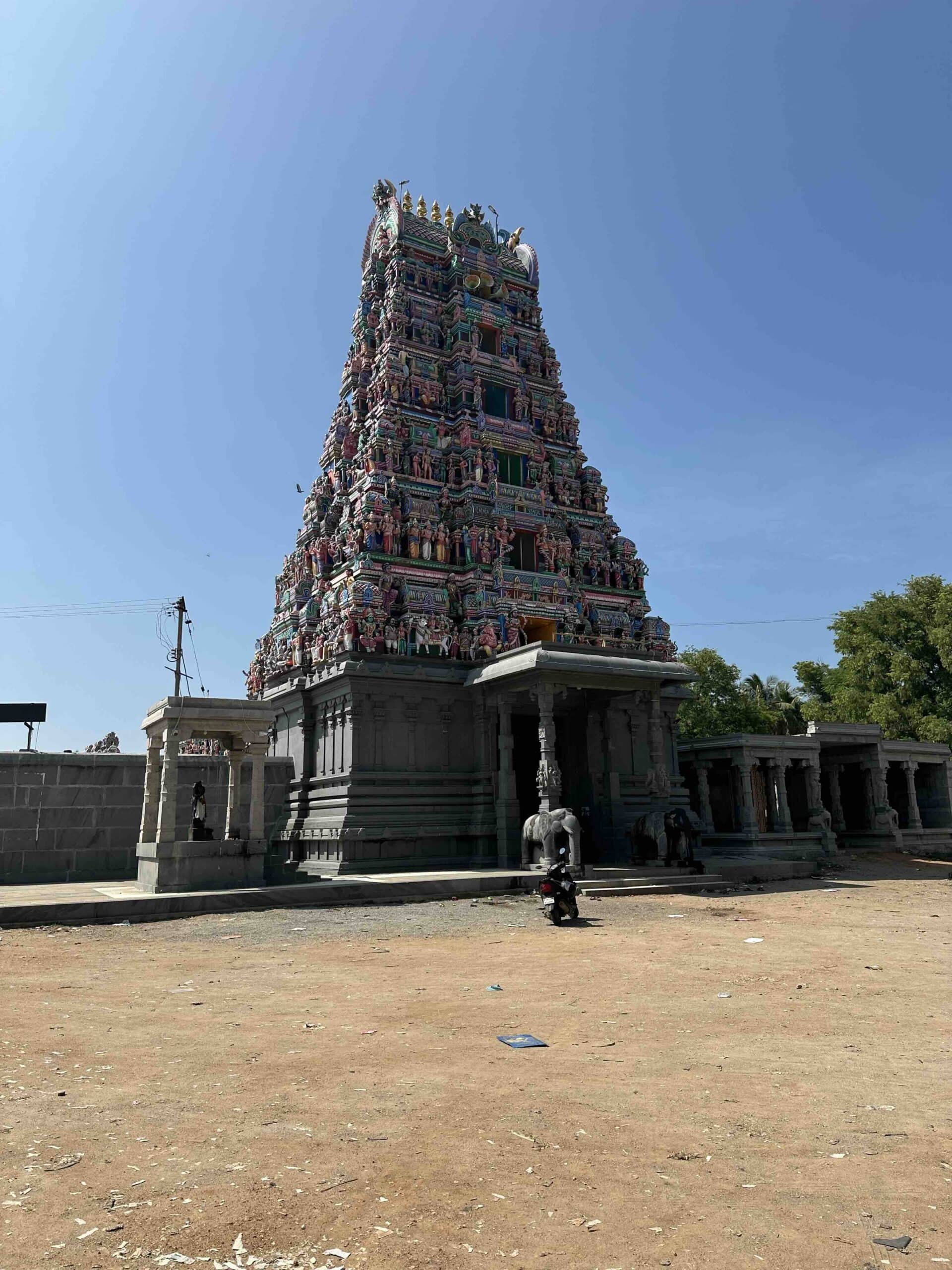
At the bottom, an enormous rectangular entrance leads through the tower and into the temple enclosure.
How is a gopuram constructed?
Now for the technical side of these architectural masterpieces.
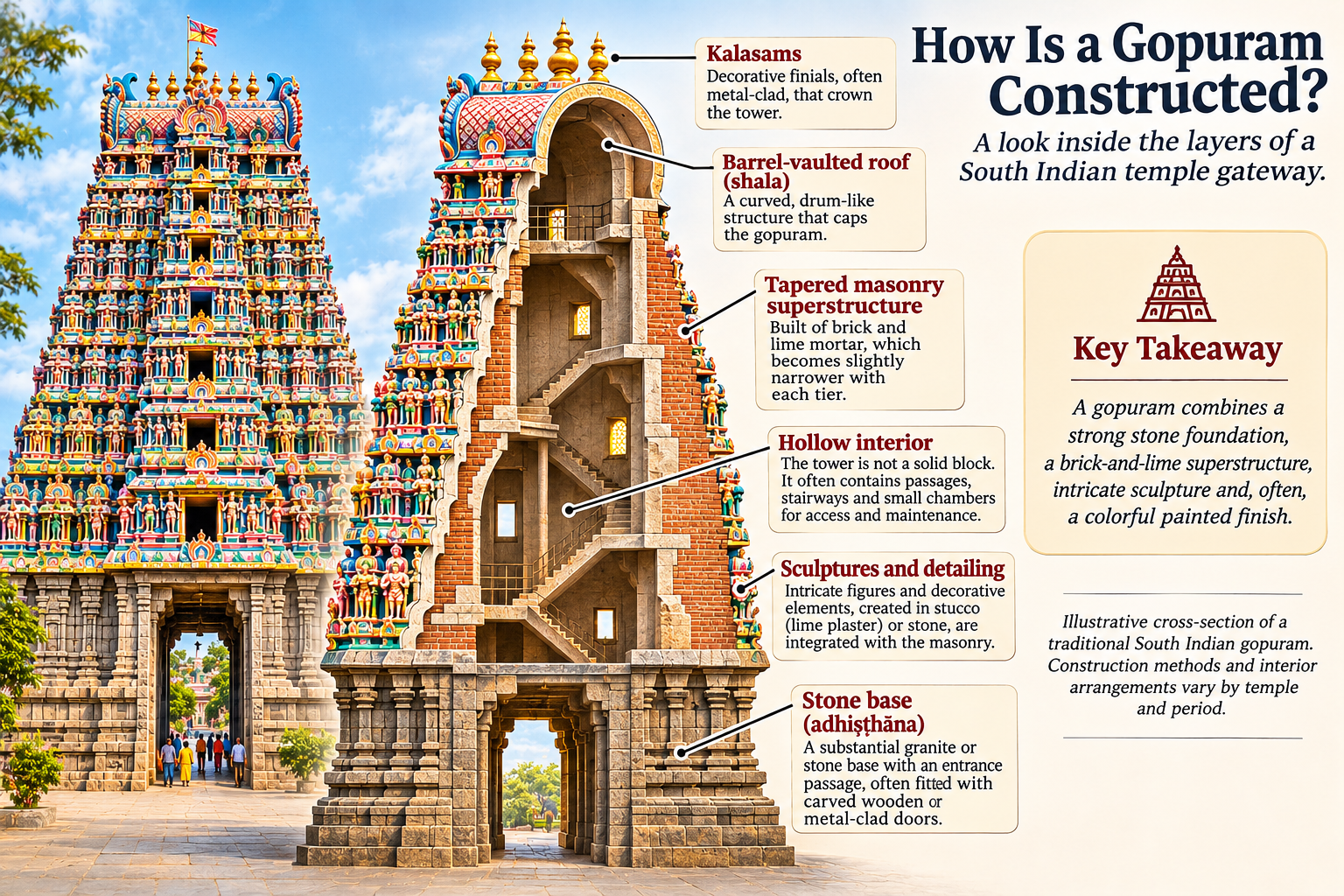
Construction begins with a substantial stone base containing an entrance passage, often secured by richly detailed wooden or metal-clad doors. Above this sits a tapering superstructure traditionally constructed of brick and lime mortar.
A barrel-vaulted roof element, known as a shala, tops the tower, often crowned by decorative finials called kalasams. Openings in the wider sides of some towers allow natural light to enter the interior. Depending on the structure, there may be internal passages, stairways and spaces used for access and maintenance.
The sculptures and architectural ornament are integrated into the exterior using carved stone, modeled stucco and plasterwork. Their construction requires specialized knowledge of both the materials and the religious traditions represented.
Why were gopurams built so tall?
Gopurams did not always dominate South Indian temples. In earlier examples of Dravidian temple architecture, the tower above the central shrine was often the most prominent feature. Over time, particularly under the Vijayanagara Empire and the Nayaka rulers, increasingly monumental entrance gateways became characteristic of major temple complexes.
As temples expanded, additional enclosure walls and gateways were constructed around existing sacred spaces. These new entrances could be taller and more elaborate than the older structures within. A monumental gopuram also demonstrated the patronage of rulers and wealthy donors.
Passing beneath these monumental gateways takes worshippers from the surrounding streets into the temple precinct; larger complexes may have several successive gateways.
In Madurai and other temple towns, their height also makes them unmistakable landmarks.
Why are some gopurams painted in brilliant colors?
Traditional lime-based finishes helped protect masonry and decorative plasterwork from the elements, whether the final appearance was subdued or vividly colored.
In more recent times, and sometimes to considerable debate, brightly colored paint has been applied or reapplied to famous temple gopurams. There is a difference between traditional mineral or lime-based finishes and modern synthetic paints: unsuitable coatings can trap moisture and damage older plaster.
Decorative painting has a long history in South Indian temple architecture; individual towers have changed through centuries of repair and repainting.
The challenge of preserving traditional craftsmanship
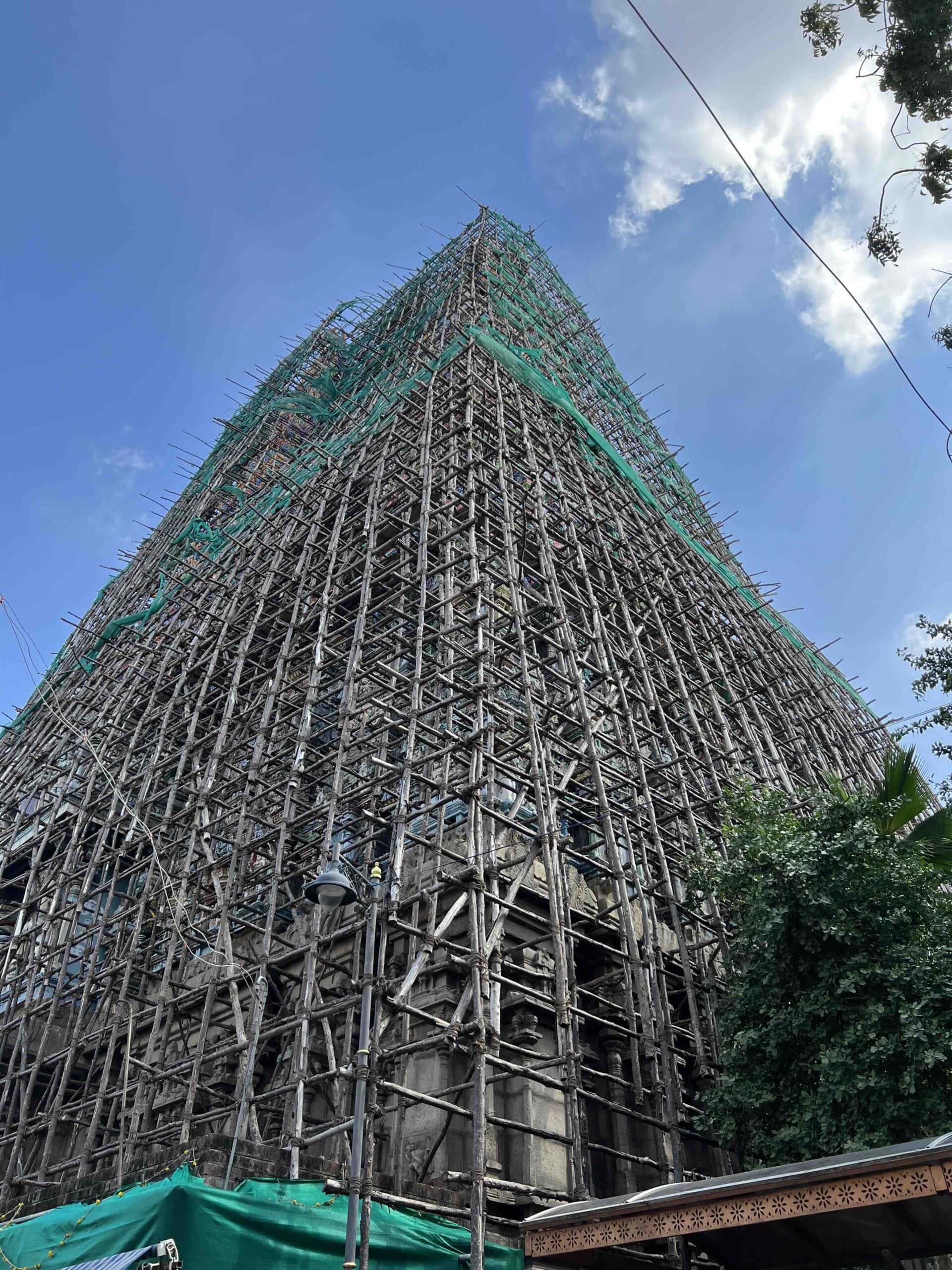
Preserving these enormous structures requires specialized craftspeople. Traditional temple architects, known as sthapathis, work alongside stone sculptors, stucco artists, painters and masons familiar with centuries-old techniques. Repairing a damaged figure high on a gopuram is considerably more complicated than patching a wall.
Traditional skills take years to master, and recruiting younger craftspeople can be difficult. One institution helping preserve them is the Government College of Architecture and Sculpture in Mamallapuram, founded as a sculpture training center in 1957. Its courses include traditional architecture, stone sculpture, sudhai (stucco) sculpture, and painting—the very disciplines needed to build and maintain temple towers.
Rising material costs add to the challenge. Poorly executed repairs using incompatible cement, paint or cleaning methods can damage historic masonry and sculpture.
Conservation also calls for careful research. Cardiff University’s Tamil Temple Towns project studies restoration practices in Madurai and Kumbakonam, including how traditional knowledge can inform the care of working temples.
How many gopurams can a temple have?
Smaller temples may have one gopuram; major complexes can have gateways facing several directions and successive enclosures.
Sri Ranganathaswamy Temple in Srirangam is an especially impressive example. The complex occupies approximately 156 acres, contains seven concentric enclosures and has 21 gopurams. What appears from a distance to be a single temple is actually an extensive collection of shrines, courtyards, halls and gateways.
Gopuram or vimana: What’s the difference?
Although both are towers associated with Hindu temples, they serve different architectural purposes. A gopuram stands above a gateway in the temple’s surrounding walls. A vimana, in South Indian temple architecture, is the structure rising above the sanctum containing the principal deity.
In much of northern India, the dominant tower above the sanctuary is commonly called a shikhara. These towers often have a curving profile, quite different from the stepped forms associated with many South Indian temples.
Where in India are gopurams found?
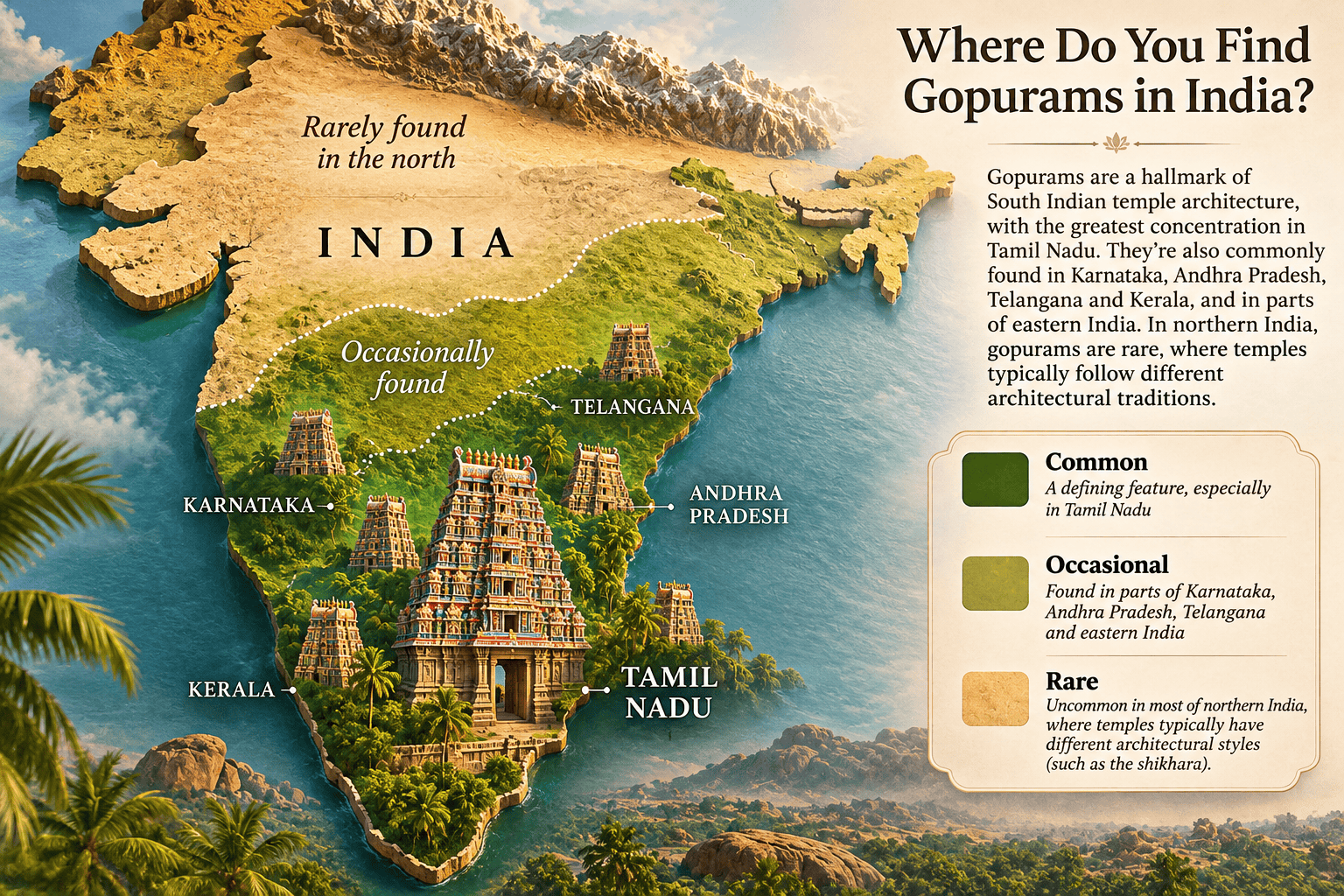
Gopurams are most strongly associated with Dravidian temple architecture, particularly in Tamil Nadu, Karnataka, Andhra Pradesh, Telangana and Kerala, though styles vary by region.
Farther north, temples more often emphasize the shikhara above the shrine. The distinction is regional rather than an absolute geographic boundary.
Where can you see some of India’s most impressive gopurams?
Meenakshi Amman Temple — Madurai, Tamil Nadu. Its colorful entrance towers are covered with densely arranged sculptural figures.
Sri Ranganathaswamy Temple — Srirangam, Tamil Nadu. Twenty-one gopurams, including the approximately 72-meter Rajagopuram, mark an extraordinary series of enclosures.
Arunachaleswarar Temple — Tiruvannamalai, Tamil Nadu. Enormous gateways rise against the backdrop of Arunachala hill.
Virupaksha Temple — Hampi, Karnataka. Its prominent eastern gateway is among Hampi’s best-known landmarks.
Visiting a temple with a gopuram
Many of these temples remain active places of Hindu worship. Visitors should expect rules concerning footwear, photography and access to certain areas. Some temples restrict entry to the innermost shrine.
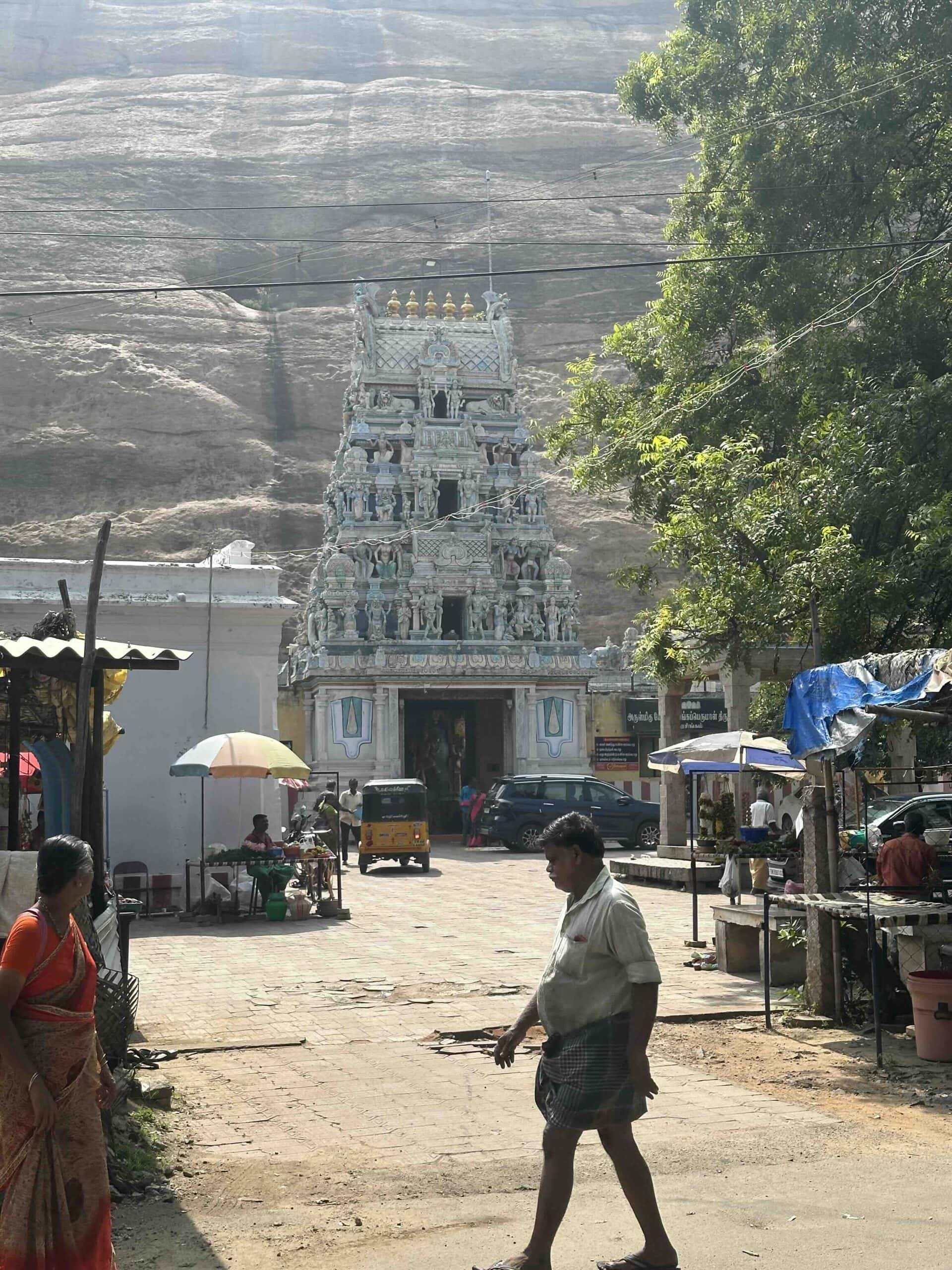
The next time you’re standing beneath a gopuram, look up. What appears from a distance to be an enormous, brightly painted tower becomes a collection of individual sculptures, each the work of an artist or craftsman. And somewhere beneath all those layers of figures, color and stone is something surprisingly simple: a doorway.

 Districts of India: The Geography Between the State and the Village
 Ganesha: India’s Beloved Elephant-Headed God
 States vs. Union Territories: What’s the Difference?