
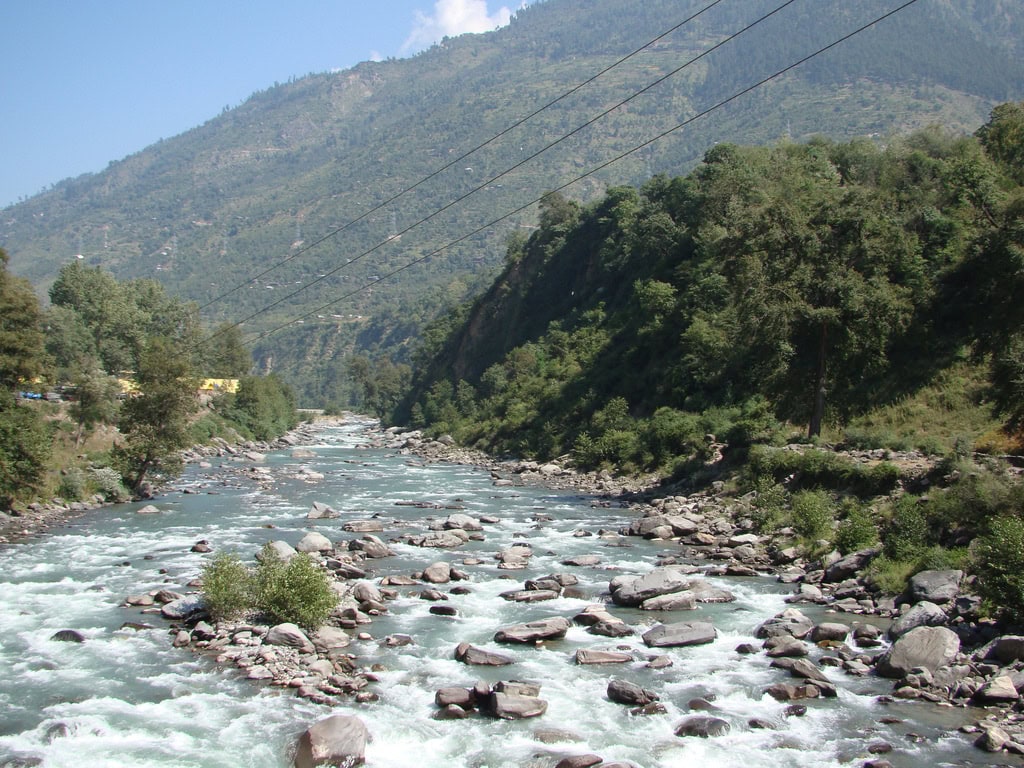
Sacred waters, ancient civilizations, imperial monuments and the demands of modern India.
High in the Himalayas of Uttarakhand, the Yamuna begins its journey as cold mountain water. By the time it meets the Ganga at Prayagraj, some 1,376 kilometers later, it has passed through agricultural plains, ancient religious centers, the nation’s capital and what was once the seat of the Mughal Empire.
Few rivers in India carry such a remarkable combination of religious, historical and cultural significance. Along her banks, religious traditions took root and emperors built their monuments.
Today, the Yamuna continues to sustain millions of people. Its waters are drawn for drinking, irrigation and industry, while its banks remain places of worship, celebration and everyday life. Yet stretches of the river have become synonymous with pollution, and the demands placed upon its waters extend far beyond what is visible from the riverbank.
When I first wrote about the Yamuna in October 2010, the contrast between its sacred status and environmental condition was already apparent. Sixteen years later, that contradiction remains.
A River Born in the Himalayas
It’s difficult to reconcile the Yamuna I know from Delhi and Agra with the river that emerges high in the Himalayas of Uttarakhand. Here, beneath the snow-covered peaks of the Bandarpunch massif, the Yamuna begins its journey through a landscape of glaciers, rocky mountain slopes and narrow valleys.
Below its glacial source stands the temple of Yamunotri, remarkably close to the birthplace of a river that will travel across much of northern India.
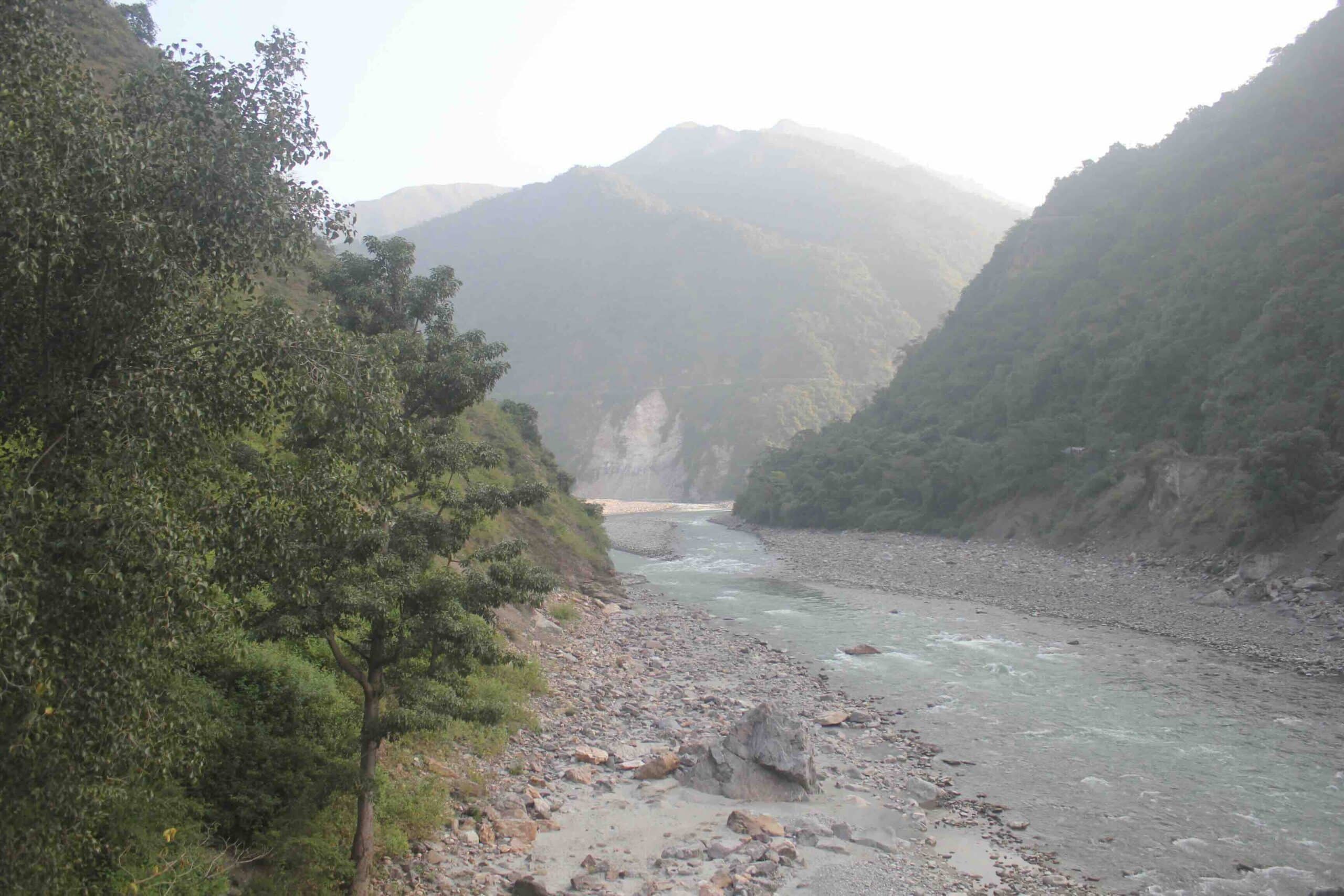
Leaving the Himalayas behind, the Yamuna enters an entirely different India. Mountain slopes give way to expansive agricultural plains, fields of wheat and sugarcane, small villages and bustling settlements.
By the time the Yamuna reaches Delhi, it has already assumed many responsibilities. Its wider drainage basin covers roughly 366,000 square kilometers, an area larger than Germany. The river and its canals provide water to farms across northern India and help supply the capital. The Yamuna is not simply the ribbon of water we see from a bridge; its reach extends into the fields, kitchens and livelihoods of people far from its banks. (Basin data.)
Beyond the capital, the river winds southeast through Vrindavan, Mathura and Agra.
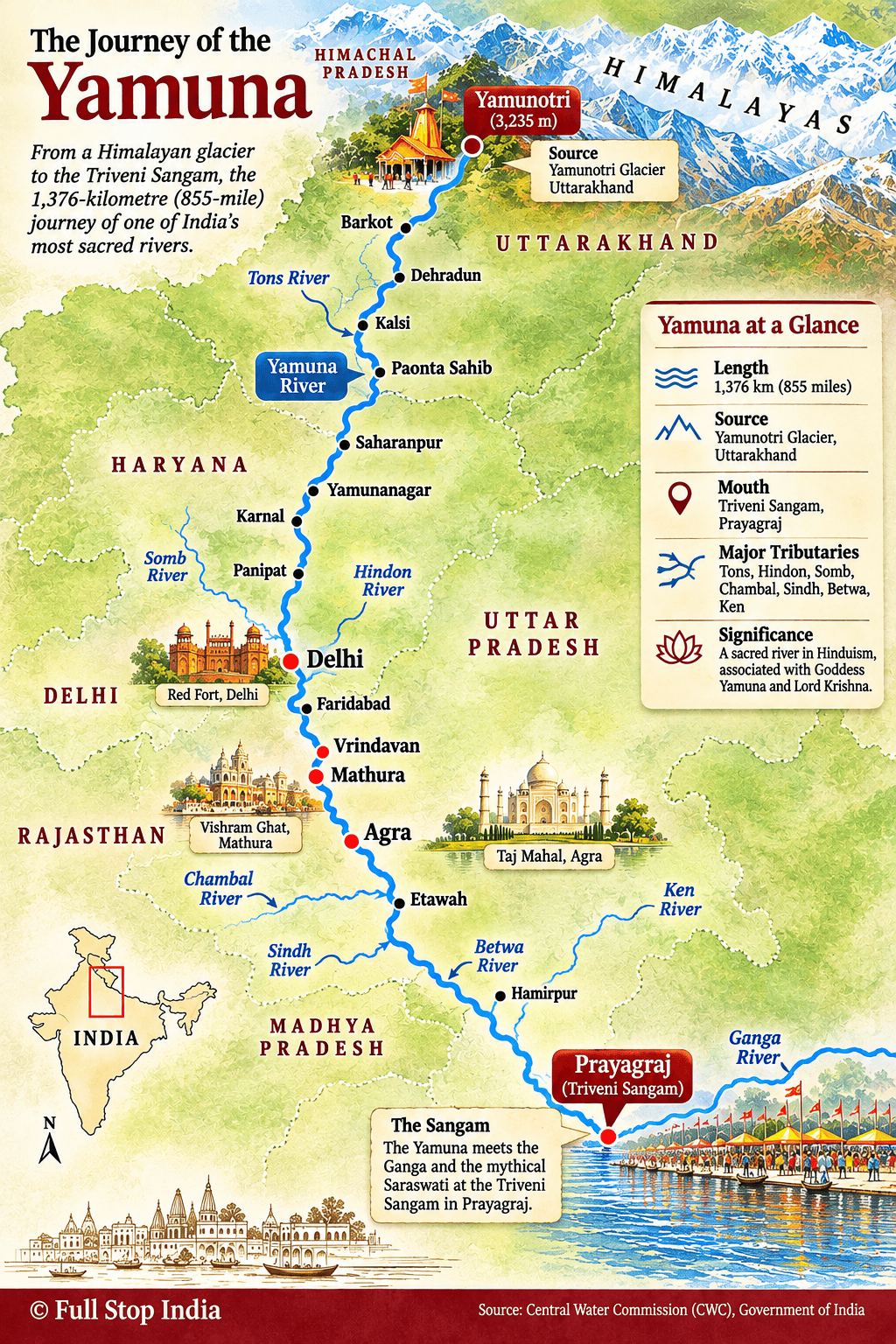
Other rivers join along the way. The Tons brings water from the Himalayas, while the Chambal, Sindh, Betwa and Ken arrive from the landscapes of central India. What begins beneath a Himalayan glacier becomes a vast river system, collecting water from places hundreds of kilometers apart.
And then there is the monsoon. Riverbanks disappear beneath rising waters, dry riverbeds come back to life and the countryside takes on an extraordinary shade of green.
At Prayagraj, the Yamuna meets the Ganga at the Triveni Sangam and, according to Hindu tradition, the invisible Saraswati. It is one of the most sacred places in India.
A river born among the quiet peaks of the Himalayas ends its journey in a place where millions gather to celebrate the sanctity of water.
The Goddess and the God of Death
Of all the relationships in Hindu mythology, the one between the Yamuna and her brother is particularly fascinating. She is the daughter of Surya, the sun god, and the sister of Yama, the god of death. A river that gives life and a brother who presides over its end.
According to Hindu belief, bathing in the Yamuna’s sacred waters can absolve sins and offer protection from the fear of death.
One of the more endearing stories of their relationship tells of Yama visiting his sister. Yamuna welcomes him into her home, prepares a meal and receives a blessing from him. The occasion is remembered each year during Bhai Dooj, celebrated after Diwali, when sisters pray for the well-being and longevity of their brothers.
The Yamuna, also known as Kalindi, features prominently in the stories of Krishna. Much of his childhood is believed to have taken place in Braj, a region of northern India where the towns of Mathura and Vrindavan remain closely associated with his life.
On the night of Krishna’s birth, his father, Vasudeva, carries the infant across the swollen Yamuna to safety. It’s a beautiful scene frequently depicted in Indian art: Vasudeva wading through the dark waters, holding the infant above his head, sheltered from the storm by the many hoods of the serpent Shesha.
Perhaps the most intriguing story, given the present condition of the Yamuna, is that of Kaliya, a serpent whose venom poisoned the river. Krishna enters the contaminated waters, subdues Kaliya by dancing upon his many heads and persuades him to leave, returning the river to the people and animals that depend upon it.
An ancient story about a poisoned river. Its relevance today is difficult to ignore.
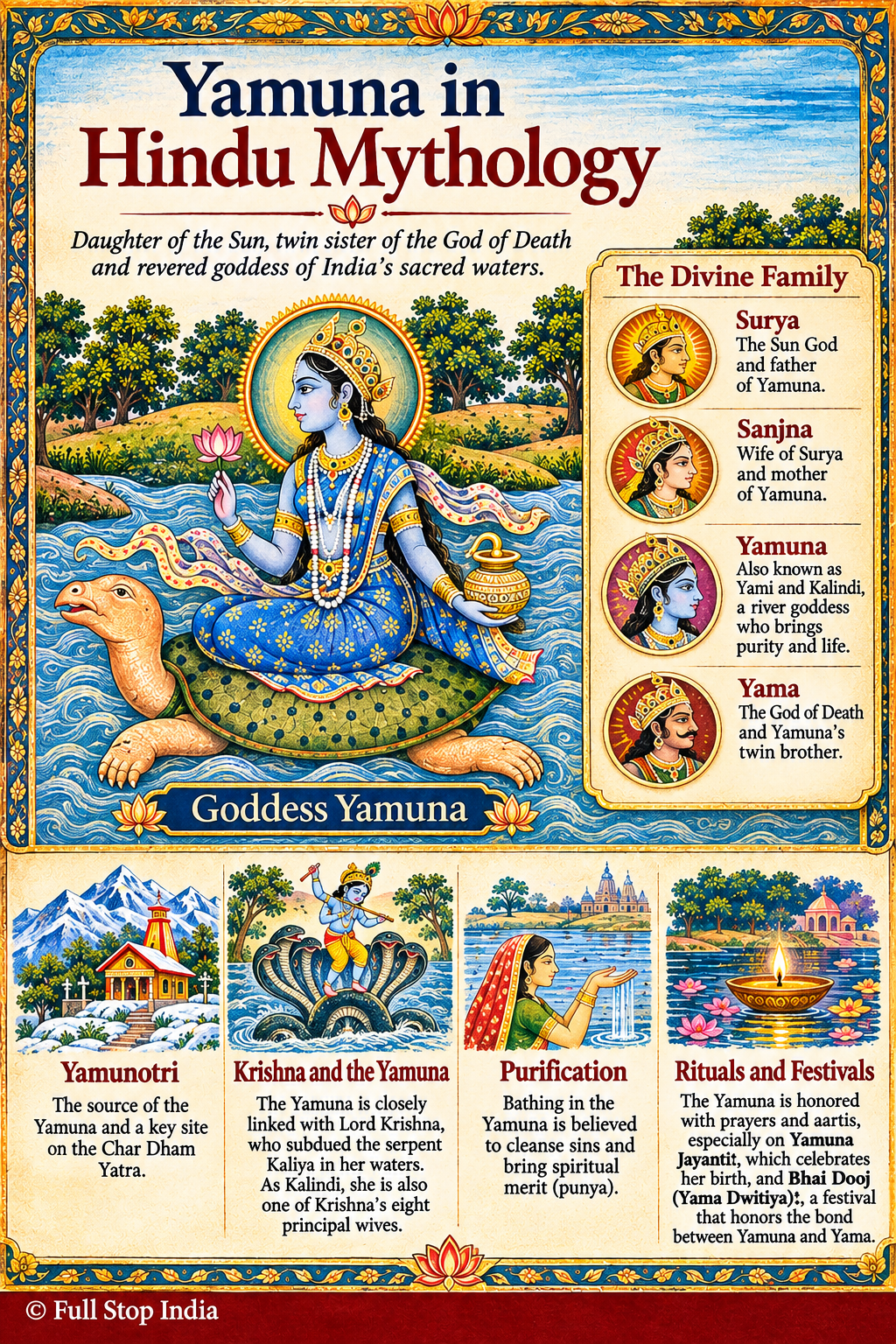
These stories are celebrated in paintings, sculptures, temple carvings, music and dance throughout India. Along the Yamuna itself, they become part of the landscape.
At Yamunotri, the goddess is honored at the first of the four shrines traditionally visited during Uttarakhand’s Char Dham pilgrimage. Hundreds of kilometers downstream, the ghats of Mathura and Vrindavan are filled with the rituals and traditions associated with Krishna. Flowers are offered, bells ring, prayers are recited and small oil lamps illuminate the water during evening aarti.
Yamunotri, Mathura and Vrindavan are three places I have yet to visit. Having read so much about their mythology and religious traditions, I find myself increasingly curious to experience this side of the Yamuna, so different from the river I’ve come to know in Delhi and Agra.
To her devotees, she is Yamuna Maiya. Mother Yamuna.
A River That Built Civilizations
Long before the marble domes and red sandstone walls appeared along its banks, the Yamuna was sustaining settlements across northern India. Its fertile floodplain offered a place to cultivate crops and establish communities.
In Delhi, the river was part of the landscape in which successive capitals developed. The Red Fort stood beside its historic course, with the river-facing walls and imperial apartments forming an important part of Shah Jahan’s city. Today’s riverbank is separated from much of that architecture by roads and urban development.
My earliest memories of the Yamuna in Delhi are of crossing a bridge to Laxmi Nagar and visiting Akshardham. I paid little attention to the river then. I was more concerned with getting my bearings in the city.
Imagine approaching seventeenth-century Agra by boat. Instead of today’s crowded streets, much of the riverfront would have been lined with garden estates, terraces, pavilions and the residences of Mughal nobles. The Yamuna was a defining feature of the city’s design. An early eighteenth-century map, examined in research into Mughal Agra’s riverfront, preserves the arrangement of dozens of these estates.
Ram Bagh, with its terraces and water channels, and the garden tomb of Itimad-ud-Daulah offer surviving glimpses of that landscape. The Taj Mahal belongs to this same architectural tradition, with Mehtab Bagh across the river completing a remarkable composition. Seen in that context, the Taj becomes part of an entire city oriented toward the water.
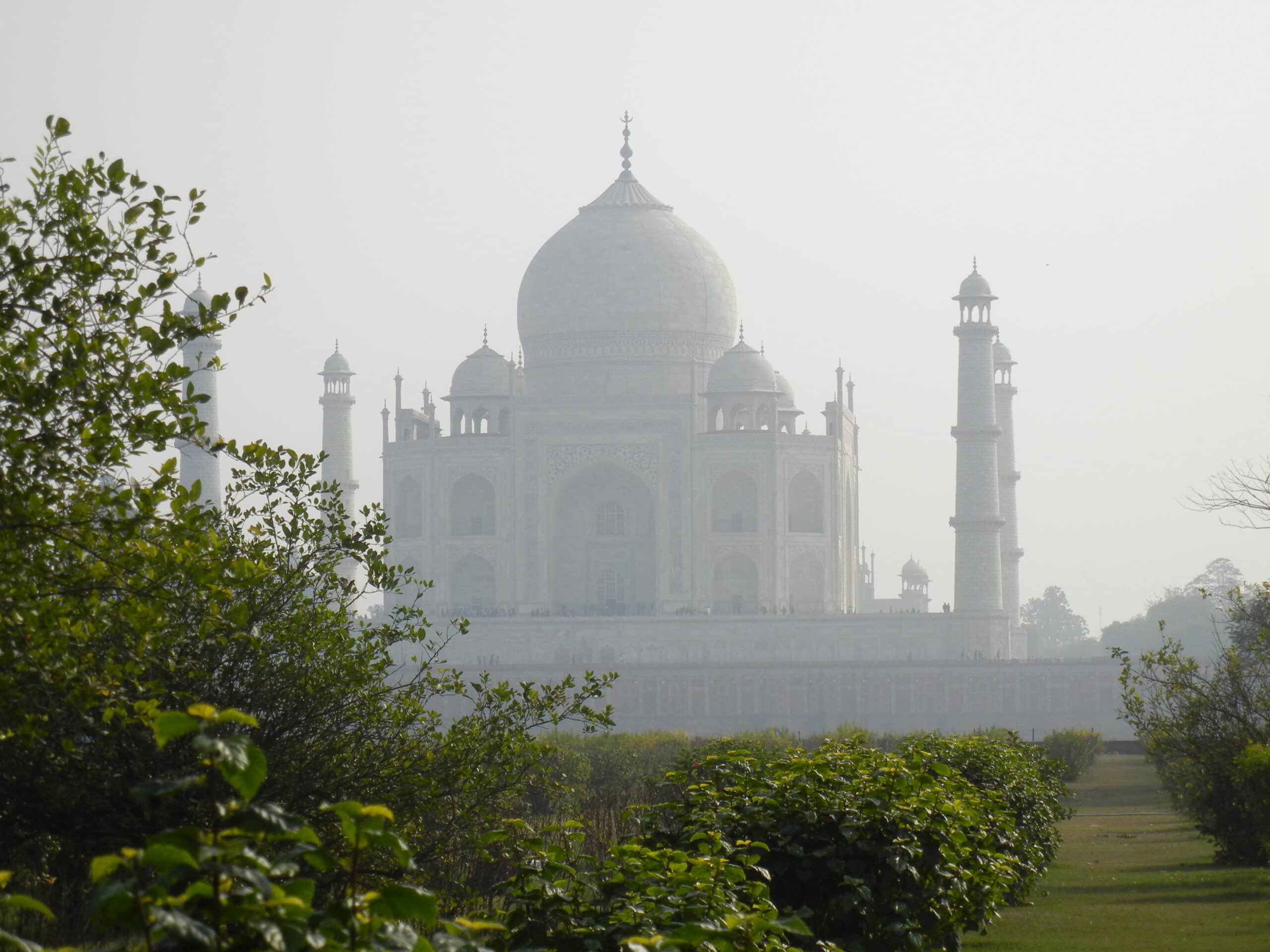
The view from Mehtab Bagh is one of my favorite perspectives of the Taj Mahal precisely because it puts the river back into the picture. I have written more about the city’s architecture in Agra: Beyond the Taj Mahal.
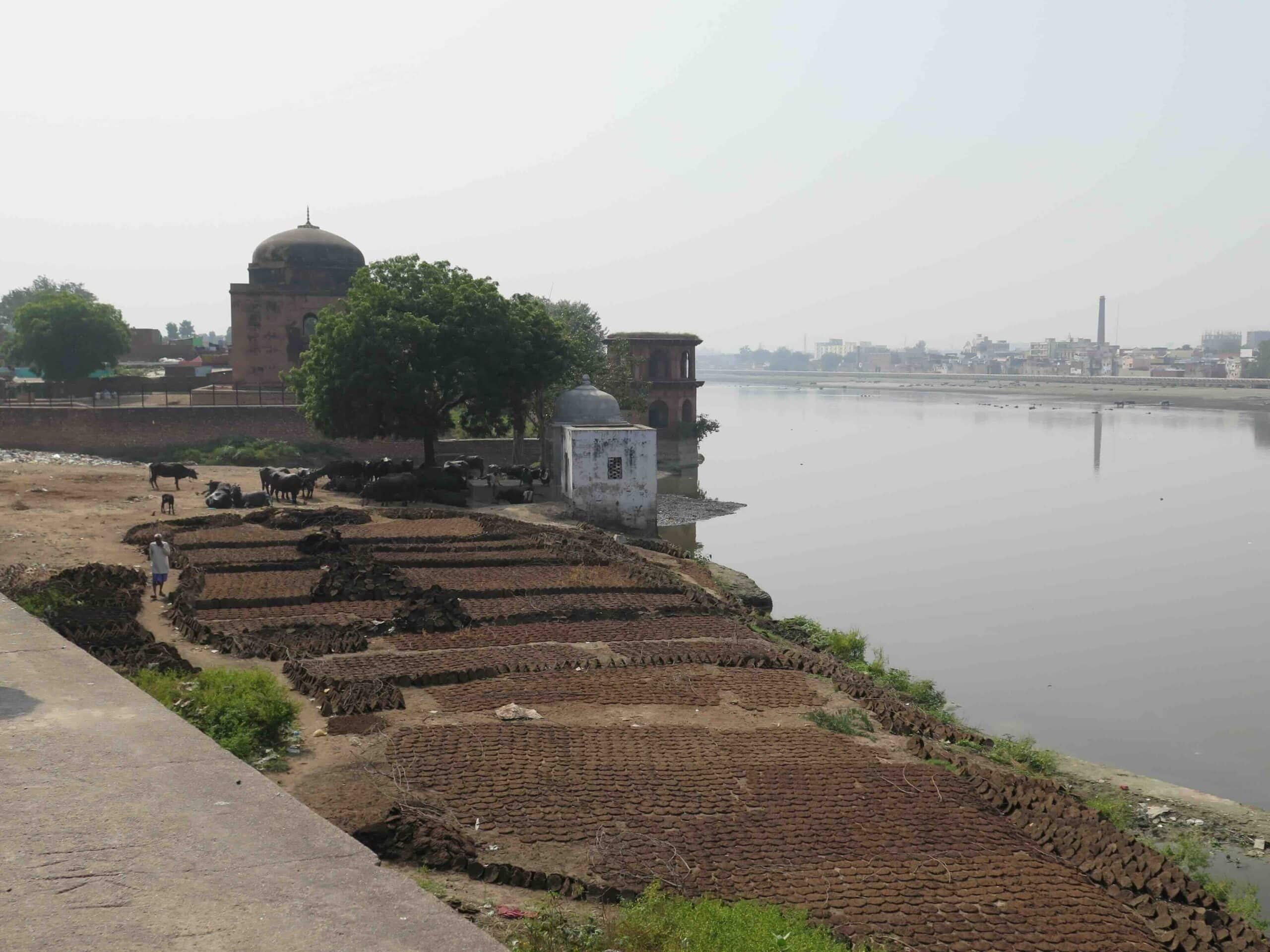
One of the less familiar remnants of Mughal Agra is Chini Ka Rauza, the riverside tomb of Afzal Khan, a Persian scholar and minister in Shah Jahan’s court. Its colored glazed tiles once gave the building a richness difficult to imagine from its weathered exterior today. An early nineteenth-century painting in the Royal Collection offers another view of this monument. In my photograph below, the old architecture overlooks a very different riverfront, where buffalo gather beneath trees and dung cakes dry in the sun. I find the juxtaposition as interesting as the monument itself.
Sacred Waters, Toxic Realities
How does a river so deeply revered become so heavily polluted?
The Yamuna that enters Delhi is remarkably different from the Yamuna that leaves it. In this relatively short stretch, the river receives enormous quantities of wastewater from India’s capital. Untreated sewage, industrial waste and rubbish all find their way into its waters. Meanwhile, water diverted upstream leaves less of the river flowing through the city.
Photographs of thick, white foam covering the Yamuna have become a familiar sight in the Indian media. Particularly unsettling are the images of devotees standing waist-deep in these waters, performing religious rituals beneath a blanket of foam.
But the foam, as disturbing as it looks, tells only part of the story.
The Delhi Pollution Control Committee regularly tests the river at various points as it passes through the capital. The findings make for uncomfortable reading. Bacteria associated with human and animal waste contaminate the water, while the decomposition of organic waste consumes the oxygen needed to sustain aquatic life. Much of what makes the Yamuna so polluted cannot be seen from its banks.
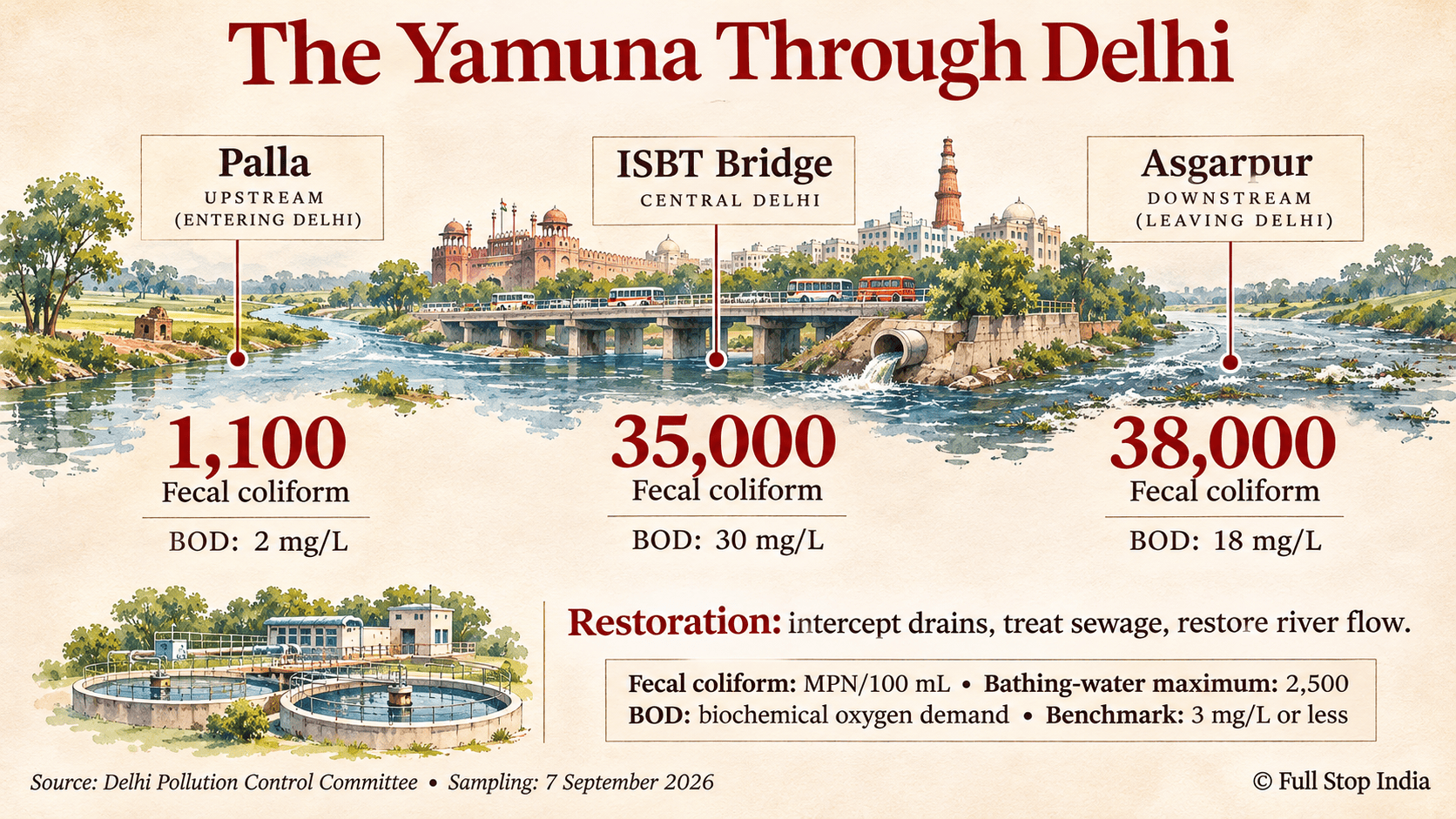
Pollution, however, is only half of the problem. The other is how much water remains in the river.
I’ve noticed considerable differences in the water levels of the Yamuna on my visits to Delhi and Agra. Standing in Mehtab Bagh, I’ve found myself paying more attention to the water than I did on my earlier trips.
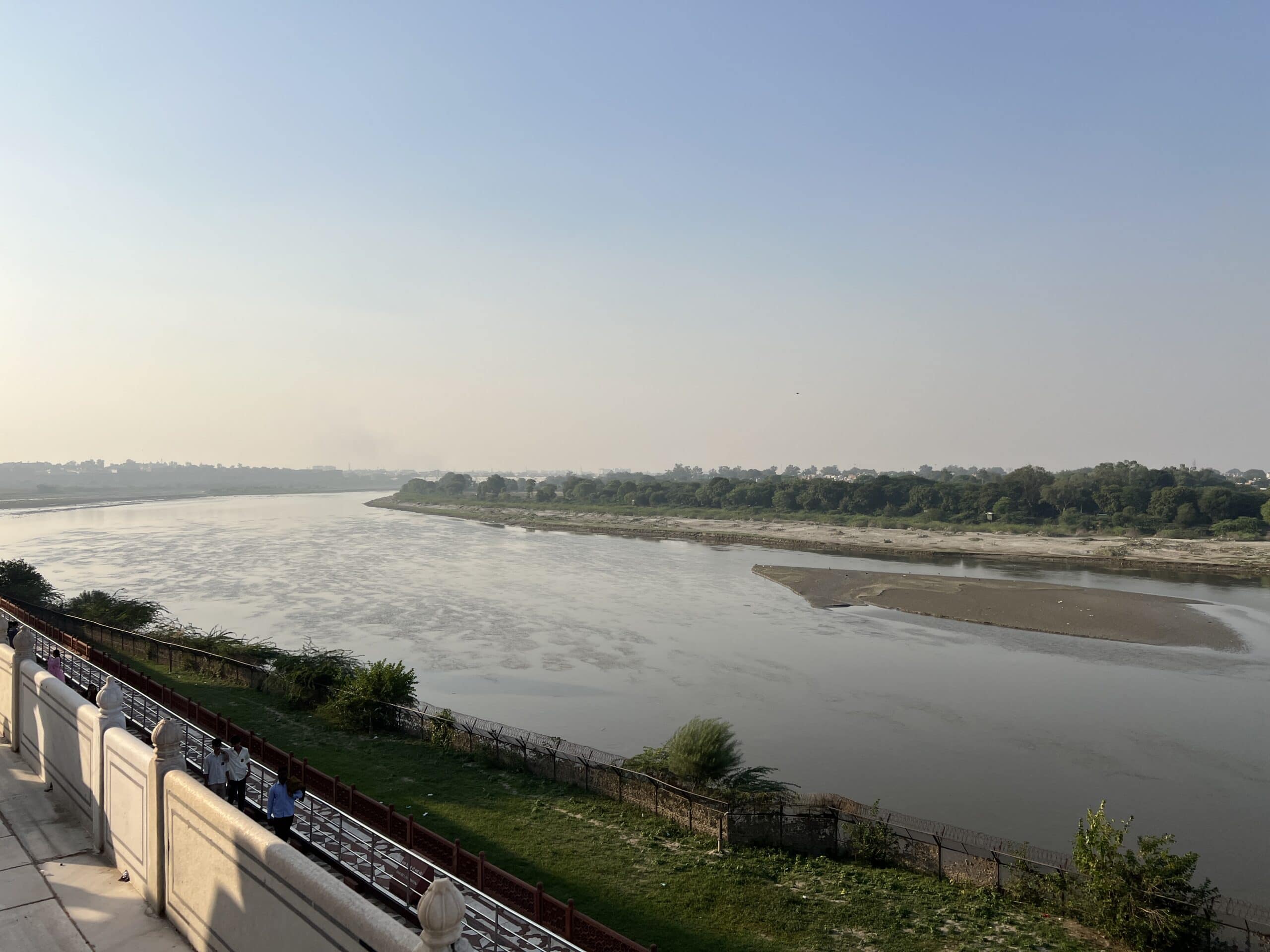
What happens in a year when the monsoon disappoints? When the rains arrive late, or there simply isn’t enough rain to replenish what has been taken? The agricultural fields still need irrigating, the factories continue operating and millions of households still turn on their taps.
And then there are those of us traveling through India.
I’ve stayed in countless hotels across the country, yet very few have made any effort to educate me about the availability of water in the surrounding area. Fresh towels, freshly laundered linens, swimming pools, beautifully maintained gardens and long, hot showers are all things we’ve come to expect. Where is that water coming from?
A little more information in our hotel rooms about local water supplies and the importance of conservation would go a long way toward making travelers more conscious of their consumption.
Efforts to clean the Yamuna began long before I first wrote about the river in 2010. The Yamuna Action Plan dates to 1993. By 2006, the government was already reporting severe pollution in the Delhi stretch.
There has been progress in treating the city’s sewage. In January 2021, government figures put the amount escaping treatment at about 941 million liters a day. By June 2025, a parliamentary update reported an estimated 641 million liters a day still untreated, with 14 of Delhi’s 37 operational treatment plants failing discharge standards. These snapshots suggest progress in sewage treatment, not proof that the river itself has recovered.
The same 2025 report recorded fecal coliform at Nizamuddin Bridge in June at 790,000 MPN per 100 milliliters, compared with a bathing-water benchmark below 2,500. More treatment capacity is welcome, but the river is still receiving far more waste than it should.
And what of the life beneath the surface? Fish such as rohu, catla and mrigal inhabit parts of the river system. A 2026 study of three stretches in Delhi NCR found fewer kinds of aquatic animals at Kashmiri Gate than at less disturbed upstream sites. The loss of suitable habitat is not simply a problem for the fish; it affects the entire food web that depends on them.
Further information: Central Pollution Control Board and National Mission for Clean Ganga.
What We Leave Downstream
I’ve watched people throw rubbish into rivers in India as though the current will simply carry it away.
To where?
Somewhere downstream, another community depends upon that same water. Someone is cultivating a field, washing clothes, casting a fishing net or preparing an offering to the river.
The Yamuna carries much more than water from the Himalayas to Prayagraj. It carries everything we leave behind.
Originally published October 26, 2010. Rewritten and expanded November 2026.

 Tamil: The Language of Tamil Nadu
 Malayalam: The Language of Kerala
 Why Do Hindu Gods and Goddesses Have So Many Arms?
