On my first trip to India in 2005, I didn’t even know the Taj Mahal was in a city called Agra. Somewhere in my imagination, it occupied a place of its own. Taj Mahalland, perhaps.
I’ve returned to Agra five times since that first encounter, and almost every departure has felt premature. The Taj is every bit as spellbinding as its reputation suggests. Yet the city around it has repeatedly given me reasons to come back.
Agra is rich with architecture, complicated history, remarkable food and monuments where you can still hear yourself think. The trouble is that so many itineraries treat the city as a single stop on the way to somewhere else.
The Taj needs no introduction
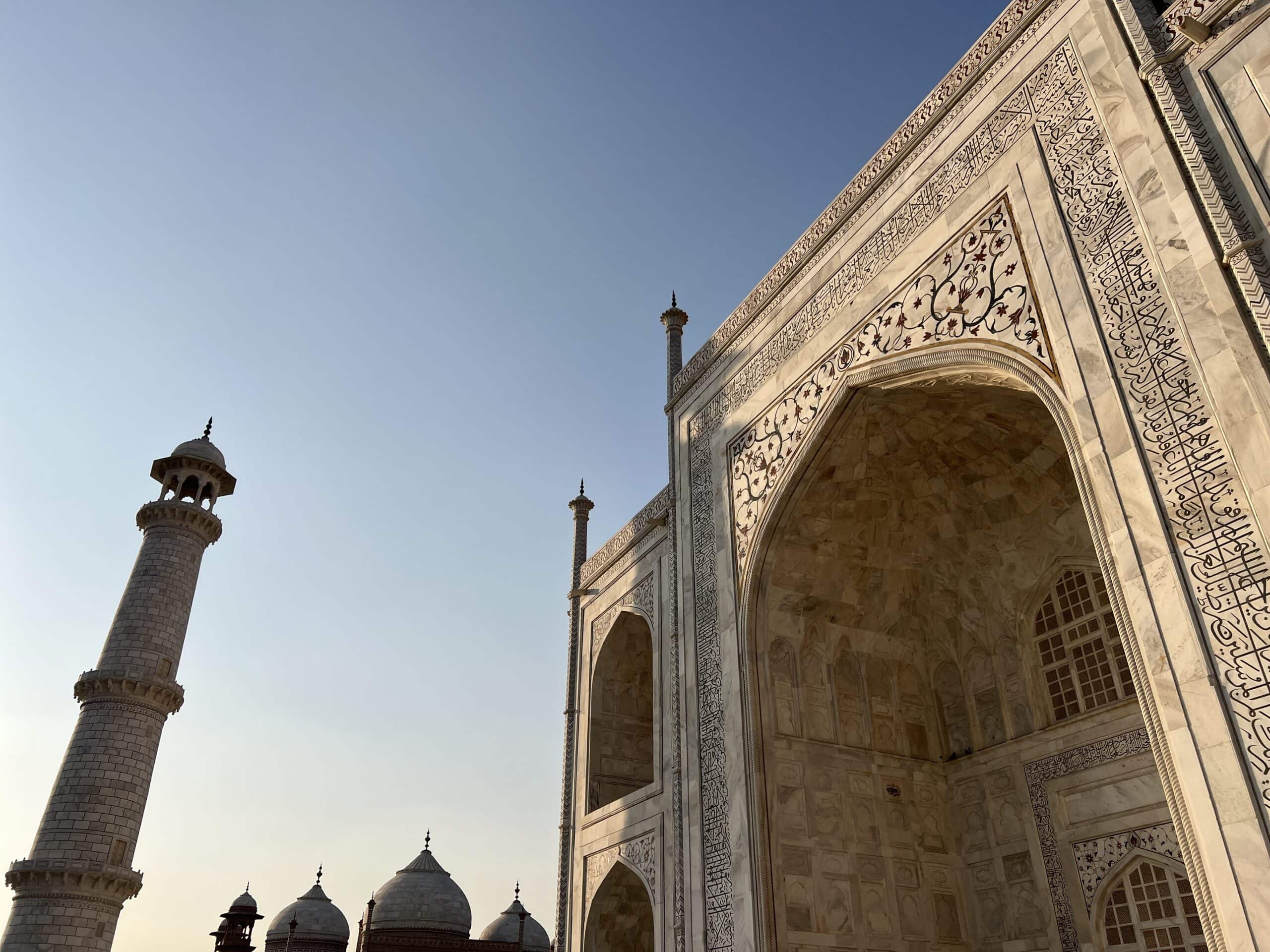
And yet the first glimpse still catches me off guard. You pass through the gateway, the white marble comes into view, and for a moment it’s difficult to take in the sheer scale of the place. I’ve experienced that feeling on every visit.
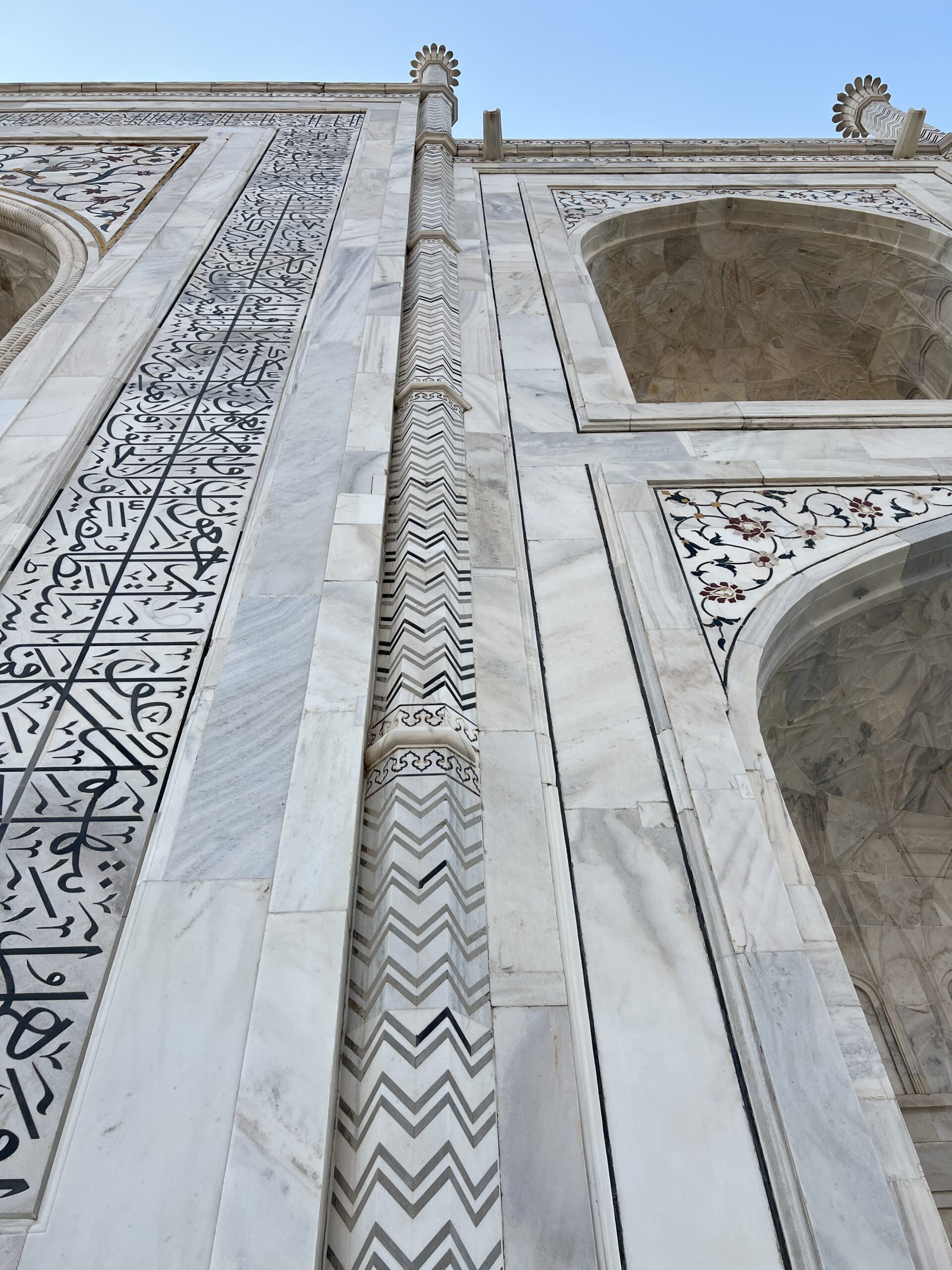
The details are just as rewarding as the silhouette: the inlaid flowers, the calligraphy, the shifting colors of the marble, the minarets. Give it at least two hours. Ask questions. Look closely. And hire an excellent guide. For me, that’s nonnegotiable.
In 2025, we had a good guide at the Taj Mahal. He told us he’d worked with visiting dignitaries through the U.S. State Department. I appreciated his knowledge of the monument and its history.
See it first from across the river
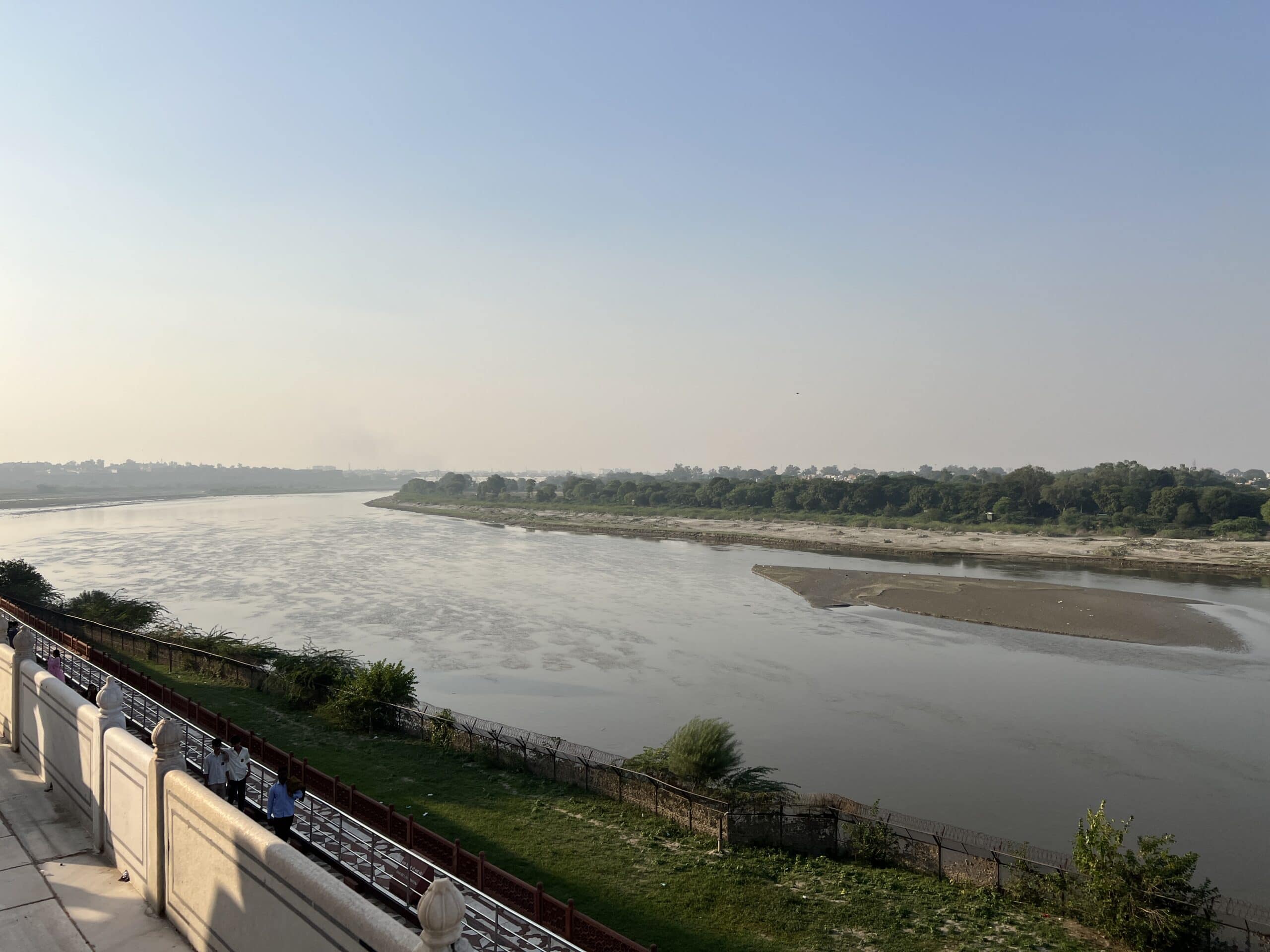
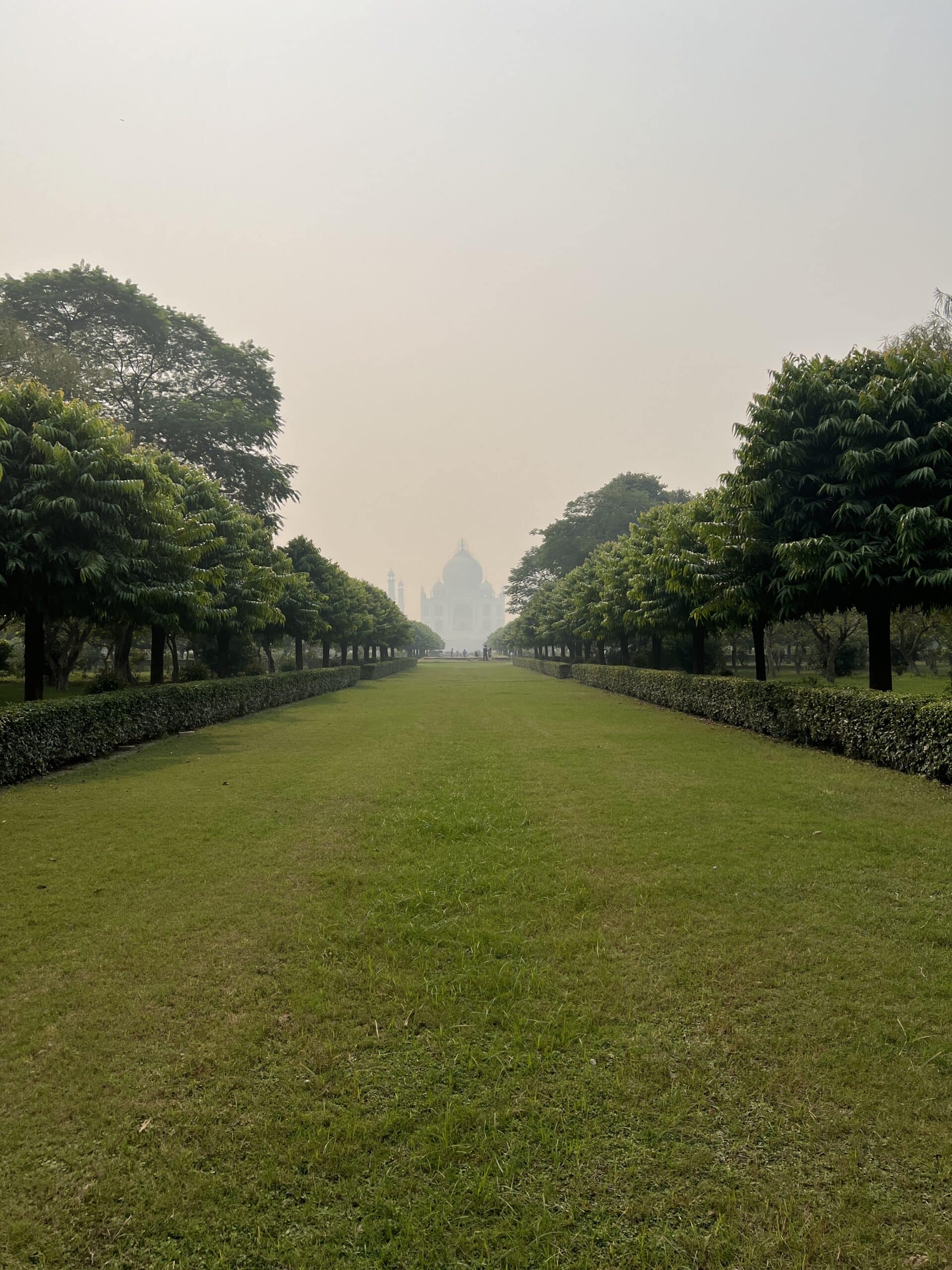
On my first visit to Agra, Rakesh, my driver, halfheartedly suggested a garden across the Yamuna. The drive seemed to take forever. The grounds were manicured and beautiful. Empty? Why? Just a handful of lovebirds here and there. Then we turned a corner. Holy Taj.
There it was, across the river, an astonishing view of the monument before I’d even visited it properly. I could make out the crowds on the far bank and hear a faint hum of voices across the water. It was one of the great surprises of that trip.
I’ve returned to Mehtab Bagh five times. The gardens remain beautiful, and the sense of quiet is still part of the pleasure. If you’re visiting for the first time, consider coming here before you enter the Taj Mahal itself. It makes the anticipation even better.
Agra Fort: the story behind the marble
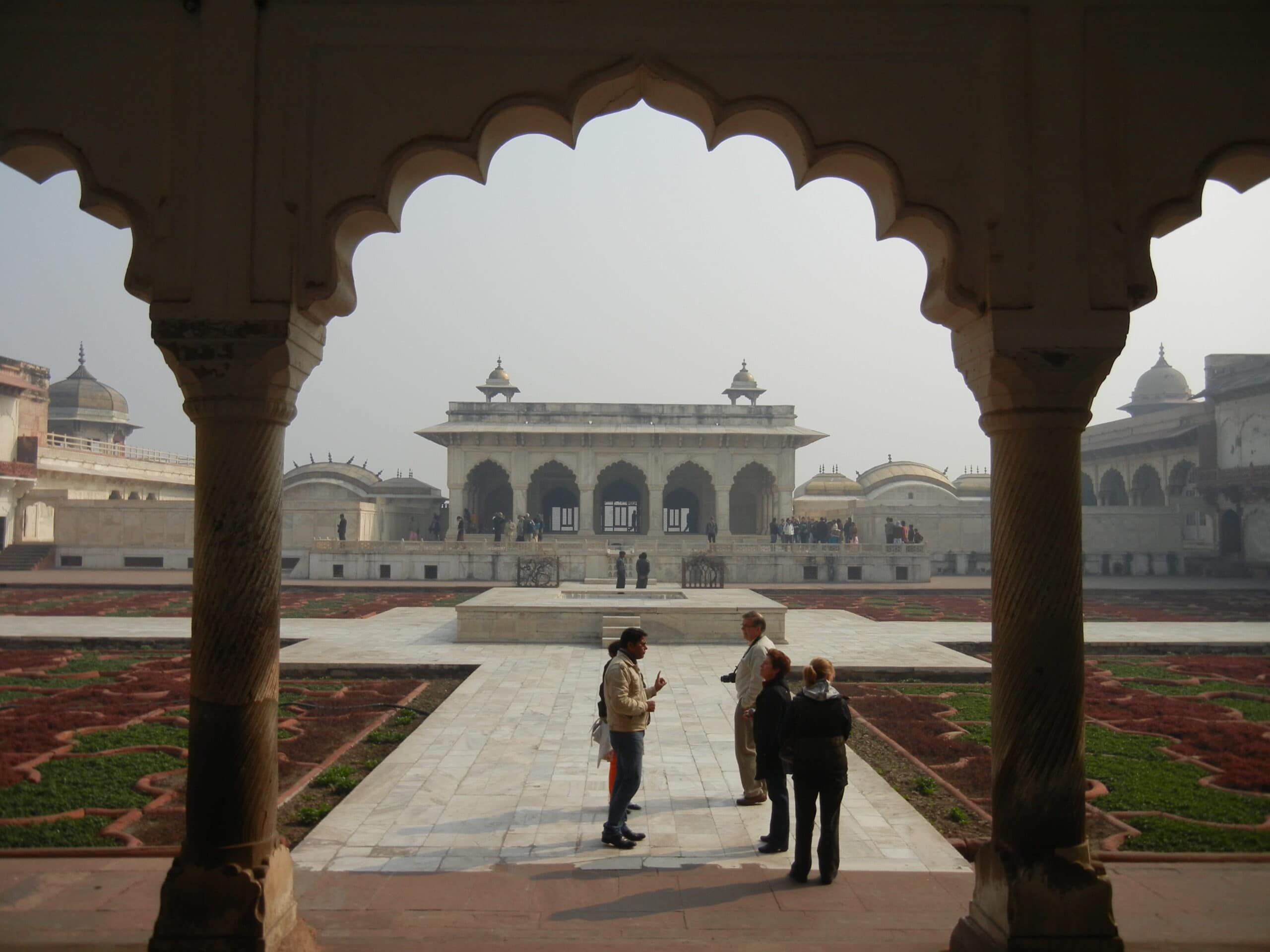
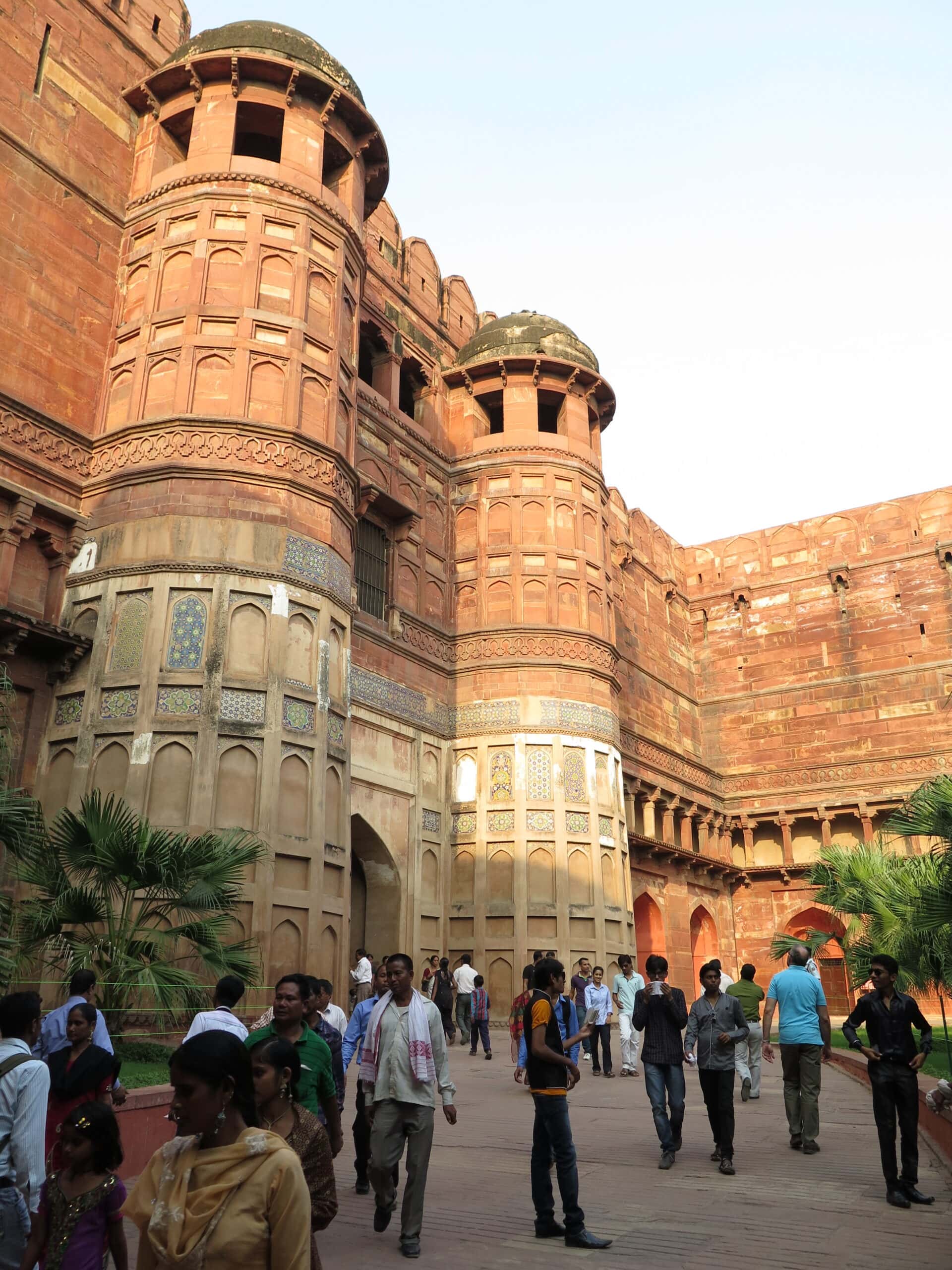
If the Taj Mahal is Agra’s most famous expression of love, Agra Fort provides the political and human context: emperors, families, ambition, betrayal and extraordinary power.
Its red sandstone walls and intricate palace interiors reward more than a hurried walk-through. Allow at least an hour inside, preferably longer, and bring a knowledgeable guide. I want to know not just what I’m looking at, but why it mattered to the people who lived there.
Look a little further.
Agra’s smaller monuments deserve time of their own, not whatever minutes remain before the car leaves.
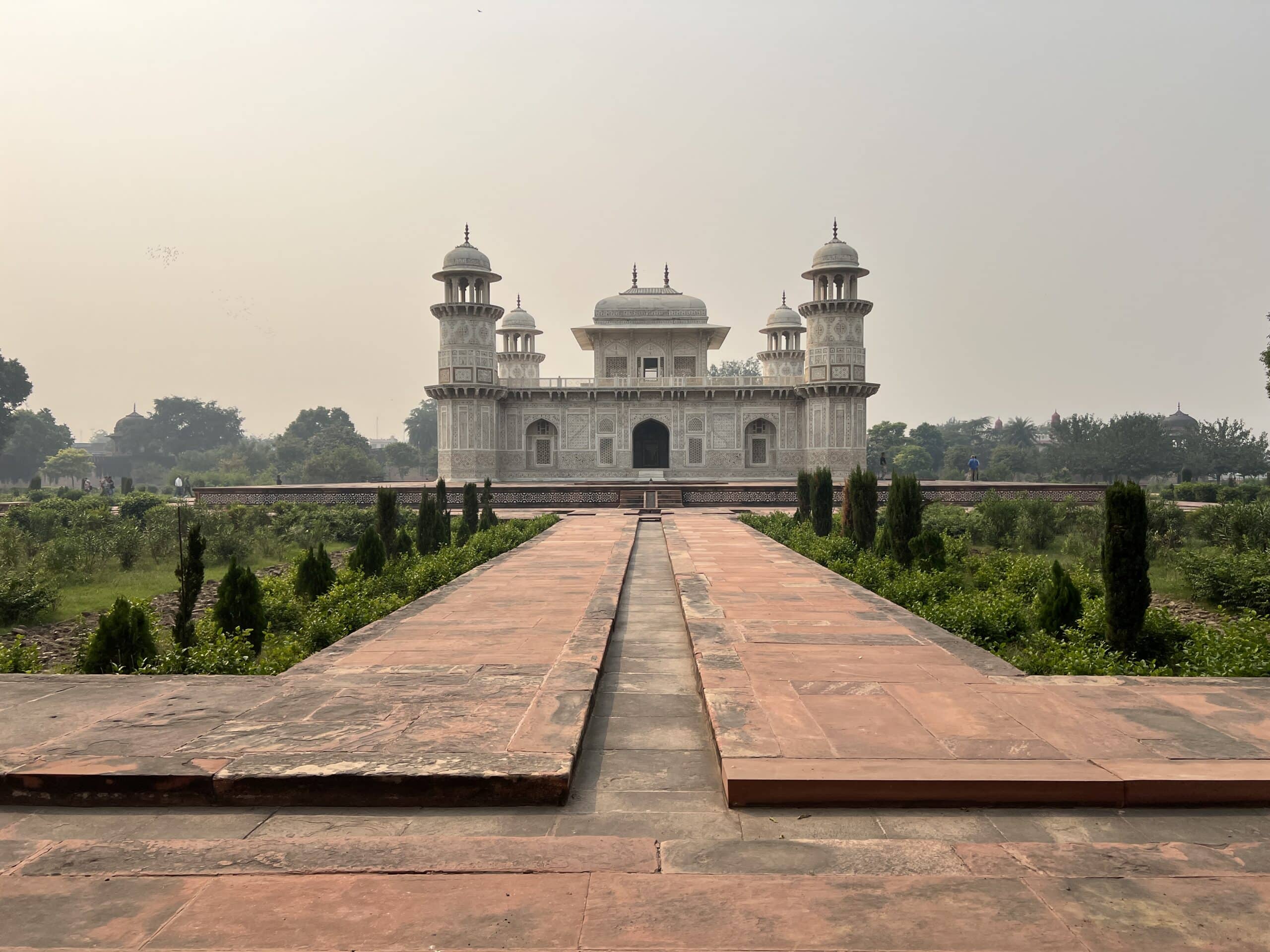
Itmad-ud-Daulah, the Baby Taj — a remarkable monument on a far more intimate scale. © Full Stop India
The Baby Taj
Itmad-ud-Daulah offers something entirely different from its celebrated neighbor. Its intimate scale lets you appreciate the marble inlay, subtle colors and astonishing precision without being overwhelmed by the size of the complex.
I’ve found it peaceful enough to hear my own thoughts. Wander around, then make your way to the Yamuna behind it. The whole experience is wonderfully rewarding.
Sikandra
Akbar’s Tomb was once presented to me as an optional stop on the way out of town. It turned out to be anything but. On an early-morning visit, we found the vast grounds nearly empty, apart from a small herd of grazing antelope.
Inside, a man appeared seemingly from nowhere, spoke to us in Hindi, and opened a dark stairway after an apparent request for baksheesh. We followed, with a head torch and very little idea what he was saying. It felt like walking into a mystery novel.
For another visit
I also remember the remarkable, nearly deserted Chini ka Rauza and would happily return. The Tomb of Mariam-uz-Zamani is still on my list.
If your route allows it, make room for Sikandra on your way into or out of Agra. And if you go, arrange a good guide. There’s far too much history here to leave to guesswork.
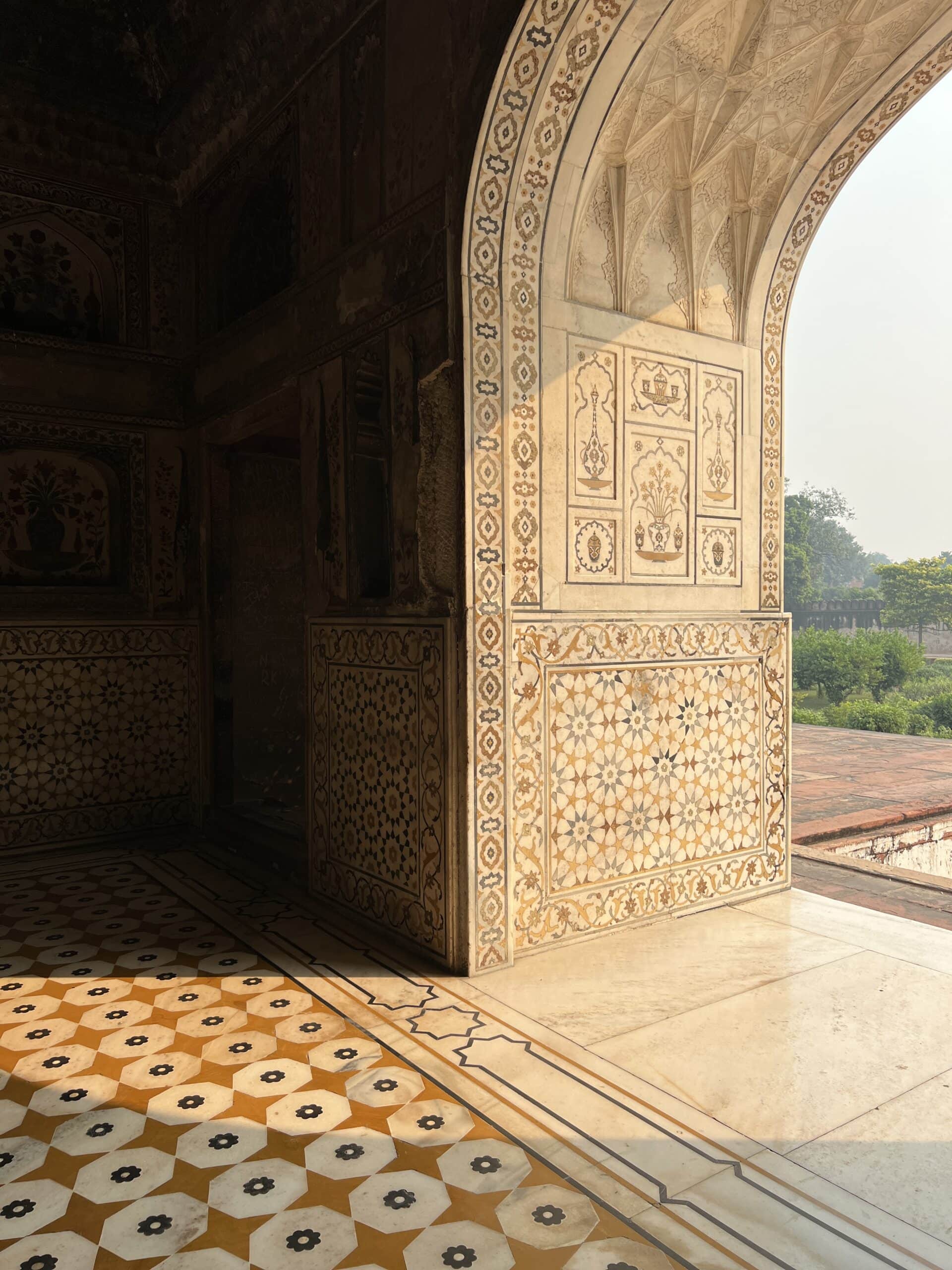
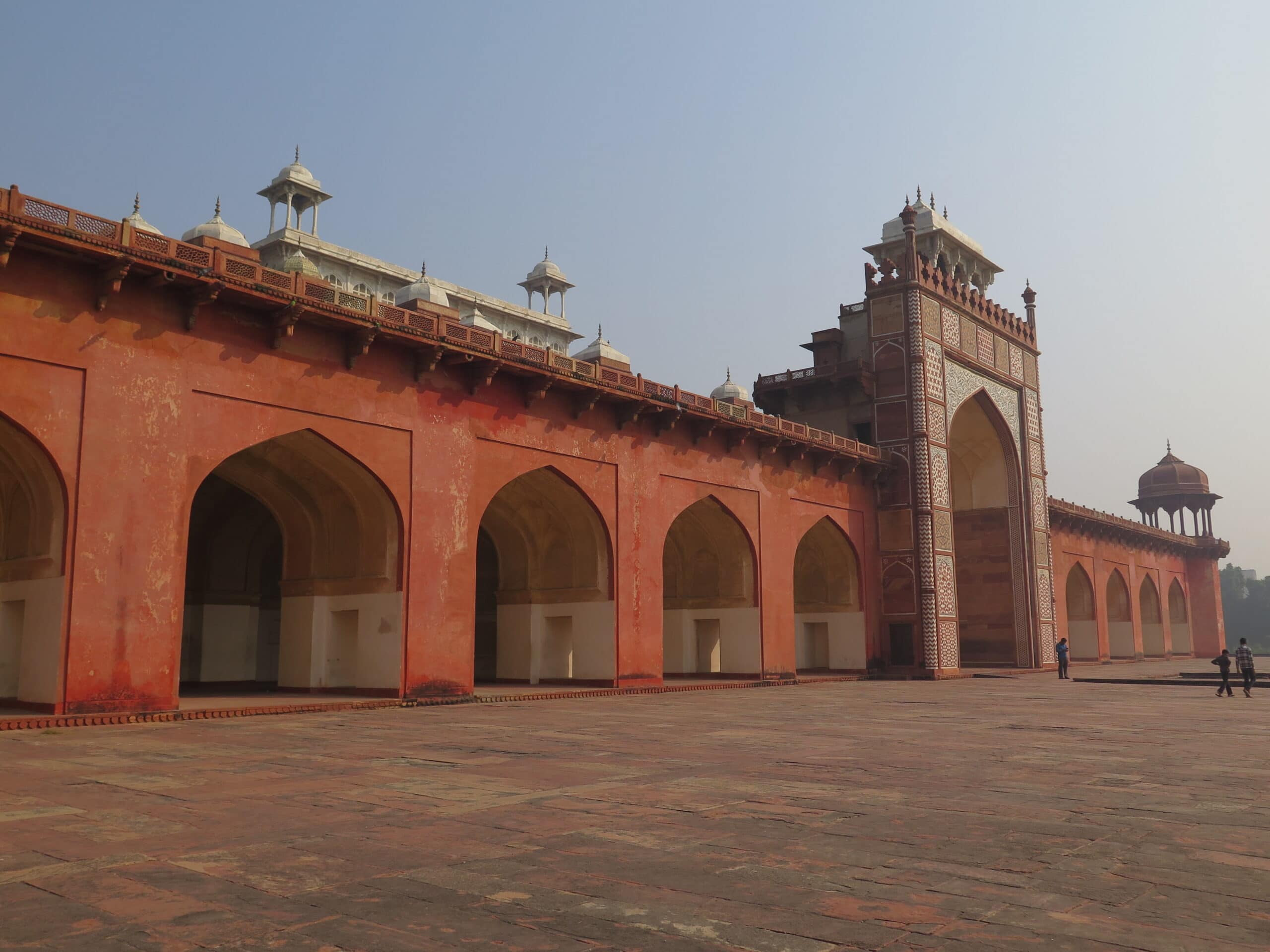
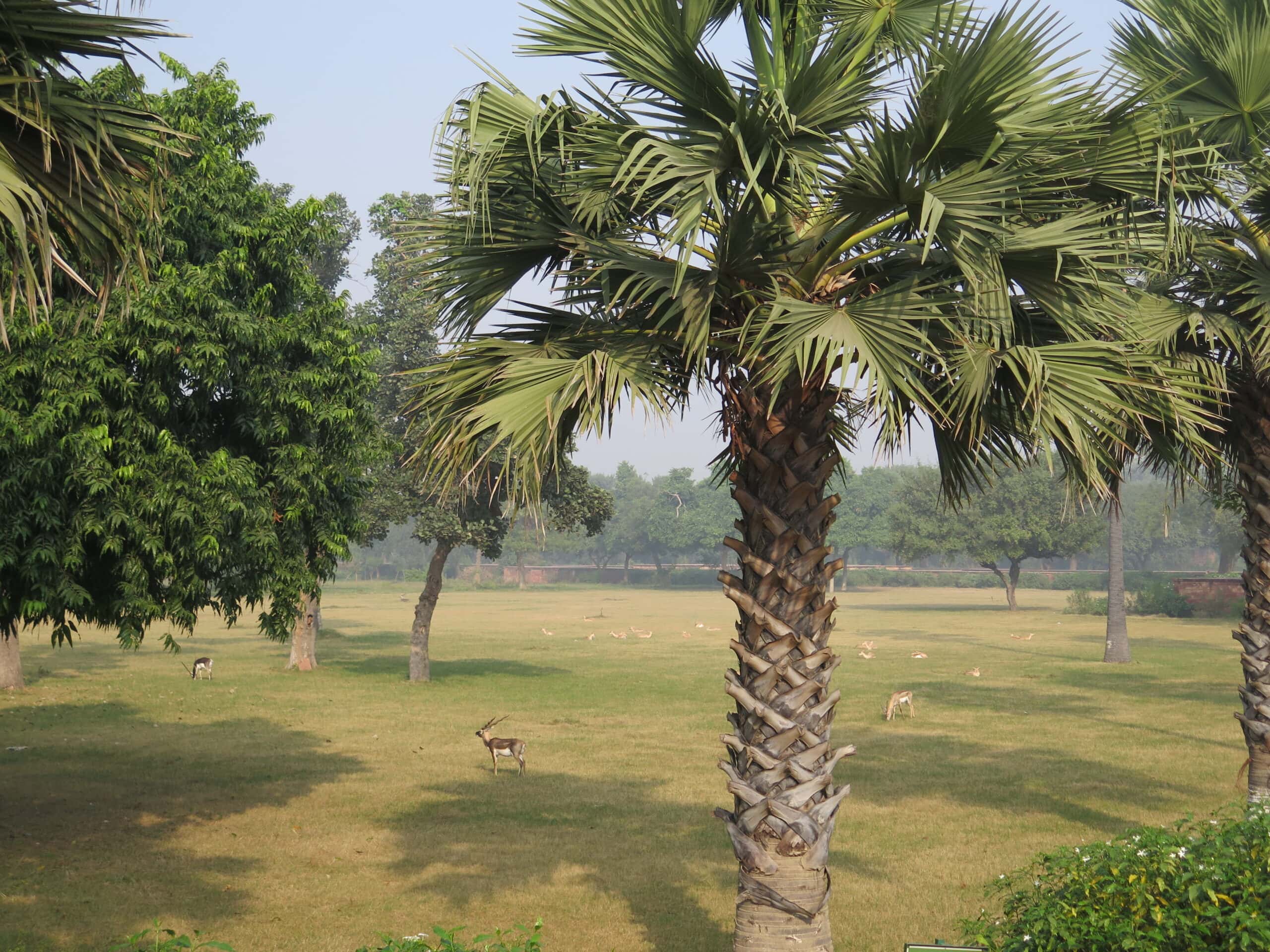
Details at the Baby Taj; the vast complex and grazing antelope at Sikandra. © Full Stop India
“Agra isn’t short of things to do. It’s short of itineraries that give people permission to discover them.”
An unexpected view through the trees
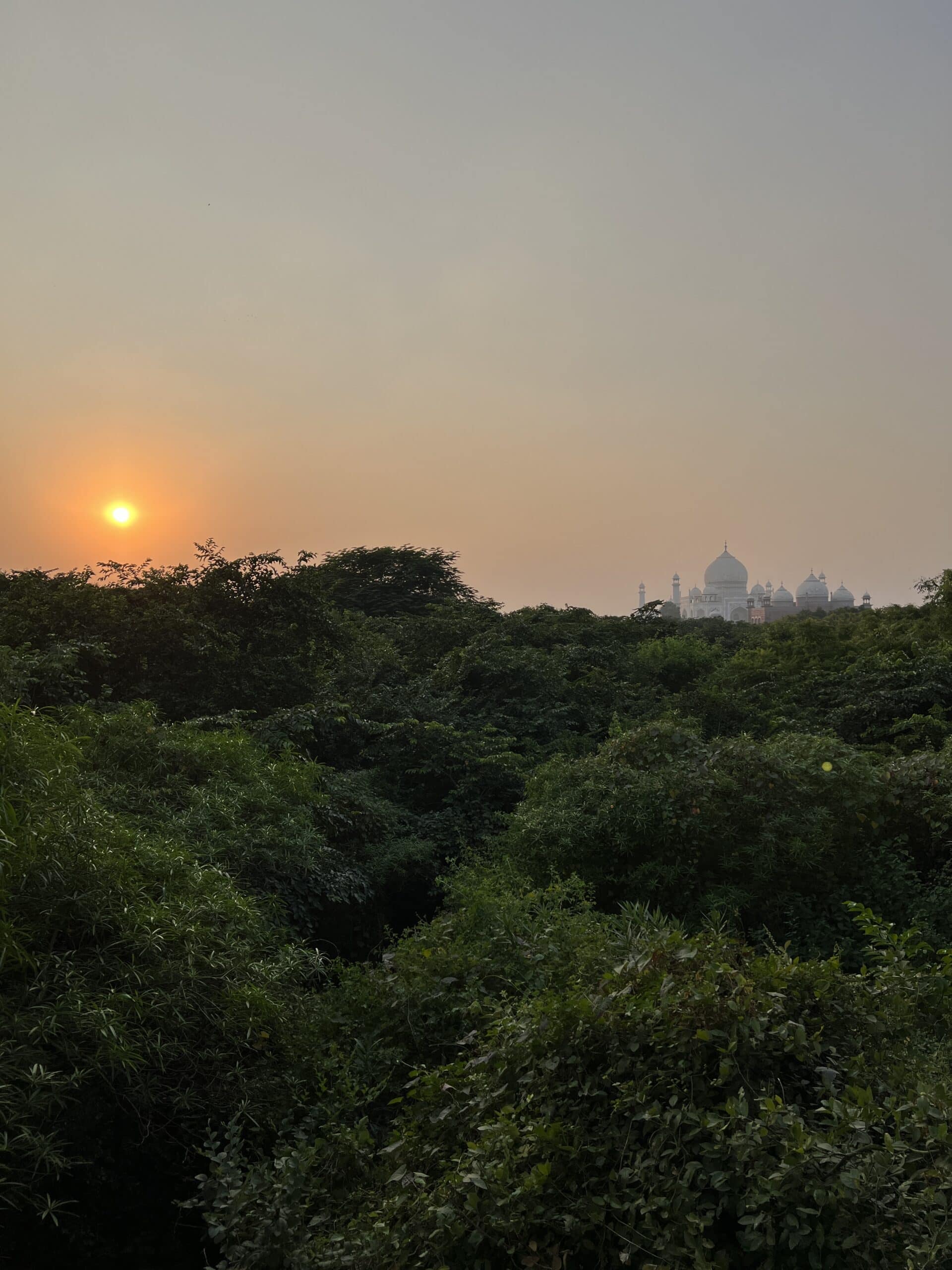
I’d read about the Taj Nature Walk for years. When I finally went in 2024, I expected a manicured promenade with views over the river. Instead, I found a modest entrance and a narrow path disappearing into vegetation. I wondered what I’d paid to see.
Then, as the sun was going down, the upper half of the Taj Mahal appeared above the canopy. It was one of the most captivating views I’ve had of the building, precisely because I hadn’t expected it.
This isn’t a polished riverside stroll. That was part of its charm for me.
An afternoon with rescued elephants
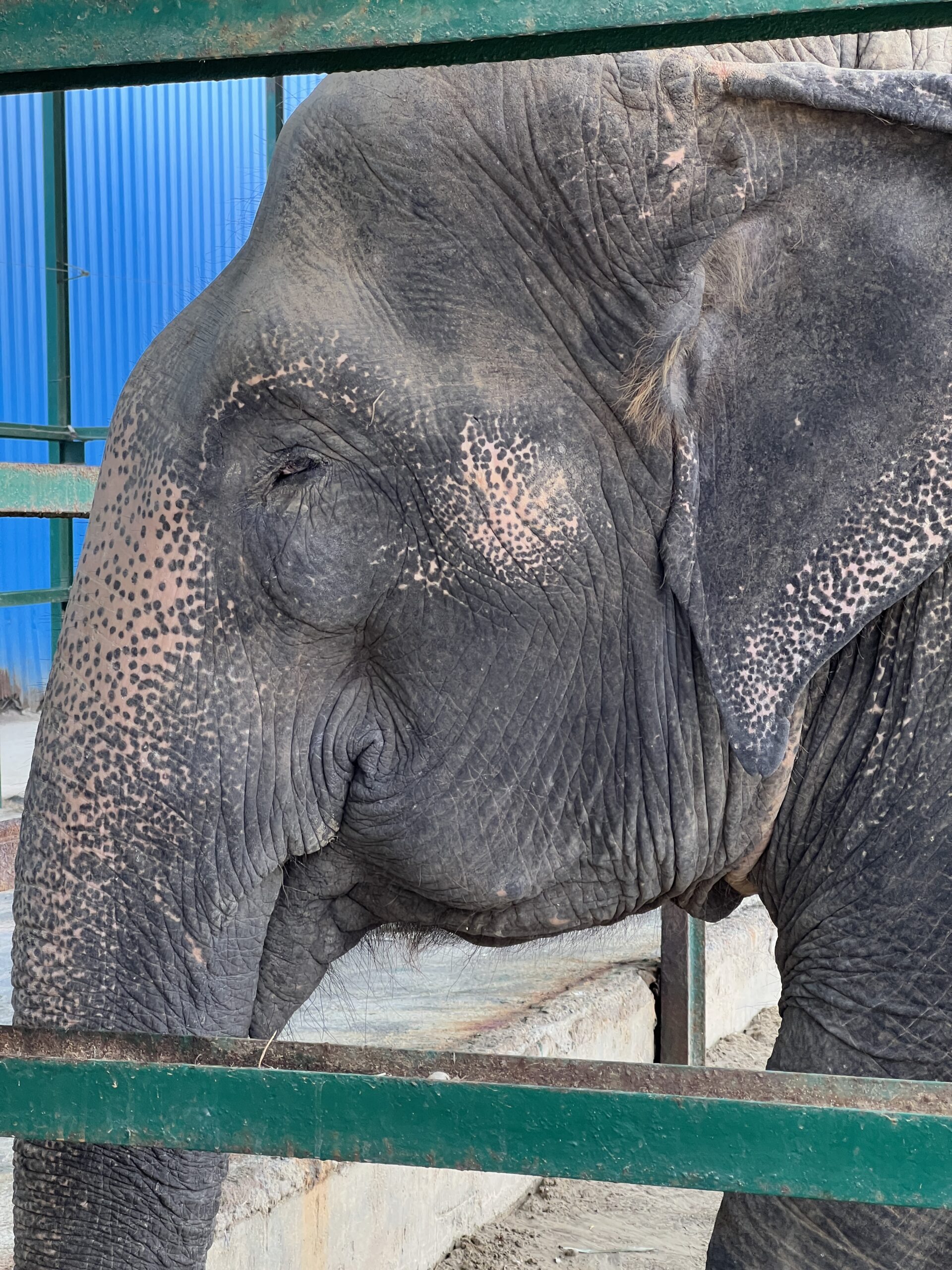
In 2025 I visited the elephant facility operated by Wildlife SOS outside Agra. We’d booked months ahead, and the experience was more structured than I expected: chai, questions about why we’d come, an affecting film about the animals’ histories, and a guided visit with clear boundaries.
No touching, feeding, calling out or approaching the elephants. Those rules were emphasized repeatedly. The staff struck me as understandably protective of animals that had endured so much.
It’s an educational visit worth considering if you have time beyond the monuments. Arrange it in advance and allow for the journey; this isn’t somewhere to turn up unannounced. There is a donation associated with the visit, disclosed when you arrange your booking; we paid ours at the end. Confirm the current donation amount directly with Wildlife SOS before you go.
Stay in Agra, not outside it
There is a certain temptation to arrive in Agra, disappear into a luxurious resort, visit the Taj Mahal and depart. You might have a beautiful stay. You might also leave without much sense of the city you came to see.
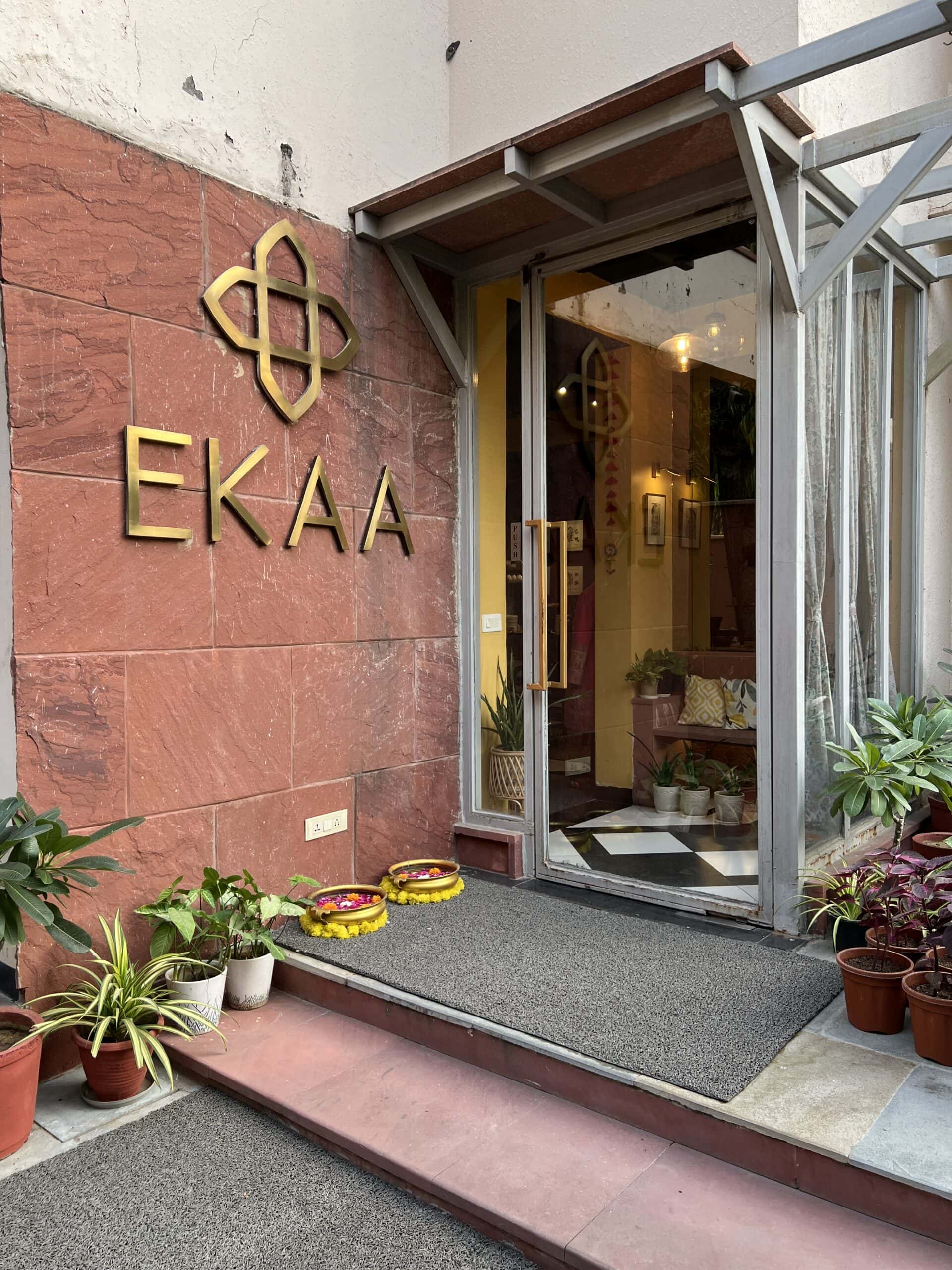
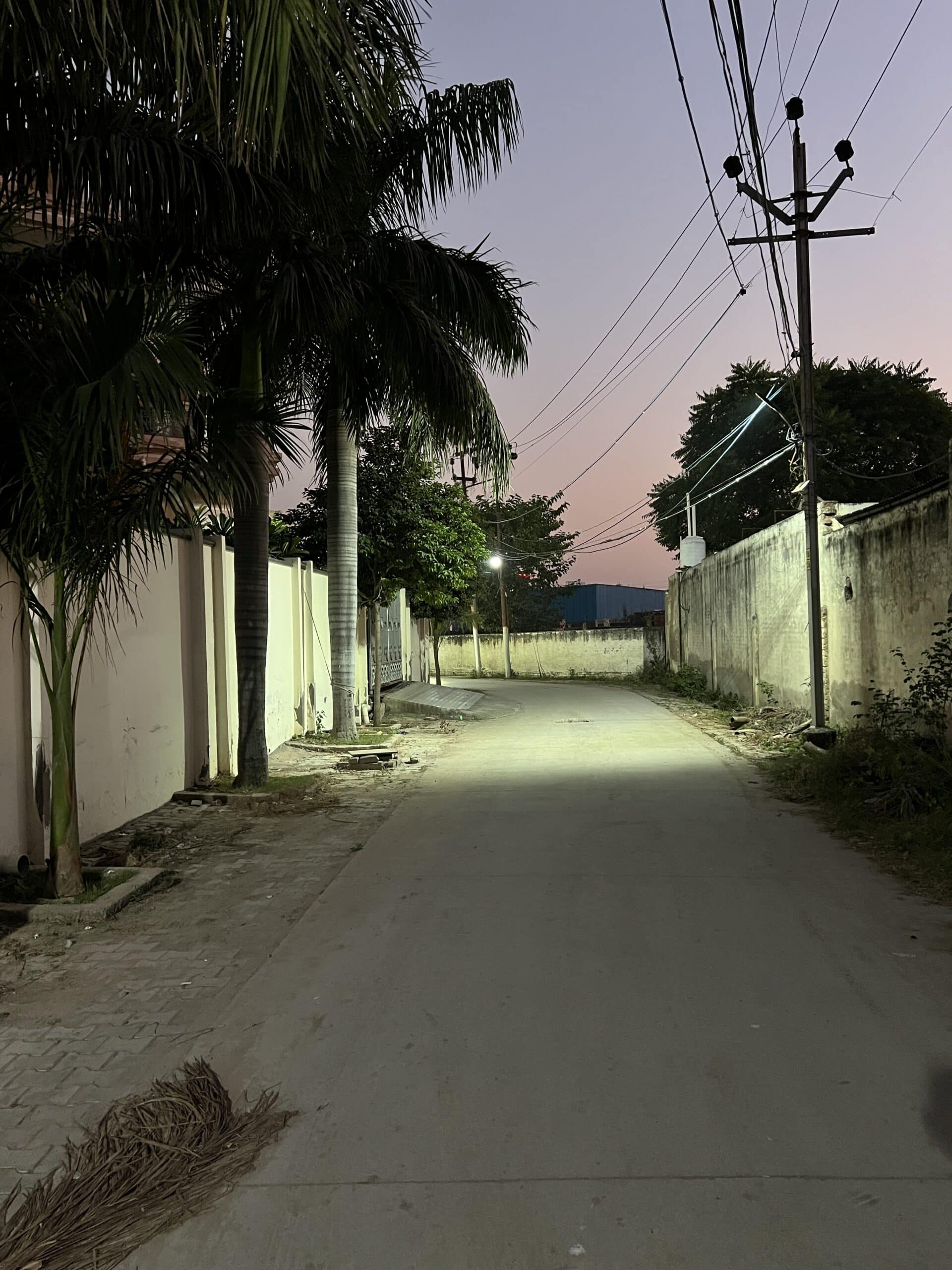
On my last two visits, I’ve stayed at EKAA, a modest, comfortable boutique hotel with generously sized rooms, a good breakfast and a location that makes it possible to walk toward the Taj—or, as I did one evening, in the opposite direction, into a quiet residential neighborhood.
The same small team seems to be there at every turn: check-in, dinner, breakfast, checkout. On one visit I spent nearly an hour talking with one of the people behind the hotel about how it came to be. That conversation has stayed with me.
EKAA isn’t trying to be a grand resort. For me, that’s precisely the appeal. It’s a comfortable place to stay in Agra, rather than somewhere to escape from it.
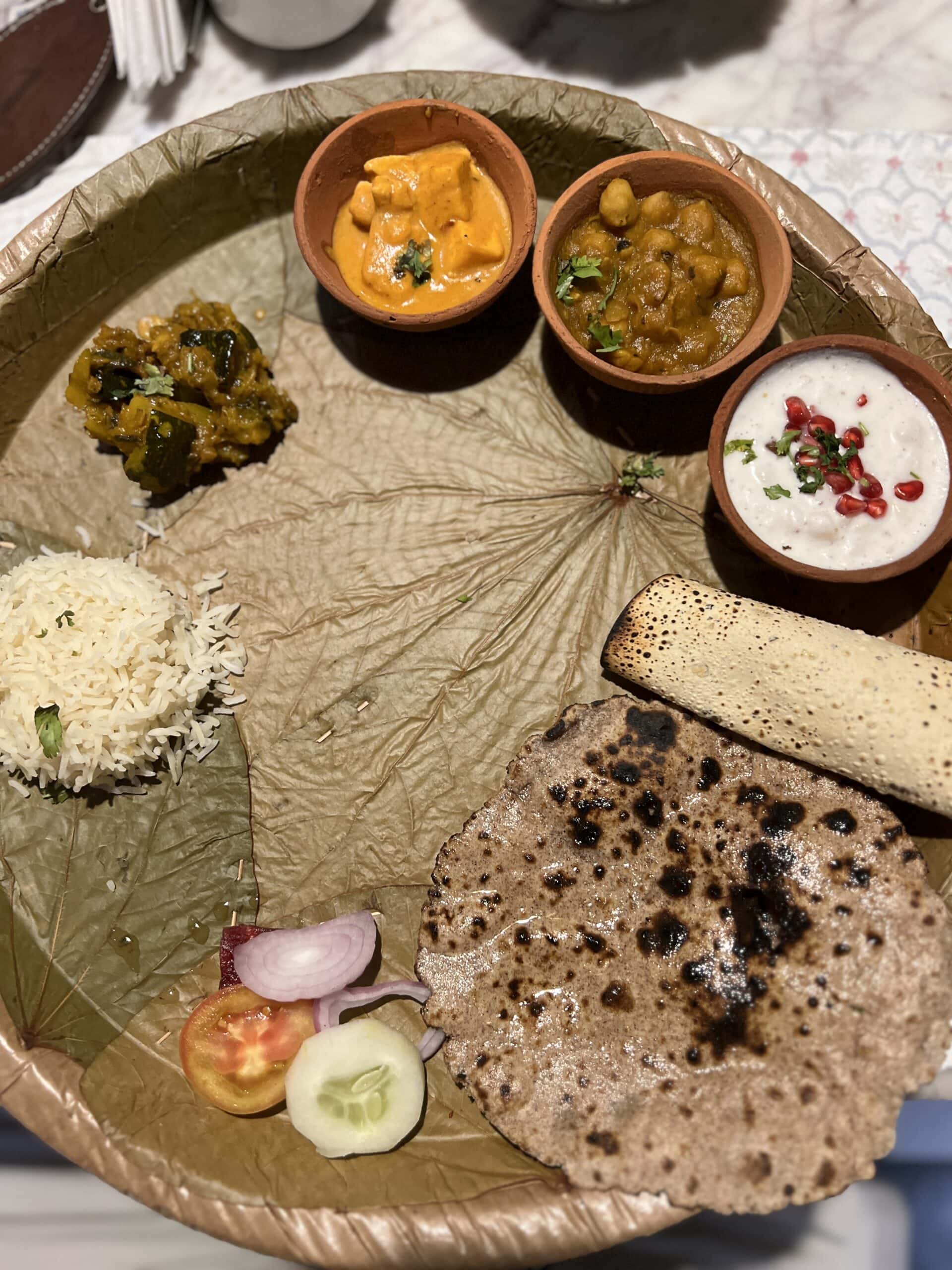
And then there’s the thali.
From the moment you arrive, the staff at EKAA are eager to tell you about their Agra thali. On my first stay, I ordered it. Every dish was introduced and explained, and the flavors were unlike anything I’d eaten elsewhere in India.
I returned the following year with my brother and sister-in-law, partly because I wanted that meal again. It was every bit as memorable the second time.
Agra Essentials
A few useful details to have handy before you arrive—and a little reading for the journey.
AGR — Agra Airport (Kheria)
Agra has a small airport with limited commercial service. Check current flights before planning to fly directly here. Official airport website.
AGC · AF · TDL
AGC — Agra Cantt, the main railway station.
AF — Agra Fort railway station.
TDL — Tundla Junction, outside Agra; allow extra time for the road transfer.
Check the station code on your ticket. For the wider picture, see my guide to trains, flights and private drivers. Book trains through IRCTC.
Agra Metro
The operating metro corridor connects the Taj Mahal area, Agra Fort and Mankameshwar Mandir. It is useful for some central sights, but not a substitute for a car and driver when visiting farther-flung monuments. Agra Metro information.
Worth reading
- Shadow of the Taj (affiliate link) — Lara Bernhardt. A novel about a woman drawn into a dangerous fight to protect a vulnerable child in India.
- Festivals of Uttar Pradesh — 2027 — A statewide calendar of festivals, celebrations and cultural events.
Useful apps
- Google Maps — Directions and reviews.
- Uber — Check local car and auto-rickshaw availability.
- Agra Metro (Official) — Metro route map and QR tickets.
- ixigo — Indian train journeys and booking details.
- BookMyShow — Films, performances and events.
Give Agra two nights.
I’ve spent too many visits wishing I’d stayed longer. Here’s how I’d arrange a first trip. For the bigger journey, see planning an India itinerary that actually works.
Day one
Arrive in the afternoon, settle in, and go to Mehtab Bagh for your first sight of the Taj from across the Yamuna. Leave time for traffic and a relaxed evening.
Day two
Visit the Taj Mahal early, with a guide, then Agra Fort. Have lunch, and spend the afternoon at the Baby Taj. Don’t rush any of them.
Day three
If your onward route allows, stop at Sikandra. For Wildlife SOS or more obscure monuments, build in extra time rather than squeezing them into an already full day.
A car makes sense
I’ve reached Agra by car and train, but for sightseeing I strongly prefer a private car and driver. The distances, traffic and pickup logistics can consume a surprising amount of time, particularly for Mehtab Bagh.
Choose your guides
I book Agra guides in advance through a travel agent. I want deep knowledge, good English and the freedom to spend as much time as I choose. I’d rather have a superb guide for one monument than a hurried all-day arrangement.
Leave room to discover
A first visit can easily fill two nights. If Agra is part of a longer North India journey, make choices rather than treating every stop as a checklist. There will always be something to return for.
The Taj will bring you here. Let Agra keep you a little longer.
Twenty years after my first visit, I still leave with places I want to see again, corners I haven’t explored and another reason to return. That seems a better way to know a city than checking its most famous monument off a list.