

How you travel through India can shape the journey as profoundly as the places you visit. Independent travel, private drivers and organized tours each offer something different—and the right answer often lies somewhere in between.
On my first journey through India in 2005, nearly the entire trip was by private car and driver. For two weeks, the same man drove me across northern India until it was time for me to take a train from Khajuraho to Varanasi.
By then, he no longer felt like someone who had simply transported me from place to place. I had grown genuinely fond of him. Saying goodbye felt like leaving a new friend, yet I had no reliable way to contact him and no idea whether our paths would ever cross again.
A new driver met me in Varanasi, but the connection was not the same. Then, after flying from Varanasi to Delhi, something unexpected happened: I was reunited with my original driver. We exchanged contact information, made plans to see one another the following year and finally had the proper goodbye we had missed when he dropped me at the airport for my flight home.
That experience taught me something I still believe more than twenty years later: how you travel through India can shape the journey as profoundly as the places you visit.
Independent travel, private drivers and organized tours each offer something different. One is not inherently more authentic than another. The right choice depends on your experience, temperament and willingness to manage the unpredictable.

Traveling India With a Private Driver
A private car and driver can be one of the most convenient ways to travel through India, particularly when visiting several destinations within the same region.
Your luggage stays in the vehicle. You leave directly from your hotel instead of making your way across town to a station. You can stop for tea, take photographs or explore a place that would be difficult to reach by train. The countryside, villages and market towns between major destinations become part of the experience.
But the quality of that experience depends enormously on the driver.
During my 2025 journey through northern India, my first driver was moody and temperamental. I never completely trusted his work, and we simply did not connect. At the end of our time together, he argued about the tip I gave him—even though I knew it was already quite generous.
Then I arrived in Varanasi and met Jai.
Jai was friendly, conversational, accommodating and fun. More importantly, he was a problem solver. He made difficult moments feel manageable and understood that his role extended beyond operating the vehicle. The difference between the two drivers was remarkable.
My driver in southern India performed his duties perfectly adequately. Unfortunately, I remember very little about him or his personality. He did what he was hired to do—nothing more and nothing less.
That is the unpredictability of hiring a driver. Some become part of the story. Others remain transportation.

The Question of Trust
The greatest disadvantage of traveling with a private driver is not the cost or the hours spent on the road. It is trust.
When a driver tells you that a place is closed, is it actually closed—or does he simply not want to go there? Is a particular route genuinely congested, or is there another reason he prefers to avoid it? Is the recommended restaurant somewhere he believes you will enjoy, or somewhere that rewards him for bringing customers?
Sometimes you may never know.
While traveling through Kerala, a driver once asked if I wanted to stop at a garden center. I was hungry and tired, but I welcomed the chance to see some greenery and stretch my legs.
When we arrived, it was nothing more than a plant nursery. I walked around briefly and headed toward the exit, where the owner demanded money from me simply for having entered. I was in no mood to argue, so I paid.
I could have refused. I could replay the encounter in several ways. But the result was the same: whatever tentative trust I had placed in that driver disappeared.
This does not mean that travelers should avoid private drivers. It means that the relationship should never be approached blindly. A good driver should respect your decisions, explain changes honestly and never pressure you toward shops, restaurants or attractions you did not request.
A driver is also not automatically a qualified guide. Driving skill, historical knowledge and cultural interpretation are different services. The strongest journeys often combine a reliable driver with carefully chosen local guides.
Why I Still Love Traveling India by Train
Despite the convenience of a car and driver, I love traveling through India by train.
A train allows you to stop managing the journey for a while. You can read, eat, sleep, recharge your electronics, watch the countryside move past the window or strike up a conversation with someone you might otherwise never meet.
Trains are often faster than traveling by road. A journey that takes six tiring hours by car might take four hours by rail—and cost a fraction of the price.
As a general rule, whenever a road journey exceeds four hours, I investigate the train options. The schedule, station locations and availability may ultimately make the car more practical, but the train deserves consideration.
Train travel is not without tension. I have waited on the wrong platform, made hurried corrections and come uncomfortably close to missing departures. Indian railway stations can feel overwhelming until you understand their rhythm. Trains may also run late, and the boarding process does not always reward hesitation.
Then there was Varanasi in 2024.
About twenty minutes before my train arrived, I contacted the owner of the Airbnb I had reserved. He had been surprisingly elusive about the check-in instructions, and I finally pressed him for an answer.
My reservation began the following day.
I had booked the wrong dates and was about to step into Varanasi station without anywhere to stay. What followed was a frantic search for a hotel from my seat on the train before I lost the relative calm of the carriage and entered the commotion of the station.

Mistakes happen even after years of traveling through India. Experience does not eliminate them. It simply teaches you that most problems can be solved—preferably with a working phone, a reliable data connection and a little remaining battery power.
The Value of an Exceptional Local Guide
For more on this, see my guide to getting around India by train, plane and private driver.
A great guide does far more than deliver names and dates. The right person can reveal a city’s character, explain what you are witnessing and lead you into stories that would otherwise remain hidden.
Years ago in Madurai, I hired a female guide who was direct, efficient and entirely no-nonsense. She intended to share the information she considered important, show us the places she believed mattered and keep us moving.
The male guides around her frequently dismissed her. She returned their attitude without hesitation, and I quietly loved watching every moment of that friction. She knew her city, understood her responsibility and refused to be diminished.
In Lucknow, I found something entirely different: a guide with a gentle spirit and an extraordinary depth of knowledge. He walked with me from dawn until dusk, answering every question with patience and an unfailing smile. I valued the experience so much that I contacted him the following year and did it all again.

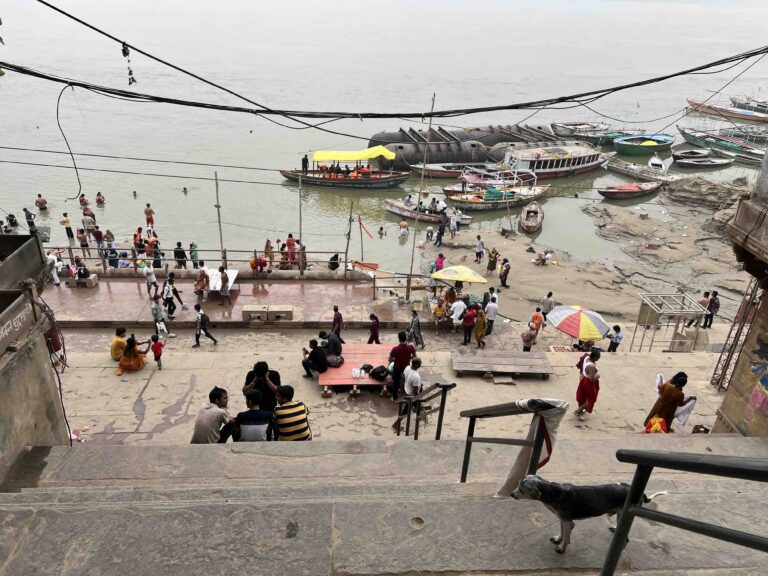
My guide in Varanasi brought those same qualities to an altogether different city. He was remarkably intelligent, endlessly patient and deeply devoted to his work. He was determined to reveal Varanasi in a way few visitors ever take the time to see or understand.
These guides did not simply show me monuments. They changed how I saw their cities.
That is why I rarely recommend hiring one guide to accompany you across the entire country. India is too layered for that. Local specialists bring personal knowledge, regional context and relationships that a general tour escort cannot reproduce.
Independent Travel in India
Independent travel offers freedom. You can change your plans, stay longer in a place you love and leave somewhere that does not speak to you. You are not governed by a group schedule, predetermined restaurants or someone else’s idea of what must be seen.
But independence in India does not require doing everything without help.
You can plan your own route, book your own hotels and travel by train while still arranging an airport transfer, reserving a private driver for certain regions and hiring guides for particular cities. In fact, this type of hybrid journey is often the most rewarding approach.

For a first visit, some arrangements should be in place before you arrive:
- Reserve your first hotel.
- Arrange your airport pickup in advance.
- Have a working international cellular plan or obtain an Indian SIM or eSIM.
- Keep hotel addresses and confirmation numbers accessible offline.
- Begin exploring after a night’s sleep, with fresh legs and clearer eyes.
- Do not expect to rent a car and drive yourself.
Driving yourself around India is not a realistic recommendation for the overwhelming majority of foreign visitors. The traffic operates according to instincts and conventions that take considerable time to understand. Hiring a professional driver is not surrendering your independence; it is recognizing where local experience matters.
Travelers obtaining a local SIM should also be prepared for a process that may not be as simple as expected. Know the official cost, use an authorized provider and question unexpected requests for additional cash.
Is an Organized Tour Right for You?
Other than my first trip in 2005, when a travel agency arranged the journey, I have not personally traveled through India as part of an organized group tour.
That distinction matters. I can speak extensively about agency-planned travel, private drivers, trains and local guides, but I will not pretend to have personal experience as a participant on a conventional India group tour.
I can, however, see the value of a thoughtfully designed tour—especially for a first-time visitor.
An organized tour can remove the burden of coordinating hotels, transportation, guides and entrance arrangements. A good tour leader solves problems quietly and provides enough structure for travelers to remain present rather than spending each evening managing the following day.
The danger is choosing a tour that attempts to show too much.
India should not be reduced to a string of monuments viewed through a bus window. Look carefully at the pace, group size and number of one-night stays. Ask how much unscheduled time is included, whether shopping stops pay commissions and whether local specialists are used in each destination.
A worthwhile tour should make India more accessible without protecting you from every unscripted moment. It should create confidence without turning the country into a performance viewed from a distance.
Who Should Travel Independently?
This is too personal a question for a universal answer. I cannot identify a category of people who should—or should not—travel independently through India.
I have, however, traveled with people close to me who struggled with precisely the conditions I had described before we arrived. They became so focused on the inconveniences, disorder and unfamiliarity that they could no longer see the people, culture and beauty around them.
That experience taught me an important lesson: I cannot want someone to see India more than they want to see it themselves.
If I have to persuade someone to visit India, I no longer believe they are ready. The desire does not need to be entirely free of apprehension, but beneath the questions and nerves there should be a genuine and fairly immediate yes.
India asks for curiosity. It rewards travelers who can accept that discomfort and beauty sometimes occupy the same frame.

If you are already an experienced traveler in India or other developing countries, you may be perfectly comfortable planning independently. If you are not, an experienced travel advisor, custom itinerary or carefully selected organized tour can provide an invaluable framework for your first visit.
My Recommendation for a First Journey
For most first-time travelers, I recommend a hybrid approach.
Have your arrival, principal transportation and important accommodations arranged in advance. Use trains for longer journeys when the route and schedule make sense. Hire a private driver for regions where traveling by road offers greater flexibility. Engage local guides whose knowledge can take you beyond the surface of a destination.

Then leave some room.
Allow yourself an unscheduled afternoon, a return visit to a place that caught your imagination or a conversation that lasts longer than expected. Good planning should not control every moment. It should create the confidence and time for something unplanned to occur.
Independent journey, private driver or organized tour—the method should serve the experience.
India will provide the rest.

 How to Prepare for Culture Shock in India
 Which Airport Should You Fly Into in India?
 Where to Stay in India: Finding Hotels, Guesthouses & Hidden Gems