Lakshadweep, Beyond the Lagoons
Coral islands, fishing communities, seafaring traditions and a very different rhythm of Indian life.
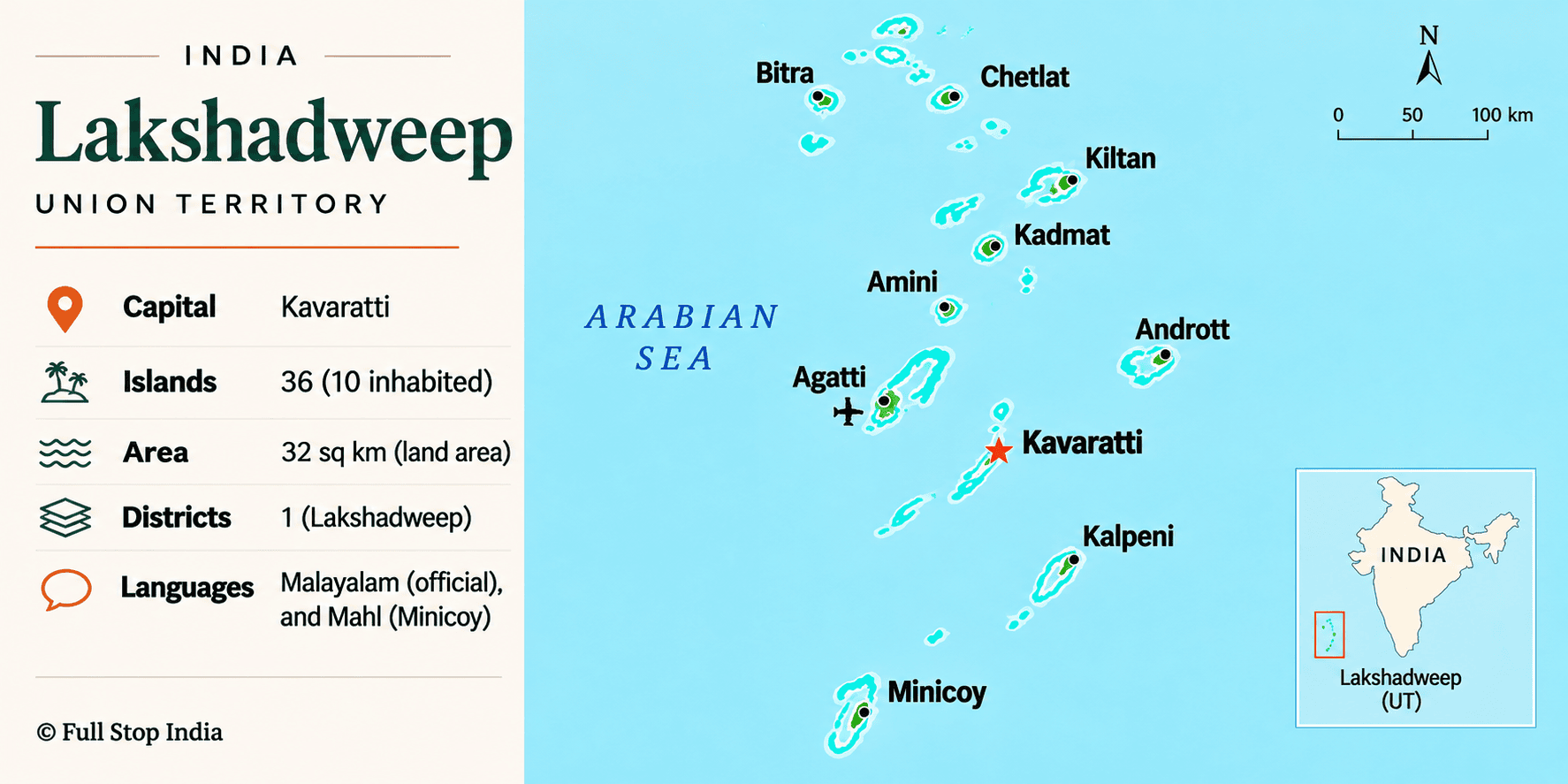
Lakshadweep looks almost impossibly small on a map of India. Out in the Arabian Sea, however, the distances between its islands become very real. The Union Territory consists of one district, spread across a chain of coral islands and atolls off Kerala’s coast.
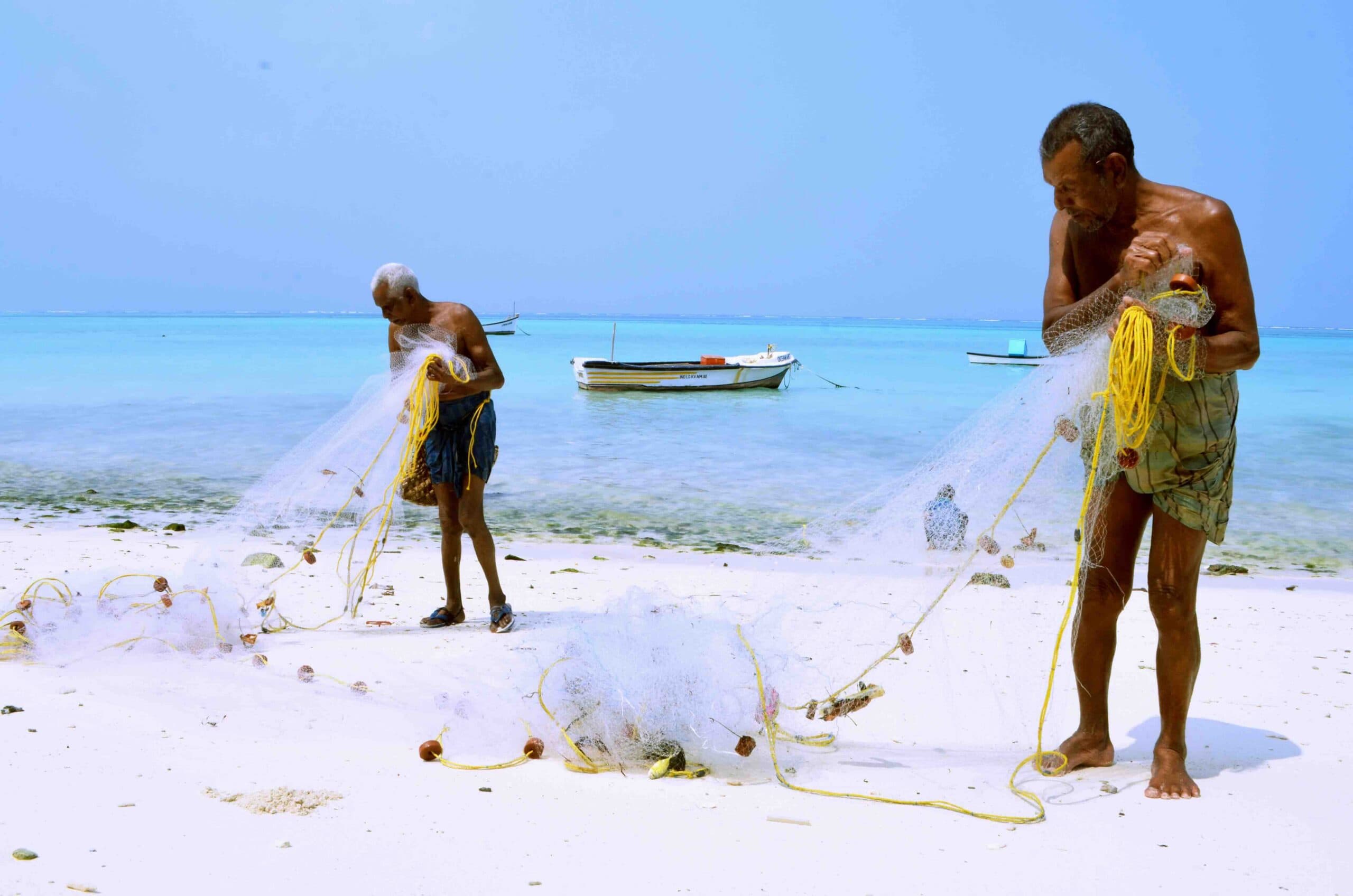
Ten islands are inhabited. Each has its own community, traditions and relationship with the sea. Fishing, especially tuna fishing, coconut cultivation, coir work and public-sector employment are important parts of local life. On Minicoy, the Mahl language and cultural connections with the Maldives distinguish it from the northern islands.
This is not a destination where visitors can simply arrive and move freely between islands. Entry permits, transport arrangements and accommodation availability shape the journey. Understanding the islands individually is the best place to start.
One district, many island communities
Although Lakshadweep is a single district, its inhabited islands have distinct identities. Kavaratti is the administrative center and Agatti has the airport. Kadmat and Kalpeni are known for their lagoons, while Amini, Andrott, Kiltan, Chetlat and Bitra are working island communities shaped by fishing, coconut cultivation and local traditions. Minicoy, far to the south, has its own Mahl-speaking culture and a long tuna-fishing heritage. Uninhabited Bangaram is known for visitor accommodation.
Getting between islands is not as simple as hopping on a ferry. Permits, accommodation and transport arrangements determine which islands visitors can reach. For more on the territory’s administrative status, see States vs. Union Territories: What’s the Difference?
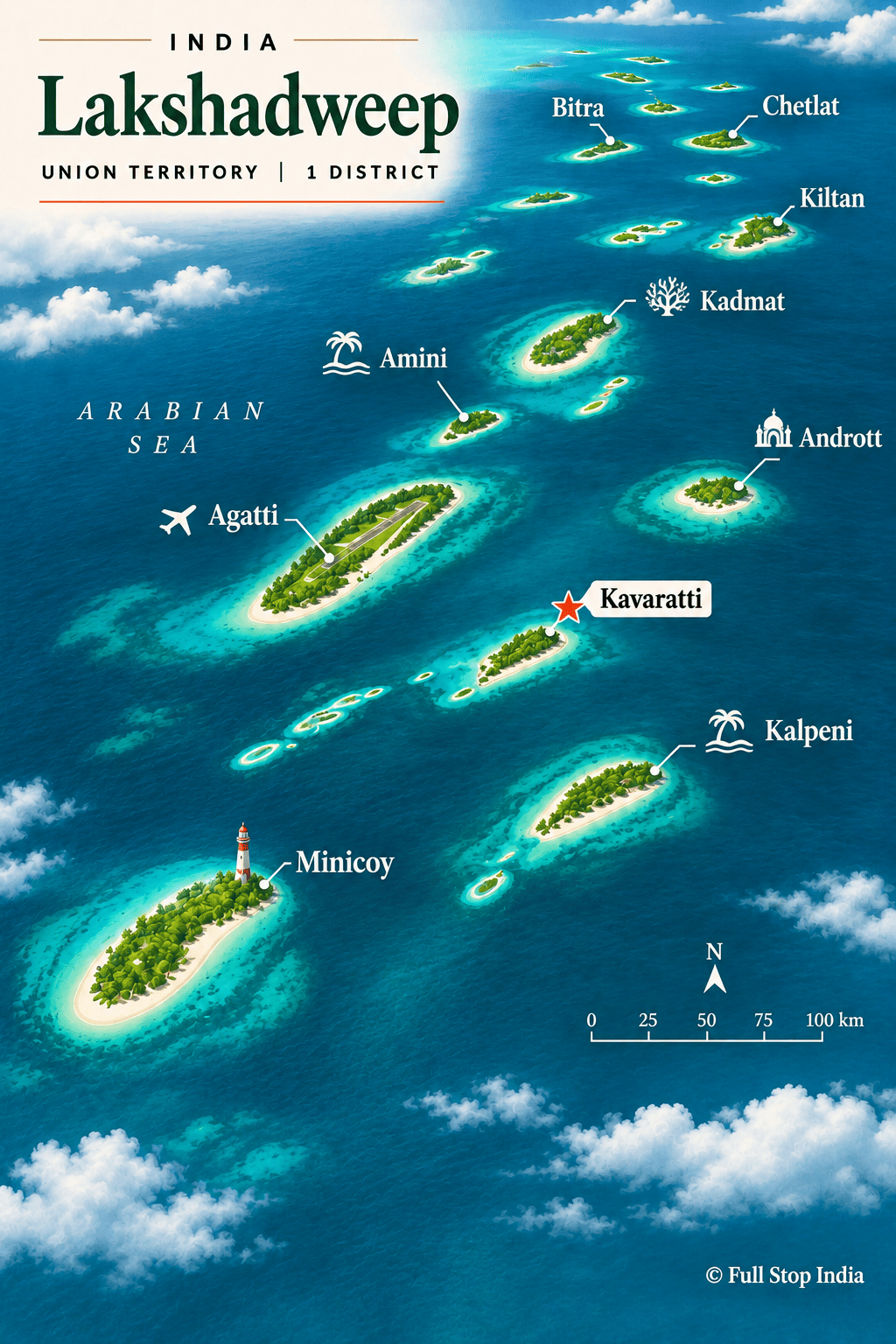
On Kavaratti, the capital, the administrative offices share a small island with fishing boats, mosques and homes shaded by coconut palms. The Ujra Mosque is among its best-known landmarks. Nearby Agatti has an entirely different first impression: the runway occupies a narrow strip of land between the lagoon and open sea. It is the main air gateway, but it is also a lived-in island with fishing households and its own routines.
Kadmat and Kalpeni are often discussed for their reefs and lagoons. Kadmat’s long, narrow shape puts the sea close to almost everything; Kalpeni’s lagoon contains smaller islets, giving it a distinctive coastal landscape. These are working environments as well as places to swim, with fishing and coconut growing woven into daily life. Bangaram, by contrast, has no permanent resident village and is chiefly known for its visitor accommodation.
The northern islands tell other stories. Amini has a history of craftwork and close-knit settlement; Kiltan and Chetlat have long depended on fishing, coconut cultivation and maritime connections. Bitra, the smallest inhabited community, is particularly remote. Andrott, one of the larger inhabited islands, has an important place in Lakshadweep’s Islamic history, including traditions associated with the arrival of Ubaidullah.
Then there is Minicoy, far to the south and culturally distinct from the northern islands. Mahl is spoken here, and the island’s traditions have close connections with the Maldives. Its lighthouse is a familiar landmark, but tuna fishing, village life and seafaring are just as important to understanding Minicoy.
It is tempting to think of Lakshadweep as a single tropical destination. In reality, the distances between islands, their different histories and the practical limits on travel mean that each visit reveals only a portion of the territory.
Getting to Lakshadweep
By air
Agatti Airport (AGX) is the islands’ principal airport. Kochi (COK) is the main mainland gateway, so plan flights and any onward island transfer together.
By sea
Government passenger ships connect Kochi and selected islands, with sailings dependent on vessel schedules and sea conditions. Check routes and book through official Lakshadweep ship ticketing, and see the sailing announcements for updates.
Permits and access
Visitors require an entry permit, and travel between islands depends on the approved itinerary and available transport. Apply through the Lakshadweep ePermit portal. For the air, rail and road connections to mainland departure points. There are no train or bus routes to the islands themselves.
Culture, festivals and everyday life
Islam is central to religious life across the inhabited islands. Fishing seasons, mosque gatherings, community celebrations and family traditions shape the calendar.
Coral reefs and lagoons are also fragile working environments. Freshwater is limited, waste management is challenging, and the islands face coastal erosion and climate pressures. Respecting local rules matters as much as enjoying the water.
Explore More of India
Local celebrations, cultural events and annual festivals.
The geography between the state and the village.
How India’s states and Union Territories differ.
India’s currency, its symbols and a few surprises.