

If you’re planning a trip to India, learning a little Hindi is one of the simplest ways to make your travels more enjoyable.
Do you need to speak Hindi to travel through India? No. English is widely used in hotels, airports, and many tourist-facing businesses, particularly in larger cities.
And Hindi isn’t spoken everywhere. India has an enormous variety of languages, and Hindi isn’t the country’s national language. While it’s especially useful across much of North India, other languages predominate in many parts of the country.
But even a handful of words can make a difference.
A greeting, a thank-you, or an attempt to ask a simple question in Hindi can turn an ordinary encounter into something more interesting. You may not understand the entire response, but people often appreciate that you’ve made the effort.
You don’t need months of lessons or perfect pronunciation to begin.
I know this firsthand. I’ve spent years studying Hindi, and I’m still learning. My motivation wasn’t simply to order food or ask directions. I wanted to have conversations with the people I met during my travels.
And that desire began with an experience in a small village in Himachal Pradesh.
The Wedding I Could Watch but Couldn’t Join
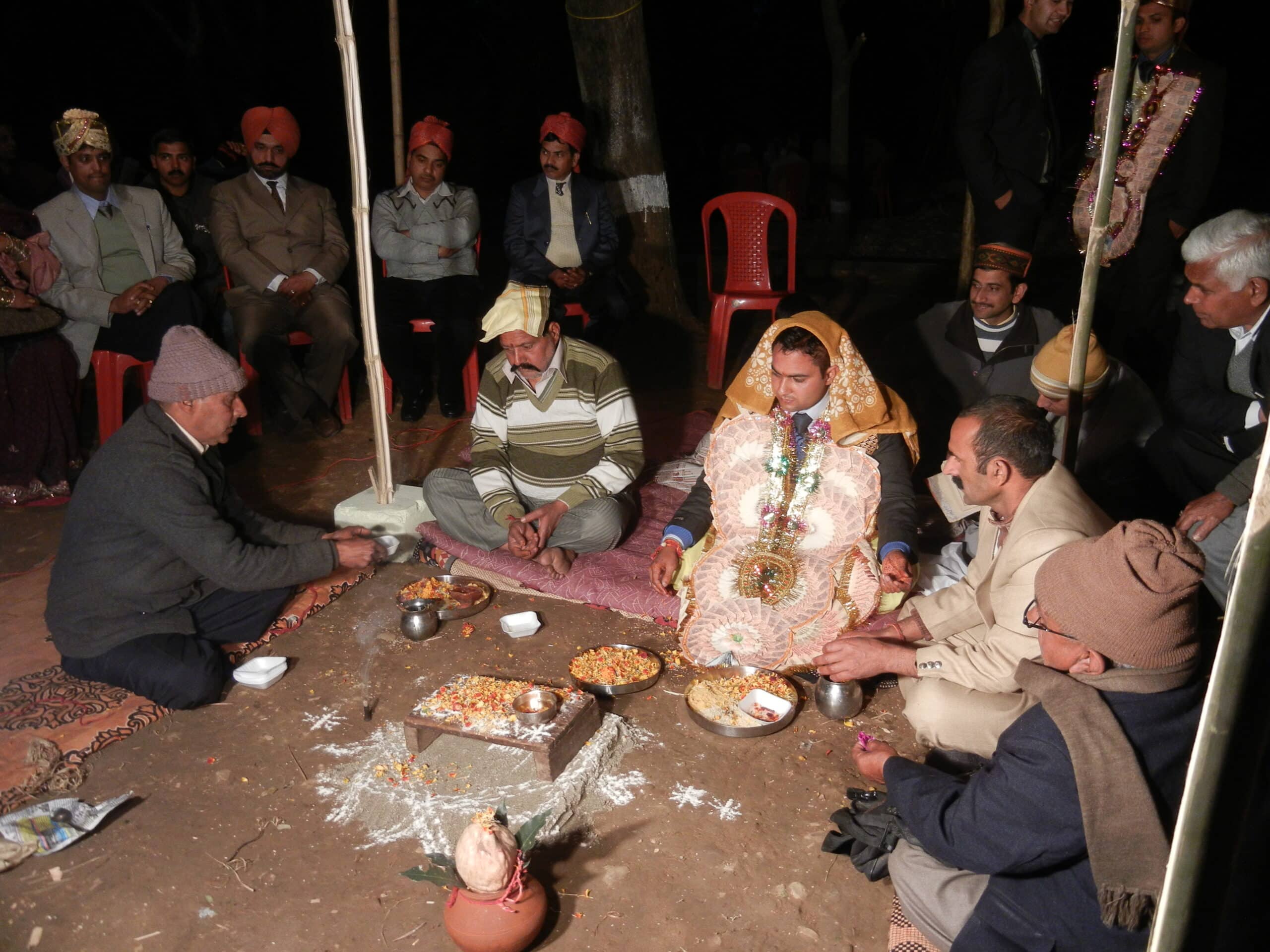
Years ago, sometime around 2010 or 2012, my longtime driver and friend Rakesh invited me to a wedding in his village in Himachal Pradesh.
I was reluctant to go. Not because I wasn’t interested. Quite the opposite. But I knew that once we arrived, Rakesh and a handful of children would be among the only people who spoke English. I didn’t know any Hindi, and I wasn’t sure what I’d do with myself.
I went anyway. The wedding was wonderful. There was a ceremony, an enormous communal meal, families gathered together, and all the activity that comes with a celebration in a small village. I was welcomed into it all.
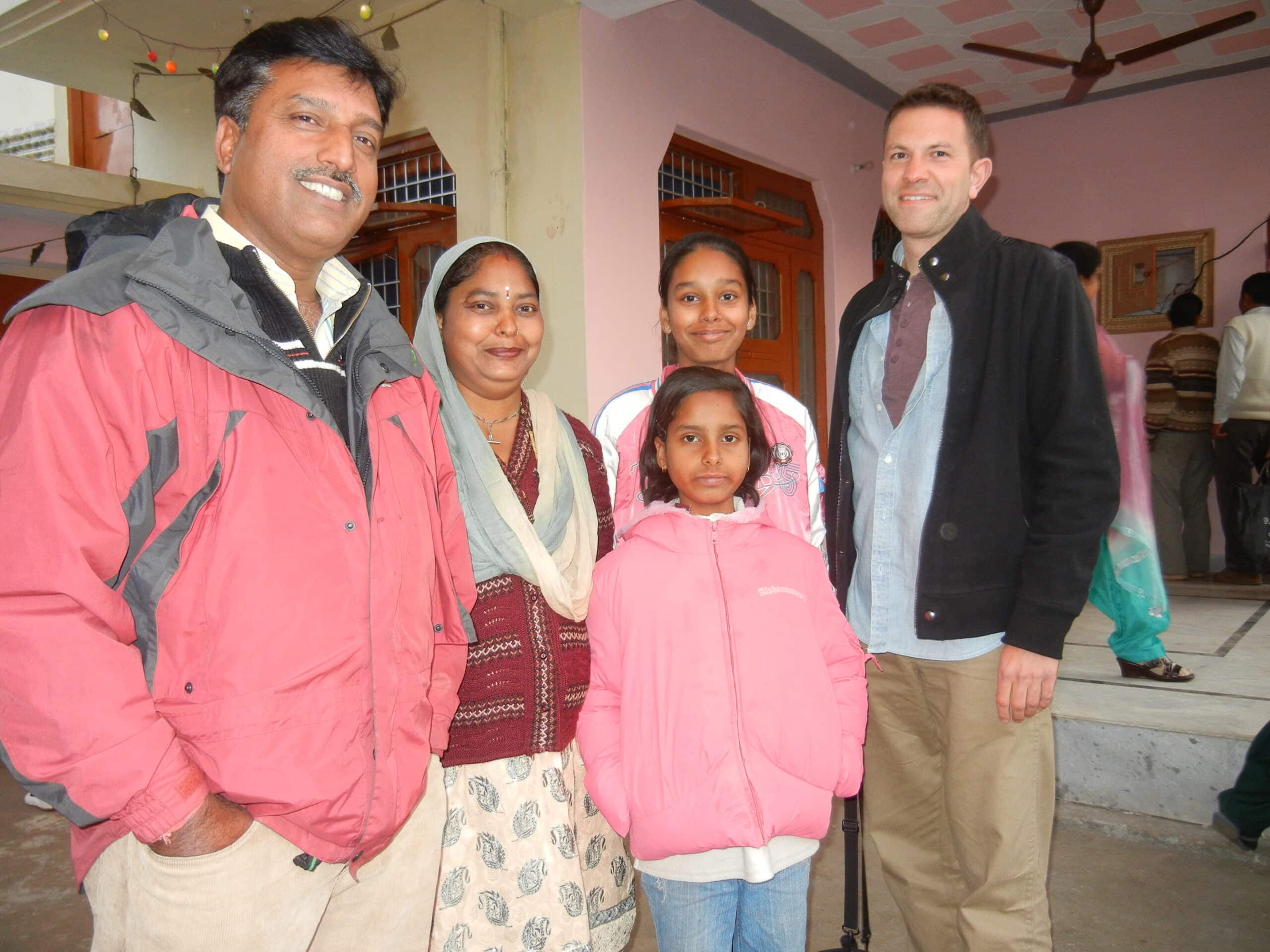
But I couldn’t really participate in the conversations. I could watch what was happening, smile, eat, and enjoy the experience. What I couldn’t do was turn to the person beside me and ask about their life. I couldn’t ask how they knew the family, where they lived, or what they thought of this American sitting among them.
I was present, but there was an entire part of the experience I couldn’t access. That stayed with me.
The Receipt That Finally Got My Attention
Fast-forward to when I was 47 and planning another trip to India. I came across an old colloquial Hindi book I’d purchased years earlier. Inside was the original receipt. 2005.
I’d bought that book seventeen years earlier with every intention of learning Hindi. And I’d done essentially nothing with it.
There I was, approaching fifty, looking at proof that I’d been meaning to do something for nearly two decades. It was a strange feeling. Not exactly regret, but a realization of just how quickly time passes while we keep telling ourselves we’ll get around to something.
I decided I wasn’t going to put it off again.
I started with Duolingo and worked my way through its Hindi course relatively quickly. It was a useful introduction to the alphabet and some vocabulary, but eventually I realized I was getting better at playing Duolingo than at speaking Hindi. I could recognize answers and complete exercises. That didn’t mean I could have a conversation with an actual person.
So I searched Google for Hindi tutors and discovered Preply. I narrowed my choices to two tutors and took a trial lesson with each. I chose the second one. I’m still studying with him today.
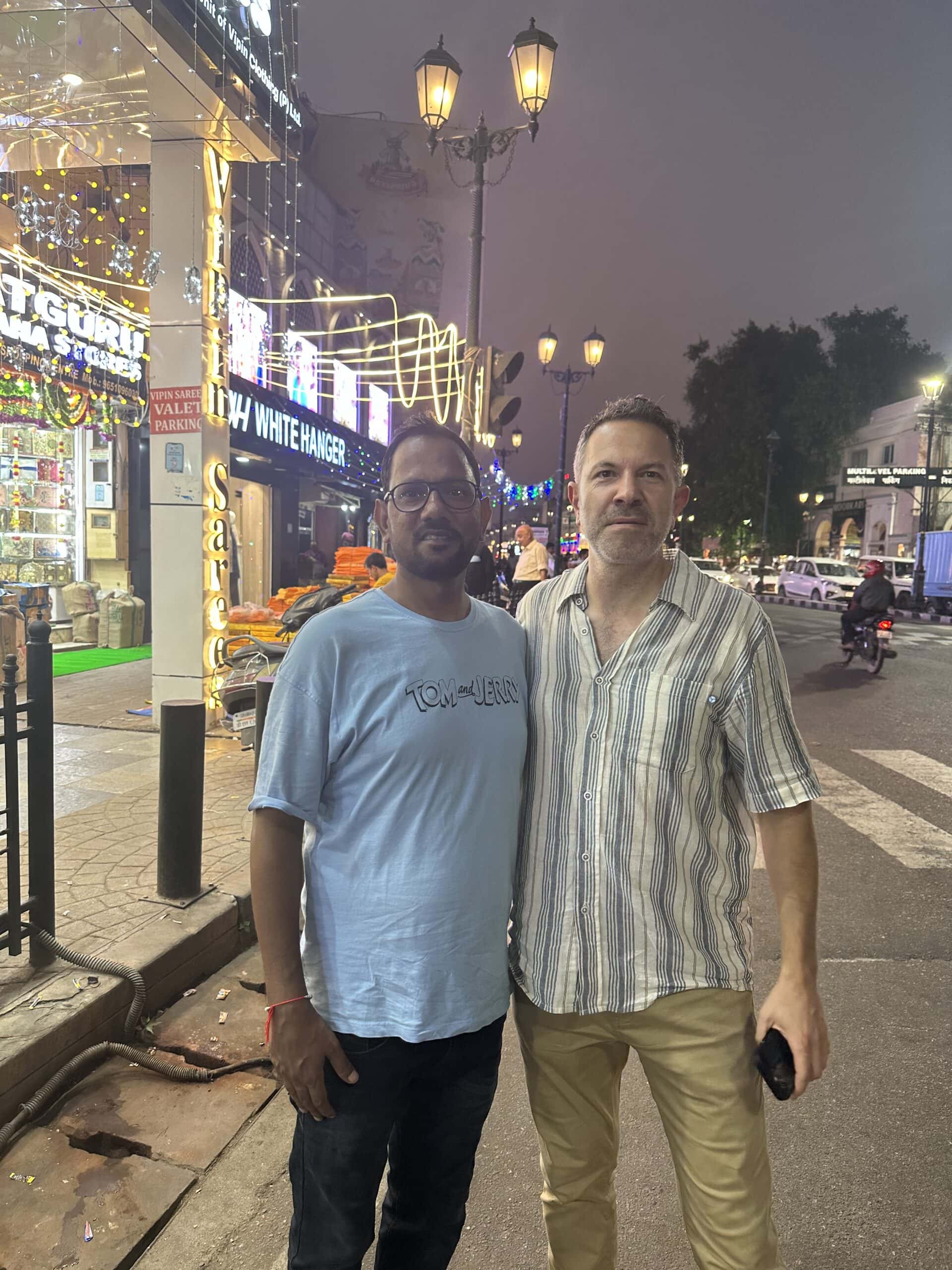
During a later trip to India, I finally had the opportunity to meet him in person in Lucknow. After so much time learning together online, meeting face-to-face was a particularly enjoyable moment.
What I Wanted Wasn’t a Better Way to Order Chai
A lot of travel language guides focus on ordering food, asking for directions, shopping, or bargaining. Those phrases can certainly be useful. But that wasn’t why I wanted to learn Hindi. I wanted to have conversations.
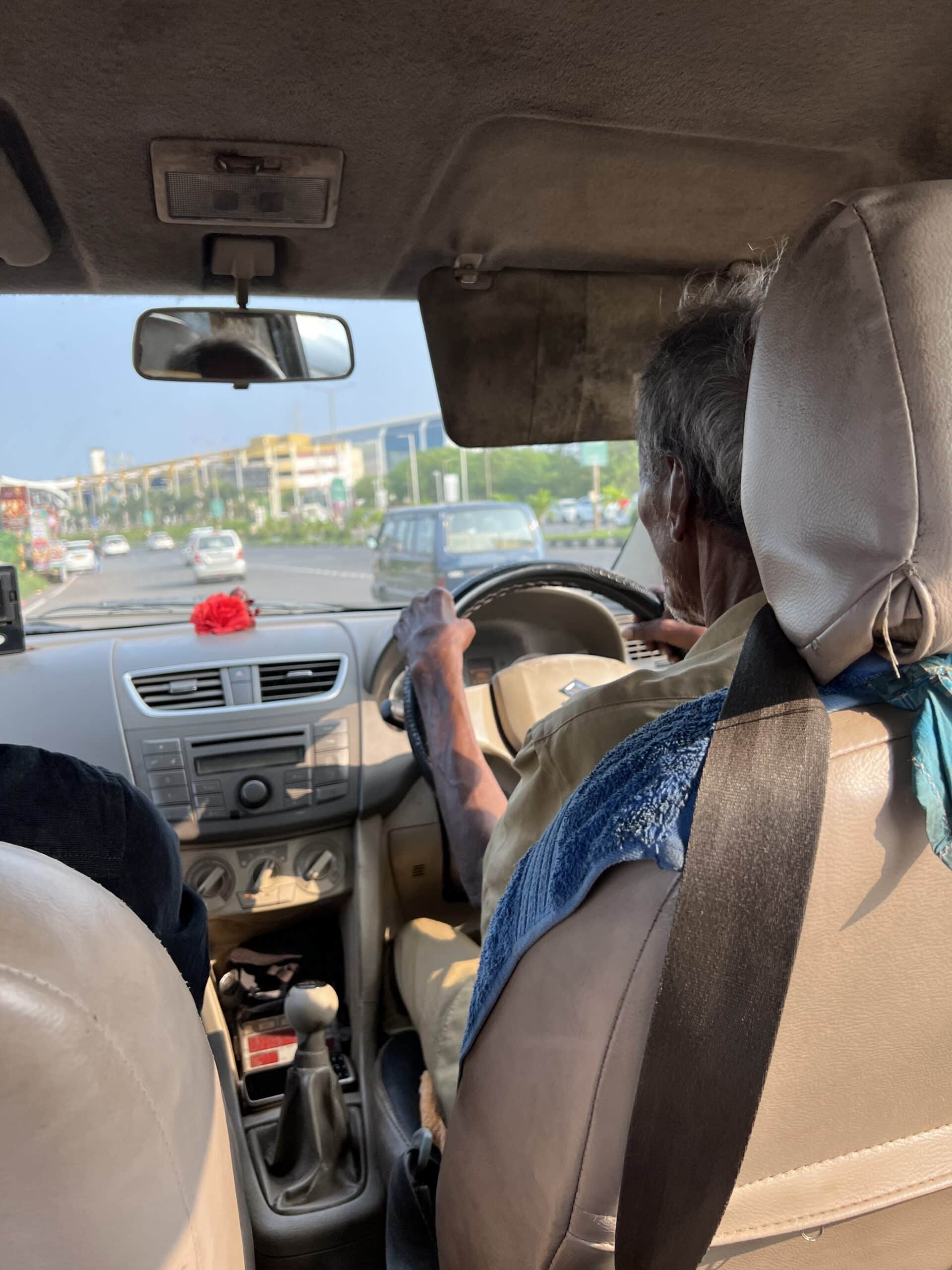
When I’m in India now, I make a point of initiating conversations in Hindi. It might be with a driver taking me from the airport to my hotel, or someone I’ve met while traveling.
I’ll ask where they’re from. Whether they still live there. If they’re married. Whether they have children. What kind of work they do. What brought them to a big city. What they hope to be doing a year or two from now.
Not all at once, of course. These are conversations, not interrogations. But they’re the kinds of questions that lead somewhere. An airport transfer stops being just an airport transfer when you begin to learn something about the person driving you.
People often seem genuinely pleased that you’ve made the effort. I’m certainly not fluent. I understand much of what people say, but speaking is still a work in progress.
My tutor speaks clearly. People in everyday life don’t always do that. They speak quickly, mumble, use regional accents, speak quietly, have raspy voices, or talk while eating. Sometimes I understand almost everything. Sometimes I have to ask someone to repeat themselves. That’s part of learning.
Ten Useful Hindi Phrases for Travelers
For more practical planning, see my guide to cultural etiquette in India.
If you’re visiting India for the first time, don’t worry about learning complicated sentences. Start with a few expressions you’ll actually use. The pronunciation guides below are approximate. Hindi contains sounds that don’t translate perfectly into English spelling.
1. Namaste — Hello
नमस्ते
Pronunciation: nuh-MUS-tay
A polite, widely understood greeting. Probably the first Hindi word most travelers learn.
2. Dhanyavaad — Thank you
धन्यवाद
Pronunciation: DHUN-yuh-vaad
A traditional way of expressing thanks. You’ll also hear people using the English phrase “thank you” frequently.
3. Haan — Yes
हाँ
Pronunciation: haan
One of the simplest and most useful words to know.
4. Nahin — No
नहीं
Pronunciation: nuh-HEEN
Just as useful as yes, especially when you don’t want to buy something.
5. Maaf kijiye — Excuse me / Sorry
माफ़ कीजिए
Pronunciation: maaf KEE-jee-yay
Useful when apologizing, politely getting someone’s attention, or asking to pass.
6. Yeh kitne ka hai? — How much is this?
यह कितने का है?
Pronunciation: yeh KIT-nay ka hai
A useful question when shopping. This form works for grammatically masculine items; you’ll also hear kitne ki hai for feminine items.
7. Meri madad kijiye — Please help me
मेरी मदद कीजिए
Pronunciation: MAY-ree MUH-dud KEE-jee-yay
A polite way to ask for assistance. Hopefully you won’t need it often, but it’s worth remembering.
8. Toilet kahaan hai? — Where is the toilet?
टॉयलेट कहाँ है?
Pronunciation: TOY-let kuh-HAAN hai
Hindi has a more formal word for toilet, shauchalay, but using the familiar English word with kahaan hai is often simpler for travelers.
9. Mujhe samajh nahin aaya — I didn’t understand
मुझे समझ नहीं आया
Pronunciation: MOO-jhay suh-MUJ nuh-HEEN AA-yaa
Especially useful when someone responds in Hindi and you haven’t quite followed what they said.
10. Phir se boliye — Please say that again
फिर से बोलिए
Pronunciation: fir say BO-lee-yay
One I still find useful. People don’t always speak slowly or clearly, and asking someone to repeat themselves is part of learning.
Listen to Hindi Being Spoken
Written pronunciation guides can only get you so far. Hearing the language is much more useful, particularly when you’re beginning to recognize its sounds and rhythms. For additional examples of everyday spoken Hindi, I recommend “100 Hindi Phrases & Sentences for Everyday Conversation” from Watch and Learn Hindi. You can watch it below.
A Few Things I’ve Learned About Speaking Hindi in India
First, understanding your tutor is not the same as understanding everyone else. A tutor knows you’re learning and generally speaks in a way that helps you follow along. The person sitting beside you at a wedding has no reason to do that.
Second, you don’t need perfect grammar to make a connection. You need enough confidence to start speaking and enough patience to listen.
Third, India isn’t one linguistic experience. Someone in Jaipur may speak Hindi every day, while someone in Chennai or Kochi may primarily speak an entirely different language. Hindi can be enormously useful, but it’s not a universal key to the country.
And finally, conversations don’t always have to go smoothly to be worthwhile. Some of my favorite exchanges have involved a little confusion, a repeated question, and a good deal of laughter.
Should You Learn Hindi Before Traveling to India?
You don’t need to spend years learning Hindi before visiting India. Start with a few words. Learn how to greet someone, say thank you, ask a simple question, and request help.
If you enjoy using those phrases, learn a few more.
That’s how my own interest developed. What began as a desire to understand the people around me eventually became years of lessons, conversations, and friendships.
I still wish I hadn’t waited seventeen years to open that Hindi book again.
But I’m glad I eventually did.
And I’m still learning.

 Districts of India: The Geography Between the State and the Village
 Ganesha: India’s Beloved Elephant-Headed God
 States vs. Union Territories: What’s the Difference?