

As an Amazon Associate I earn from qualifying purchases. Some product links in this article are affiliate links, which means Full Stop India may earn a commission at no additional cost to you. Read our affiliate disclosure.
The Art of Bringing Less
When I first traveled to India, I brought it ALL. The kitchen sink, the bathroom sink, and a trailer.
It was obnoxious.
And judging by the hundreds of comments I received along the way, I wasn’t the only one who thought so.
The ridiculous part is that I was actually quite good at packing. I knew how to roll certain clothes, fold others, and arrange everything carefully to minimize wrinkles and maximize space. Unfortunately, every inch of space I saved became an invitation to bring something else I was absolutely certain I’d need.
I didn’t have a packing problem. I had a what-if problem.
More than twenty years and many trips later, I’ve learned that packing efficiently isn’t about how much you can fit into your luggage. It’s about how little you actually need to bring. India taught me that lesson, although it took me a few trips to listen.
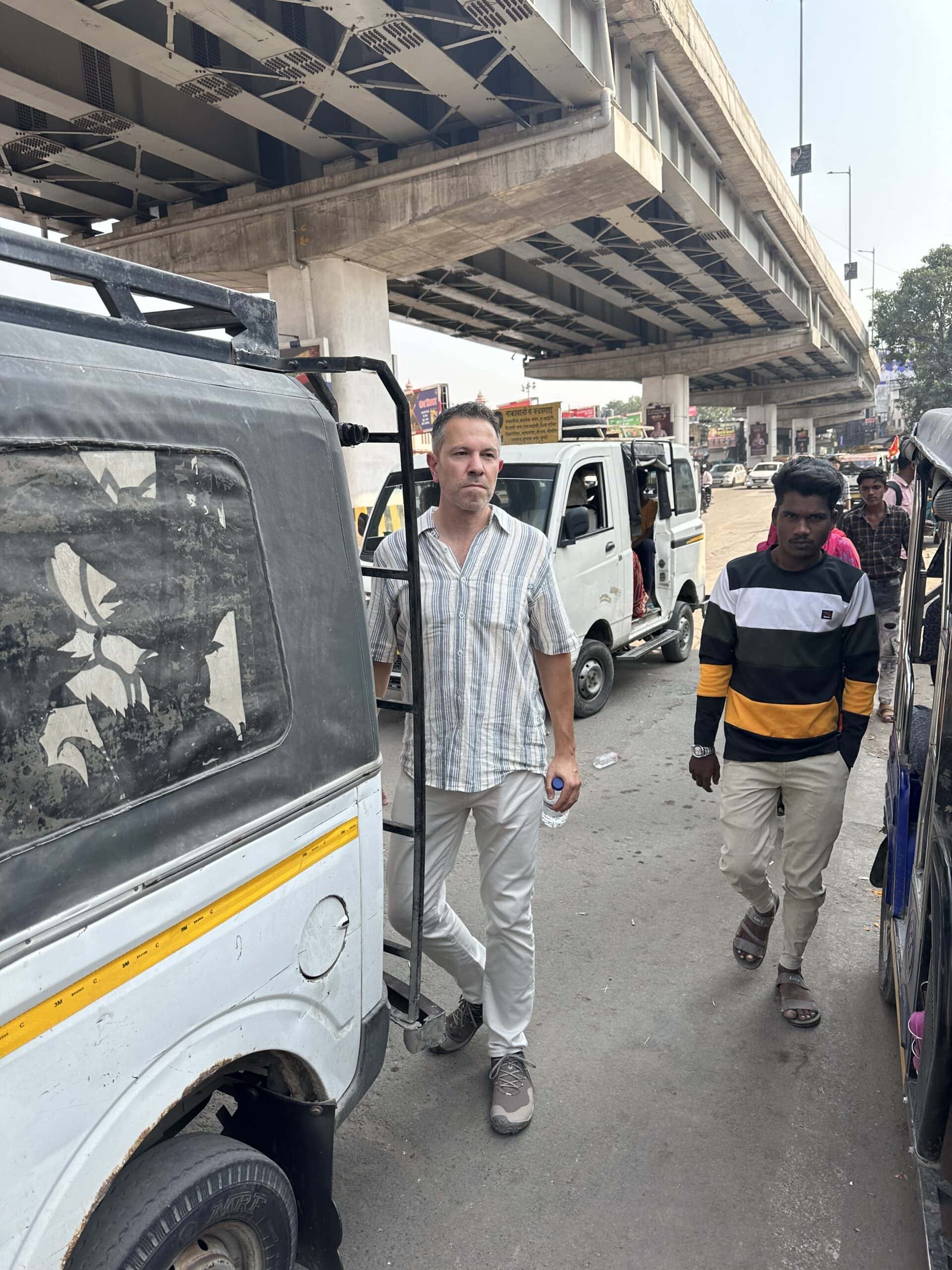
My Luggage Today: One Suitcase and One Backpack
These days, I travel with a hard-shell roller suitcase with a clamshell opening and combination lock, along with a backpack. That’s it.
And yes, I check my suitcase.
I know this may offend the carry-on-only crowd, but I have absolutely no interest in dragging a suitcase through connecting airports, rearranging liquids and toiletries to satisfy security requirements, or competing with fellow passengers for the last available overhead compartment. I check my bag, sling my backpack over my shoulder, and get on with my journey.
My backpack holds my laptop, charging cables, sunglasses, passport, wallet, travel documents, and a small Dopp kit with a toothbrush, travel-size toothpaste, deodorant, mints, and lip balm. I also carry a change of clothes in case my checked suitcase decides to take a different holiday.
If my luggage is delayed, I can manage for a day or two. I’m not trying to win a competition for the lightest luggage. I’m trying to travel comfortably.
Choose Luggage for the Trip You’re Actually Taking
My roller suitcase works for how I travel today, but I wouldn’t recommend the same bag to everyone. For hotels reached by private car, domestic flights, and train journeys, a roller suitcase is practical. For weeks on local buses, trekking, or carrying everything over long distances, a backpack or duffel may make more sense.
India isn’t always kind to luggage wheels. Think uneven pavement, broken sidewalks, staircases, and the occasional stretch where there isn’t much of a sidewalk at all. Choose durable construction, sturdy wheels, comfortable lifting handles, and compartments that work for you. Above all, make sure you can lift and maneuver the bag yourself.
What I Actually Pack for India
Most of my trips fall during India’s main tourist season, when daytime temperatures can approach 100°F and evenings can drop into the 50s. That’s a wide range; the Himalayas and monsoon season call for different planning.
For a trip lasting several weeks, here’s what typically goes into my suitcase:
- 7 pairs of underwear and 3 pairs of socks
- 6 shirts and a couple of polos
- 4 pairs of pants and a couple of undershirts
- A lightweight rain/wind jacket and one warm pullover, mostly for the plane
- An active T-shirt and athletic shorts for morning walks
- A swimsuit, if my hotels have pools
That’s enough for weeks, because I plan to do laundry.
Color, Comfort, and Dressing for India
I lean toward lighter colors, tone-on-tone combinations, and neutrals. India can be dusty, and I find lighter, muted colors often age better over a couple of days of wear than dark clothing that shows every bit of dust. That doesn’t mean I’m entirely beige: I bring pops of color in my tops and perhaps one darker pair of pants. The trick is making the pieces work together.
Lightweight, breathable fabrics that dry quickly are particularly useful when you’re washing clothes by hand.
One thing I’m particular about is shorts. They’re increasingly common in major metros, but they’re still not the daytime norm in many places. I wear athletic shorts for early morning walks, when local men are often doing the same, and I’m generally back to my lodging by 9:00 or 9:30 to change into trousers. Unless I’m lounging by the pool—which, if you know how I travel, is rare.
It’s not a rigid dress code. I simply prefer to dress with some consideration for where I am.
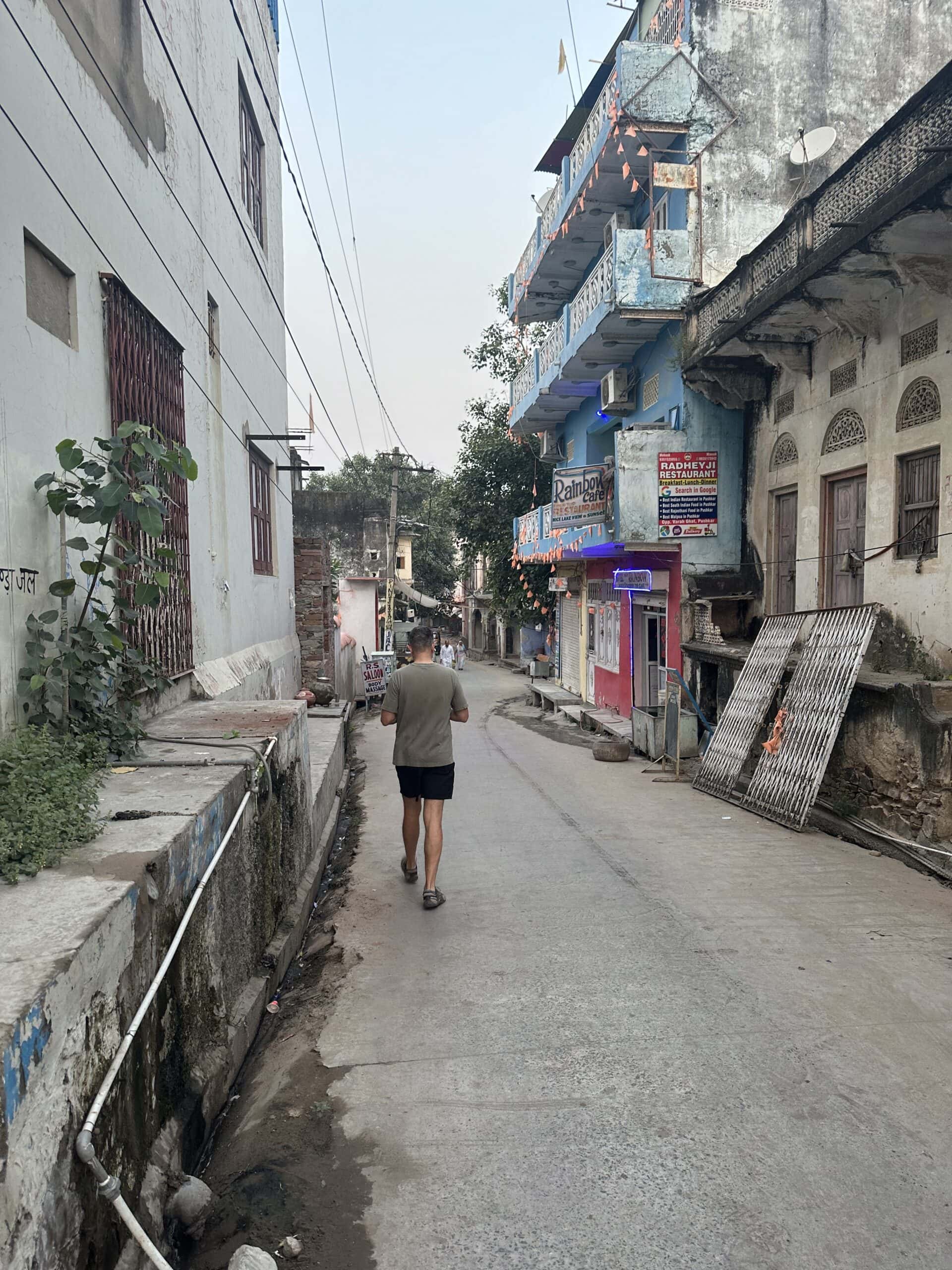
Footwear: Comfort Comes First
I bring comfortable walking shoes and sandals or flip-flops. Sandals are perfect for a quick bazaar errand, dinner, or a day without miles of sightseeing. They’re everywhere in India, and I rarely pack dress shoes. A good pair of sandals can be perfectly appropriate even at a very nice restaurant.
For long days, though, comfortable, stable walking shoes matter. India will put your feet to work on uneven pavement, stone pathways, stairs, and rocks. I want maximum comfort and a secure footprint on the ground, not shoes that look wonderful until lunchtime.
A Word About Removing Your Shoes
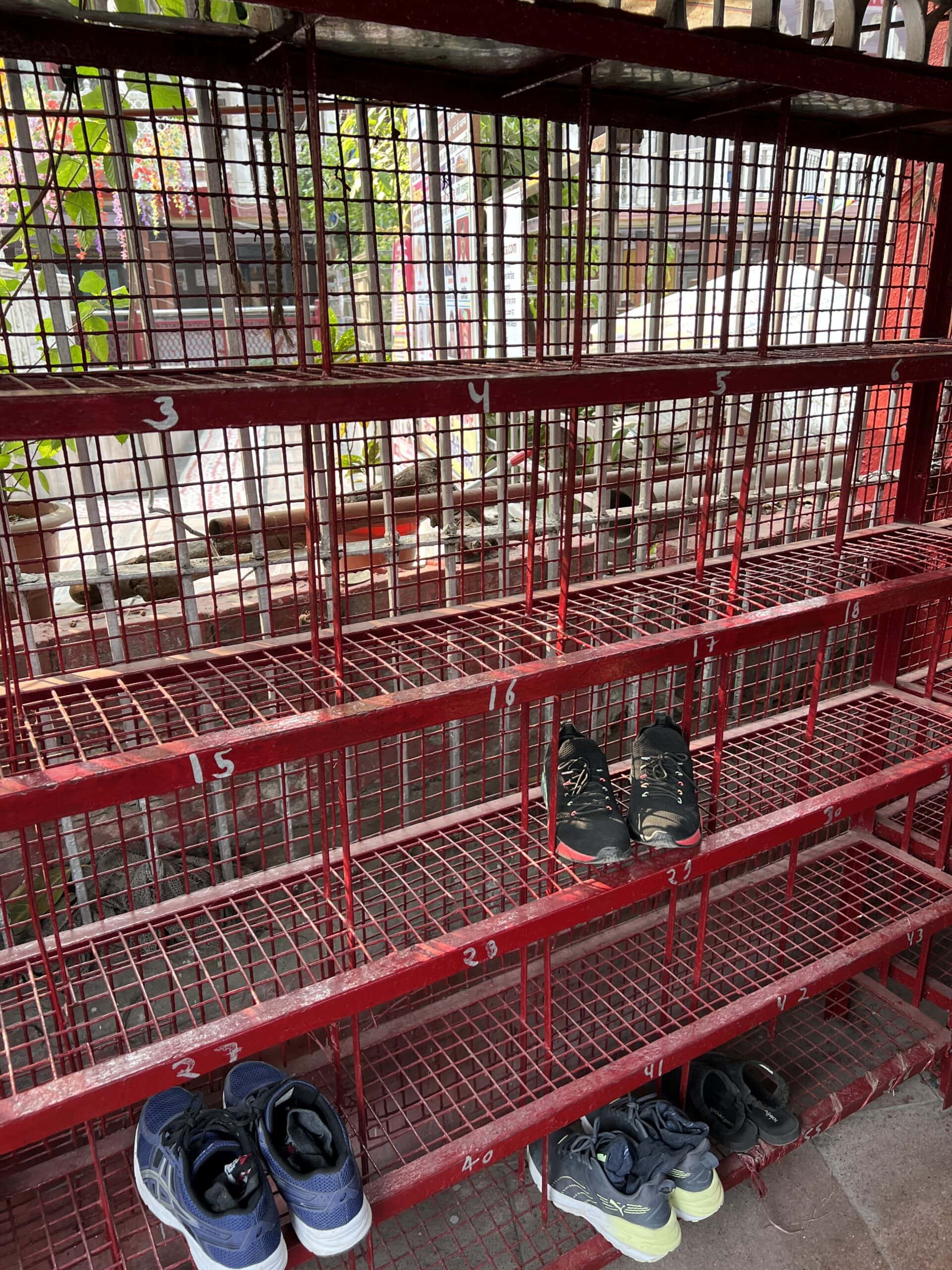
You’ll remove your shoes frequently at temples, mosques, and other sacred spaces. At the Taj Mahal, visitors are required to remove their shoes or wear protective shoe covers when entering the marble mausoleum.
Some sites have a shoewallah who stores footwear in numbered compartments for a small fee. Others have an unsupervised area by the entrance. Not every place offers storage, and while missing shoes aren’t the norm, I think twice about leaving an expensive pair unattended.
Laundry: The Secret to Packing for a Month
Whether I’m away for two weeks or five, I don’t pack enough clothes for every day. I do laundry along the way.
At an Airbnb or homestay, there’s often a bucket and scoop in the bathroom. I pop into the bazaar for a small packet of washing powder, wash my T-shirts, underwear, and socks, rinse them well, and lay them out to dry. Nearly every room seems to have an overhead fan; I crank it up to circulate the air. Often everything is dry by morning, though humidity can slow things down.
When I’m staying in hotels, I usually know in advance which one will be my laundry stop. Reasonably priced rooms often mean reasonably priced laundry, although I check the rate sheet. There’s something lovely about leaving clothes at the front desk, heading out all day, and returning to find everything washed, folded, and waiting on the bed.
The Dhobiwalla and the Presswallah
Laundry services are found in every city and nearly every good-sized town. Look for a dhobiwalla (धोबीवाला), a neighborhood laundry worker who washes, dries, and folds clothes, often for a fraction of hotel prices. In some cases, the same local operation may even handle the hotel’s laundry.
What you’re paying extra for at the hotel is convenience. No hunting through the market, agreeing on collection times, or racing back before closing. Sometimes that convenience is worth every rupee.
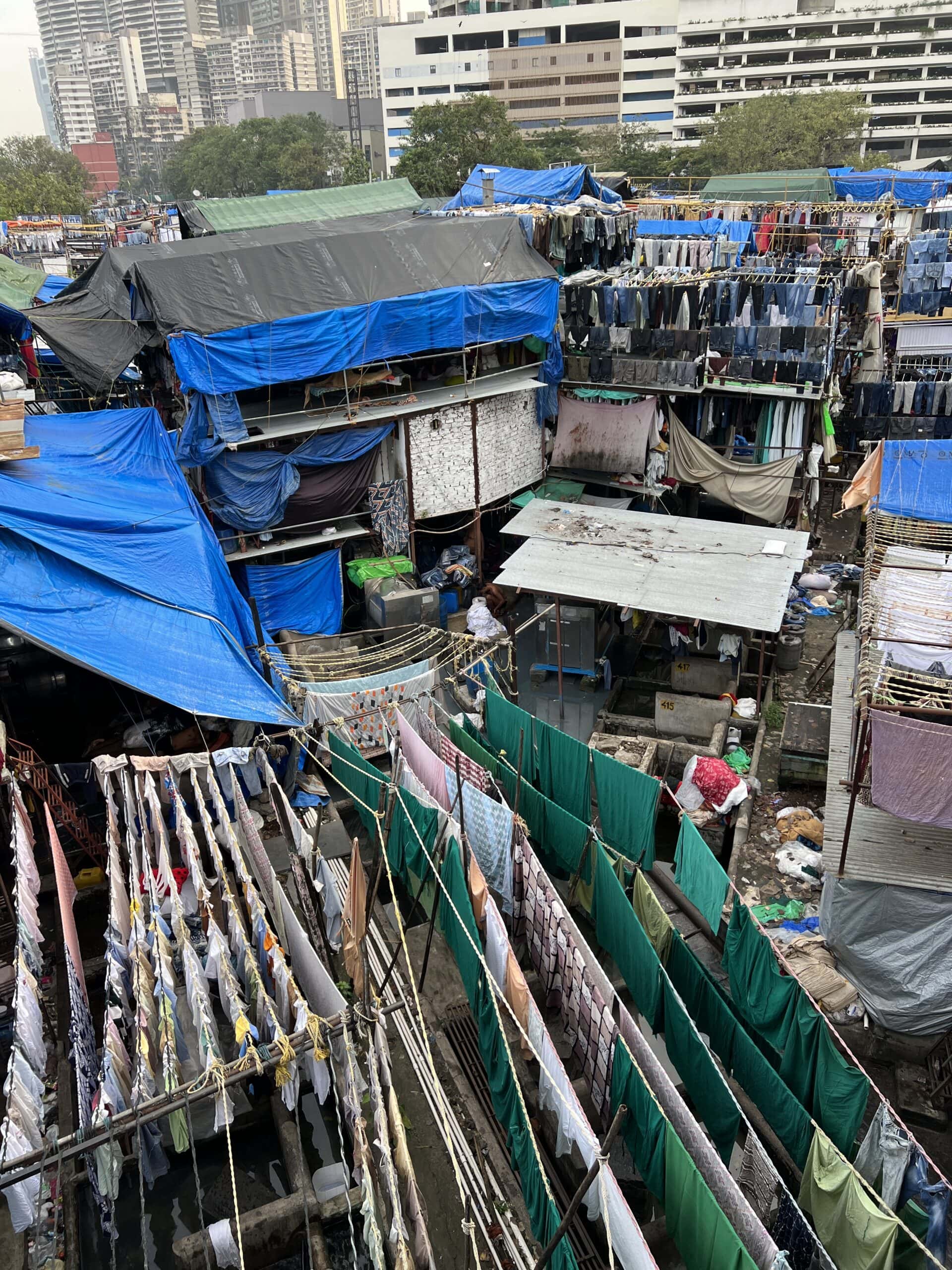
Mumbai’s Dhobi Ghat is a remarkable large-scale example of a laundry tradition you’ll find in smaller forms throughout India.
If you only need a shirt or trousers pressed, look for a presswallah or istriwalla (इस्त्रीवाला), often working with a heavy iron at a roadside stall.
I’ve seen local laundry prices as low as ₹50 for socks or underwear, ₹80 for a shirt, and ₹100 for trousers. These are examples, not fixed rates; prices vary. If you’re quoted ₹150–200 for underwear or ₹300–400 for a shirt or trousers, I’d consider checking a local dhobiwalla before paying hotel-level prices.
A little Hindi helps: Kapde kab tak milenge? (कपड़े कब तक मिलेंगे?) — When will my clothes be ready? Confirm the price and collection time, especially if you’re leaving town the next day.
Toiletries and Medications: India Has Shops, Too
Forgot a toothbrush, toothpaste, shampoo, or hair product? Visit the bazaar. Neighborhood shops, supermarkets, and chemists carry an enormous range of everyday necessities. Your hotel clerk, driver, or autowallah can point you in the right direction; Google Maps doesn’t list every little shop.
Two small things I make room for are lip balm and throat lozenges. Northern India’s dry air can be hard on my lips, and in polluted cities I sometimes develop a scratchy throat for a day or two. Lozenges offer some relief.
Regular prescription medication is different: bring it from home, appropriately packaged, with any documentation you need. I wouldn’t count on replacing my usual prescriptions locally. Chemists are useful for everyday needs such as pain relievers, bandages, and throat lozenges; seek qualified medical advice for anything more serious.
A few tissues or wet wipes, sunscreen, earplugs, and resealable plastic bags earn their space, too. They’re more useful to me than another pair of shoes.
Electronics, Sightseeing Bags, and Airport Security
I bring my usual phone and laptop chargers, plus a plug adapter. Some hotels accommodate two-prong American plugs, but don’t rely on that. India’s electrical supply is generally 230 volts: most modern phone and laptop chargers accept it, but check the input rating on yours. A plug adapter changes the plug shape, not the voltage.
The adapter I recommend is the TESSAN India Travel Plug Adapter. Affiliate link: I may earn a commission from qualifying purchases, at no additional cost to you.
I don’t bring a separate daypack for sightseeing. For someone who prefers a bag, a comfortable crossbody or front-worn sling is more practical in crowds than a bag with exposed rear zippers. Handheld handbags can get tiresome over a full day; save those for dinner.
A Word About Airport Security in India
Domestic airport security in India can be more involved than you might expect. I’ve been asked to take out not just my laptop, but charging cords, earbuds, adapters, and practically anything that plugs into it.
I keep the accessories in one small bag, so I can pull them out in seconds. A Ziploc works. A lightweight zippered pouch works, too, if you prefer something more stylish. Either beats unpacking half your backpack in the security line.
My Dopp kit has also been flagged for inspection. I’ve been asked to open it and explain its contents. So far, nothing has been taken. Whew.
That isn’t a guarantee: restrictions on liquids, gels, aerosols, and deodorant vary by product and checkpoint. Follow the officers’ instructions and give yourself a little extra time.
What I’ve Learned to Leave Behind
Mostly, I’ve learned to leave behind the excess: too many shirts, too many trousers, and shoes for occasions that never materialize.
It’s perfectly fine to repeat an outfit. If you need another shirt halfway through the trip, you can buy one. I could say this isn’t a fashion show, but perhaps that’s exactly what you have planned. If you want a different outfit in every photograph, pack accordingly.
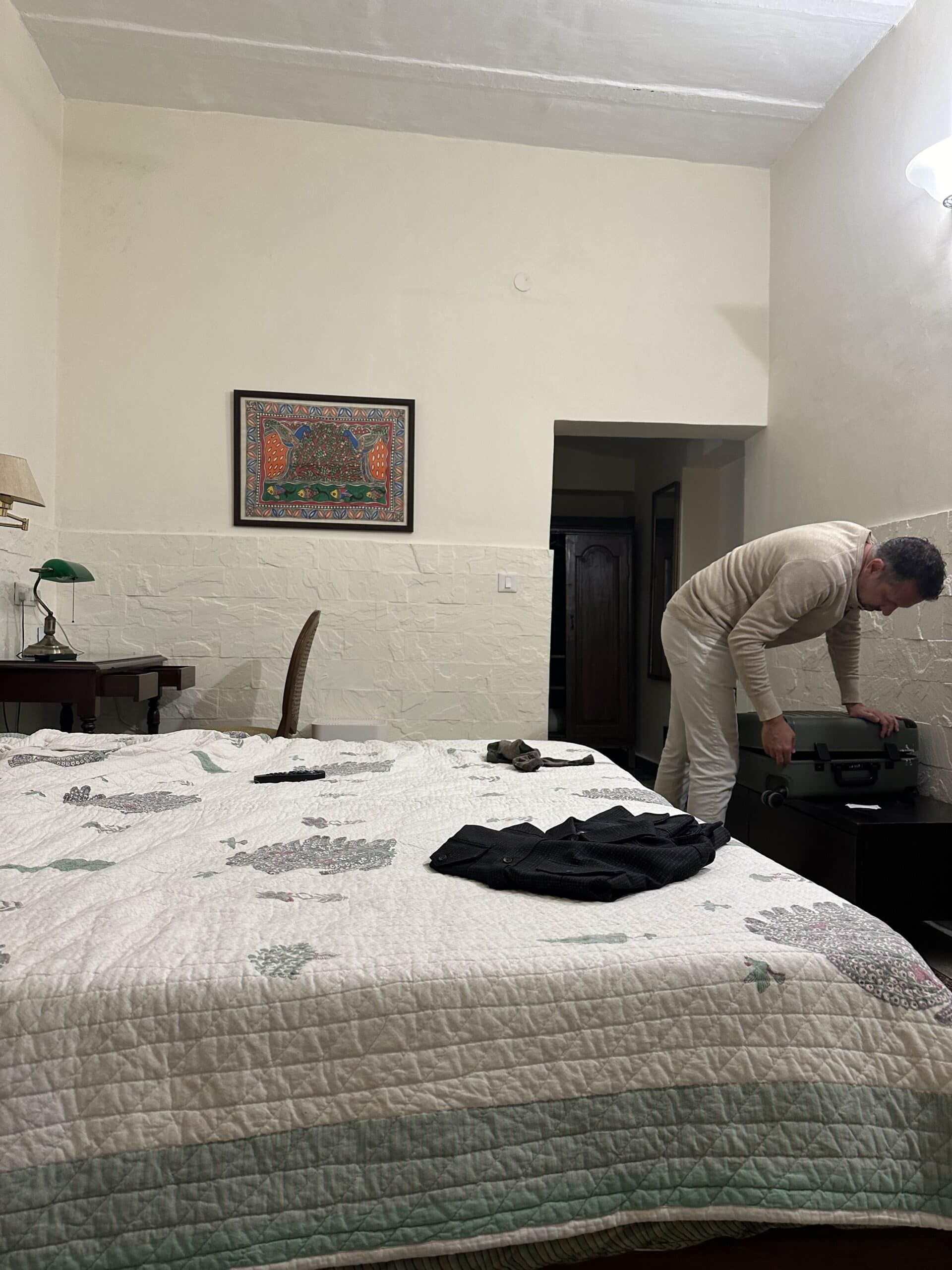
A Lesson From My Retail Days
When I worked in retail, we encouraged customers to buy versatile basics. For a business traveler, one pair of trousers, one skirt, a couple of blouses, and a jacket that worked with both could produce nearly a week’s worth of combinations.
The same principle works in India. Choose pieces that work together, suit the weather, and fit the days you actually intend to have. You don’t need a separate outfit for every imagined occasion.
I spent my first trip to India hauling around things I was certain I’d need, most of which never left my suitcase.
Twenty years later, I still bring everything I need. I’ve just gotten a lot better at knowing what that is.

 Bindi: What the Dot on the Forehead Means in India
 What Is a Geyser in India? How to Get Hot Water
 How Much Should You Tip in India? A Practical Guide