
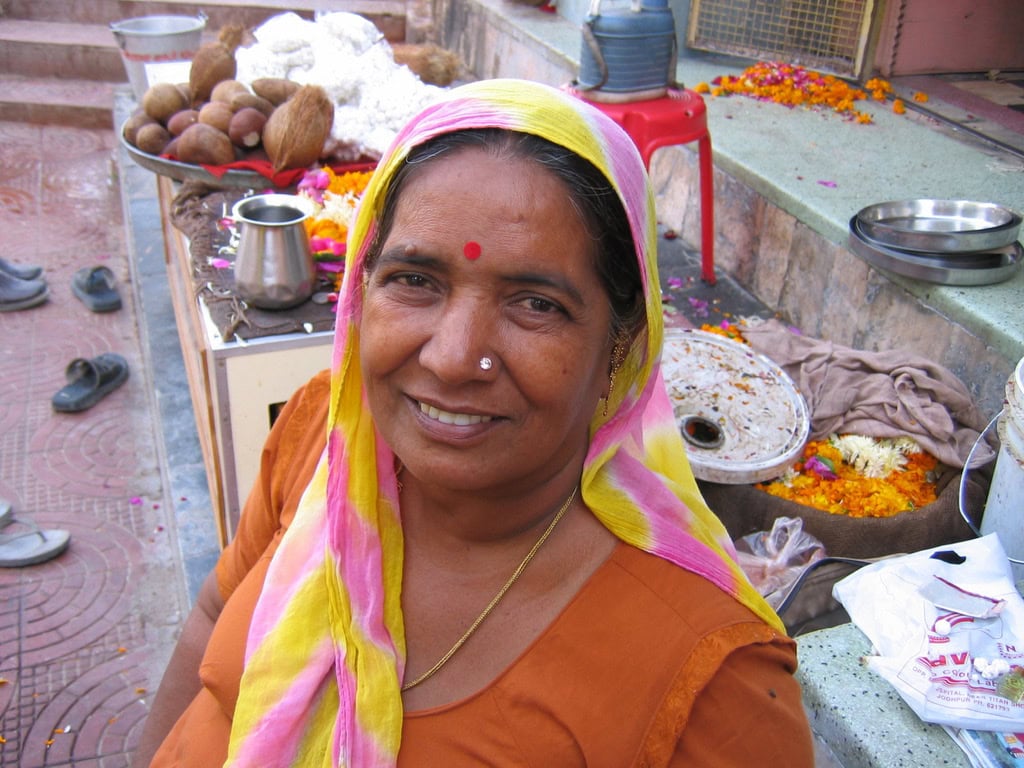
A traditional red bindi worn between the eyebrows. © Full Stop India.
You will see them everywhere in India. A small red dot between a woman’s eyebrows. A tiny sparkling stone. An elaborate design that matches a sari. Some are barely noticeable, while others are impossible to miss.
And then there’s that terrible old joke about why Indian women have a dot on their foreheads. Something about a man poking his finger between her eyebrows every time he tells her what to do.
If that’s the extent of your knowledge about bindis, we’ve got some catching up to do.
That little dot is called a bindi, and there’s considerably more behind it than the punchline of a bad joke.
What Is a Bindi?
The word bindi comes from the Sanskrit bindu, meaning a point or drop. Traditionally, it’s a mark worn by women on the forehead, usually between the eyebrows. The familiar red dot is the most recognizable, but bindis come in just about every color, shape and size imaginable.
Now, this can get confusing for a first-time traveler to India, because you’ll also see marks or dots on men’s foreheads. These are generally called tilak or tika, rather than bindis. And not every dot on a woman’s forehead is a bindi, either. It could also be a tilak, perhaps applied during a visit to a Hindu temple or as part of a religious ceremony.
A fresh tilak is often a clue that someone has recently visited a temple, where a priest may apply colored powder or sandalwood paste as part of a blessing.
Ugh. I promise, it will all become commonplace once you get your bearings in India.
And not every Indian woman wears a bindi. Religion, regional customs and personal preference all play a part.
Why Between the Eyebrows?
There’s a reason for that particular spot.
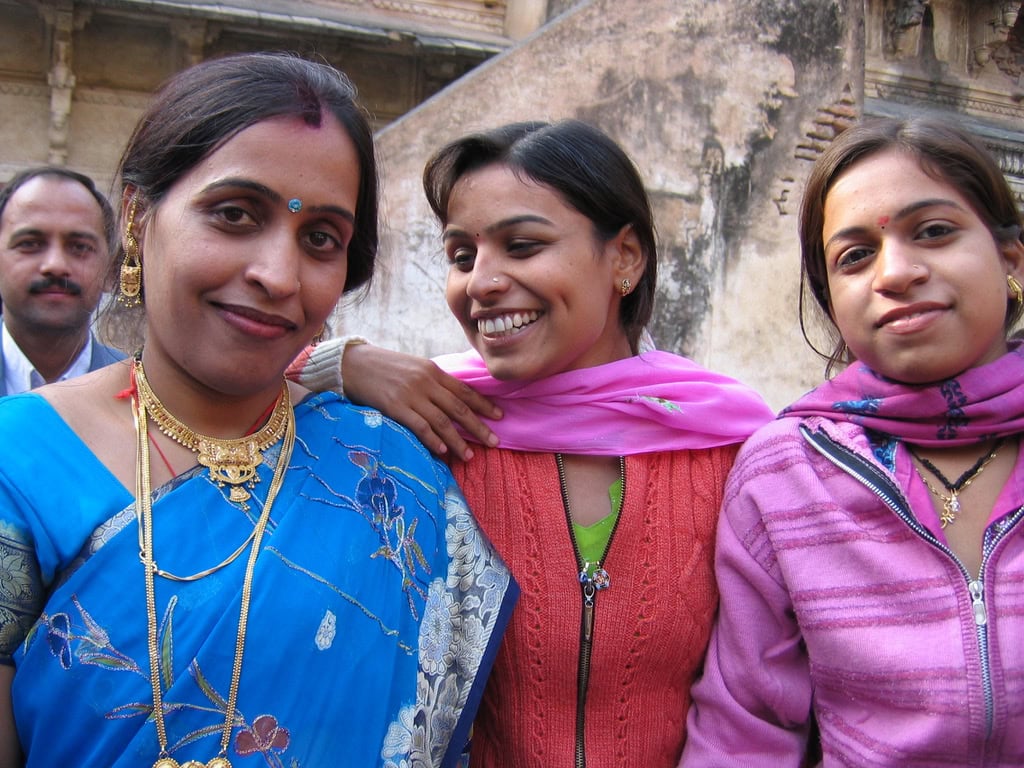
In Hindu and yogic traditions, the space between the eyebrows is associated with the Ajna Chakra (आज्ञा), commonly called the third eye. It’s one of the seven main chakras in many yogic systems and is associated with intuition, awareness and inner wisdom.
The Sanskrit word ajna means “command,” and in some traditions, marking this spot is believed to encourage concentration and spiritual focus.
Of course, not everyone wearing a bindi is thinking about chakras. Sometimes it’s simply part of getting dressed.
Does a Bindi Mean a Woman Is Married?
Not necessarily.
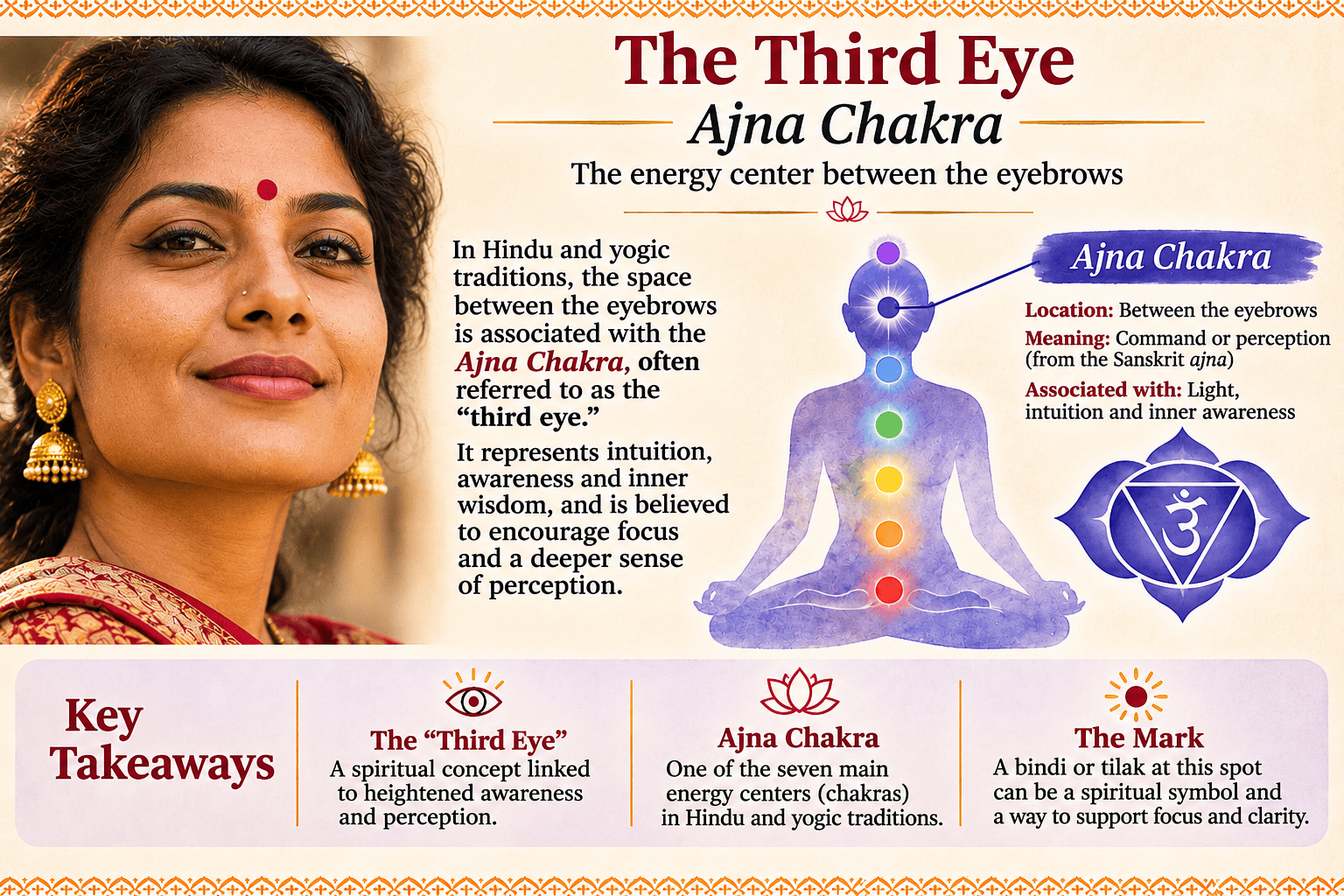
Traditionally, a red bindi has been associated with marriage in many Hindu communities. But unmarried women and girls wear bindis too, and plenty of married women don’t wear them at all.
Red itself has significance in Hindu traditions. It’s associated with marriage, prosperity, fertility and shakti, or divine feminine power. You’ll see it in wedding clothing, ceremonial powders and religious celebrations.
So while the red dot has a long history, don’t assume you can determine a woman’s marital status by looking at her forehead.
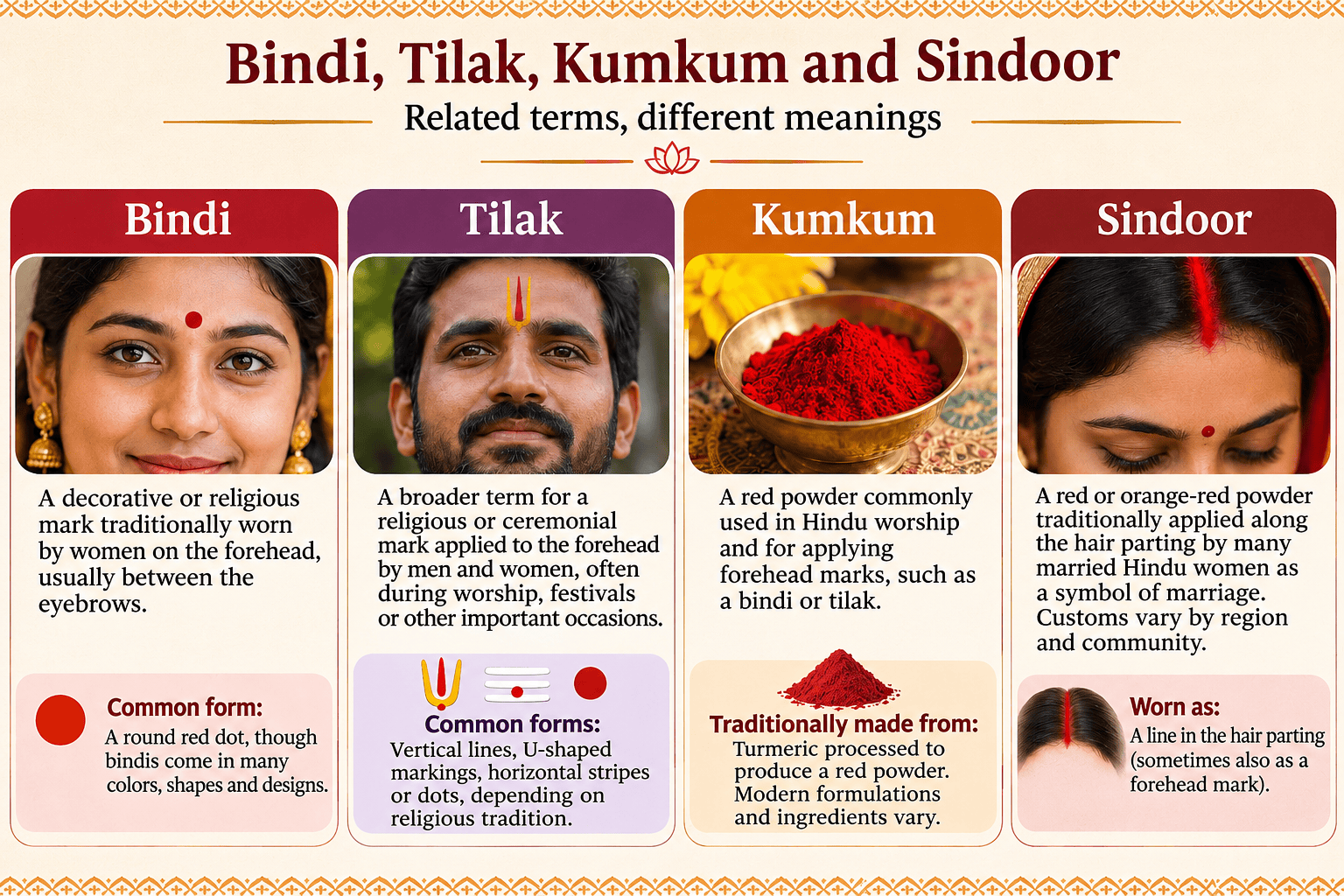
Bindi, Tilak, Kumkum and Sindoor
By now you’ve encountered a few different terms. Here’s how they fit together.
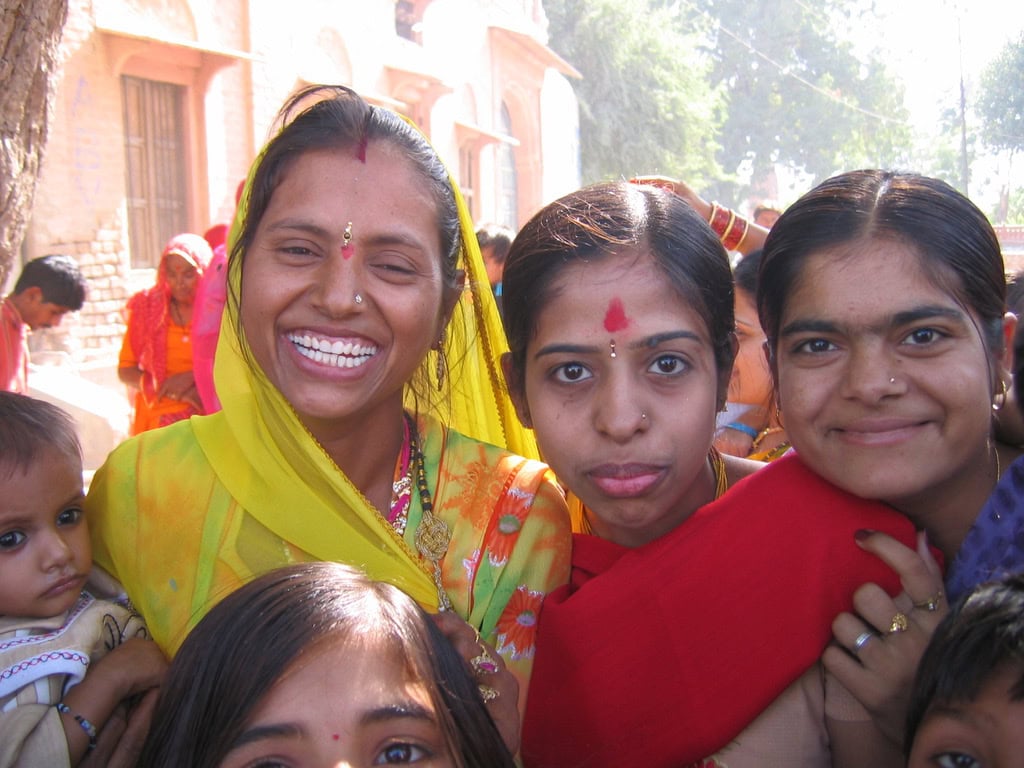
Bindi is the decorative or religious forehead mark traditionally worn by women.
Tilak, sometimes called tika, is a religious or ceremonial mark worn by men and women. It might be a dot, a vertical line, horizontal stripes or another shape, depending on the tradition.
Kumkum is the red powder commonly used in Hindu worship and to make certain forehead markings.
Sindoor is the red or orange-red powder traditionally worn by many married Hindu women along the parting of their hair. Unlike a bindi, it’s specifically associated with marriage in the communities where it’s worn.
What Are Bindis Made From?
Before adhesive bindis became commonplace, the familiar red dot was often applied using colored powder or paste. Kumkum, traditionally made by processing turmeric with an alkaline ingredient, is one such material.
Getting that perfectly round circle takes some practice. One traditional method uses a small circular guide placed against the forehead. Powder or paste is applied through the opening, and when the guide is removed, you’re left with a neat dot.
These days, you’re just as likely to see a stick-on bindi. They’re made from materials such as felt, fabric or plastic film, sometimes decorated with glitter, beads or rhinestones.
Applying one couldn’t be easier. Peel it from the backing card, press it onto clean, dry skin between your eyebrows, and you’re done. When you’re finished wearing it, gently peel it off.
Where to Buy Bindis in India
Just about anywhere.
You’ll find bindis at neighborhood cosmetic shops, market stalls, general stores and shops selling bangles, hair accessories and costume jewelry.
Most adhesive bindis come on small cards or sheets, with several designs arranged by color and size. A basic packet can cost just a few rupees, while elaborate bridal designs cost considerably more.
If you don’t see them, ask:
Bindi kahan milegi? (बिंदी कहाँ मिलेगी?)
Where can I find a bindi?
Can Visitors Wear a Bindi?
Absolutely. You may even be offered one at a wedding, festival or other celebration.
There’s nothing particularly unusual about buying a packet of decorative bindis at a market and wearing one. Just remember that a bindi chosen as an accessory isn’t quite the same thing as a religious tilak applied during worship.
If someone offers to apply a tilak during a temple visit, it’s generally part of a blessing or religious ritual. You don’t need to know every detail of the tradition to appreciate the gesture.
And there you have it. That little dot you’ve been noticing on foreheads throughout India has quite a story behind it.
Certainly a better one than the joke you started with.

 What Is a Geyser in India? How to Get Hot Water
 How Much Should You Tip in India? A Practical Guide
 How to Wash Clothes in a Bucket in India