
Your plane touches down in India at 11:30 at night. By the time you’ve cleared immigration, collected your luggage, found a taxi and reached your hotel, it’s nearly 2 AM.
You’ve spent the better part of the last day traveling. All you want is a hot shower and a bed.
Check-in goes smoothly. You decline the offer of help with your luggage, climb the stairs and enter your room. Shoes off, clothes off, shower on.
Cold water.
You wait a minute. Then another.
Perhaps the hot water takes a while to travel from the basement. You leave the shower running while brushing your teeth, figuring it’ll warm up eventually.
Five minutes later, still nothing.
Does the hotel turn off its hot water at night? Is something broken? Is this simply what you get for booking the cheapest hotel you could find?
Whatever the explanation, you’re not getting a hot shower tonight.
A quick, thoroughly unpleasant wash will have to do.
The following morning, still irritated and not particularly well rested, you approach the front desk.
“There was no hot water in my room last night,” you explain.
“Did you turn on the geyser?” asks the owner.
“The what?”
Welcome to your first lesson in Indian plumbing.
What Is a Geyser?
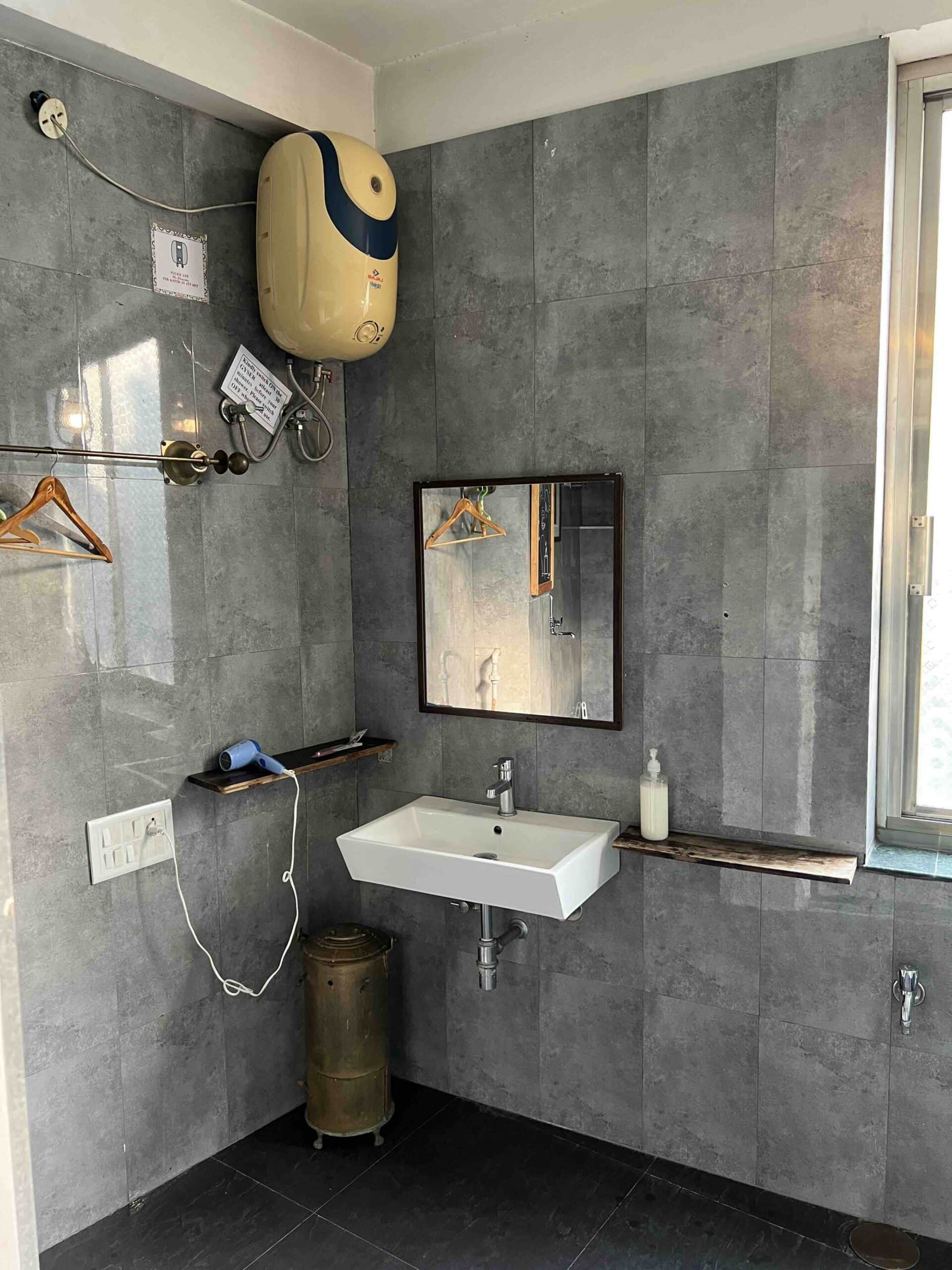
In India, a geyser (pronounced gee-zer) is a water heater.
Not the sort that shoots boiling water out of the ground in Yellowstone National Park. This one hangs on the bathroom wall and provides hot water for your shower and taps.
You’ll find electric geysers in homes, guesthouses, Airbnbs, homestays and plenty of budget and midrange hotels throughout India.
Unlike the large central water-heating systems commonly found in American hotels, these are often individual units installed inside or near the bathroom.
They’re generally cylindrical or rectangular tanks mounted high on the wall, sometimes directly above the shower.
And here’s the important part: You may have to switch it on before you get any hot water.
That little detail would have been useful at 2 AM.
How to Use a Geyser in India
Fortunately, operating one isn’t complicated once you know what you’re looking for.
1. Find the geyser
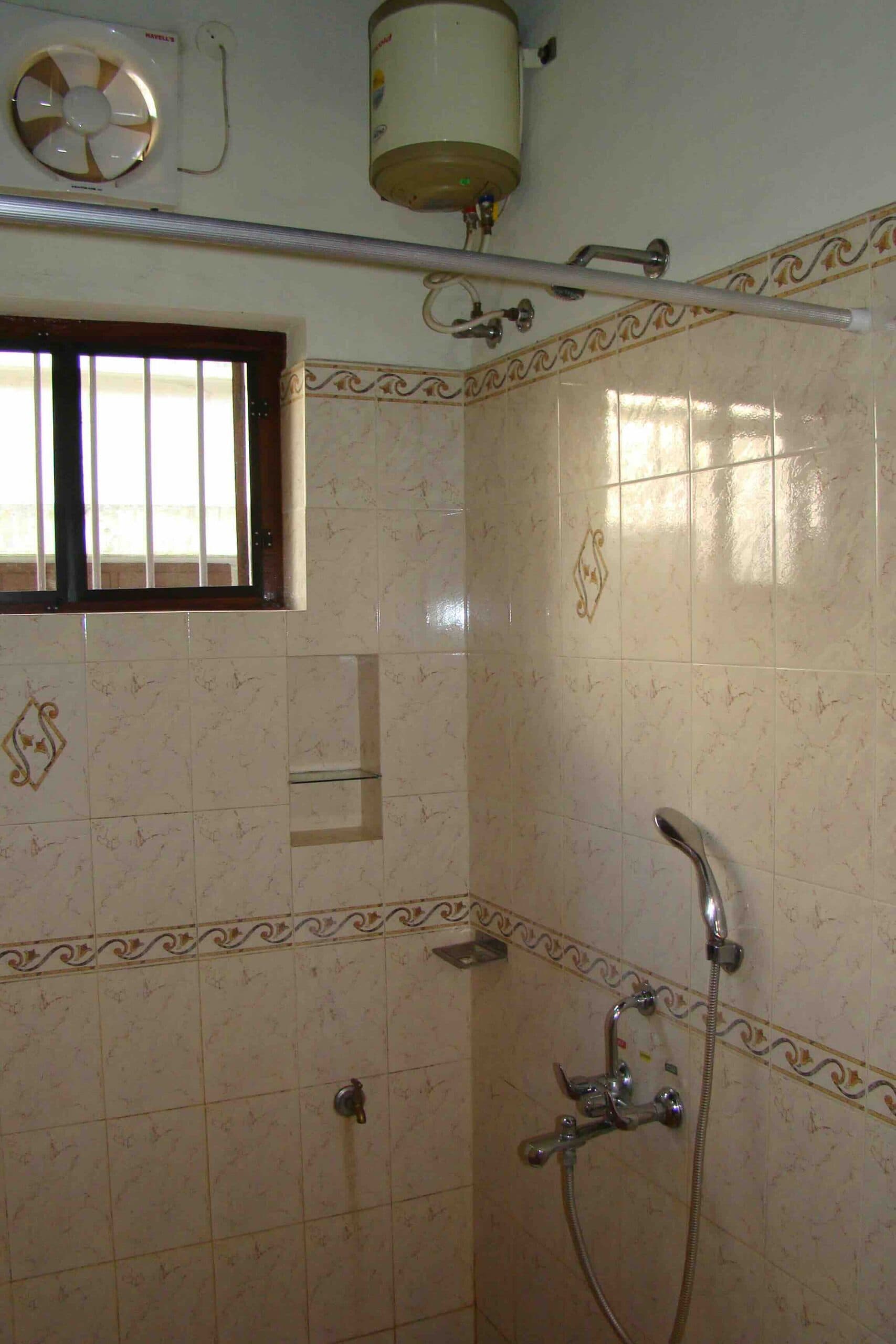
Look above the shower, near the bathroom ceiling or on an adjacent wall.
You’ll generally see a tank with two water pipes attached, one bringing cold water into the tank and the other carrying heated water out.
Some bathrooms conceal the heater above a false ceiling, so the tank itself may not be visible.
2. Find the switch
Look for a wall switch marked Geyser, Water Heater or simply Hot Water.
In older hotels, it may be one of several switches on a panel near the bathroom entrance. The switch might also have a small red indicator light.
If you can’t identify it, ask the hotel staff or your host rather than experimenting with every switch in the room.
3. Turn it on and wait
Switch on the geyser approximately 15 minutes before you plan to shower. That’s generally enough time for a typical storage geyser to heat the water, although larger tanks or colder incoming water may require longer.
Many geysers have two indicator lights. One indicates that the power is on, while the other illuminates when the water is actively heating.
On some models, the heating light switches off when the tank reaches its set temperature. That’s your indication that the water is ready.
Not every geyser operates exactly the same way, so pay attention to any instructions posted nearby.
4. Take your shower
Once the water has heated, turn on the hot-water tap and adjust the temperature.
You can begin using the shower while the tank is still heating, but you’ll have less hot water available.
And depending on the size of the geyser, that supply may disappear sooner than you expect.
How Much Hot Water Will You Get?
Not necessarily as much as you’re accustomed to.
A typical storage geyser in an Indian hotel might hold 10, 15 or 25 liters of water. The smaller the tank, the sooner you’ll run out.
A 15-liter geyser may provide approximately five to ten minutes of hot water, depending on the shower’s flow rate and how much cold water you’re mixing in.
Can you wash your hair? Absolutely. But if you’re accustomed to standing under a running shower while shampooing, you may find yourself rinsing with cold water. Wet your hair, turn off the shower while shampooing, then turn it back on to rinse.
Can two people shower back-to-back? Possibly, but don’t count on it. If the first person uses most of the hot water, the second may need to wait another 10–20 minutes or longer for the tank to reheat.
What happens when the hot water runs out? Cold water replaces the hot water you’ve used, gradually lowering the temperature. The heater may continue working, but it won’t necessarily keep pace with your shower.
One trick I’ve learned is to turn off the shower while soaping up or shampooing. You conserve hot water, and a small tank suddenly becomes considerably more manageable.
You may also find a bucket and mug in the bathroom. They’re perfectly ordinary bathing equipment in India and can be particularly useful when the hot-water supply is limited.
When There’s No Hot Water
Before assuming the geyser is broken, check a few things.
Is the switch on? Some hotels turn geysers off between guests. Look for an illuminated power indicator.
Has the water had enough time to heat? Give the tank at least 15–20 minutes before deciding something isn’t working.
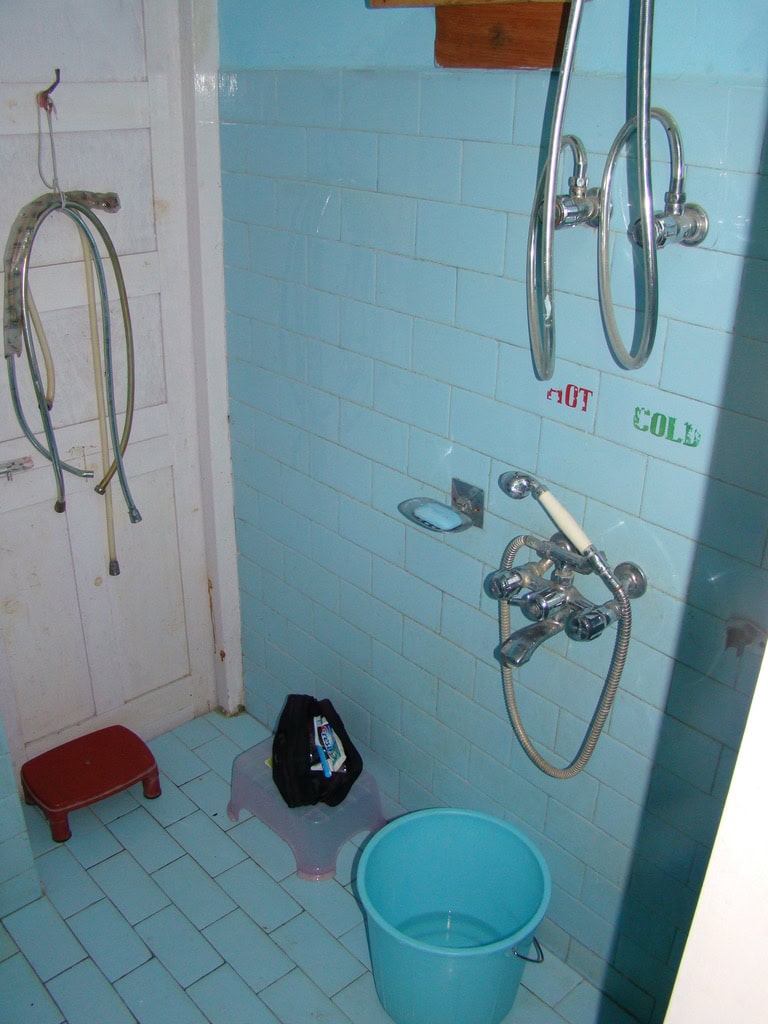
Are you using the correct tap? I’ve lost count of how many Indian showers I’ve encountered where the dial marked with a snowflake delivers hot water, while the one marked with a sun delivers cold. Yes, exactly the opposite of what you’d expect. Before declaring the geyser broken, try the other tap.
Has someone already used the hot water? If another person has just showered, the tank may need time to reheat.
If you’ve checked everything and still have no hot water, ask the front desk, your Airbnb host or your homestay host for help.
Better yet, I make a habit of asking about hot water when I arrive. If I don’t see a geyser where I’d expect one, I’ll ask whether there is one, how to switch it on and whether there’s anything unusual I should know about the setup.
Hot Water May Have Scheduled Hours
Not every Indian hotel or guesthouse provides hot water around the clock.
Individual geysers remain common in budget and midrange accommodations, while many upscale hotels have centralized hot-water systems. You’ll also encounter instant water heaters and solar-heated systems.
It’s still common to find properties with posted hot-water hours. You might see a notice stating that hot water is available from 6 AM until 10 PM, with no hot water overnight.
I’ve encountered enough of these arrangements that I pay attention to the posted hours, particularly when arriving late or planning an early departure.
If there’s no notice, ask. A hotel advertising hot water doesn’t necessarily mean you’ll have it at 2 AM.
One Last Thing: Turn It Off
When you’ve finished showering, turn off the geyser. It’s common practice in India, saves electricity, and reduces unnecessary heating cycles and wear on the unit.
Who knew something as simple as finding the geyser switch could make you appreciate a hot shower so much more?

 Bindi: What the Dot on the Forehead Means in India
 How Much Should You Tip in India? A Practical Guide
 How to Wash Clothes in a Bucket in India