

Fifteen years later: what I still believe, what I got wrong, and what continues to drive me crazy.
In February 2011, I published an article on Full Stop India titled 10 Annoying Things About India and Indians. Some readers loved it. Others suggested I should never set foot in India again.
Fifteen years later, I’ve returned repeatedly, traveled thousands of additional miles, made lifelong friends, and spent years studying Hindi. Some of those things still annoy the hell out of me. Others? I might have been a little harsh.
Rather than rewrite history, I’m keeping the original words below, followed by my perspective in 2026.
As a writer of India, I am frequently asked what my interest is in a country few people think to visit. Most people don’t really care to hear the reasons. They have already envisioned an idea of what the country looks like even as I sing the praises of India’s wonderful tourist sites and it’s people. Oh, and the food! Are they still listening? Nope. These people have nodded off because I didn’t give them what they really wanted to hear; This list of 10 annoying things about India and Indians:
01. Why Do You Keep Staring at Me?
Coming from a culture where we barely give a passing glance at most people surrounding us, it’s perhaps more than a bit of culture shock to arrive in a country where the general feeling is, EVERYONE IS STARING AT ME! In the hotel lobby, in restaurants, on the road, inside cars, buses and trains…AHHHH, stop staring at me. At home we would take this as an unspoken suggestion that maybe you should check your teeth for leftovers, or that pimple is ready to apply for a zip code. Yet most of us don’t even notice we’re being stared at in our normal surroundings. Cross the Atlantic into a foreign country and we’re suddenly blindingly aware of the different characteristics of the Indian population. Some will say Indians stare because they are interested in you; Your fashion, your mannerisms, your speech, your approval or disapproval of their country. And others will offer their own irritation at being stared at. “I don’t know what their damn problem is,” a local once explained to me. Ugh, and the laughing. If you’re personality sides more with Woody Allen than the Dalai Lama, plan to travel with a therapist.
Here's something I never would have expected to write fifteen years ago: I don't find people stare at me much in India anymore.
At least, no more than they do anywhere else.
What's changed? Quite a lot, actually.
For starters, everyone has a smartphone in their hands. People are far too busy looking at their screens to concern themselves with the foreigner walking past. Social media has exploded since 2011, exposing people to fashions, lifestyles, and cultures that once might have seemed unusual.
Western clothing is commonplace throughout India today. And perhaps people have simply become more accustomed to seeing foreign tourists. What might have attracted a second glance in 2011 barely registers now.
Or perhaps it's a combination of all these things.
There's another possibility, of course.
I'm twenty-one years older than when I first visited India in 2005. Maybe I've simply reached the age where I care considerably less about what strangers think of me.
Whatever the explanation, the staring that once irritated me enough to put it at number one on this list is something I hardly notice anymore.
02. Can’t Say No
Westerners love to say no. We love it so much so, it’s not uncommon to hear people say, “Hell No!” Indians on the other hand can’t be brought to say no. Asking a yes or no question in India will commonly be answered with, “actually, it is…” Asking to meet at a certain time or to go to a particular place can be met with, “I’ll try, We’ll see.” Indians consider ‘No’ to be very harsh and they don’t like to disappoint. So rather than getting a quick determination on a request, tourists are often left wondering what ‘possibly’ means.
Oh, this one.
I could probably write an entire article about the difference between yes, maybe, we'll see, and just coming.
Things have changed considerably since then. Social media, technology, and shifting societal norms have made communication more direct than it once was. I might still not hear an outright no, but I'm much better at recognizing when a conversation is heading in that direction. And rather than waiting for an answer that may never come, I make my decisions accordingly.
Technology has also introduced a level of transparency that didn't exist in 2011. With Uber and Ola, for example, I can see exactly where my driver is in real time. So when he tells me he's just coming, there's a very good chance he actually is!
And really, who am I to complain?
Say I'm at a restaurant and I don't particularly care for the food. The waiter notices I haven't eaten much and asks whether everything is okay.
Do I tell him the truth? That I didn't like the dish?
Of course not.
“I'm just not that hungry.”
“Perhaps I ordered too much.”
I'll come up with any number of explanations rather than tell the waiter I didn't enjoy the food. After all, is one honest complaint from me really going to convince the chef to change a recipe?
Probably not.
So I fib. Just a little.
Which makes me wonder whether my original complaint was ever exclusively an Indian characteristic.
Apparently, I can't always say no either.
03. Hypocrisy Between Religion and Life
Hinduism and Islam are the most common religions in India. Followers are quick to educate foreigners on the societal laws of the country. And what sounds great on paper doesn’t always translate into reality. I once had a conversation with a tour guide about Hinduism, specifically his beliefs and how they applied to his life. We spent far too long talking about the ideals of Hinduism and as I questioned him further it was clear there were cracks in his theories. Topics about helping others in need and concern for one another are the basics of good moral consciousness. But when asked to give examples of how he helps his community, there were none. He was focused on earning enough to take care of his family. Talk of sex in India is commonly avoided. In the movies it’s rare to see two characters kiss. Homosexuality is regarded as non-existent in most circles. And arranged marriage is seen as the poster child for successful unions. It’s no secret there is an entirely different reality surrounding sex in India behind closed doors. Affairs, a growing number of un-closeted gays and a rising divorce rate are just some of the hypocrisies between religion and life in India.
Ouch. Nothing like pulling punches.
Religion will forever be a hot-button subject, regardless of which side you're on. And perhaps sides isn't even the right word. There aren't just two. There are countless perspectives, with thousands of organized religions, spiritual traditions, and individual interpretations of faith throughout the world.
Reading what I wrote fifteen years ago, I don't necessarily disagree with the underlying observation. People often live very differently from the values they publicly profess. That's hardly unique to India. We see it everywhere, including plenty of examples right here in the United States.
What's especially interesting to me today is how much the conversation within India itself has changed.
Take the film industry. Aamir Khan has made a career of taking on subjects that others might prefer to leave alone. His film PK questioned religious exploitation and blind faith, provoking protests and calls for a boycott. His television series Satyamev Jayate confronted domestic violence, caste discrimination, and other uncomfortable social realities. Director Deepa Mehta's Fire challenged conventional ideas about marriage and sexuality, while films such as Lipstick Under My Burkha and Article 15 brought women's independence and caste discrimination into the spotlight.
And it's not just cinema.
Writers are pushing boundaries, too. Perumal Murugan's novel One Part Woman, which explores marriage, fertility, and religious tradition, provoked such fierce opposition that he temporarily announced he was giving up writing. Arundhati Roy's Azadi, a collection of essays examining nationalism, freedom, and Kashmir, was among the books banned in Jammu and Kashmir in 2025.
Imagine that. Books and films raising questions about society, and the reaction to those questions becoming a story in itself.
Then there's India's younger generation. Increasingly connected and willing to make its dissatisfaction known, young Indians have taken to the streets over everything from examination scandals and employment opportunities to women's safety and political accountability. The protests following the 2024 rape and murder of a doctor in Kolkata were particularly striking.
The old guard, whether political, religious, or social, is certainly being given plenty to think about.
Does any of this mean India has suddenly abandoned its traditions? Of course not. Nor should it. What it does suggest is that the contradictions I was questioning in 2011 are being examined and debated much more openly, often by Indians themselves.
I've changed, too. Since 2011, I've developed much deeper friendships in India and had conversations about religion, marriage, relationships, and social expectations that I probably wouldn't have been able to have during my earliest visits.
What I find more interesting today isn't whether India is somehow uniquely hypocritical.
It's the tension between tradition and modern life, and how differently that tension plays out from one family, generation, or community to another.
I still find the contradictions fascinating.
I'm just less inclined to pretend I understand them all.
04. Everything Is a Headache
Even locals will tell you, everything in India is a headache. From cops shaking down drivers for minor infractions to merchants watering down product or skimming small amounts from a package after it’s been weighed, some days one wonders how the country progresses. Ever come to a road block? Instead of simply driving past or looking for a quick detour as we would outside of India, locals find this a challenge to conquer. They simply must pull over, get out and add their two cents into what has become an argument of strangers. For no rational reason this growing cluster of people debate the reason for the accident, who is to blame, why they should blame them while inevitably moving to a debate about politics.
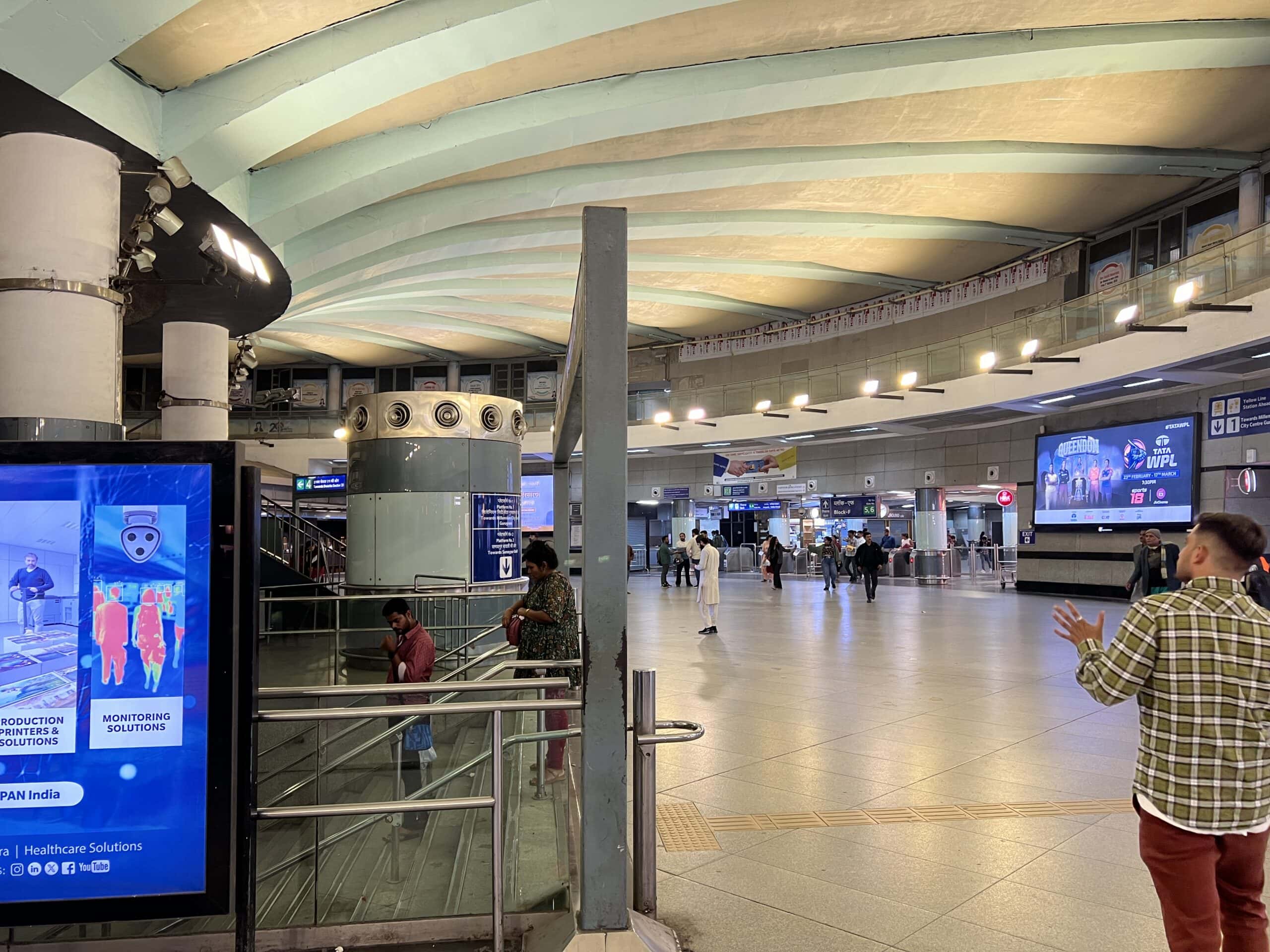
Some things in India have become dramatically easier since I wrote this.
Booking transportation, finding accommodation, communicating with people, and arranging travel can now be done from a phone in ways that would have seemed remarkable in 2011.
Yet some things remain a struggle.
Take applying for an Indian e-Visa. The website is so painfully cumbersome that you almost wonder if you're being punked. And I can't help asking myself, how does a country hoping to attract more international tourists manage to make the very first step of visiting so unnecessarily frustrating? You're trying to encourage people to come, not convince them to abandon the idea before they've even booked a flight.
The positives? There are more than ever.
Uber has made arranging a simple ride lightning fast. No negotiating fares, no wondering whether you're being overcharged. Just book the car and watch it arrive.
ixigo has made tracking trains in real time seem like magic. Where's my train? Is it running late? Which platform? Information that once required considerable effort is now sitting in the palm of your hand.
UPI has made paying for everyday purchases almost ridiculously easy. From shops to roadside vendors, a quick scan of a QR code and you're done.
And MakeMyTrip has transformed hotel bookings. What once might have required a travel agent, a series of telephone calls, or considerable guesswork can now be accomplished by just about anyone with a smartphone.
There are more good things about traveling in India today than ever before. And frankly, many of these conveniences work better than what we're accustomed to back home.
Of course, you still have to show your passport five times at the airport before boarding a domestic flight.
Shrug.
Can't win them all.
05. No Sense of Pride for Historical Landmarks
Travel guide books of India give wonderfully written descriptions of famous monuments, museums, historical landmarks to see. What they often forget to include is the rampant graffiti scrawled across walls, or etched into stone. Indians are infatuated with letting the world know they visited a particular place. As tourists we are bombarded with talk of how proud Indians are of their country. Yet locals and traveling Indians can’t seem to find personal restraint from defacing property which is hundreds, sometimes thousands of years old. I’ve been told this is bad education, poor moral character. I’ve never caught anyone in the act during all my travels. One day I hope to meet up with an individual so I can ask, what are you doing and why? Is it really necessary to burn your initials into this tree?
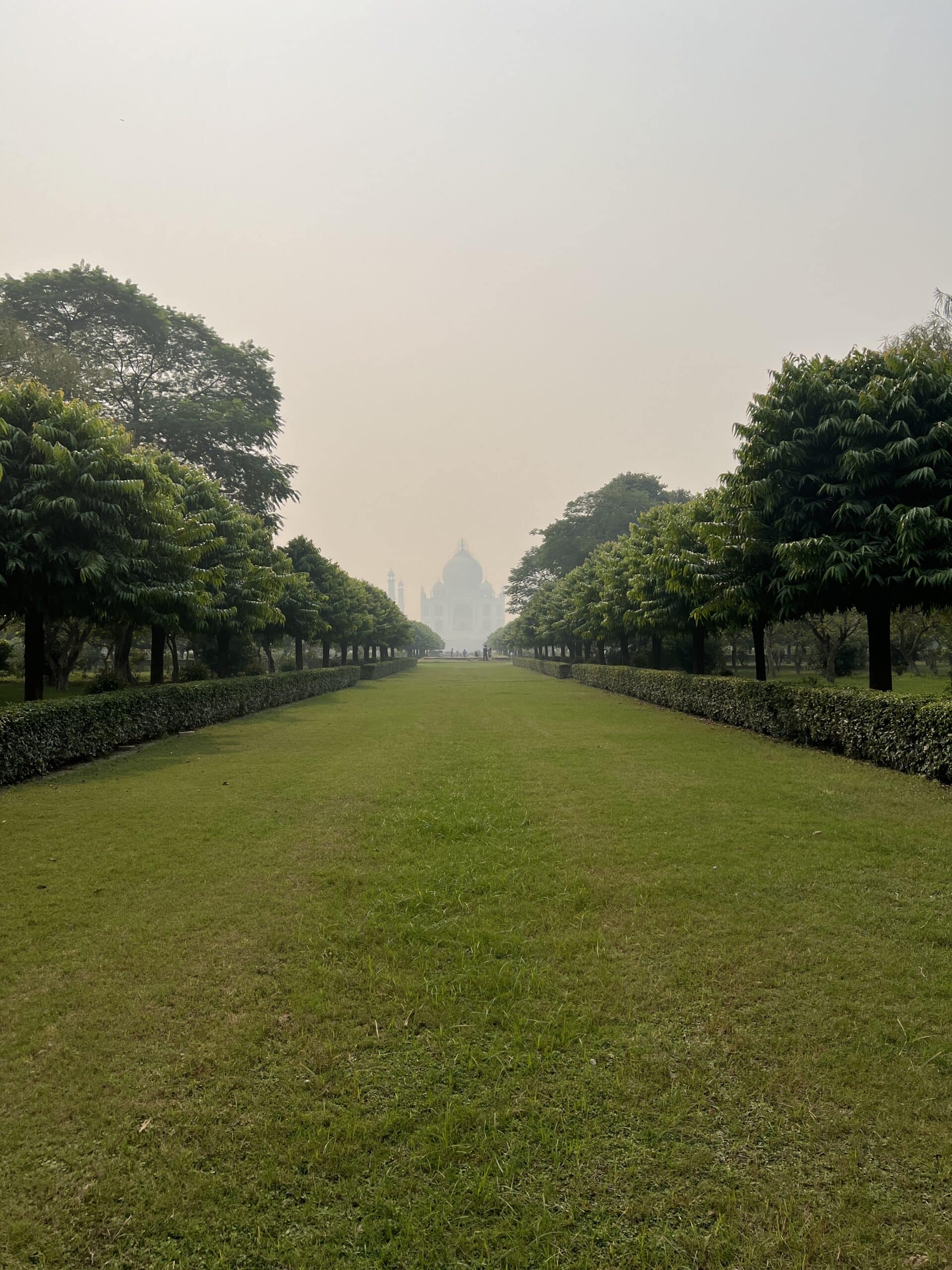
The graffiti still bothers me.
So does litter around historical sites, damage to old structures, and the casual treatment of places that have survived for centuries.
What I wouldn't repeat today is the suggestion that Indians somehow lack pride in their heritage.
In fact, quite the opposite.
The amount of restoration and upkeep undertaken by the Archaeological Survey of India (ASI) throughout the country has been impressive, to say the least. I've revisited numerous historical sites since writing the original article in 2011, and the improvements at many of them are remarkable. Cleaner, better organized, and more thoughtfully maintained. There's a noticeable difference in how these places are being presented and preserved.
And I don't think this is happening in isolation.
Earlier in this article, I touched on how Indian filmmakers, writers, journalists, and younger generations are increasingly questioning established norms and demanding change. I wonder whether we're seeing some of that same evolving consciousness reflected in the country's public spaces.
India, to my eyes, has never looked better.
I hesitate to use the word cleaner, because that can suggest the country was somehow uniformly dirty before, which certainly wasn't the case. And there are still plenty of exceptions today.
Over twenty-one years of traveling through India, I've noticed what feels like a broader shift toward better-maintained public spaces, greater attention to preservation, and a growing expectation that India's extraordinary cultural heritage deserves to be cared for.
It's progress you can actually see.
And having watched some of these changes unfold over the years, I find that enormously encouraging.
06. Indian Standard Time
Planned a meeting at 9:30? Expect your guests to arrive closer to 9:45-10:00, possibly even 10:30. Indians move to a different time schedule jokingly referred to as Indian Standard Time. It’s not for a lack of clocks. Mobile phones are a personal fixture and everyone is checking them constantly. Punctuality in India is not the same as in the western world; however this is changing with the rapid integration of western standards within the country. Tourists using a car and driver service will experience this at least once during a tour of India. A 9:00 AM scheduled departure may end up being closer to 9:30. The excuse? The car didn’t start, it needed to be washed, the driver was asking directions, etc. How do you react to this? You don’t. Let the driver save face and chalk it up to your first encounter with IST.

In my travels since 2011, things have definitely changed.
Take IndiGo, for example. They don't play around. Those planes are expected to leave on time, and you'd better be at the gate when you're supposed to be.
And the drivers? I've arranged nine o'clock departures only to find the car waiting outside at 8:45, the driver ready to go whenever I am.
But don't be fooled. Indian Standard Time is alive and well.
I went to see a performance in Delhi with a posted start time of 8 PM.
At 7:45, the theater was mostly empty. I remember thinking, Wow, tough crowd for the performers tonight.
By eight, a few more people had wandered in.
By 8:30, a respectable crowd had emerged.
And at 8:55, when the theater finally darkened and the show was about to begin, the audience was at maximum capacity.
Not an empty seat in the house.
Apparently, everyone else knew something I didn't.
Indian Standard Time.
Some traditions are harder to change than others.
07. I’m in a Big Hurry!
According to the sign, the queue forms here. I’ll stand in line here with the rest of the…hey wait a minute, that guy just cut in front of me. Hey wait! That guy just cut in front of… And so goes the experience where queues are involved in India. Talk of corruption is rampant throughout the media and within inner circles. Yet, these are the same people who believe lines are not for them. Indians think nothing of cutting in front of each other in traffic. Heck, most of them don’t even look when merging into your lane. It’s expected that you will see them merging and thus, fall back to make room. While standing at a ticket window after waiting in queue for ten minutes at a railway station, you’ll be pushed from all directions by arms holding wads of money while shouts erupt behind you. Movie theaters, museums, festivals; Anywhere a crowd gathers you can expect to be pushed to the end of the line unless you quickly adapt. There is a fine line between Indian queue etiquette and aggressive western behavior. Learn the difference fast.
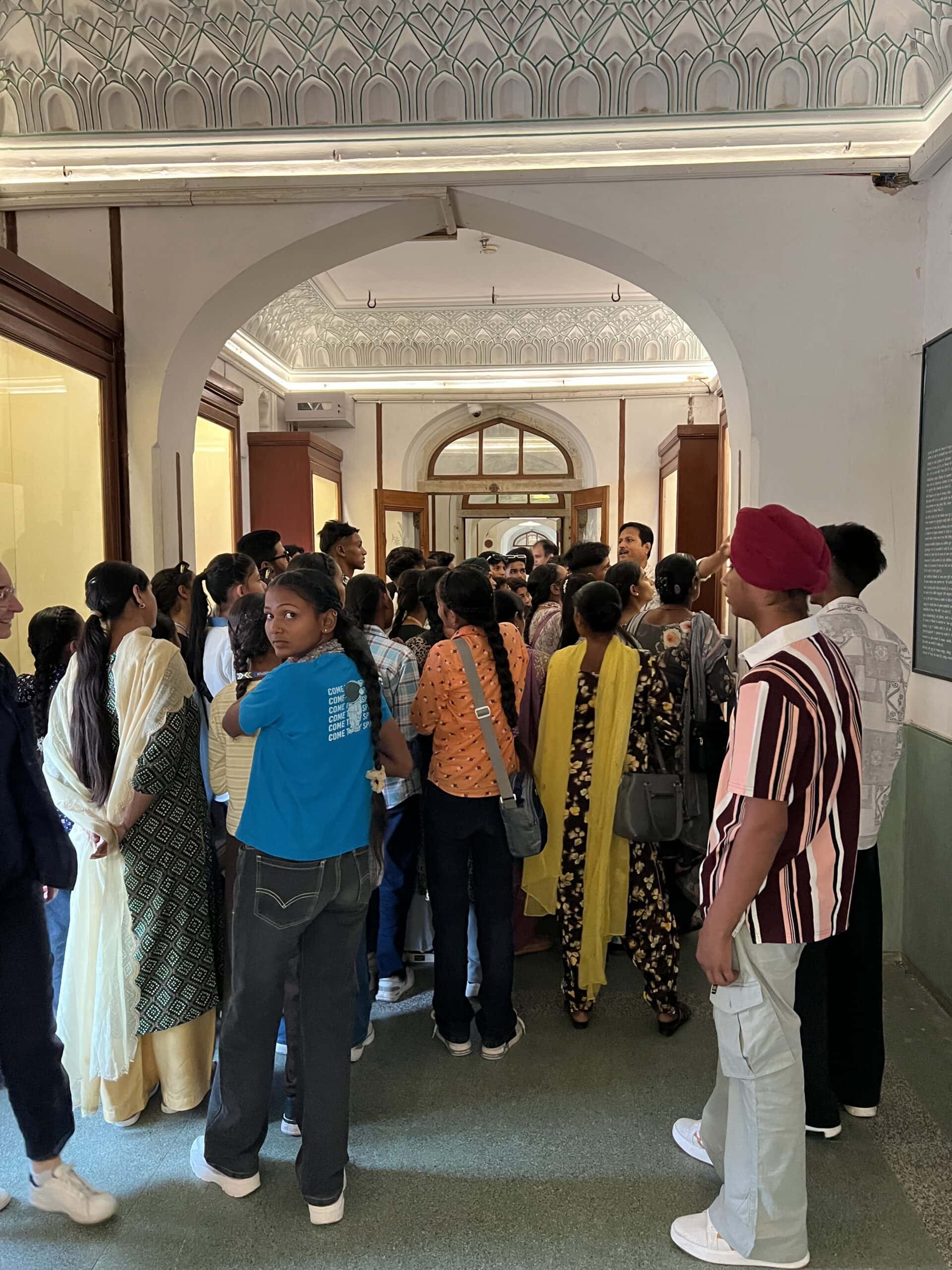
Queues in India have become considerably more orderly since I wrote this in 2011.
Airports, railway stations, museums, and tourist attractions generally have lines that function the way they're supposed to. You get in line, wait your turn, and eventually reach the front. What a concept!
Except, of course, at the ticket counter.
Here, you still need to be quick with your money, whether it's cash or UPI, and be prepared to defend your position.
And whatever you do, keep an eye on didi-ji standing beside you.
She looks perfectly innocent. Sweet, even. The sort of woman who might ask whether you've eaten breakfast or insist you take the last seat on a crowded bus.
But don't be fooled.
The moment she spots an available ticket agent, she's making her move.
And before you've even figured out what happened, didi-ji is at the counter, money in hand, conducting her business while you're left wondering how you managed to lose your place in a line you were already standing in.
Some things have changed.
But didi-ji hasn't.
08. Apathy Toward Animals
Cows are sacred. Monkeys are revered. The rest of the animal kingdom in India, eh, not so much of a big deal. Trusts for tiger preservation, prevention of cruelty to elephants and a modest group of other NGO’s are gaining traction within the country. But the general reaction to animals by Indians can be sickening. Elephants are pulled from their mothers at an early age only to be beaten, starved, and drugged into submission for later use at temples and popular tourist sites. Stray dogs continue to be a tremendous burden on the country. Sterilization campaigns in the largest cities have been received with mixed results. Perilous reports of continued poaching of endangered species continues with seemingly no triumphant end. Urbanization to house an overpopulated country pushes monkeys, birds, reptiles and countless other species further and further away from their natural habitats. To point a finger only at India would be unfair. Similar situations are perplexing a myriad of countries across the globe. Animal populations are rising along with humans. The education of how to interact humanely with the animals, how to curb the excessive growth patterns, how to safeguard future existence, is grossing lacking.
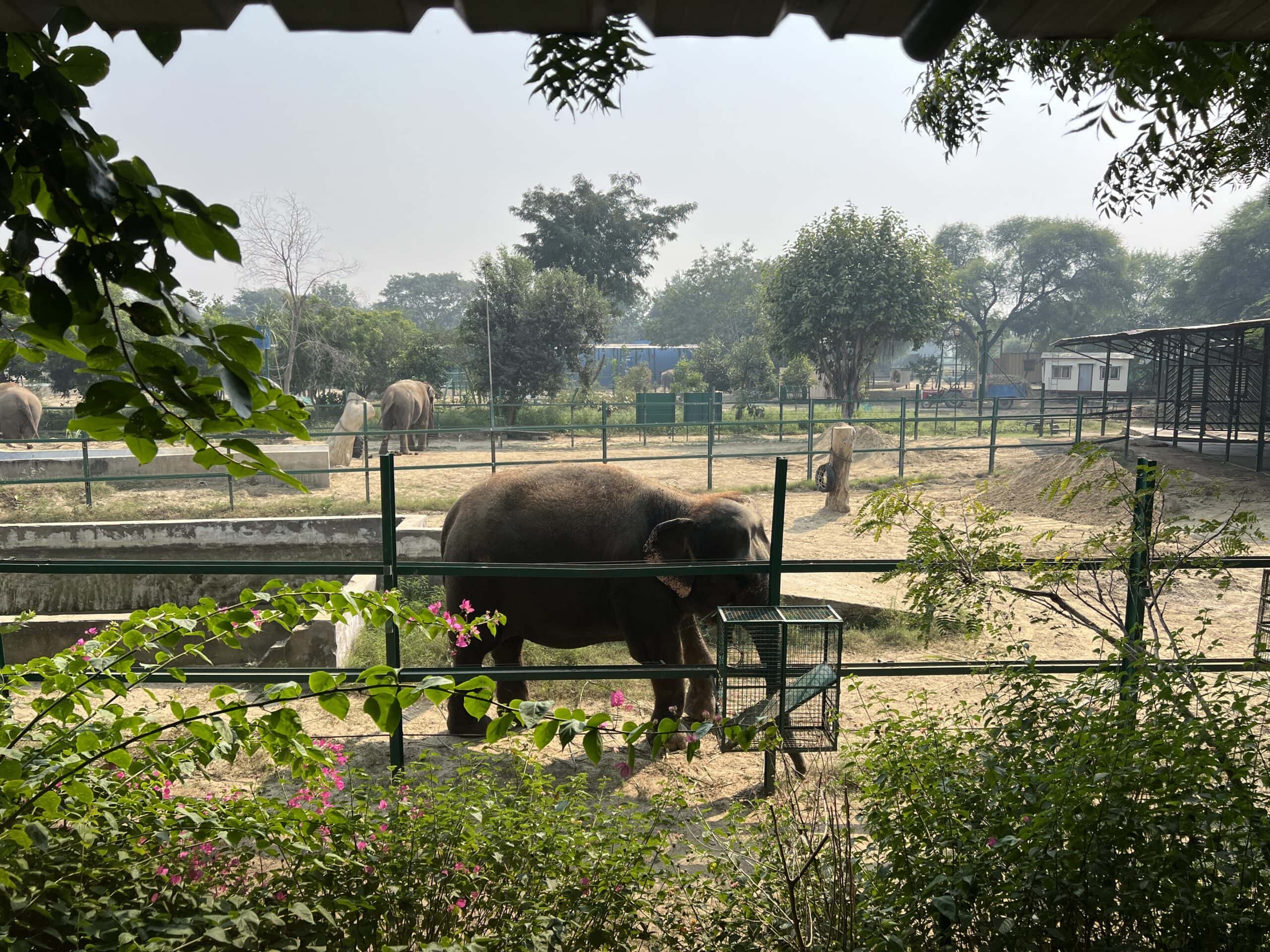
Of all the subjects I wrote about in 2011, this is one where I've been particularly encouraged by the changes I've seen.
Animal welfare in India has come a long way.
Today, countless animal welfare NGOs operate throughout the country, providing everything from emergency roadside assistance for animals struck by vehicles to veterinary care, rehabilitation, and shelter for domestic animals in need.
Organizations such as Wildlife SOS have brought greater attention to the plight of abused elephants and rescued sloth bears, while animal shelters and cow sanctuaries continue their work, sometimes in the middle of bustling cities like Mumbai.
And it's not just about rescuing animals.
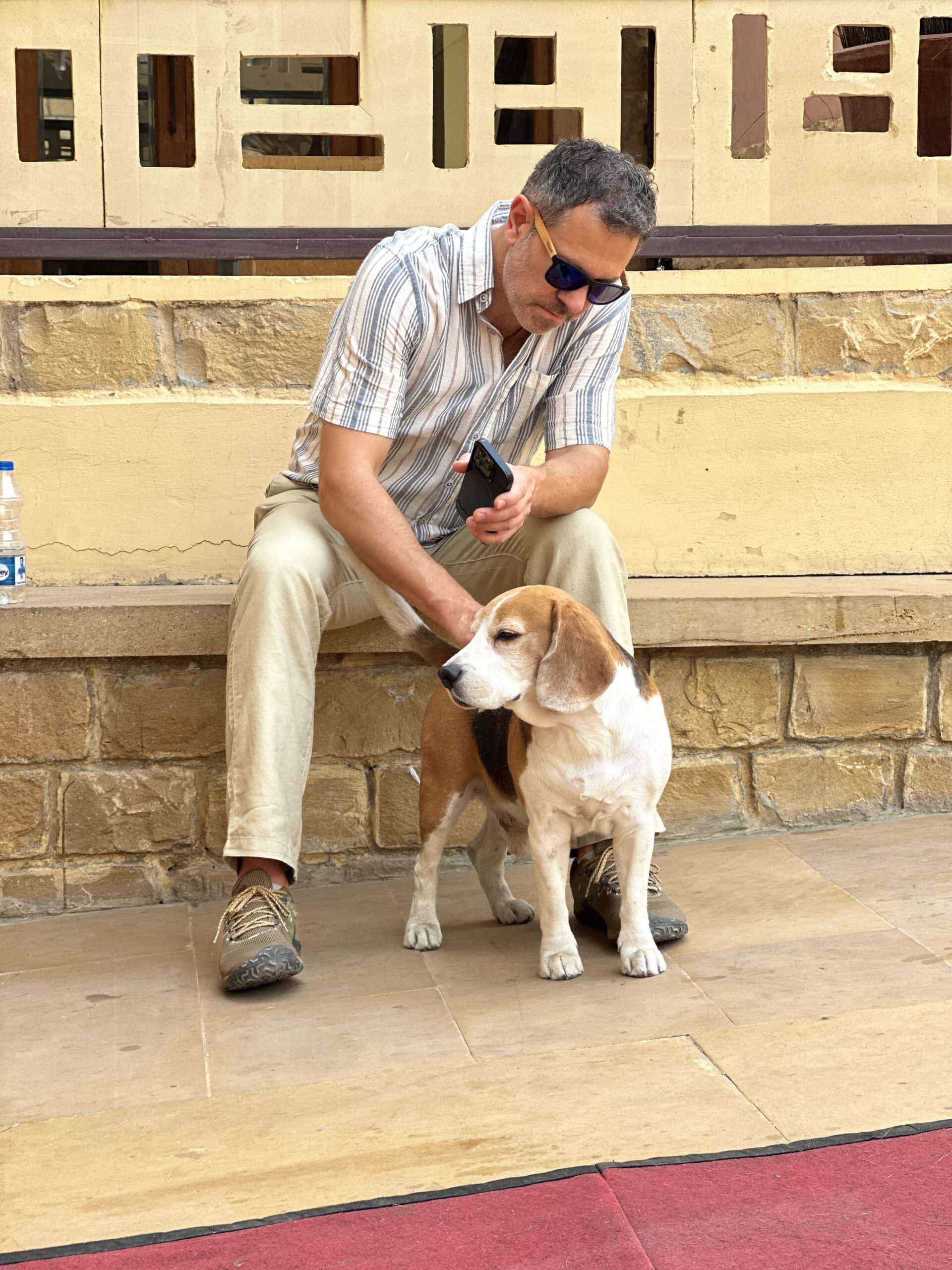
The relationship between Indians and their domestic pets has evolved considerably. Pet supply stores, veterinary services, grooming salons, and specialty products are increasingly commonplace in major metropolitan areas. India is following a worldwide trend in which cats and dogs aren't simply animals living alongside us, but members of the family, often enjoying lifestyles nearly as comfortable as their owners.
Quite a change from what I remember during my earliest visits.
Of course, there's still plenty of room for improvement. Animal welfare is never a straight line of progress. There are setbacks, ongoing challenges, and difficult questions about how animals are treated, particularly those used for labor, entertainment, and tourism.
The overall direction I've witnessed is encouraging.
The climate for animals in India is receiving a welcome makeover.
And with growing cities, expanding development, and continued pressure on natural habitats, animals need us more than ever.
09. No Sense of Individual Property
The need to visit the toilet hit while I was typing away on my laptop. As I entered the bathroom, my Indian friend who was staying with me jumped on my computer. When I returned he was furiously browsing the web. The project in process before leaving to use the toilet was of no concern to him even though I was patiently waiting to return to it’s completion. Morning showers start me off in a good mood. I travel with a particular soap while in India. Call it a ritual, it’s always in my bag. So when I reach for my special soap, only find it covered in long black hairs not belonging to me, it’s clear another of my traveling friends has helped himself to it. And the travel size shampoo bottle is much lighter in contents compared to just yesterday. Is that my towel, wet and crumpled in the corner? I love to walk whenever I can stretch my legs after too many hours bumping between various cities in India. Returning back to my hotel room generally finds one of my friends rummaging through my bags. It’s not what you think. They aren’t stealing from me, simply exercising Indian curiosity to see what they can borrow for a short period of time. Indians are fascinated with western products from electronics to beauty brands which they cannot find in their home country. Becoming accustomed to the lack of requesting approval before using your personal property takes a bit of time. What you gain is a rearranging of priorities along with the understanding that Indians would share any of their possessions with you in kind.
Yikes. Reading that back makes me sound like a bit of a prick!
Was I really that worked up over a bar of soap? Or somebody borrowing my shampoo?
Apparently so.
Thankfully, I've loosened up considerably since then.
One of the things I've come to appreciate most about my friendships in India is the willingness to share. Homes, meals, possessions, time. There's often a sense that if someone needs something and you have it, why wouldn't you offer it?
And somewhere along the way, I stopped being so precious about my own belongings.
There's enough for everyone.
If somebody needs something I have, they're welcome to it. And if I need something, I know I can count on the same generosity in return.
Together, we'll make it work.
Funny how something that once irritated me has become one of the things I appreciate most.
10. Curious or Making Fun?
The laughter, finger pointing, glances back and forth between friends…is it Indian curiosity or a form of taunting we don’t understand as foreign tourists? Is there a way to really know? For some people it’s a shy way of gaining your attention. They are as curious about us as we are about them. For others, it has to be mean spirited joking at your expense. While exploring a historical tourist spot in Tamil Nadu, I came across a group of young teenagers. Great bursts of laughter ensued as I passed. They in turn decided to follow my movements. The laughter followed and so did the loud conversations. One boy approached me to ask if I spoke Tamil. It was clear he was ensuring I was void of understand their language before digging in further to whatever course of conversation they were enjoying. Examples of this occur regardless of location in India. It happens at home too. We’re all exposed to it, wondering if we’re being talked about, in what manner. All a tourist of India can do is ignore or confront. I prefer to remind myself it’s not about me, it’s not about me.
One of the great things about getting older, assuming you're willing to accept that aging can actually be a good thing, is becoming more in tune with your surroundings.
And with that comes a certain freedom.
The little things that once irritated you begin to fade into the background. You become more aware of the positives around you and considerably less concerned with the supposed negatives.
Looking back at this incident, I have no idea whether those teenagers were laughing at me. And frankly, I couldn't care less today.
As I mentioned in the first section, social media and technology have changed so much about how we see one another. People are exposed to more cultures, personalities, fashions, and human interactions than ever before. What might once have seemed unusual barely warrants a second glance today.
And really, who am I to think that whatever I'm doing is of particular interest to anyone else?
Perhaps that's the greatest change of all. I've stopped assuming that the laughter, the glances, or the conversations happening around me have anything to do with me.
Besides, there's a certain irony to getting older.
You spend your younger years wishing people would stop paying attention to you.
And then you reach an age where you just hope somebody still does!
The Comments Were Almost as Entertaining as the Article
One of the things I’d almost forgotten about the original article was the reaction it generated.
Some readers found the observations amusing. Others recognized their own experiences. And a few were decidedly less enthusiastic about my interpretation of India.
One commenter, writing under the name green, was particularly unimpressed. After accusing me of judging an entire population through a Western perspective, the reader concluded with a fairly direct suggestion:
“So kindly do us a favor -don’t come.”
Well, that was certainly one way to end a conversation.
I responded at the time by explaining that Full Stop India was written from my perspective as a Western traveler, drawing on personal experiences and occasionally injecting humor into cultural observations.
I still stand by the idea that travel writing should be personal, candid, and occasionally provocative. Looking back, I can also understand why someone might object to having an entire population described through a handful of frustrating encounters.
Then there was a reader calling themselves You You, an Indian who had spent much of their life living abroad in the United Kingdom and the Middle East. That reader had a rather different reaction:
“Believe Me…I repeat Believe me….I spent 15 mins or so reading this article and its the Gospel Truth.”
The commenter went on to describe returning to India and encountering some of the very same frustrations I’d written about, including staring and late arrivals.
Two readers. Two very different reactions.
And that’s what makes revisiting the comments so interesting. I was writing as an outsider trying to make sense of a country that fascinated me. Some readers recognized the humor. Others saw sweeping generalizations about their home.
Fifteen years later, I can see elements of both arguments.
I wouldn’t write the original article exactly the same way today. I also wouldn’t erase it, or pretend I didn’t have those experiences.
The original post captured a particular moment in my travels and my understanding of India. And the comments captured a conversation worth remembering.
For a fuller account of what brings me back, read why I keep returning to India.
So Why Do I Keep Going Back?
For more practical planning, see my why I keep returning to India.
Reading this article again after fifteen years has been an interesting exercise.
Some of my original complaints now seem almost quaint. Others still make me laugh. And a few make me wonder whether I was perhaps taking myself a little too seriously.
What strikes me most is how much has changed.
India has changed. The technology, infrastructure, social attitudes, and everyday conveniences I encounter today are remarkably different from what I experienced when I first arrived in 2005.
And I’ve changed.
Twenty-one years of traveling to India have brought friendships, experiences, and a much deeper appreciation for a country that continues to surprise me.
I’ve spent years learning Hindi. I’ve returned to familiar places and discovered countless others. I’ve watched cities transform and revisited historical sites that look better today than I remember them years ago.
I’ve also learned that not every unfamiliar behavior needs an explanation, and certainly not every inconvenience deserves an argument.
There are still things about traveling in India that drive me crazy.
Of course there are.
The things I love about India have always far outweighed the things that annoy me.
And perhaps that’s the greatest difference between the person who wrote this article in 2011 and the person revisiting it today.
Back then, I was often trying to understand why India didn’t work the way I expected.
Today, I’m considerably more interested in experiencing India as it is.

 Planning Your Return: India Is Never Quite the Same Twice
 Bringing India Home: The Things We Carry Back
 Shopping in India: The Things I Bought, the Things I Didn’t, and What I Learned