

Twenty rugs, a wedding necklace, an old map, and a pair of tassels that somehow ended up on Wisconsin roads.
There’s a black tassel hanging inside our company’s delivery van in northern Wisconsin. I bought it from a roadside vendor somewhere in Rajasthan, where similar tassels are commonly seen dangling from the mirrors of India’s elaborately decorated trucks.
If you’ve spent any time on India’s highways, you’ve undoubtedly noticed the trucks. They’re often painted in brilliant colors, adorned with religious symbols, decorative lettering, and just about anything else their owners can attach to them. Among those decorations are black threads and tassels, traditionally associated with warding off nazar, or the evil eye. They’re believed to offer protection against bad luck and misfortune, a little extra insurance for anyone spending their days on India’s unpredictable roads.
I found a pair at a roadside stall and decided our company delivery van in Wisconsin could use a little of that protection.
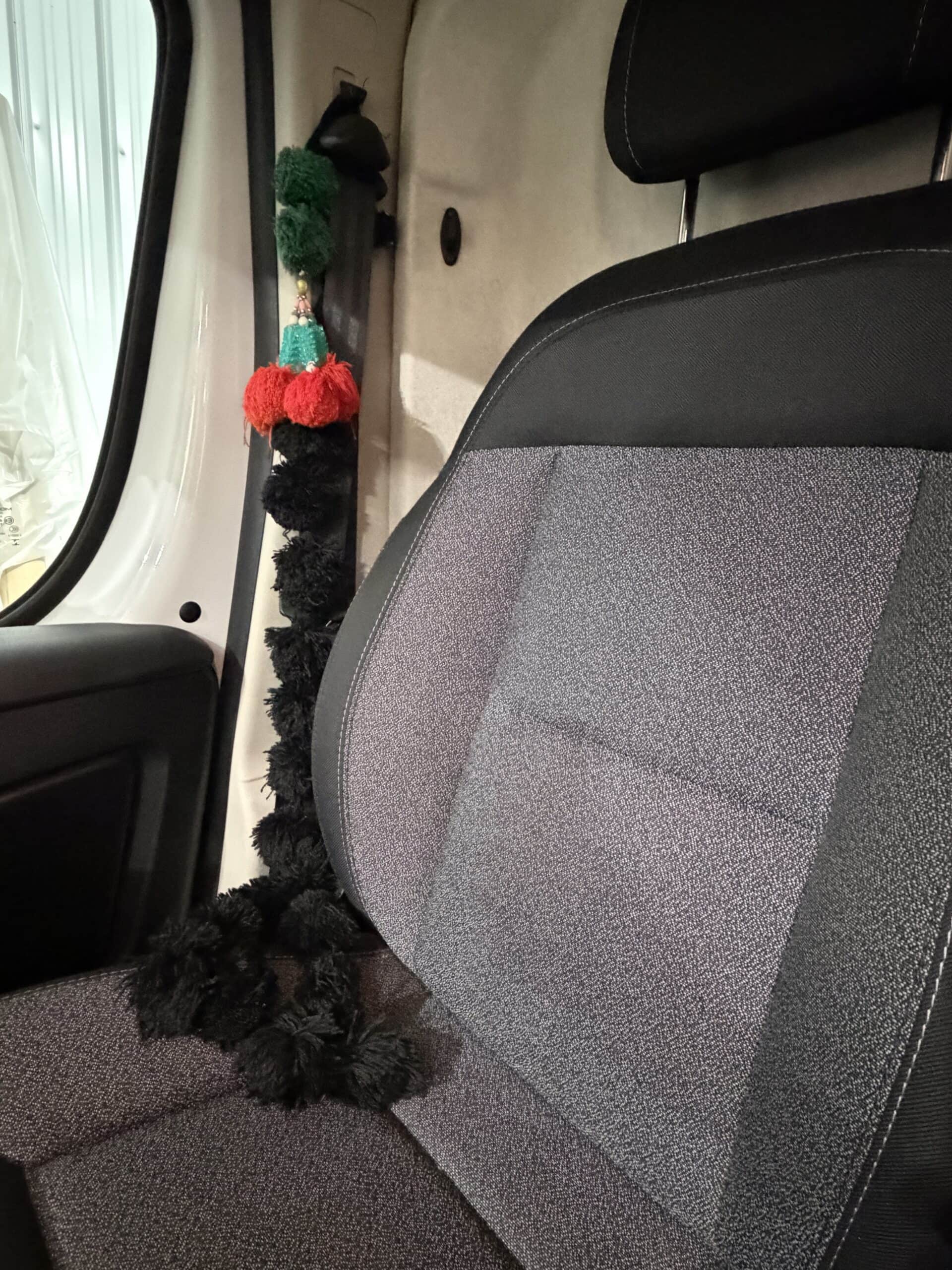
Originally, there were two. The other blew out an open window on a windy day.
Apparently, protection against the evil eye doesn’t necessarily include protection against a strong Wisconsin crosswind.
This is probably not the souvenir most people bring home from India. Then again, looking around my house and office, I’m not sure I’ve ever been particularly conventional about what I buy there.
A Map Beside the Weight Rack
The pre-Partition map of India hangs beside my weight rack, which isn’t necessarily where you’d expect to encounter a reminder of one of the most consequential events in South Asian history.
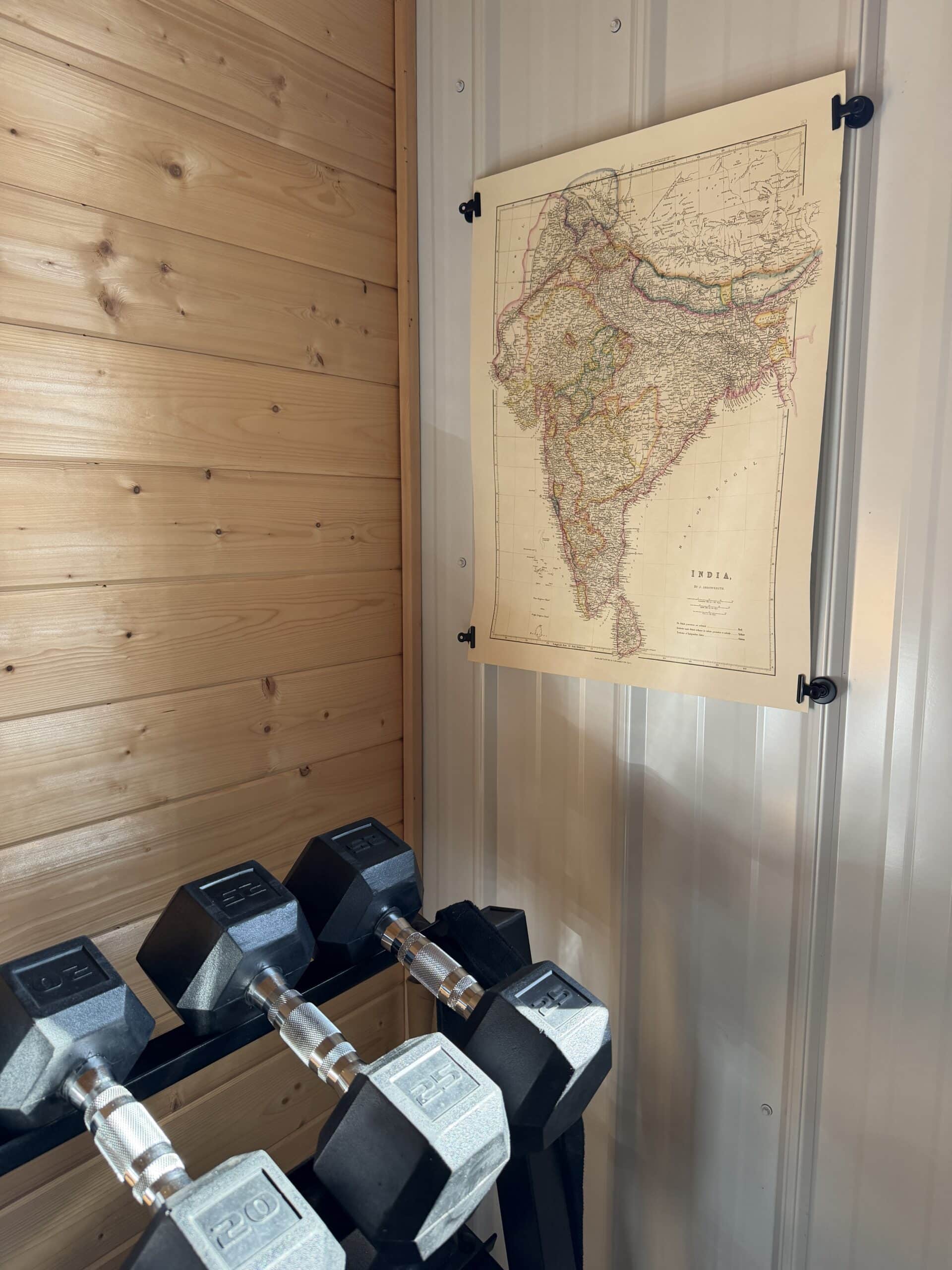
I wish I could remember where I bought it. Possibly a shop in Bombay, although I wouldn’t swear to it.
In my office hangs an oil painting by Indian artist Deepti Nair. Nearby, a small clay camel sits beside my desk.
I also have several kurtas hanging in my closet and a few silver Om coins tucked away in my safe.
There’s no particular system to any of this. The painting is displayed prominently, the camel has claimed a spot beside my desk, and the coins have barely seen daylight.
And then there’s the wedding necklace.
Rakesh Knew Where to Go
At an Indian wedding, I’d noticed one of the traditional garlands made from currency notes. Sometimes called note malas, they’re associated with wedding celebrations, particularly in northern India.
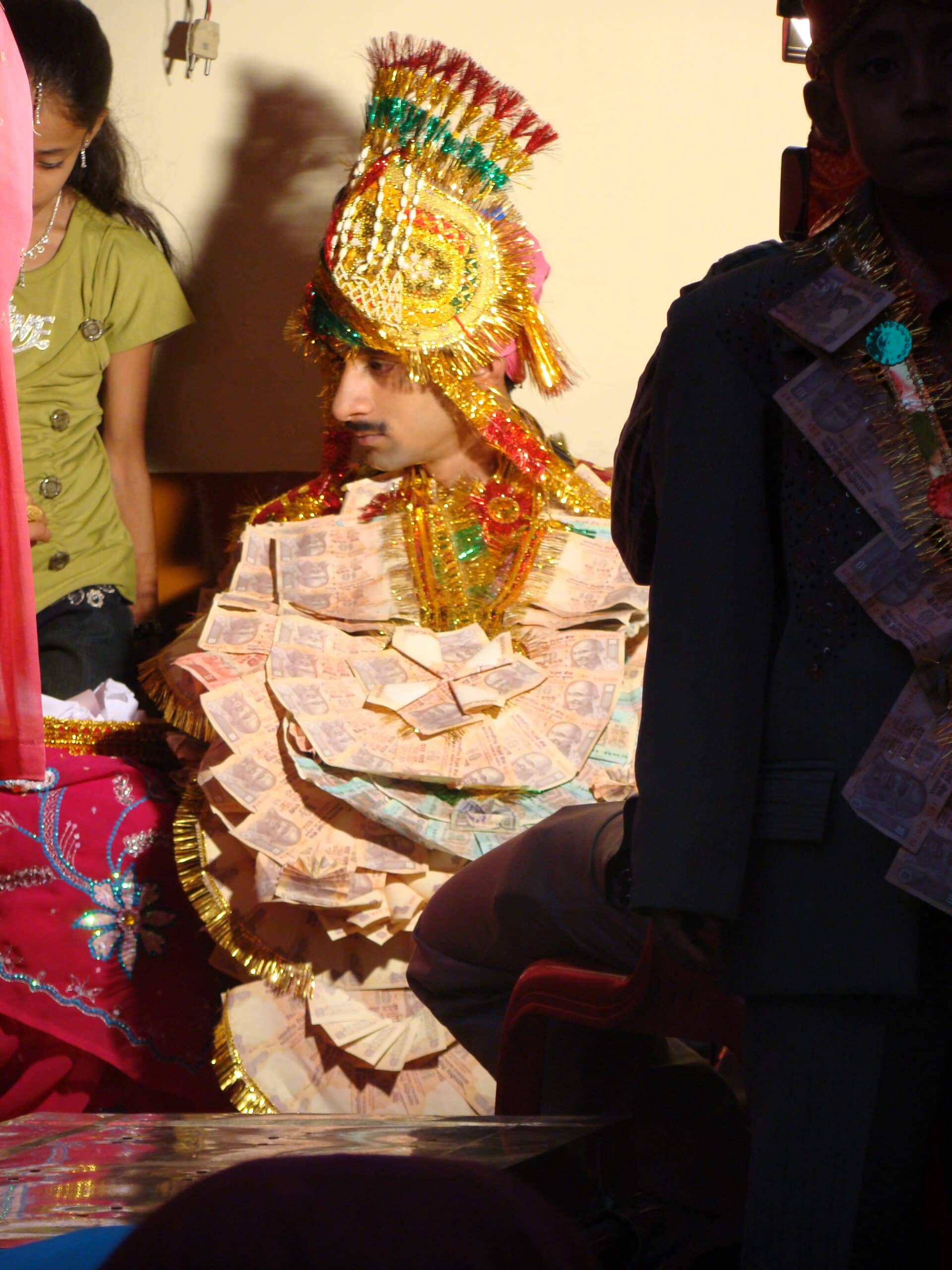
I decided I wanted one.
I asked my longtime driver and friend Rakesh whether he knew where I could find one. He didn’t need to think about it. There was a seller in his village.
So off we went.
I purchased the necklace, brought it home, and hung it in my closet alongside several kurtas. It’s probably the only thing in there intended for an Indian groom, although it has yet to receive an invitation to anything.
Rakesh has helped me find plenty of things in India over the years. His assistance was particularly valuable when I decided to try my hand at sourcing rugs.
Twenty Rugs, and Absolutely No Idea Where to Start
On one trip to India, I set off with the intention of sourcing rugs for our interior design business in Wisconsin.
I’d never done it before, and I had absolutely no idea where to start.
From a design perspective, I knew what I was looking for. We had specific client projects in mind, so color, size, pattern, and construction were all important. The challenge was finding the rugs themselves.
Fortunately, I had Rakesh, who made phone calls, arranged meetings, and took us to places I never would have found on my own.
One of our more unexpected purchases happened at the shops inside Jaipur’s City Palace. A rug hanging on the wall caught my attention, although the shopkeeper didn’t seem entirely convinced he wanted to take it down, even for a sale.
We eventually persuaded him, and the rug came with us.
Near Jodhpur, our search took us somewhere quite different.
Behind an Ordinary Door Near Jodhpur
The area around Jodhpur is known for its traditional dhurries, the colorful flatwoven rugs produced by local artisans.
After several phone calls, Rakesh directed us through a series of side streets to a nondescript home. There was little about the exterior to suggest what we’d find inside.
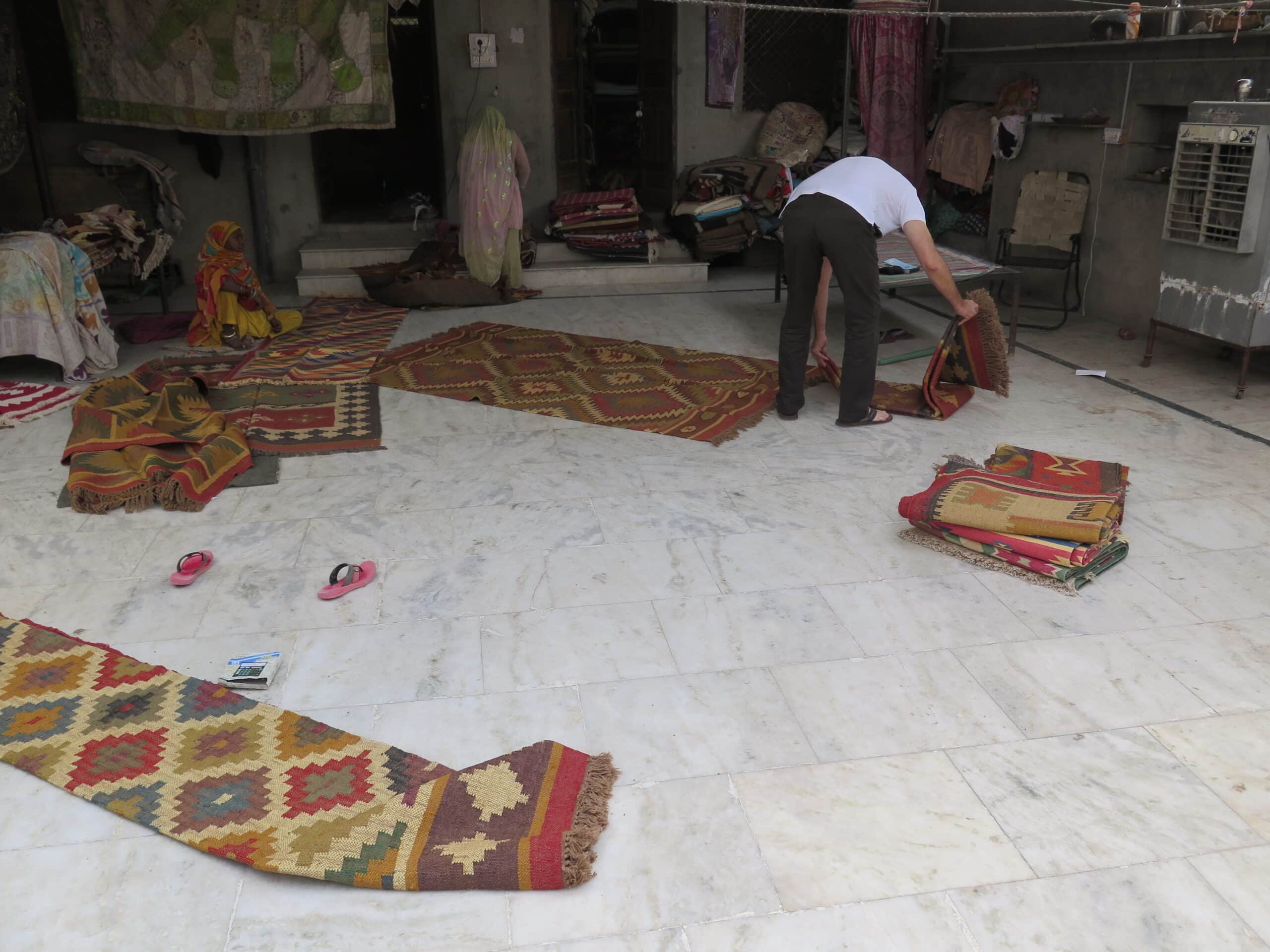
In the courtyard stood a dhurry loom, where a husband and wife were working. Once they learned we were interested in purchasing rugs, they happily demonstrated their craft, each working from opposite sides of the loom and meeting in the middle to create the patterns.
I’d seen plenty of finished rugs by that point, although watching the two of them work gave me a much greater appreciation for what went into making them.
Then they showed us their storeroom.
It was packed. Hundreds of finished rugs, folded and sorted by size, were stacked from the floor almost to the ceiling. Every available space seemed to hold another pile.
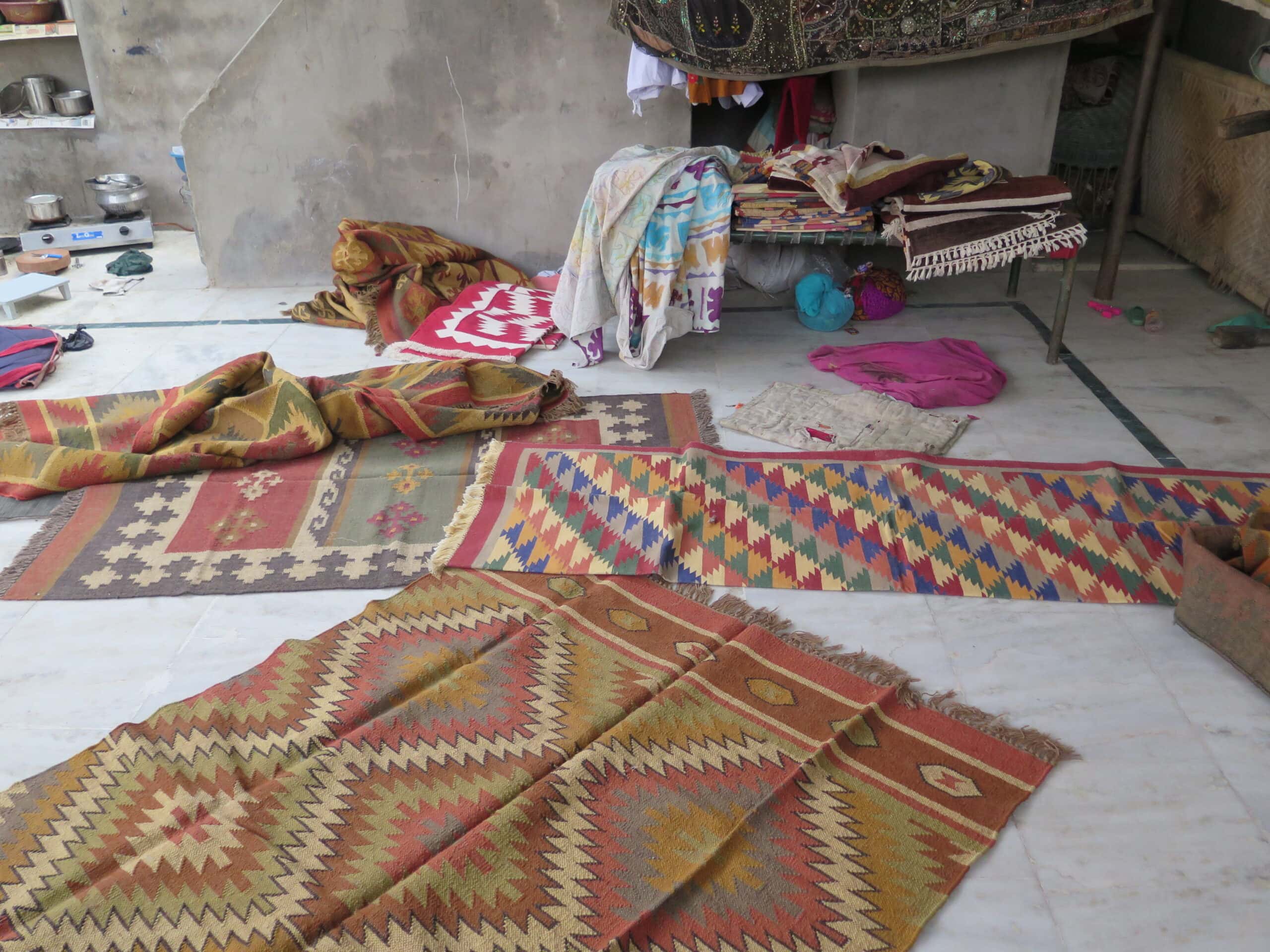
For an interior designer who’d arrived in India not knowing where to begin, it was quite a discovery.
We started going through the stacks, considering colors, dimensions, and patterns for the projects waiting back in Wisconsin.
That’s when we heard the screech of brakes, followed by a terrible thud.
An Unexpected Interruption
I went outside to investigate and found a small car stopped a few feet behind a full-sized cow, which was lying on its side in the road.
The car had struck the cow as it wandered along, something cows are quite accustomed to doing on Indian roads.
The driver appeared more concerned about the damage to his car than the animal he’d just hit.
The neighbors had other priorities.
People emerged from nearby homes, passing vehicles stopped, and before long the driver was surrounded by an upset crowd, all scolding him for hitting a cow, an animal regarded as sacred by many Hindus.
Fortunately, the cow eventually got to its feet, shook itself off, and very slowly lumbered away into the desert.
The driver, meanwhile, was still getting an earful.
Once the commotion settled, we returned to the courtyard and continued looking through the rugs. We purchased several dhurries that afternoon.
I had set out to find rugs for our clients. I hadn’t anticipated a weaving demonstration, a storeroom containing hundreds of rugs, and a roadside confrontation involving a cow.
It was certainly a memorable afternoon.
Rajasthan to Wisconsin
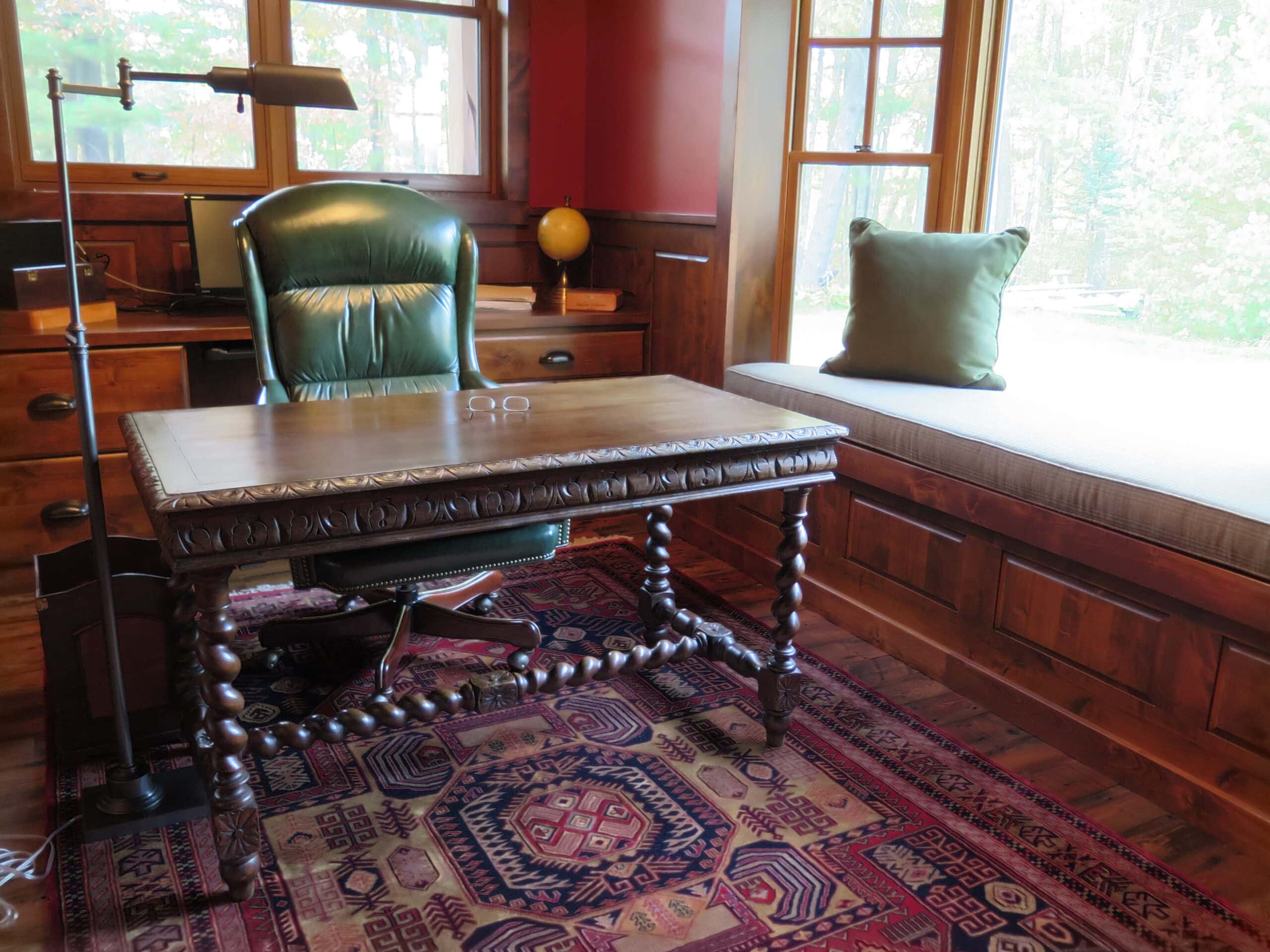
Over several weeks of traveling through Rajasthan, we accumulated approximately twenty rugs. The back of our hired car gradually became a traveling rug warehouse as we moved from one destination to another.
By the time we reached Delhi, we had quite a collection to get home.
We arranged for the rugs to be prepared for international shipment through an established courier service using DHL. With the photographs, receipts, insurance, and tracking information in hand, we sent them on their way.
They arrived in Wisconsin before I did.
By the time I returned to our studio, our staff had already opened the shipment and spread the rugs across the floor.
I walked in to find the same pieces we’d discovered in shops, courtyards, and storerooms halfway around the world, now laid out in our studio in northern Wisconsin.
It was a delight to see them all together.
Eventually, all twenty were sold into various client projects, exactly as we’d intended when we set off.
I’ve written more about the practical side of purchasing and shipping things home in Shopping in India: The Things I Bought, the Things I Didn’t, and What I Learned.
What stays with me from this trip, though, is the experience of finding the rugs in the first place. Without Rakesh’s calls and connections, I doubt we’d ever have discovered that courtyard near Jodhpur, let alone witnessed everything that happened there.
What Does India Have to Do With a Wisconsin Lake Cabin?
Incorporating something from India into an American home might seem like a stretch, particularly if your interiors are nothing like the places where you found those objects.
I understand the hesitation, although my own home is a good example of why I don’t worry much about it.
I love Hawaii. Not quite as much as India, but enough that I’ve visited six, seven, perhaps eight times. I’ve lost count, just as I have with India.
Over those visits, I’ve accumulated a nice collection of Hawaiian art.
Now, I live in a vintage 1940s cabin on a lake in northern Wisconsin. Hawaiian art doesn’t exactly fit that aesthetic.
Or does it?
As a designer, I say hell yeah.
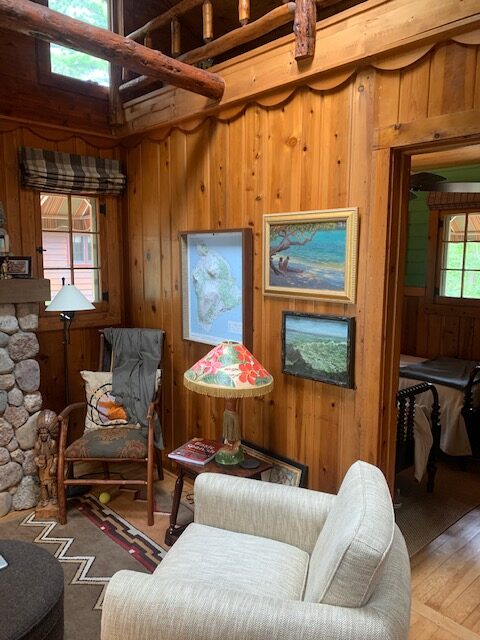
I have an entire wall devoted to Hawaii, with paintings, a map, and even a hula lamp. On my fireplace mantel sits another Hawaiian painting, surrounded by objects I’ve collected from other countries and destinations.
Some pieces are colorful, others ornate or sculptural. Some are small enough to sit on a shelf or nightstand. They were purchased at different times, in different places, without any intention of creating a coordinated collection.
Yet they work together.
And that’s precisely how I think about incorporating India into an American home.
You don’t need an entire room of Indian furnishings, or a house that looks as though it belongs in Rajasthan. It might be a painting above your bed, a colorful textile over a chair, a small sculpture on your desk, or something unusual you discovered in a market.
As an interior designer, I spend a great deal of time considering scale, proportion, color, texture, and placement. Those things matter. But I don’t believe that everything in a room needs to share the same style, period, or country of origin.
A Hawaiian painting can hang in a Wisconsin lake cabin. A pre-Partition map of India can hang beside a weight rack. A clay camel can sit in an office surrounded by furniture samples.
And an Indian rug can look perfectly at home in a house thousands of miles from Rajasthan.
The trick isn’t to make everything match. It’s to give the pieces you love a place where they can be appreciated, individually and as part of the room.
I’d much rather walk into someone’s home and discover something unexpected than see a room where every object looks as though it came from the same showroom.
A painting, a textile, a little object on a nightstand—sometimes those are the things that tell you the most about the person who lives there.
And they’re often the things that prompt the best question:
Where did you find that?
Still Looking for the Right Tassels
Which brings me back to the black tassels from Rajasthan.
One is still hanging in our company delivery van. The other, as I mentioned, made its escape through an open window somewhere in northern Wisconsin.
I’ve actually tried to replace it.
On a subsequent trip to India, I stopped to look at more tassels, hoping to find another pair like the originals.
There were plenty available. None quite appealed to me the way that first pair had.
So I came home without them.
I’m still looking.

 Planning Your Return: India Is Never Quite the Same Twice
 10 Annoying Things About India and Indians
 Shopping in India: The Things I Bought, the Things I Didn’t, and What I Learned