

I’ve planned trips to India down to the last hotel reservation, and I’ve arrived with little more than a return ticket and a general idea of where I wanted to go. Both approaches have given me extraordinary experiences. Both have taught me a few lessons.
One year, I decided to devote three weeks almost entirely to Rajasthan. I flew into Delhi, spent the night, and headed west the following morning. For three weeks, I crisscrossed the state, exploring places I’d long wanted to see and discovering others along the way. I returned to Delhi only when it was time to fly home.
The following year, I did much the same thing in Himachal Pradesh.
Those journeys reinforced something I’ve come to believe about India: you don’t need to see everything to have an extraordinary trip. In fact, deciding what not to see can be one of the smartest decisions you make.
But I’ve also had wonderful journeys that covered several states and cities. I’ve traveled with detailed itineraries and dedicated drivers, and I’ve wandered into towns without a hotel reservation, finding remarkable places to stay simply by asking to see a room.
So what’s the right way to plan an India itinerary?
There isn’t one. But there are a few things worth understanding before you start connecting dots on a map.
Start with somewhere that calls to you
When I begin planning a new trip to India, I generally start with my gut.
That may not sound like particularly sophisticated travel advice, but it’s the truth. I’ve trusted my instincts for more than fifty years, and they’ve served me pretty well. I’m not about to abandon them now.
Sometimes a destination sits in the back of my mind for years before I finally make it there.
A few years ago, I made a somewhat spontaneous three-day visit to Ahmedabad, my first venture into Gujarat. What a wonderful surprise. And the thali? Still the best I’ve had in India.
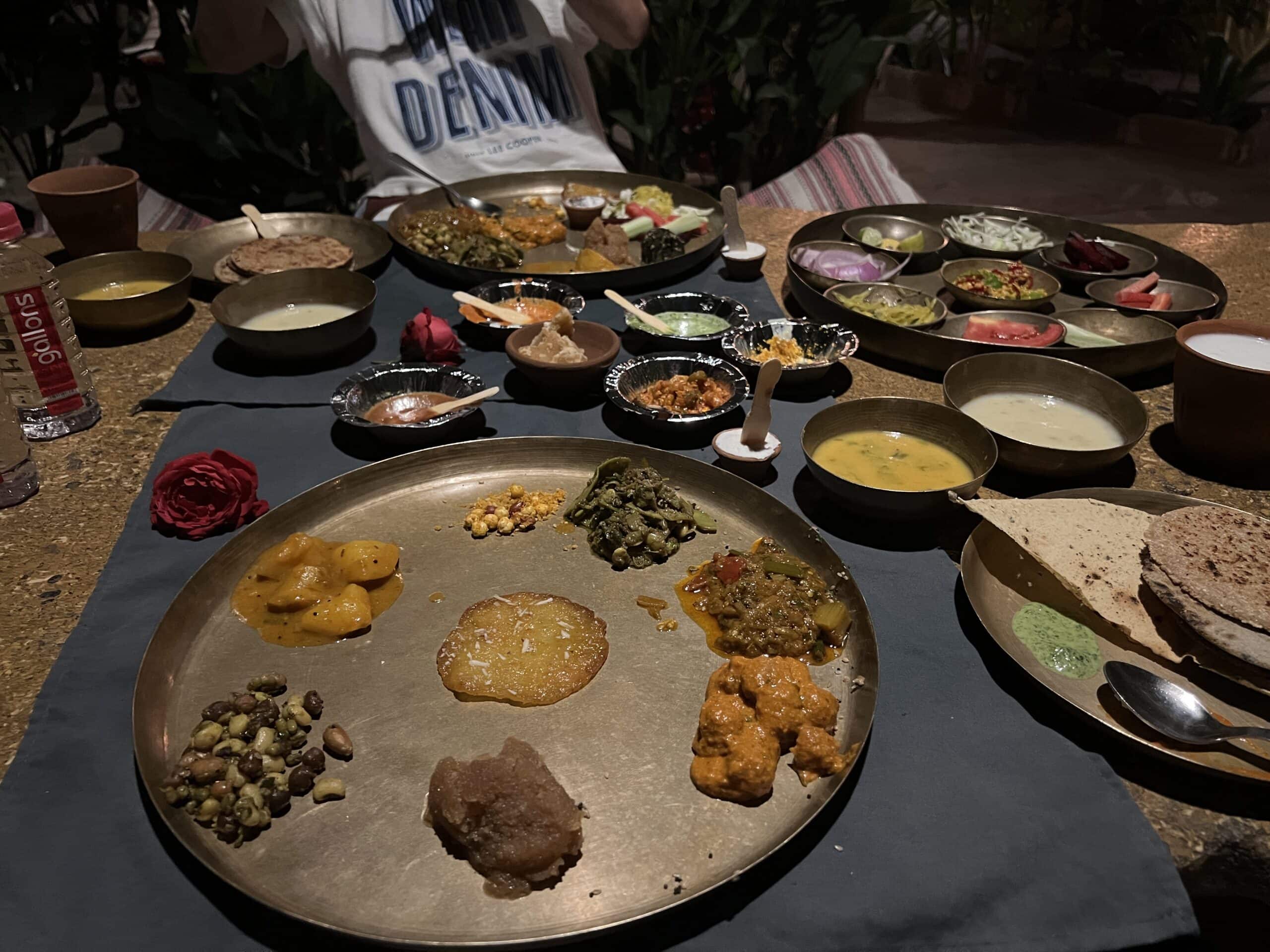
I didn’t go because Ahmedabad appeared on somebody’s list of must-see destinations. I went because I wanted to see it.
That’s how much of my travel begins.
I’m not suggesting that everyone should choose destinations this way. Some people want to visit the Taj Mahal, see a tiger in the wild, explore ancient temples, or experience the beaches of Goa. Those are perfectly good starting points.
What matters is that the itinerary begins with something that genuinely interests you, rather than an obligation to visit places simply because everyone else does.
Start with curiosity. Then figure out how to get there.
Geography matters. More than you might think.
India is enormous, and distances can be deceiving.
A journey that looks manageable on a map may involve congested roads, slow stretches through towns, unexpected detours, or connections that aren’t nearly as convenient as they appear.
I learned this lesson rather spectacularly on a recent trip.
I had arranged a visit to Wildlife SOS, a wonderful organization involved in rescuing and caring for animals in India. I knew about their elephant conservation work near Agra and thought it would be a meaningful addition to our itinerary.
The plan seemed straightforward. We’d finish sightseeing in Agra, visit the elephants, and then head north toward Delhi. Looking at the map, I figured we could take the older Delhi–Agra highway for a short distance, connect with the newer expressway, and be back in Delhi in time for dinner.
Simple enough.
Or so I thought.
It wasn’t until we were back in the car after our visit that the driver mentioned we were in for a long journey.
What was he talking about? The expressway would have us back in Delhi in no time.
Except, according to him, we couldn’t make the connection I’d planned. No matter how many ways I asked the question, the answer remained the same. We were taking the old highway.
We left around 2:30 in the afternoon.
We reached Delhi around eight that evening.
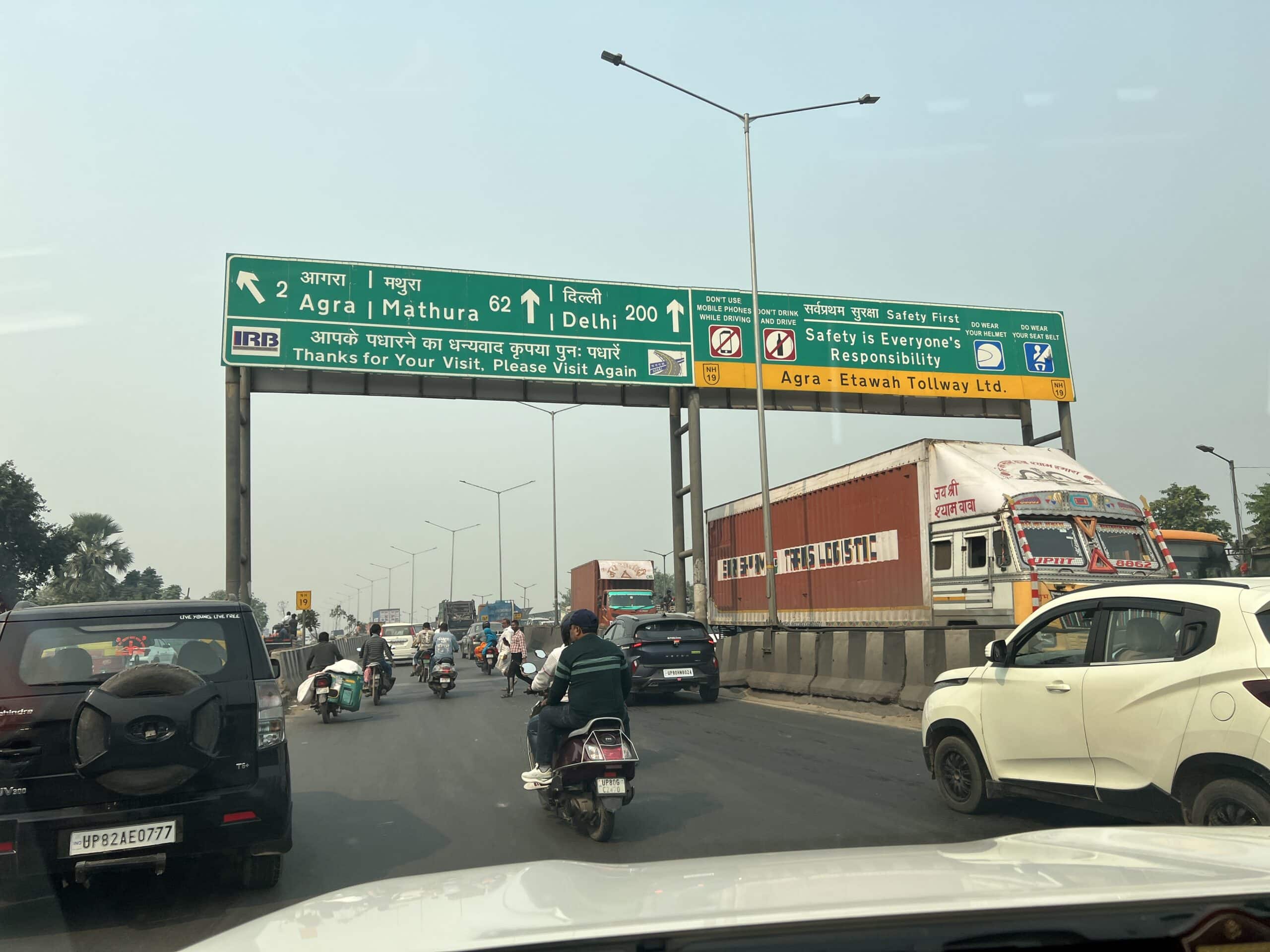
By then, we were tired, hungry, frustrated, and thoroughly ready to be out of the car.
The visit itself was worthwhile. The transportation plan, however, was not one of my finer achievements.
The lesson? Don’t assume that two roads appearing close together on a map means you can conveniently move between them. Ask your driver, hotel, or a knowledgeable local operator about the actual route before committing to the day’s schedule.
And don’t assume the fastest-looking route is the one you’ll be able to take.
I’ll never fail to consult someone about logistics like that again.
Well, maybe.
Build a route, not a collection of destinations
Once you’ve chosen the places you want to visit, look at how they connect.
This is where a good itinerary begins to take shape.
For example, if you’re planning a first visit to northern India, Delhi, Agra, and Jaipur make a logical combination. They’re relatively close by Indian standards and offer very different experiences.
But adding Varanasi, Jodhpur, Udaipur, or Ranthambore changes the equation. Not because those destinations aren’t worthwhile, but because every addition creates another transportation decision.
Sometimes a train is the answer. Sometimes a domestic flight makes more sense. And sometimes a private driver allows you to stop at interesting places along the way that you’d otherwise miss.
The important thing is to understand what each connection actually involves.
A four-hour drive isn’t necessarily four hours out of your day. There’s checking out, loading luggage, navigating city traffic, stopping for lunch, arriving at the next hotel, and settling in.
Before you know it, much of the day is gone.
That’s not necessarily a problem. I’ve had wonderful days traveling between destinations. Roadside restaurants, unexpected markets, small towns, and conversations along the way can be part of the experience.
But there’s a difference between enjoying the journey and spending half your vacation trying to get somewhere else.
Make the transportation part of your plan, not an afterthought.
Not every destination needs the same amount of time
One of the more peculiar pieces of travel advice I’ve encountered is the suggestion that you should spend several nights in every destination or you’re somehow traveling incorrectly.
I don’t agree.
Some places deserve three or four nights. Others might be perfectly satisfying with one.
The question isn’t how many nights a travel expert says you should spend somewhere. It’s what you want to experience while you’re there.
If you’re visiting Jaipur, for example, you might want time for the historic sights, shopping, local crafts, restaurants, and simply enjoying the city. Three nights could make perfect sense.
But another destination might be a convenient overnight stop with one particular attraction you’ve been wanting to see.
There’s nothing wrong with that.
What I try to avoid is creating an itinerary where every day feels exactly like the previous one.
India has extraordinary forts, temples, palaces, and monuments. But after several consecutive days of sightseeing, even remarkable architecture can begin to blur together.
Mix things up.
Visit a market. Take a cooking class. Explore a neighborhood on foot. Spend an afternoon discovering local crafts. Sit in a café and watch the world go by.
One of my favorite things about India is how much there is to experience between the famous attractions.
You don’t need to fill every hour to have a full day.
Book the essentials. Leave room for everything else.
My approach to planning India has changed over the years.
When I was younger, I was perfectly comfortable arriving in a city without a hotel reservation, walking into a few properties, asking to see the rooms, and deciding where to spend the night.
I found some extraordinary accommodations that way, from unexpectedly affordable five-star hotels to modest family-run guesthouses where the rooms were spotless and the home cooking was worth returning for.
Some of those smaller properties were particularly memorable. Family members preparing fresh local dishes in the kitchen, wonderful hospitality, and the kind of personal attention that can be difficult to replicate in a larger hotel.
These days, I’m a little less spontaneous about where I’m going to rest my head.
It’s not necessarily that I need more luxury. I’ve simply become more particular about where I want to stay.
Maybe I’ve read about a remarkable heritage hotel, seen a property featured in a travel magazine, or stumbled across an Instagram reel that made me think, I have to stay there.
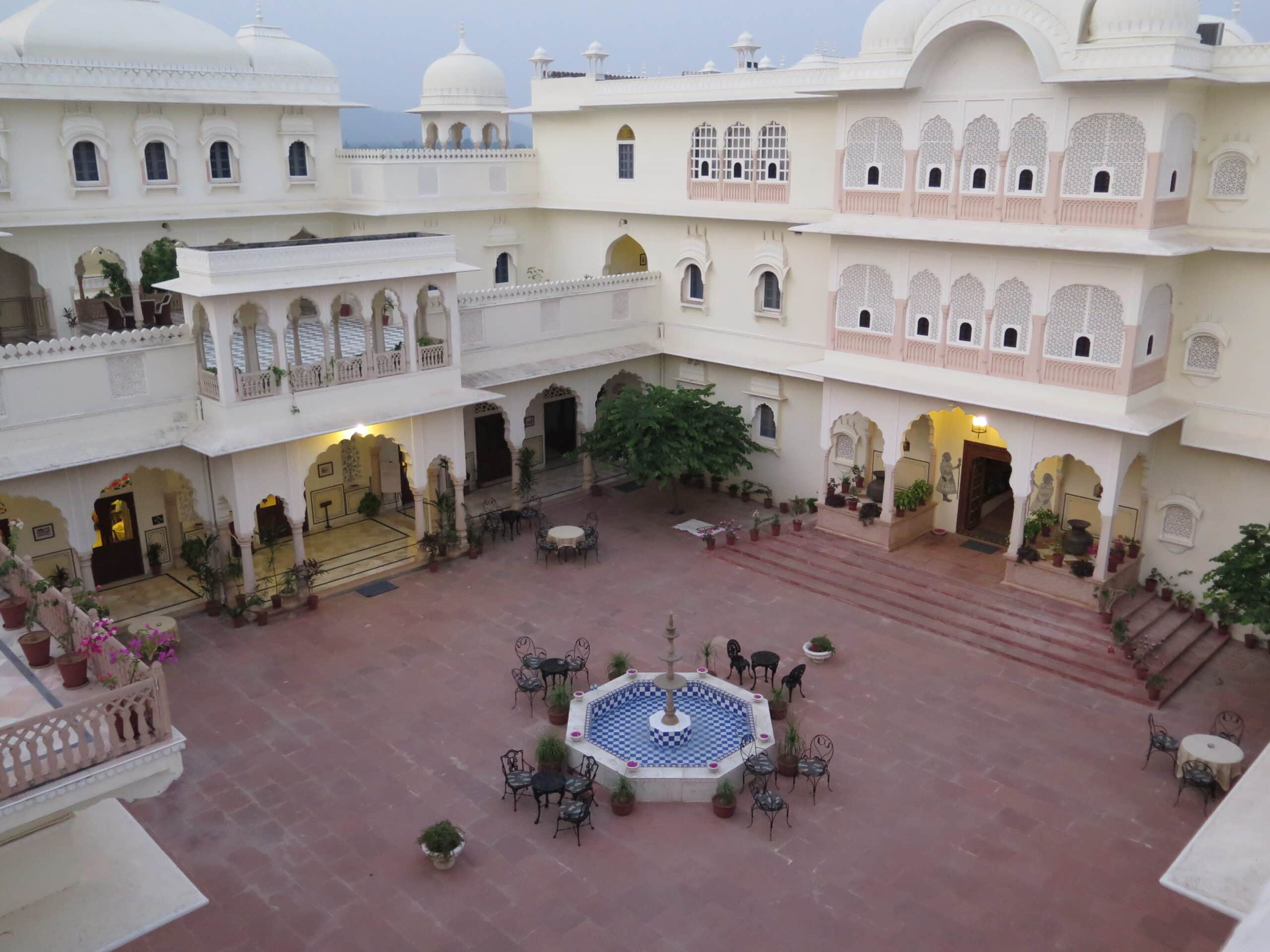
When I find a property that excites me, I book it.
I’m not interested in arriving only to discover that the place I’ve been looking forward to is full.
But the rest of the day? That’s another story.
I might have a rough list of things I want to see, neighborhoods to explore, or restaurants I’d like to try. Unless something requires advance reservations, I’m generally happy to see how the day unfolds.
I’ve had some wonderful meals in Mumbai simply by taking a seat at the bar of a restaurant where getting a table seemed impossible.
Frankly, I often prefer the bar anyway.
There’s something about sitting there, watching the room, chatting with the staff, and seeing what comes out of the kitchen.
Of course, certain experiences require advance planning. A visit to Wildlife SOS, for example, needs to be arranged beforehand. And if there’s an exceptional restaurant with a kitchen I’ve been dreaming about, I’ll make the reservation.
But I don’t need every lunch, dinner, or afternoon accounted for.
I’ve come to believe that a little advance planning doesn’t diminish spontaneity.
Quite the opposite.
Taking care of the essentials gives me the freedom to enjoy everything else.
When it comes to trains, I’m not leaving things to chance
Train travel deserves its own discussion because, for me, it’s one of the great pleasures of traveling through India.
But I’m particular about how I do it.
When I’m planning a rail journey, I book as soon as reservations become available. Indian Railways generally opens reservations 60 days in advance for most trains, excluding the journey date, although some services have different rules.
I want my preferred accommodation, particularly an air-conditioned sleeper berth, and I’m not interested in leaving that to chance.
I’m also not the traveler sitting upright for hours reading a book and staring thoughtfully out the window.
I’m the one stretched out on the berth, gently rocked to sleep within minutes of leaving the station.
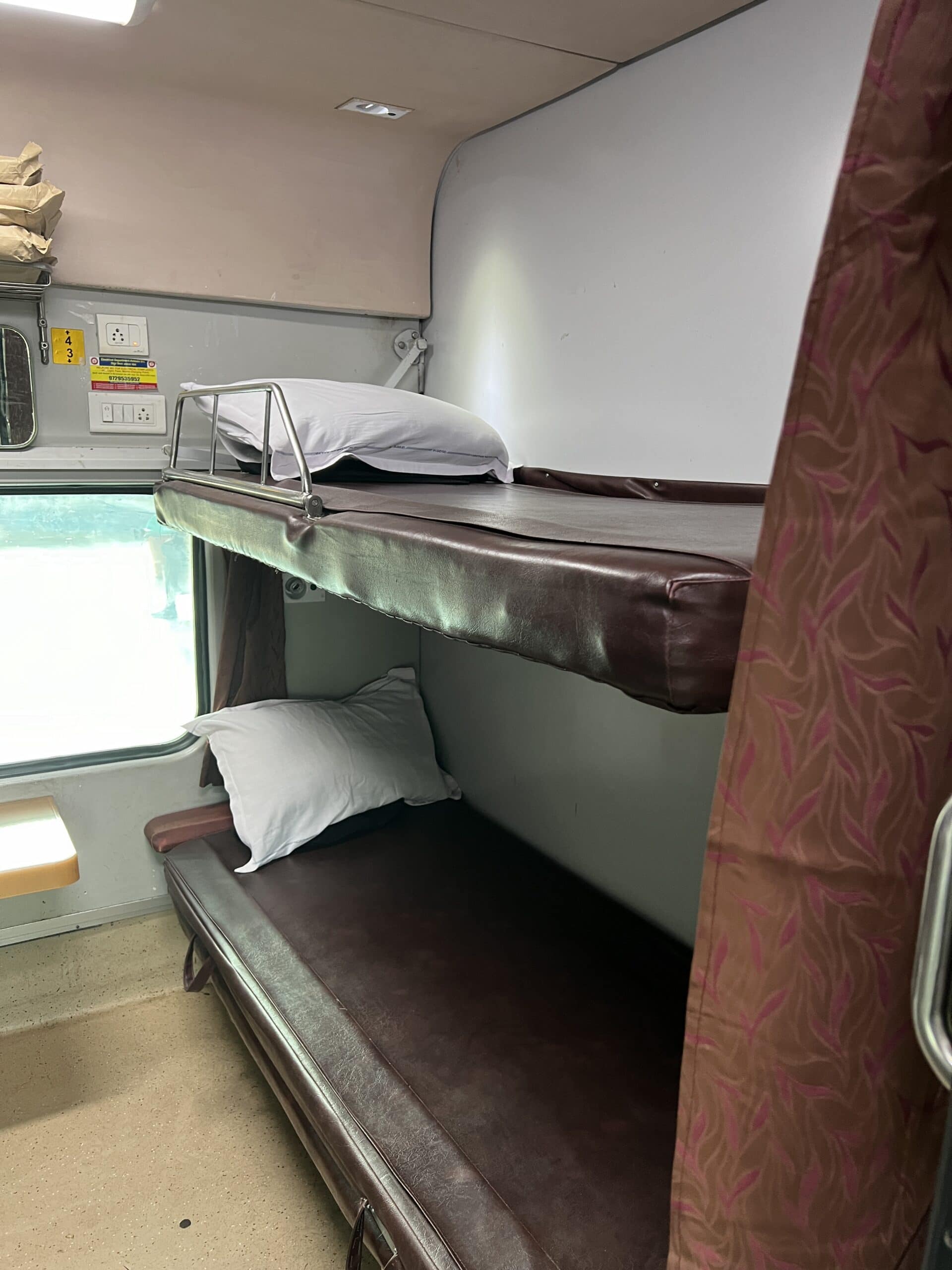
That’s part of the pleasure of traveling by train in India, and I intend to enjoy it.
I also arrange for someone to meet me when I arrive.
I travel much lighter than I did on my first nine or ten trips, but there’s still something wonderful about stepping off a train and knowing that a car is waiting.
Could I negotiate with an autorickshaw driver or arrange a ride through an app? Absolutely.
But after a long journey, why would I want to?
Time is valuable, particularly when you’ve traveled halfway around the world to be somewhere.
And I’d rather spend that time exploring India than sorting out transportation with my luggage in tow.
Know what needs a reservation—and what doesn’t
Not every experience in India requires an advance booking, but some absolutely do.
If you’re hoping to visit a wildlife sanctuary, take a particular guided tour, attend a special event, or dine at a highly sought-after restaurant, find out what the booking requirements are before you arrive.
The same applies to popular train routes and accommodations during major holidays and festivals.
On the other hand, there’s no need to schedule every restaurant meal, market visit, or neighborhood walk.
I like having a short list of possibilities for each destination. A few things I’m particularly interested in seeing, perhaps a restaurant recommendation or two, and enough information to know roughly where everything is located.
Then I see what happens.
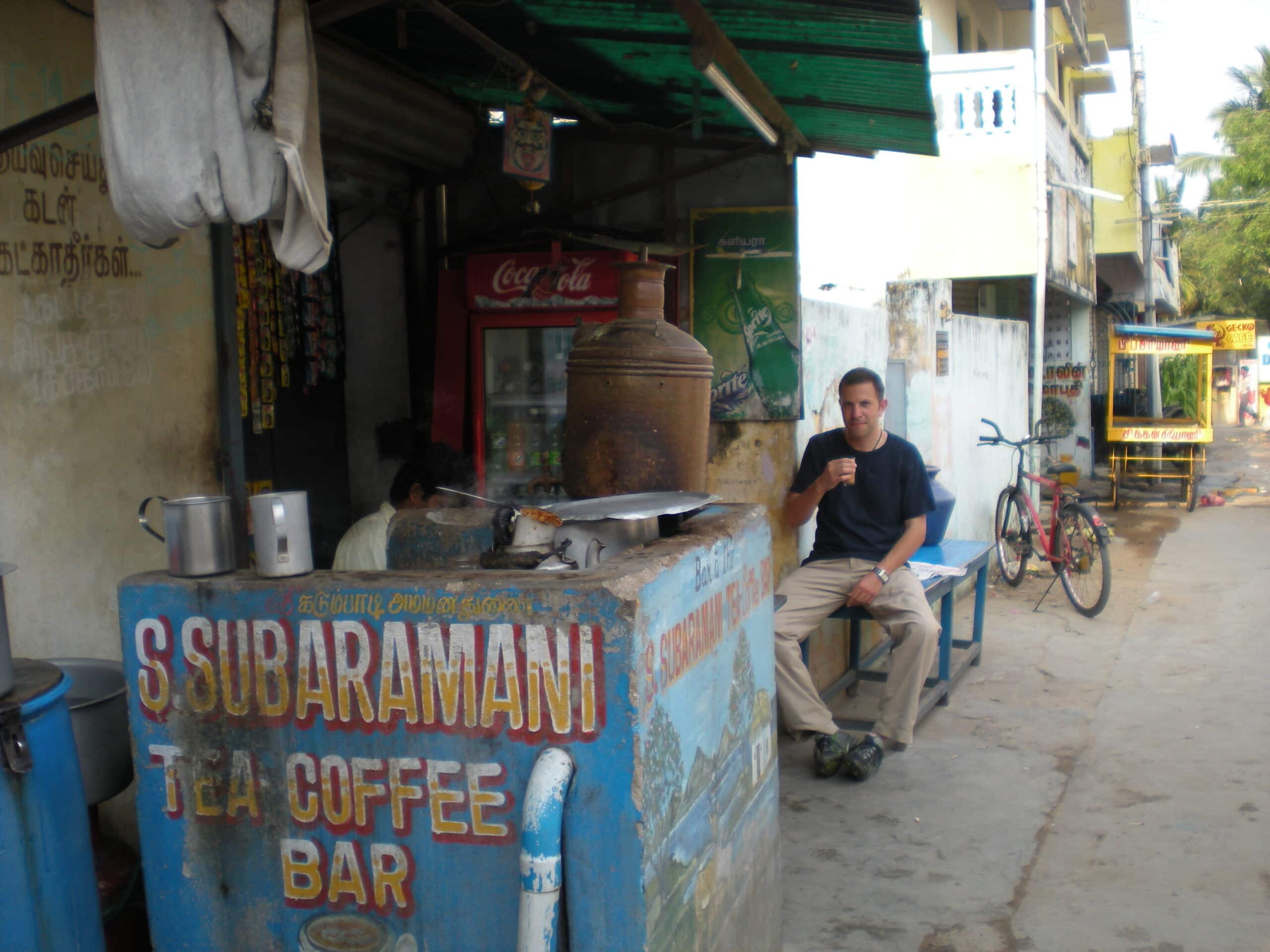
Sometimes I accomplish everything on the list.
Sometimes I find something more interesting along the way and forget about the list entirely.
Both outcomes are perfectly acceptable.
Don’t mistake inconvenience for adventure
There’s a romantic notion that the best travel experiences happen when everything is unplanned.
Sometimes they do.
But not every inconvenience leads to a wonderful story.
I’ve enjoyed extraordinary stays in hotels I discovered on arrival. I’ve also learned that knowing where I’m sleeping, having my train ticket secured, and arranging transportation in advance can make a trip significantly more enjoyable.
That doesn’t make the experience less authentic.
Taking a prearranged car from a railway station doesn’t prevent me from exploring local neighborhoods, meeting people, eating regional food, or discovering something unexpected.
It simply removes one logistical task from my day.
The trick is knowing which parts of a trip you want to control and which parts you’re comfortable leaving open.
And those preferences can change over time.
Mine certainly have.
Before you finalize your itinerary, ask yourself a few questions
Once you’ve sketched out a route, look at it again with a critical eye.
- Are the destinations connected logically, or are you zigzagging across the country unnecessarily?
- Have you accounted for the actual time required to travel between places, not just the distance?
- Are there experiences or accommodations that require reservations?
- Does each destination offer something different, or are you repeating the same type of sightseeing?
- Have you allowed enough time to enjoy the places you’re visiting?
- And perhaps most importantly, does this itinerary genuinely excite you?
If the answer to that last question is no, something needs to change.
You may find it useful to begin with my guide to how many days you really need in India and my article on when to visit India. Both decisions can shape the itinerary before you’ve booked a single hotel.
An itinerary is a framework, not a contract
After more than two decades of traveling through India, I still have a long list of places I want to see.
Kolkata is calling. Karnataka deserves a proper exploration. Hyderabad is waiting. And I have no doubt that somewhere along the way, another place I hadn’t considered will find its way onto the list.
That’s part of what keeps bringing me back.
I don’t believe there’s a perfect India itinerary. There’s only the itinerary that works for you, your interests, your available time, and your willingness to embrace the unexpected.
Start with somewhere that excites you. Understand the geography. Make the reservations that matter. And leave yourself enough freedom to change your mind.
Because sometimes the most memorable part of an India journey is the one you never thought to put on the itinerary.

 How to Prepare for Culture Shock in India
 Which Airport Should You Fly Into in India?
 Where to Stay in India: Finding Hotels, Guesthouses & Hidden Gems