
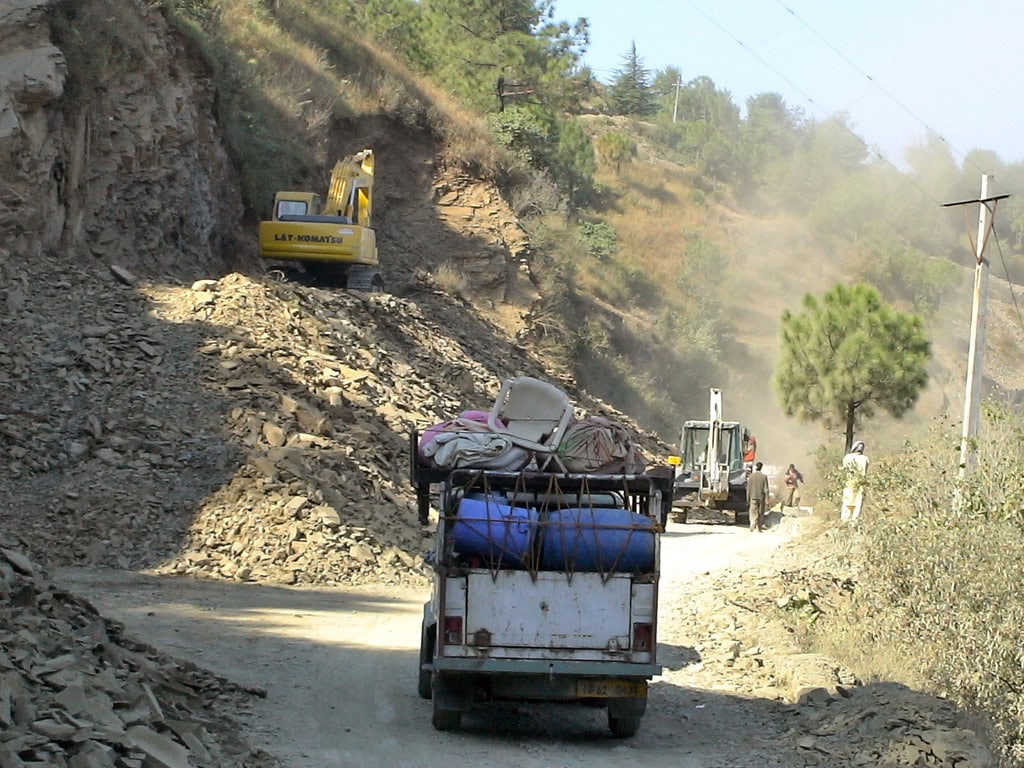
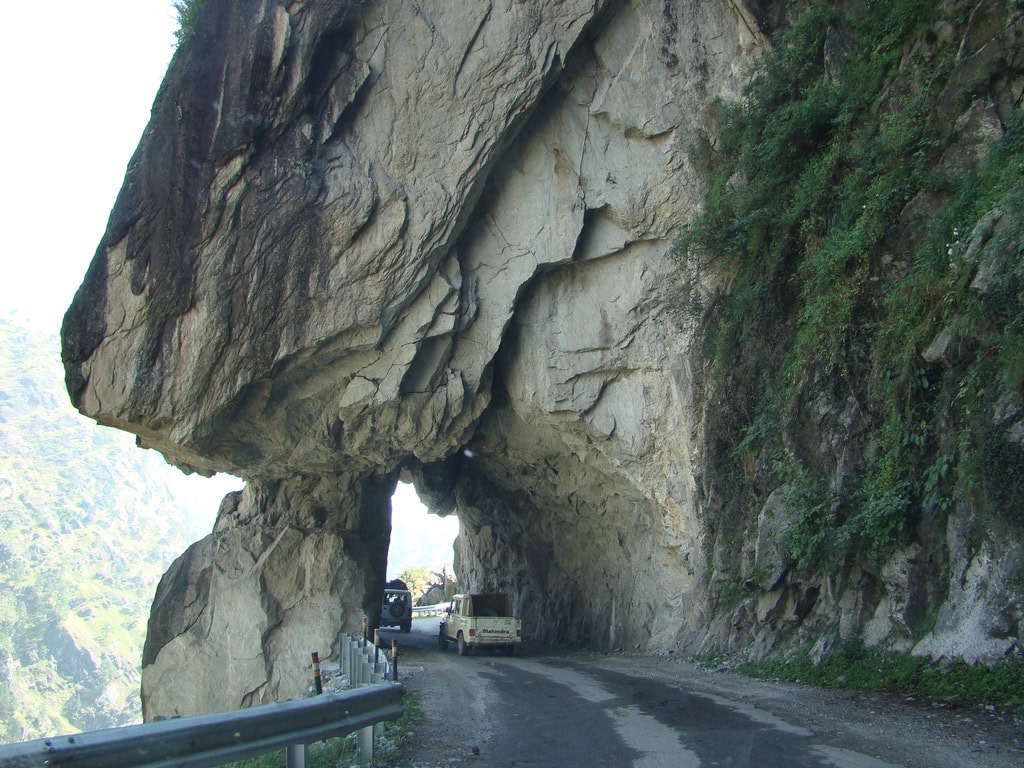
Some of the most spectacular roads I’ve traveled in India have been in the mountains. Narrow stretches cut into hillsides, hairpin turns, steep drops, and views that make you wonder how anyone managed to build a road there in the first place.
Then there’s the traffic. Trucks loaded well beyond what looks reasonable, buses negotiating bends with inches to spare, and the occasional herd of goats that has absolutely no intention of moving for anyone.
And sometimes, the road simply disappears.
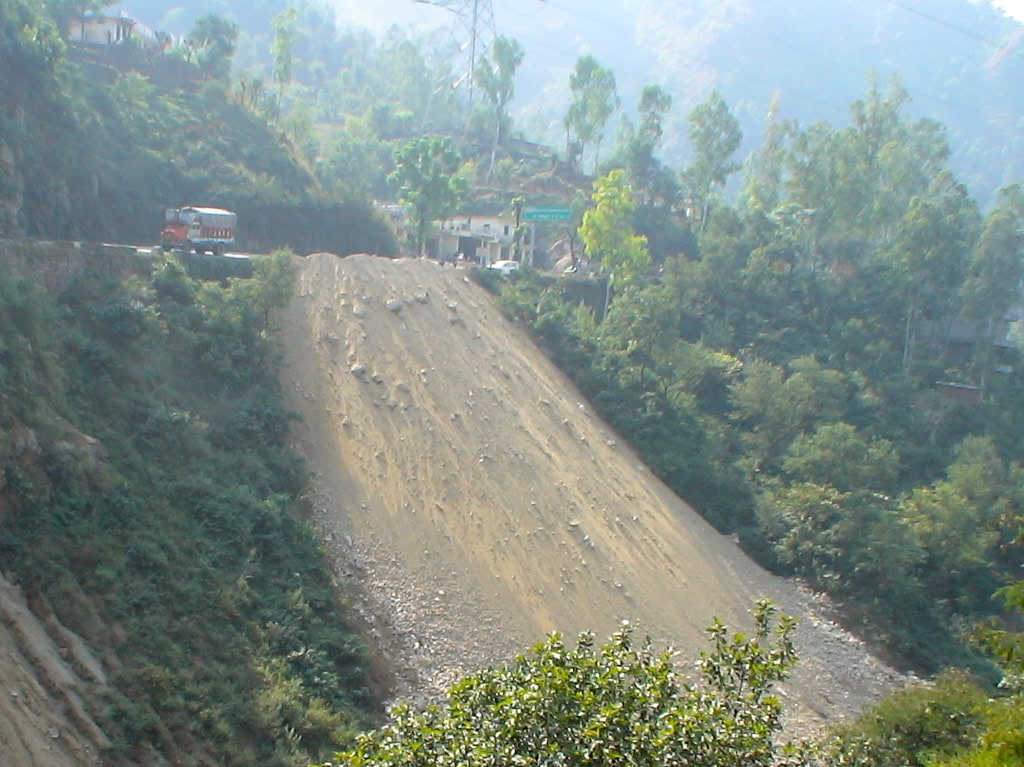
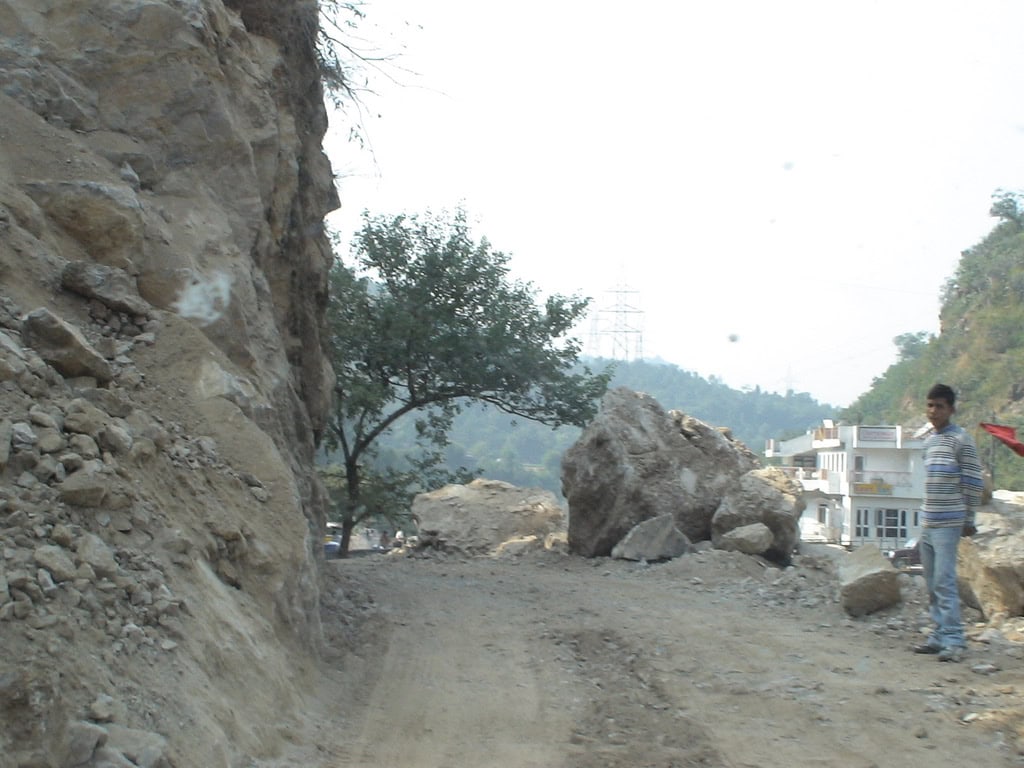
During my travels through Himachal Pradesh in 2009, I photographed the aftermath of landslides along mountain roads: a huge scar across a hillside, boulders obstructing a roadway, and machinery clearing debris as vehicles waited nearby. I didn’t see the hillside collapse. I saw what was left behind.
For a traveler, a landslide can mean sitting in traffic for hours or abandoning the day’s plans. For the people who live along these roads, it’s a much bigger problem.
When the Mountain Comes Down
India’s monsoon is essential to the country, but it can be brutal on mountain roads. Prolonged rainfall saturates the ground, water works its way into cracks and unstable slopes, and eventually something gives.
The Himalayas are geologically young mountains. Steep terrain, erosion, and unstable rock make building and maintaining roads especially difficult. Cutting farther into a hillside to widen a road, poor drainage, and removing vegetation can add to the risk.
Sometimes it’s a small rockfall. Other times, tons of mud, trees, and boulders bury the road—or take part of it down the mountainside.
The Monsoon Is Over. So Why Is the Road Still Closed?
Here’s something to remember if you’re visiting the mountains in September or October: the end of the rain doesn’t mean the damage has been repaired.
Slopes can remain unstable. Retaining walls and drainage systems may be damaged. And heavy equipment has to reach the affected stretch—sometimes along the very road that needs repairing. When several routes are blocked, crews and machinery are stretched thin.
One road may reopen in hours; another may remain closed for days. Even afterward, repairs can continue for weeks or months. Rockfalls and other slope failures can happen outside the monsoon, too.
The Road Is Open. Technically.
In India, road open can mean several things. Traffic may be alternating through a single cleared lane. There might be a rough diversion, or vehicles may be allowed through only during certain hours while work continues.
Expect trucks. Lots of trucks. And queues that don’t necessarily move just because somebody has started honking.
Sometimes the alternative route adds hours of driving. Sometimes there isn’t one. And a road that reopened this morning can close again if rain returns or the slope moves.
For the Villages Along the Road, It’s Another Story
This is the part travelers sometimes overlook. For us, a landslide might mean a missed hotel reservation or one less afternoon of sightseeing. For a village dependent on that road, the consequences can be considerably more serious.
Mountain roads connect smaller communities with schools, hospitals, markets, and larger towns. They carry food, fuel, medicines, building materials, and farm produce. When the only practical road closes, a shop may run short of supplies, a farmer may miss a market, and a family may struggle to reach medical care.
Tourism businesses feel it too: fewer guests, cancelled trips, and lost work for drivers, guides, and restaurants.
The road that takes you to a beautiful hotel overlooking a valley may also be the road that brings groceries to the people working there. It’s worth remembering when you’re irritated about spending half a day in traffic.
Where Landslides Affect Travel
The Himalayas are the obvious starting point. Himachal Pradesh, Uttarakhand, Jammu & Kashmir, Ladakh, Sikkim, and parts of Northeast India have mountain routes exposed to landslides, rockfalls, and washouts. In the Western Ghats, roads through parts of Maharashtra, Goa, Karnataka, Kerala, and Tamil Nadu can also be affected by heavy monsoon rain.
That’s not a reason to skip these places. Just don’t assume that because a map says the drive takes four hours, you’ll arrive in four hours.
Your Driver Probably Knows Something You Don’t
Experienced local drivers often hear about closures from other drivers, truck operators, hotels, and roadside businesses. That informal network can be useful long before you reach a queue of stopped vehicles.
It doesn’t replace official instructions, and not every rumor is accurate. But I’d rather have a driver tell me we’re turning around than one who insists he can get through because somebody else apparently managed it.
When the Road Is Closed, It’s Closed
Don’t pressure your driver to pass a barrier or follow vehicles into an unstable area. A slope that has already collapsed can release more debris, and the ground beneath a damaged road may be unsafe.
Don’t get out to walk across an active or recently affected landslide unless emergency personnel direct you along a safe route. Avoid standing below exposed slopes, and don’t stop in a dangerous spot to take photographs.
Follow police and road-crew instructions. If they say wait, wait. If they say turn around, turn around. For emergencies in India, dial 112.
How Do You Know If the Road Is Open?
There isn’t one dependable website tracking every landslide and closure across India. For forecasts and heavy-rain warnings, consult the India Meteorological Department. For national highways, check the National Highways Authority of India or the relevant road operator. State police and district administrations may publish local closure notices.
Also ask your hotel and driver whether anyone has traveled the route recently. Check again before departure. Yesterday’s conditions may mean very little today.
Leave a Little Room in Your Plans
I’m not suggesting you plan every mountain journey around the possibility of a landslide. Most trips won’t involve one.
But I wouldn’t schedule an international flight immediately after a long drive out of the mountains, or insist on driving an unfamiliar mountain road at night in heavy rain just because I’ve already paid for a hotel.
Sometimes the sensible choice is to wait or change plans. A landslide is inconvenient. Being stranded somewhere unsafe because you refused to change your itinerary is considerably worse.
From the Full Stop India archives: Originally published October 23, 2010. Substantially revised November 2026, with original photographs taken in Himachal Pradesh in 2009.

 Planning Your Return: India Is Never Quite the Same Twice
 Bringing India Home: The Things We Carry Back
 10 Annoying Things About India and Indians