

I’ve traveled through India in almost every way I can think of: five-star hotels, tiny homestays, private cars, trains, Airbnbs and auto-rickshaws. The surprising thing? The amount I’ve spent has rarely determined how much I’ve enjoyed the trip.
“How much does a trip to India cost?” sounds like a straightforward question. It isn’t. India can be remarkably affordable, gloriously indulgent, or anything in between—sometimes all in the same week. What matters is deciding where comfort is worth paying for and where a little flexibility can lead to something better.
I’ve traveled India at almost every price point
My first visit in 2005 was a five-star affair. In 2006, I mixed two-star homestays and three-star hotels with a private car and driver. By 2008 I was traveling on a modest two-star budget; in 2009, it was one-star hotels, homestays and a car with driver. In 2010 I returned largely to homestays, with a few three-star hotels mixed in.
Then came the swings in the other direction: four- and five-star hotels with a car and driver in 2012; a mixture of five-star and two-star stays in 2013. In 2024, one trip relied on an Airbnb, tuk-tuks and the metro. Another combined trains for the first half with a car and driver for the second, and a mix of Airbnbs and four- and five-star hotels. In 2025, I traveled mostly in three-star hotels with a car and driver.
I share that history because there is no single “right” way to see India. Some of my least expensive homestays were among the best places I’ve ever stayed. Meals were often included, and breaking bread with the owners meant stories, local knowledge and recommendations that no booking site could have supplied. I’ve also thoroughly enjoyed my Airbnbs, and I want to stay in more of them on future trips.
What should you budget?
For more practical planning, see my guide to finding places to stay in India.
Rather than pretend there’s one magic daily number, I think of India travel in three broad styles. These are planning categories, not guaranteed 2026 or 2027 prices: season, city, room sharing, train class and the distance between stops can change the cost substantially.
| Travel style | What it might look like |
|---|---|
| Strict budget | Hostels or simple guesthouses, buses and metro, shared or inexpensive transport, local cafés and thalis. |
| Comfortable independent | Good homestays, Airbnbs and three-star hotels, a mix of trains, tuk-tuks and occasional private drivers. |
| Higher comfort | Boutique or luxury hotels, private cars and drivers, more guided experiences and restaurant splurges. |
India absolutely can be done on a strict budget. A hostel bed, a bus ticket, the Delhi Metro, an auto-rickshaw and a meal at an affordable café can stretch your money remarkably far. But budget travel isn’t automatically the most meaningful kind, just as luxury isn’t automatically the most rewarding. I tend to choose a little of both.
Where you stay: from homestays to beautiful hotels
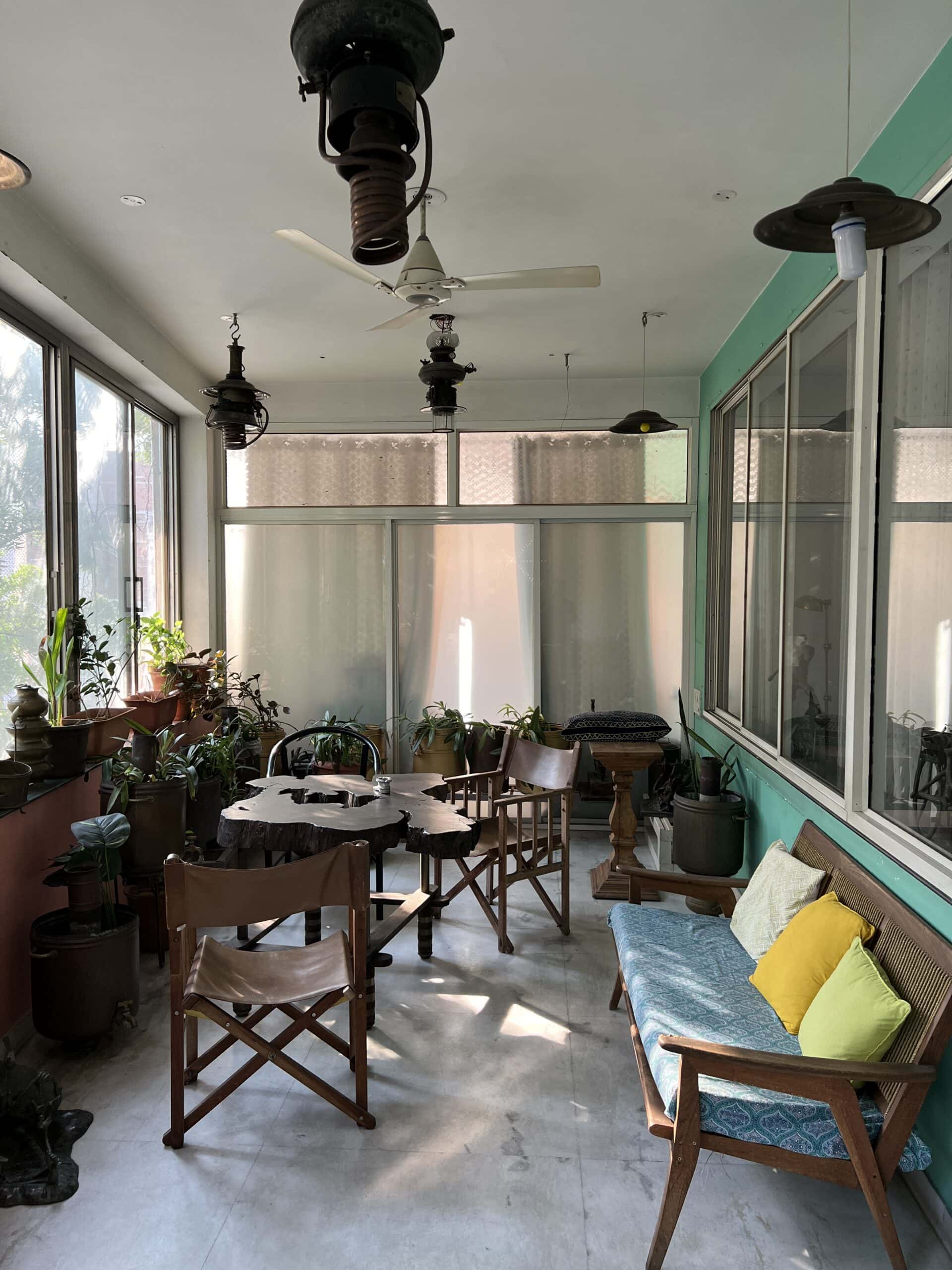
Accommodation is one of the biggest levers in a travel budget. I’ve slept in basic rooms where the welcome was extraordinary, and I’ve stayed in expensive hotels where the room itself was an experience. Price and pleasure don’t always rise together.
The homestays I remember most fondly often came with conversation over meals. The owners would tell me something about the neighborhood or point me toward a place I would never have found on my own. Airbnbs offer another pleasure: a kitchen, a living room, and the feeling that for a few days you’re inhabiting a city instead of merely passing through it.
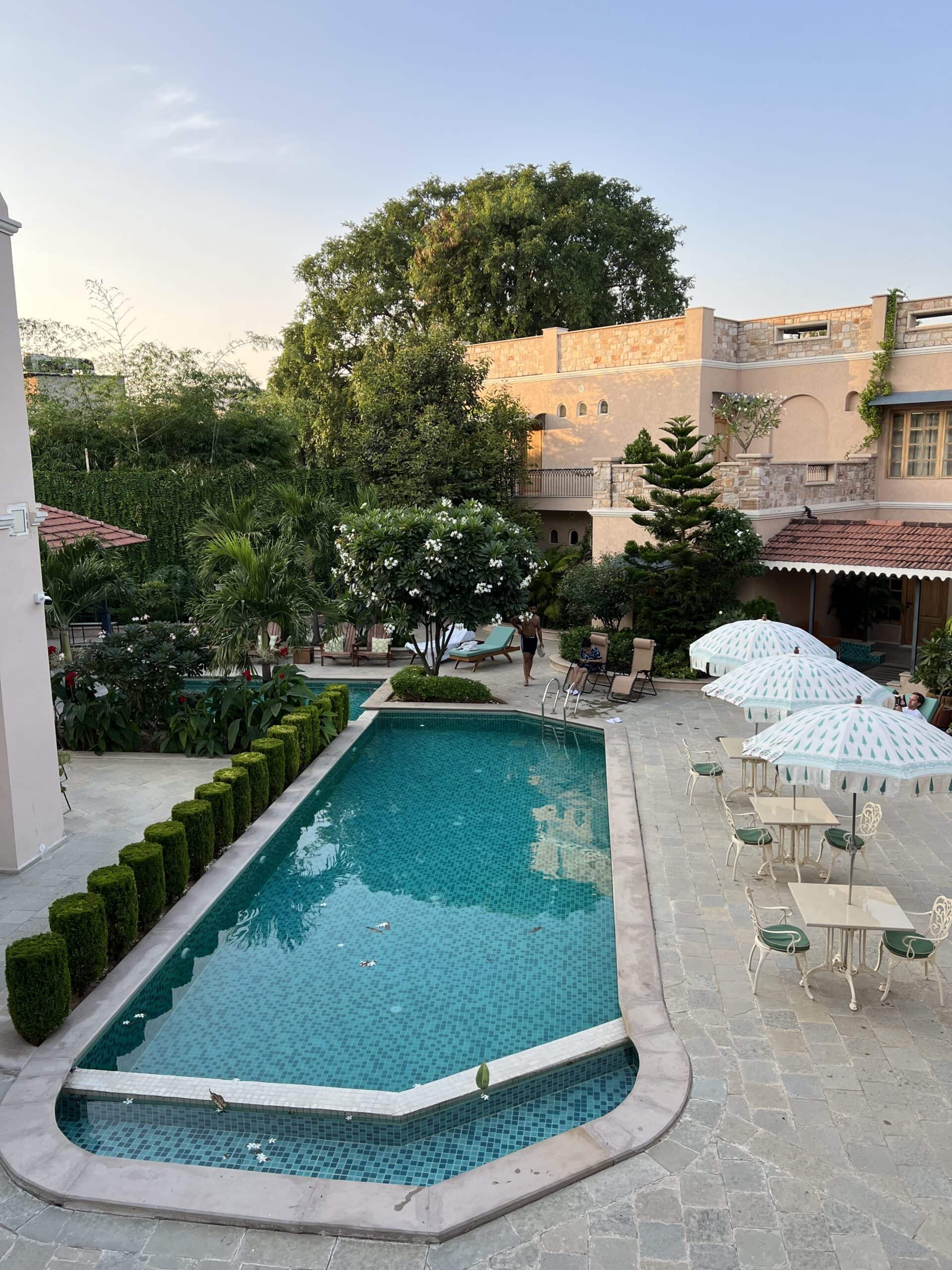
And then there are times when I happily pay for a lovely hotel. A peaceful courtyard or a pool after a long day can be worth the premium—especially when I’m moving between cities and need a genuine pause.
Getting around: trains, tuk-tuks and private drivers
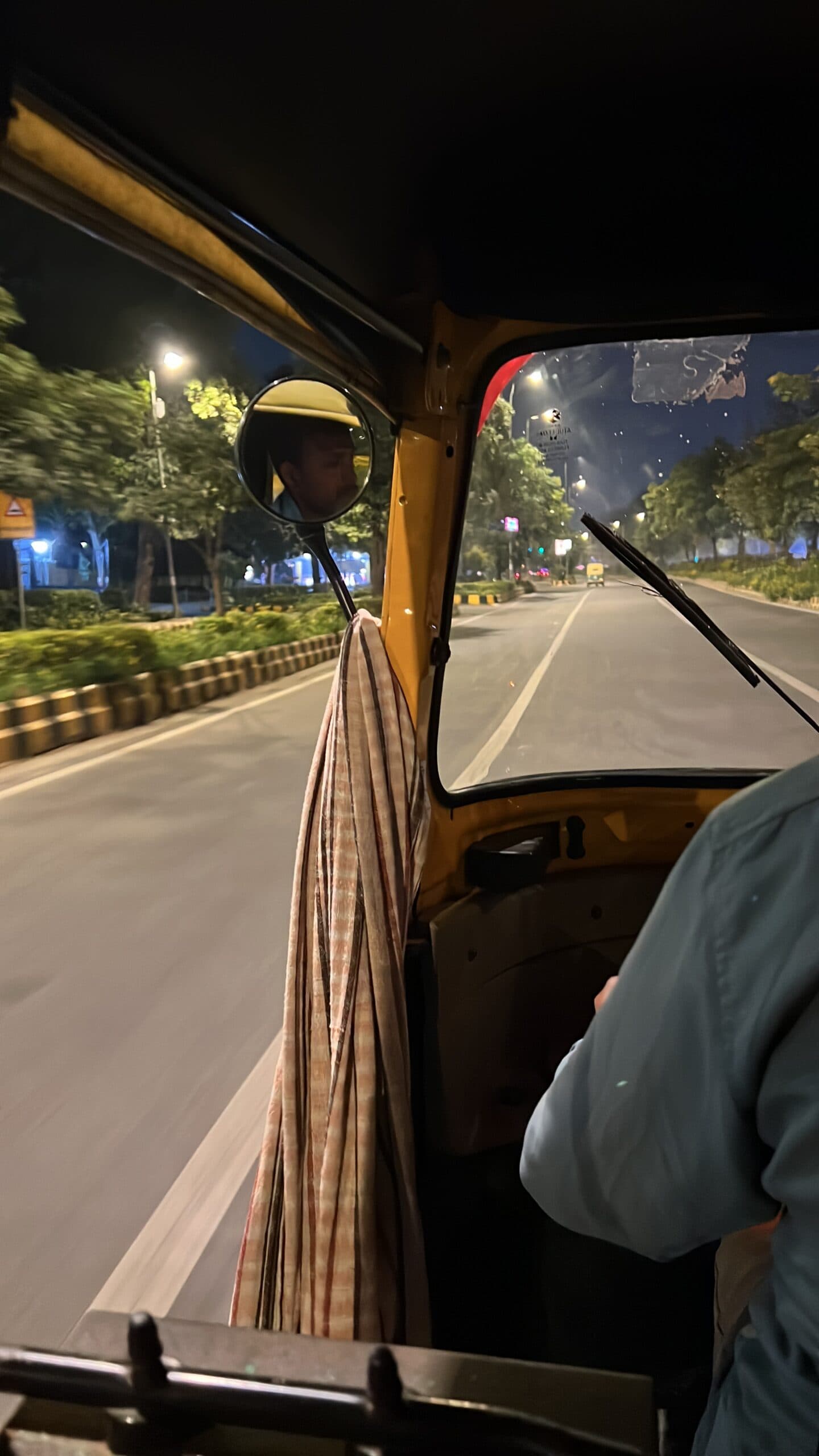
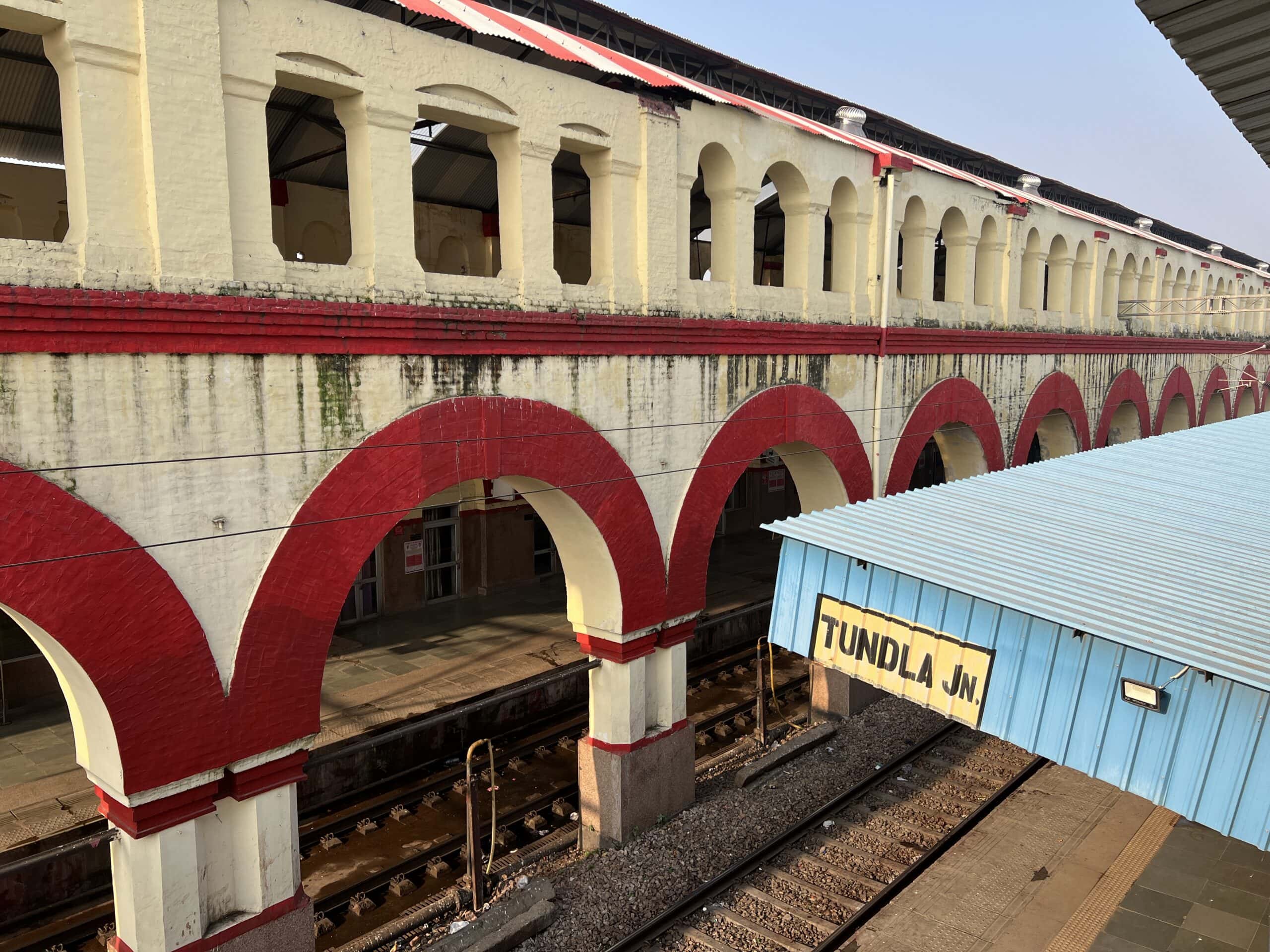
Transportation is where your itinerary can make or break the budget. Moving every day costs money, but it also costs time and energy. Trains can be an economical way to cover substantial distances. Metros and tuk-tuks make city travel accessible. A private car and driver can be worthwhile when you’re visiting several places not conveniently linked by rail—or when you want the freedom to stop along the way.
I’ve done all of it. On one of my 2024 trips I traveled by train for the first half and by private car and driver for the second. Neither was inherently better. Each suited a different part of the journey.
What eating in India really costs
One of the pleasures of traveling through India is discovering just how well you can eat without spending much money. During my travels, I stopped at a modest restaurant in Ahmedabad and enjoyed a generous vegetarian thali for less than ₹200. Chapatis, dal, vegetables, curd and accompaniments arrived together on a stainless-steel tray.
It wasn’t an elaborate dining experience. It didn’t need to be. The food was satisfying, the price was remarkable, and it was exactly the sort of everyday meal I enjoy finding when I travel. I’ve enjoyed expensive meals in India too, but spending ten times as much doesn’t necessarily mean eating ten times as well.
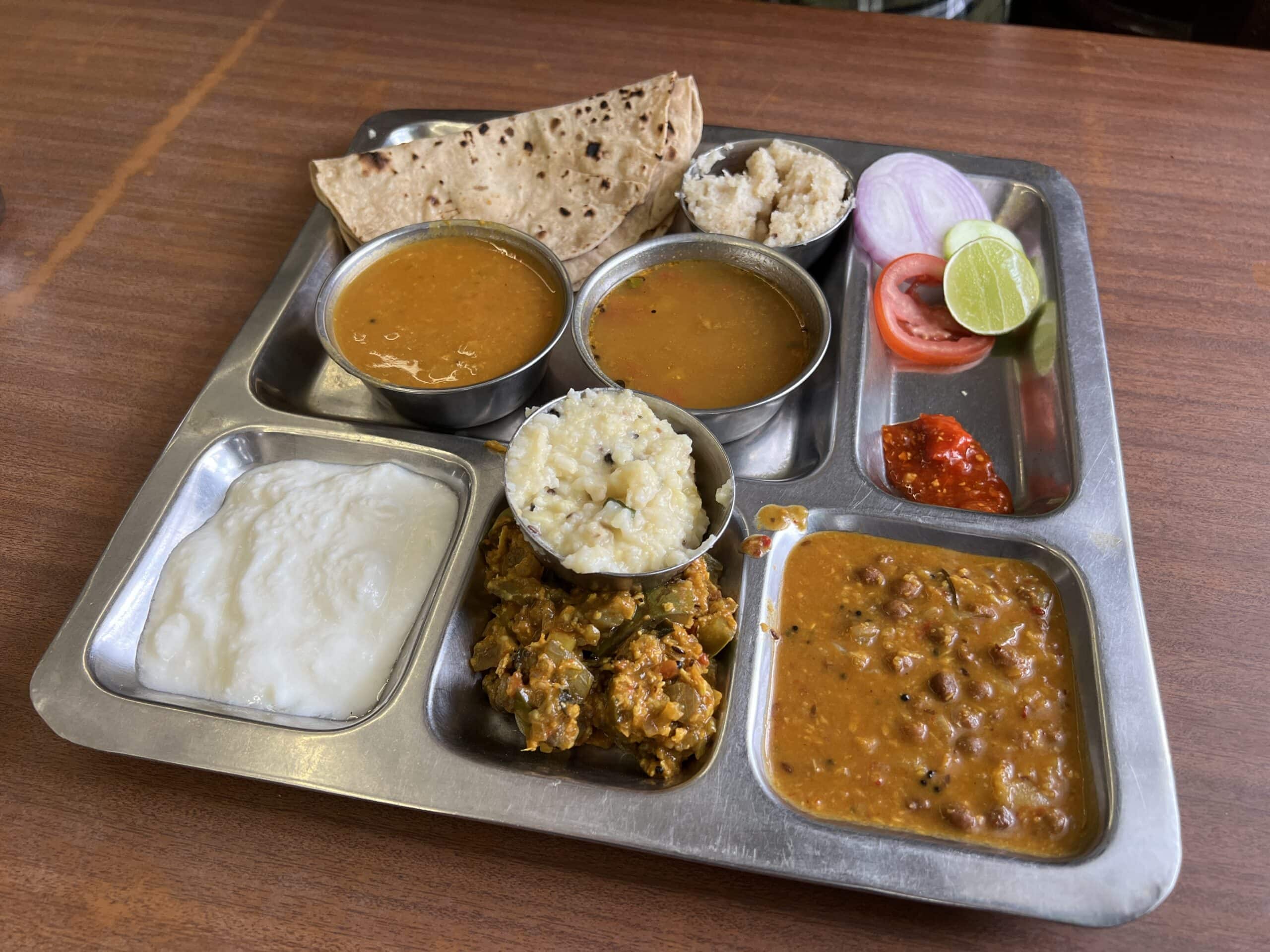
At the other end of the spectrum, there’s pleasure in finding a comfortable café, ordering coffee and doing absolutely nothing for a while. A good trip should leave room for both.
A real example: my 2025 trip
For something more concrete, here are a few numbers from my own 2025 travels. These aren’t a complete trip budget, and they shouldn’t be mistaken for a quote for someone else’s holiday. They’re actual examples of how costs were distributed.
| Expense | What I paid or recorded |
|---|---|
| Indian travel-company arrangements | ₹497,259 for services arranged for four travelers, including cars and drivers, some hotel stays, train arrangements and a Kerala houseboat lunch. |
| International flights | $4,717.98 total for two travelers—my companion and me—flying United Airlines Premium Economy. |
| Other expenses: laundry, entrance fees, meals, tours, tips, and miscellaneous extras | ₹73,357 recorded for two other travelers. This was not a complete account of their spending. |
Hotels I booked directly
These are the amounts from my 2025 bookings, generally for two rooms because I was traveling with my brother and our companions. They are booking totals, not per-person nightly rates. I have kept the original currencies as recorded.
| Where | What was included | Booking total |
|---|---|---|
| Mumbai (Bombay) | 3 nights; breakfast included | ₹50,634 |
| Jaisalmer | 2 nights; suite overlooking the fort; breakfast included | $345.00 |
| Agra | 1 night; walking distance to the Taj Mahal; breakfast included | ₹9,388 |
| Delhi | 3 nights; homestay; breakfast included | ₹38,940 |
| Lucknow | 2 nights; ITC property; breakfast included | $255.32 |
| Goa | 3 nights; beach resort; two rooms | ₹126,501 |
| Madurai | 2 nights; heritage property with private plunge pool; breakfast included | ₹27,944 |
| Kochi | 5-star hotel with pool and breakfast | ₹39,141 |
| Thekkady | 2 nights; 5-star garden resort with pool and breakfast | ₹38,036 |
Domestic flights
Each of these IndiGo fares was for two tickets, not four, and is shown in US dollars as booked.
| Route | Cost for two tickets |
|---|---|
| Mumbai–Jaisalmer | $161.28 |
| Dehradun–Lucknow | $155.28 |
| Varanasi (Benares)–Goa | $290.46 |
| Goa–Madurai | $270.46 |
| Kochi–Delhi | $289.92 |
These direct bookings were separate from the travel company’s arrangements. I wouldn’t add all of these figures together as though they were a tidy, all-inclusive package: some expenses were shared across four travelers, others covered two, and the records aren’t a complete account of every purchase.
Those figures need a little context. The travel-company total was shared across four people and covered specific booked services, not every expense of the trip. I booked other hotels directly—generally two rooms, because I was traveling with my brother’s party—and some domestic flights separately. Some hotel charges were in rupees and others in US dollars. I wouldn’t convert them all into one neat total without first reconciling the bookings and payments.
In my journal and records, one reimbursement worksheet for two travelers recorded ₹73,357 in its main expense column—approximately $843 at the exchange rate used in that worksheet. It included sightseeing, meals, guides, tips, laundry and other purchases. It was not a complete record of their spending, and it was money they reimbursed me for, not an additional personal travel cost of mine.
There’s a lesson in those untidy numbers. A realistic India budget has layers: the international flight, accommodation, long-distance transport, local rides, meals, sightseeing, guides, tips, shopping and all the little things you never think to put in a spreadsheet. You need to know what’s included before comparing two trips that look similar on paper.
Where I would save—and where I’d spend
I’d happily save on an ordinary lunch, take the metro across Delhi, or choose a modest homestay with welcoming hosts. I would spend more for a well-located hotel when arriving exhausted, a good driver on a complicated road itinerary, or an experience that matters to me. I’d also avoid changing hotels every night simply to fit in another destination. That’s an expensive way to see less.
If this is your first visit, build a budget that allows you to be comfortable without insulating yourself from the country. Some of India’s most rewarding experiences cost very little. Others are worth saving for. The trick is knowing the difference—and leaving a little money, and time, for the unexpected.
For more first-trip planning, see How Many Days Do You Really Need in India?, When Is the Best Time to Visit India? and Planning an India Itinerary.

 How to Prepare for Culture Shock in India
 Which Airport Should You Fly Into in India?
 Where to Stay in India: Finding Hotels, Guesthouses & Hidden Gems