India, Explained.
A little context for the words, objects, customs and everyday curiosities you’ll encounter along the way.
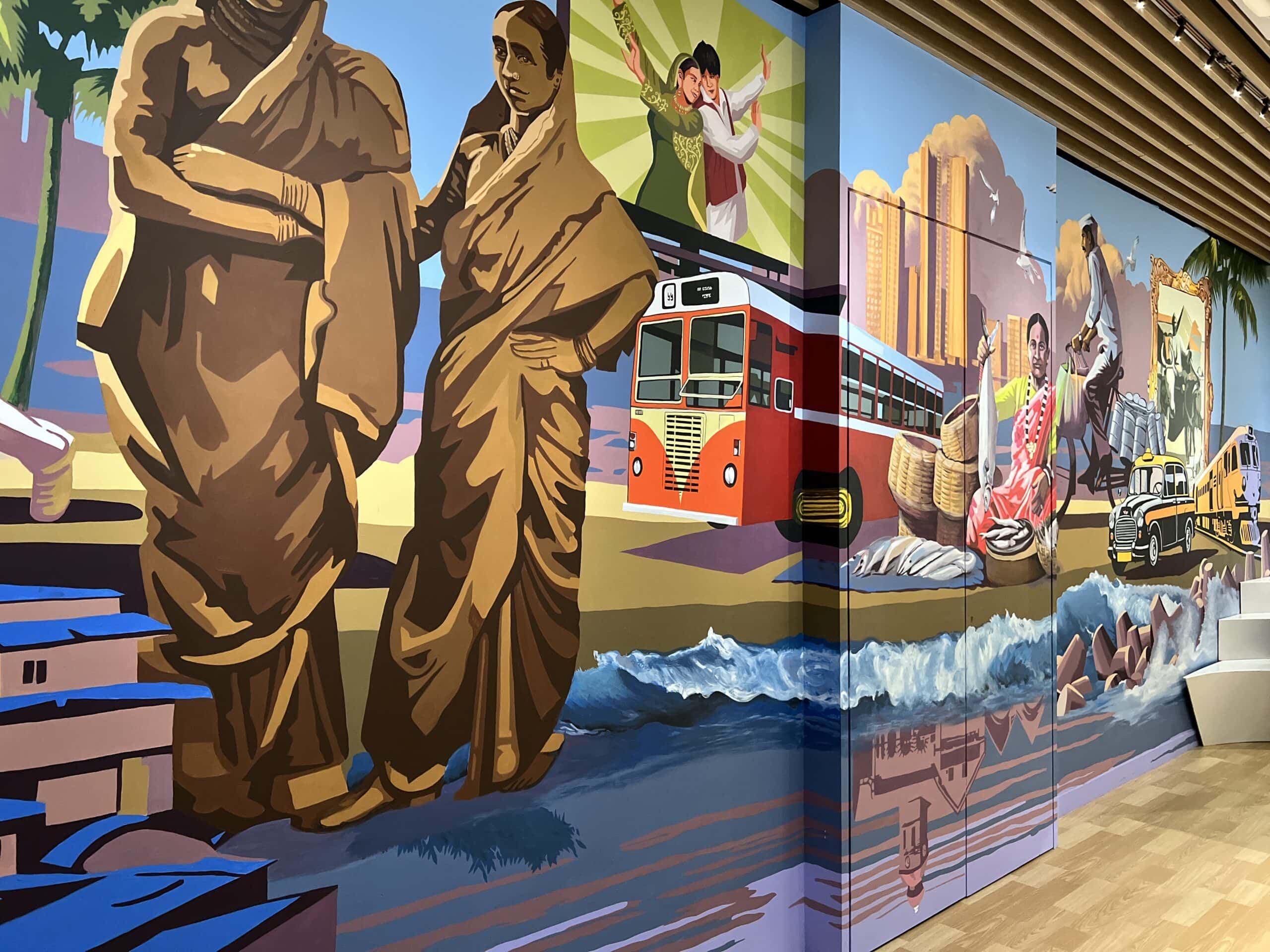
India has a way of introducing you to something unfamiliar every few minutes. An autorickshaw rattles past. Someone mentions a lakh. You spot a rangoli at a doorway or a small spice box in a kitchen. Consider this a pocket field guide to those moments—not a lesson to memorize, just a place to satisfy your curiosity.
Food & drink
23 entries
Chaat
A family of savory snacks, often combining spicy, tangy, sweet and crunchy flavors.
Dhaba
A casual roadside eatery, especially associated with hearty meals along highways. Read my guide to dhabas →.
Gulab jamun
Soft, syrup-soaked milk-based sweets, often served warm.
Masala dabba
A round, compartmented spice box used in many Indian kitchens. Read my guide to the masala dabba →.
Paan
A preparation wrapped in betel leaf, with fillings that vary; some contain areca nut or tobacco.
Betel
A climbing vine whose leaves are used to wrap paan; not the same thing as areca nut.
Tulsi
Holy basil, a plant with religious and household significance. Read my guide to tulsi →.
Chai
Tea commonly brewed with milk and sugar; masala chai adds warming spices.
Thali
A meal served as a selection of dishes, often arranged on one plate.
Dosa
A thin South Indian crepe usually made from fermented rice-and-lentil batter.
Idli
Soft steamed cakes made from fermented rice-and-lentil batter.
Sambar
A tangy lentil-and-vegetable stew popular in South India.
Roti
A simple unleavened flatbread eaten across much of India.
Naan
A leavened flatbread traditionally baked in a tandoor.
Tandoor
A cylindrical clay or metal oven used for breads and roasted foods.
Biryani
A fragrant rice dish made in many regional styles, often with meat or vegetables.
Lassi
A yogurt-based drink served sweet, salty or flavored. Read my guide to Lassi →
Lime Soda Sweet
A fizzy Indian drink made with fresh lime juice and soda water, served sweet, salted or mix. Read my guide to Lime Soda Sweet →
Jalebi
Crisp coils of fried batter soaked in syrup.
Kulfi
A dense frozen dairy dessert, traditionally made by slowly reducing milk.
Pani puri / Golgappa
Crisp hollow shells filled with spiced water and other ingredients; names and fillings vary by region.
Achar
Indian pickles, usually made with vegetables or fruit, spices and oil or brine.
Ghee
Clarified butter used in cooking and sometimes religious ceremonies.
Prasad
Food or another offering presented during worship and then shared with devotees.
Everyday India
33 entries
Ambassador (Amby)
The distinctive Hindustan Ambassador automobile, once ubiquitous as a government car and taxi.
Autorickshaw
A motorized three-wheeler for short journeys, sometimes casually called a tuk-tuk.
Baksheesh
A term that can refer to a tip, gratuity or small payment, depending on context. Read my guide to Baksheesh →
Chowk
A square, intersection or market area; its meaning varies by place.
Desi
A term for people, cultures or things connected to the Indian subcontinent; its meaning depends on context. Read my article on pronouncing desi →.
Jhula
A swing; in some Himalayan place names, a suspension bridge.
Lakh & Crore
One lakh is 100,000; one crore is 10 million. Both are part of India’s numbering system. Read my guide to Lakh & Crore →
Sagar
A word meaning sea or ocean, also found in names of lakes and reservoirs.
Hindi
One of the Union government’s official languages, widely spoken in northern and central India.
Namaste
A greeting or respectful acknowledgment, often accompanied by joined palms.
Ji
A respectful suffix attached to names and expressions.
Achha
A versatile Hindi word meaning good, okay, I see or really, depending on tone.
Jugaad
A colloquial word for inventive improvisation or a resourceful workaround.
Geyser
In India, a geyser is a water heater, often a small electric unit in a bathroom. Switch it on before you shower if the hot water isn’t already running. Read my guide to geysers →
State vs. Union Territory
India has states and union territories, which differ in their constitutional and administrative arrangements. Read my guide to states and Union Territories →
District
An administrative subdivision within a state or union territory.
Panchayat
A local self-government institution, particularly in rural areas.
Bazaar
A market, often with stalls or specialized shops.
Mandi
A marketplace, especially a wholesale or agricultural produce market.
Gali
A lane or narrow street.
Mohalla
A neighborhood or locality.
Chhota Hathi (Choti Haati)
Literally “little elephant,” a popular nickname for compact goods-carrying trucks, particularly the Tata Ace, often seen delivering everything from produce to furniture.
Indian Railways
The national railway system that connects cities, towns and regions across India.
Gobar (Cow Dung)
Gobar is Hindi for cow dung. Across India, it is shaped into cakes for cooking fuel, used as fertilizer, and put to work in ways that might surprise you. Read my article on cow dung →
Sleeper Class
Non-air-conditioned sleeping accommodation on many Indian trains.
UPI
A widely used system for instant digital payments, often through QR codes.
Aadhaar
India’s unique identification system based on demographic and biometric information.
Rupee
India’s currency, represented by the symbol ₹.
MRP
Maximum Retail Price: the tax-inclusive maximum a retailer can generally charge for a packaged product. Read my guide to MRP →.
Monsoon
Seasonal wind patterns that bring much of India’s annual rainfall.
Hill Station
A mountain town historically associated with escaping summer heat.
Indian Standard Time
India’s single time zone, UTC+5:30. Read my guide to Indian Standard Time →.
Faith & traditions
29 entries
Aarti
A Hindu devotional ritual offering light, often with a lamp, music and prayer. Read my guide to Aarti →
Darshan
The act of seeing and being seen by a deity or revered spiritual figure.
Ganesh (Ganesha)
The elephant-headed Hindu deity associated with beginnings and the removal of obstacles.
Gopuram
An ornate monumental gateway tower at many South Indian Hindu temples. Read my guide to gopurams →
Hanuman
The Hindu deity celebrated for devotion, strength and courage.
Rangoli
Decorative patterns made on the ground, especially around festivals and celebrations. Read my guide to rangoli →
Sadhu
A Hindu religious ascetic or renunciant.
Shiva
A major Hindu deity associated with transformation and dissolution.
Vishnu
A major Hindu deity associated with preservation and cosmic order.
Hinduism
A diverse family of religious and philosophical traditions originating in South Asia. Read my guide to Hindu symbols →.
Islam in India
India’s Muslim communities and their rich religious, architectural and cultural heritage.
Sikhism
A religion founded in Punjab emphasizing devotion, equality and service.
Buddhism
A religious and philosophical tradition originating in ancient India through the teachings of the Buddha.
Jainism
An Indian religious tradition known especially for its emphasis on nonviolence.
Gurdwara
A Sikh place of worship, generally open to visitors of all backgrounds.
Langar
A free communal meal served at Sikh gurdwaras.
Mandir
A Hindu temple.
Masjid
A mosque, or Muslim place of worship.
Puja
An act or ceremony of worship and devotion.
Diwali
A festival of lights celebrated in varied ways by different communities.
Holi
A spring festival widely associated with colorful powders and celebration.
Navratri
A nine-night Hindu festival celebrating forms of the divine feminine.
Eid
A term used for major Muslim festivals, including Eid al-Fitr and Eid al-Adha.
Karma
The principle that actions have consequences, interpreted differently across Indian traditions.
Dharma
A concept encompassing ethical conduct, duty and the right way of living.
Namaskar
A respectful salutation, often made with palms pressed together.
Tilak
A mark applied to the forehead for religious or cultural purposes.
Ganga / Ganges
A major river revered as sacred in Hindu traditions.
Kumbh Mela
A large Hindu pilgrimage gathering held periodically at designated river sites.
Arts, clothing & culture
15 entries
Bindi
A mark or ornament worn on the forehead, with meanings that vary by person and context. Read my guide to Bindi →
Kurta
A long tunic worn by people of different genders, in casual and formal styles.
Lungi
A length of cloth wrapped around the waist, commonly worn in parts of South India. Read my guide to the lungi →
Mahout
A person who works with and cares for elephants, traditionally as a handler.
Salwar Kameez
A three-piece outfit consisting of salwar trousers, a kameez tunic and a dupatta scarf, worn in styles ranging from everyday cotton to elaborate formalwear. Read my article on salwar kameez →
Sari / Saree
A length of fabric draped around the body in numerous regional styles.
Dupatta
A long scarf worn with many South Asian outfits.
Sherwani
A long formal coat often worn for weddings and celebrations.
Lehenga
A long skirt, often part of a festive or bridal ensemble.
Mehndi
Decorative designs applied to the skin using henna paste.
Chikankari
A delicate embroidery tradition closely associated with Lucknow.
Bandhani
A tie-dye technique especially associated with western India.
Block Printing
Printing textile patterns by hand with carved blocks.
Jutti
Traditional flat footwear, sometimes elaborately embroidered.
Charpai
A traditional woven cot or bed found in homes and courtyards.
Adapted and expanded from Full Stop India’s original 2012 glossary. Meanings vary by region, language and context.